


In an open system with global trade, imbalances and financial crises in one country spill over into others with incredible speed. The Great Financial Crisis in 2008 was centered on mortgage-backed securities in the private sector, which pushed banks into a corner where they needed to make some very grim decisions. No one wants to make the hard decisions until they are forced into a corner where they need to choose between selling and survival.
The crisis that the global monetary system faces today is not one in the private sector but in the public sector, in real purchasing power terms as well as in the terms of trade that shift cross-border flows. Policymakers are in the process of being backed into a corner where they will be forced to decide WHO they are.
On one side, fiscal spending needs to increase in order to meet defense spending targets due to the rising threat of China. This is WHY we have seen equity names that have the highest sensitivity to fiscal spending rally so much from the 2022 lows. Governments can no longer ignore this threat because it is tangibly impacting taxes and labor markets.
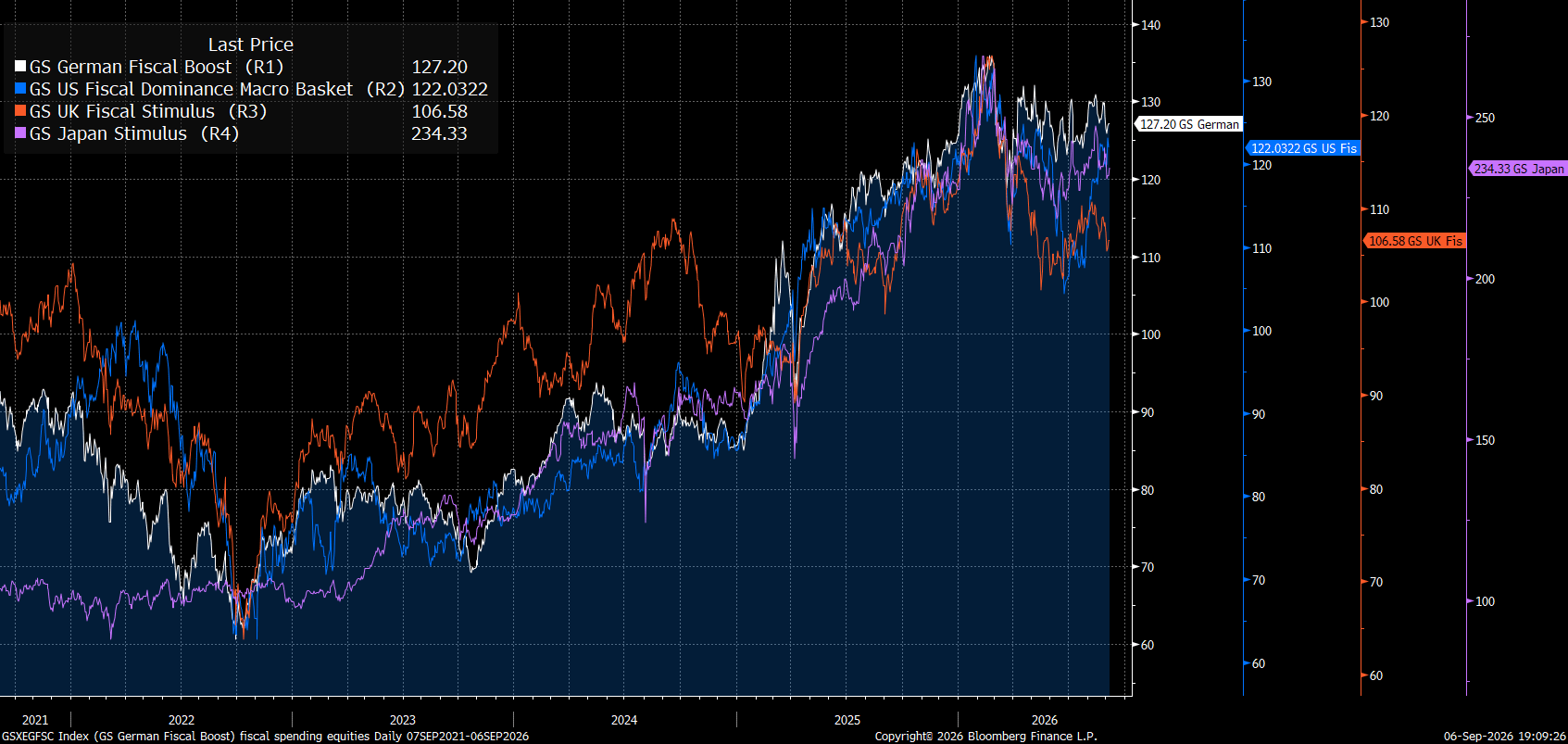
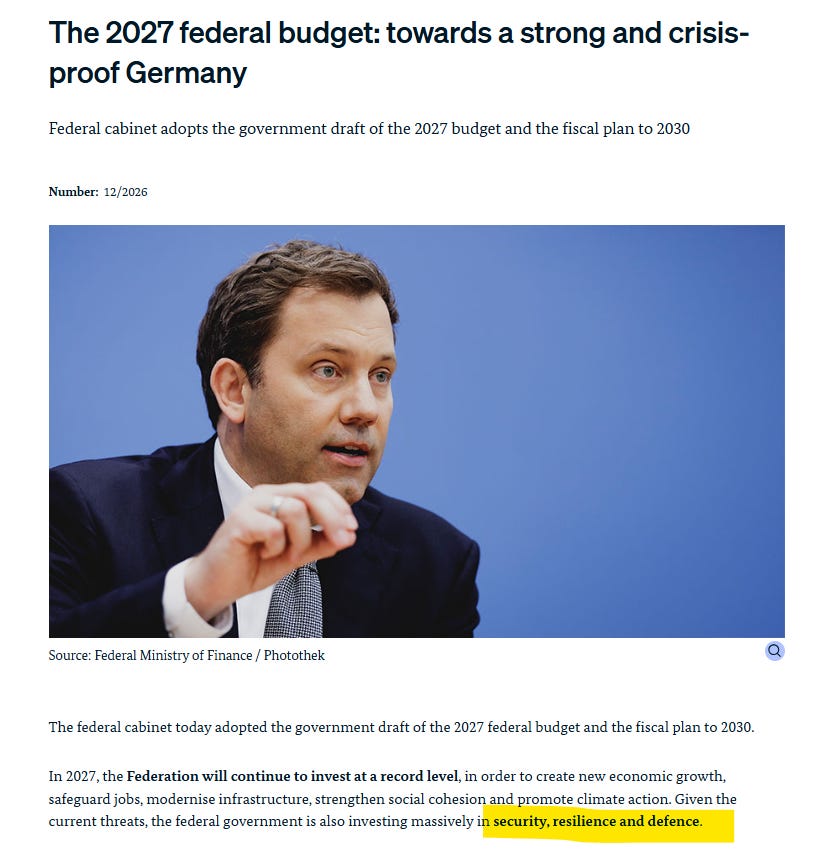
The clearest example is how Germany allowed its industrial base to be carved out by Chinese exports and is now taking in significantly less tax revenue because of it. In order to fund the deficit, it needed to raise taxes on the consumer due to its short-sighted incompetence.
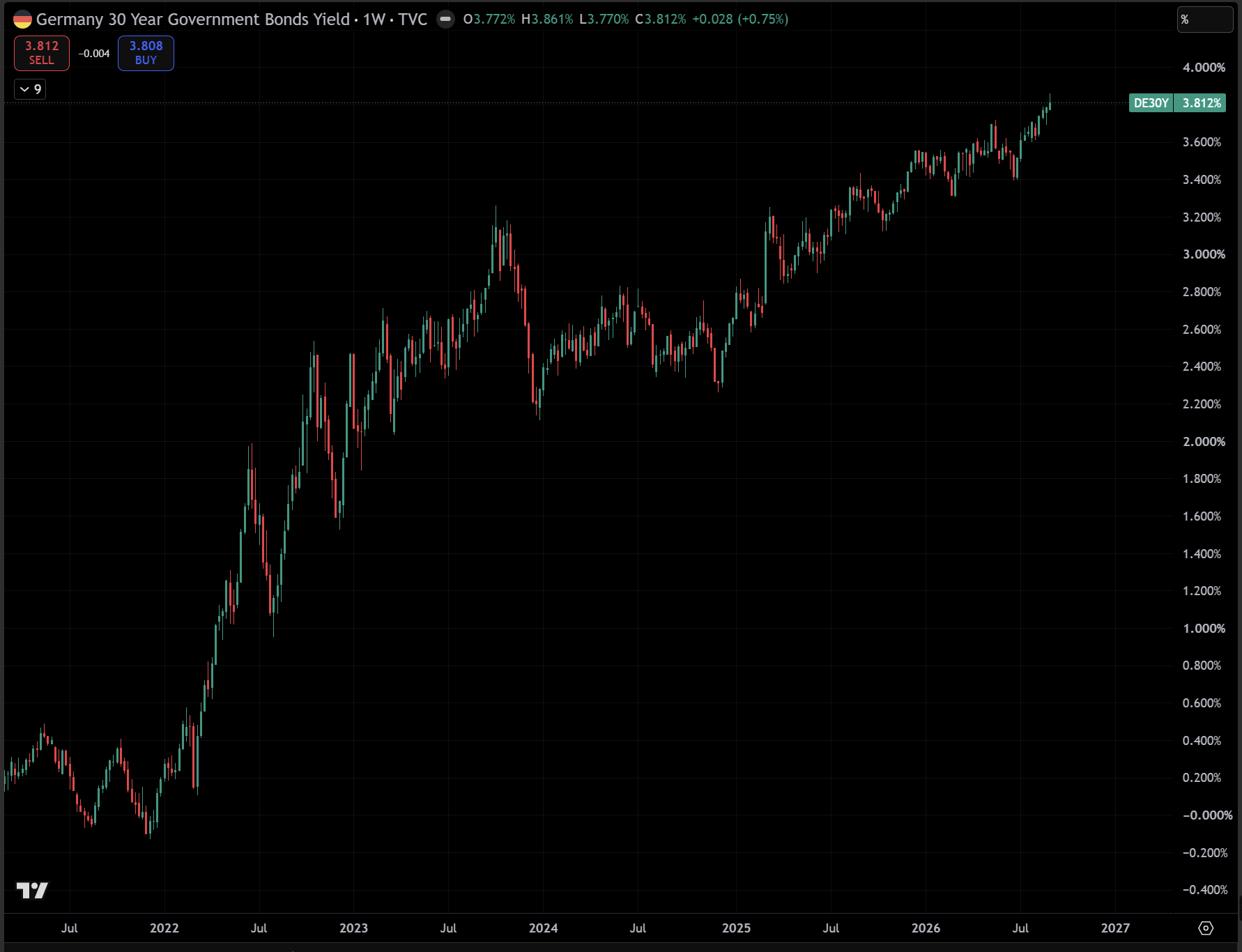
Germany is one of many countries being forced into a corner, and now the market is pushing them into an even tighter spot as long-term interest rates rise and increase the cost of financing deficits. 30-year government bond yields are at record-high levels as a result.
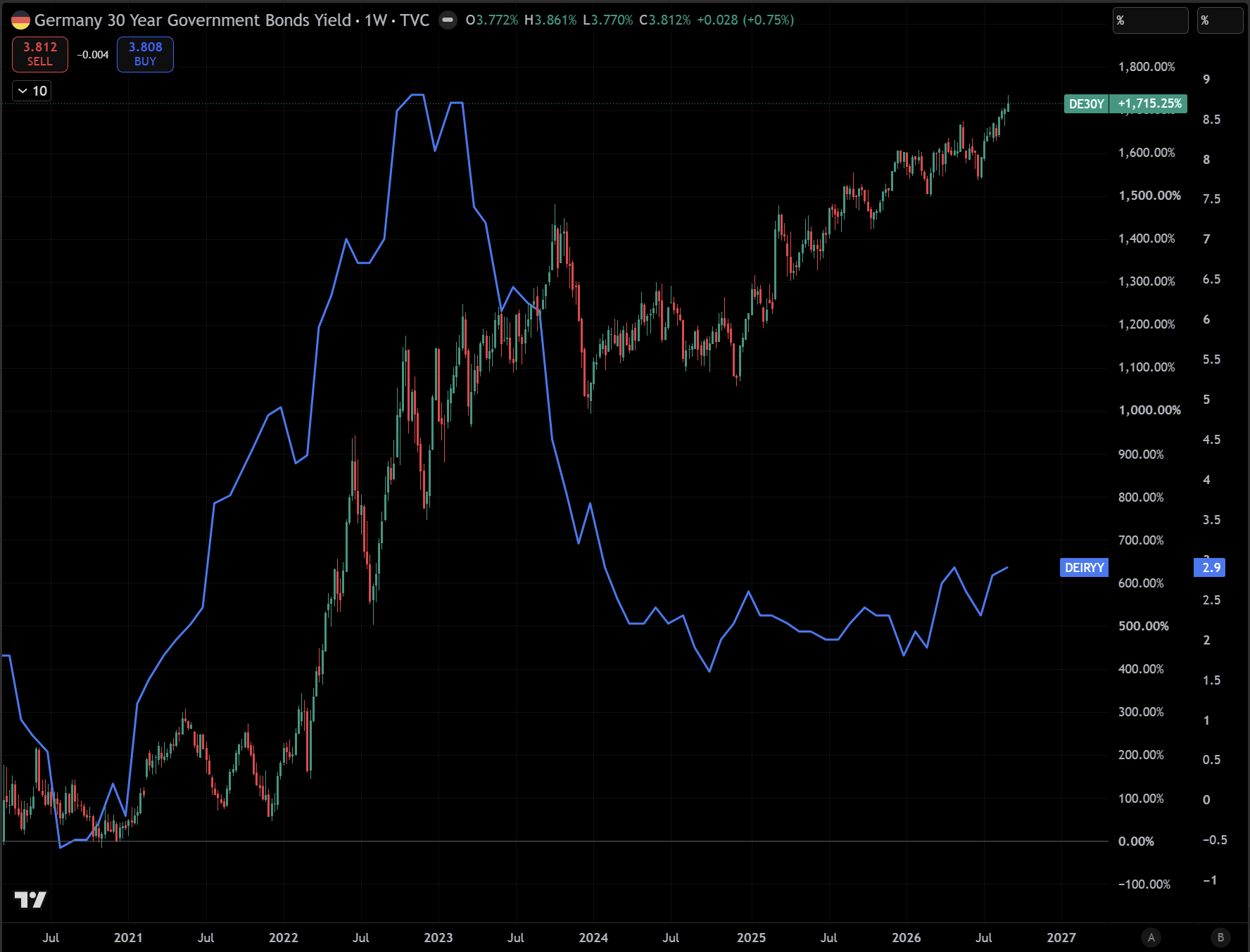
And notice that yields have been making new highs even with inflation at 2%. This reality is so much larger than domestic inflation!
But who cares? This is Germany. It doesn’t matter for the United States or other major countries, right?
Once the world begins to realize that Germany is getting pushed into a corner and that the divergence of long-end yields from inflation is the same exact pattern in the United States and Japan, it will wake up to the fact that every major country is being pushed into the same exact corner.
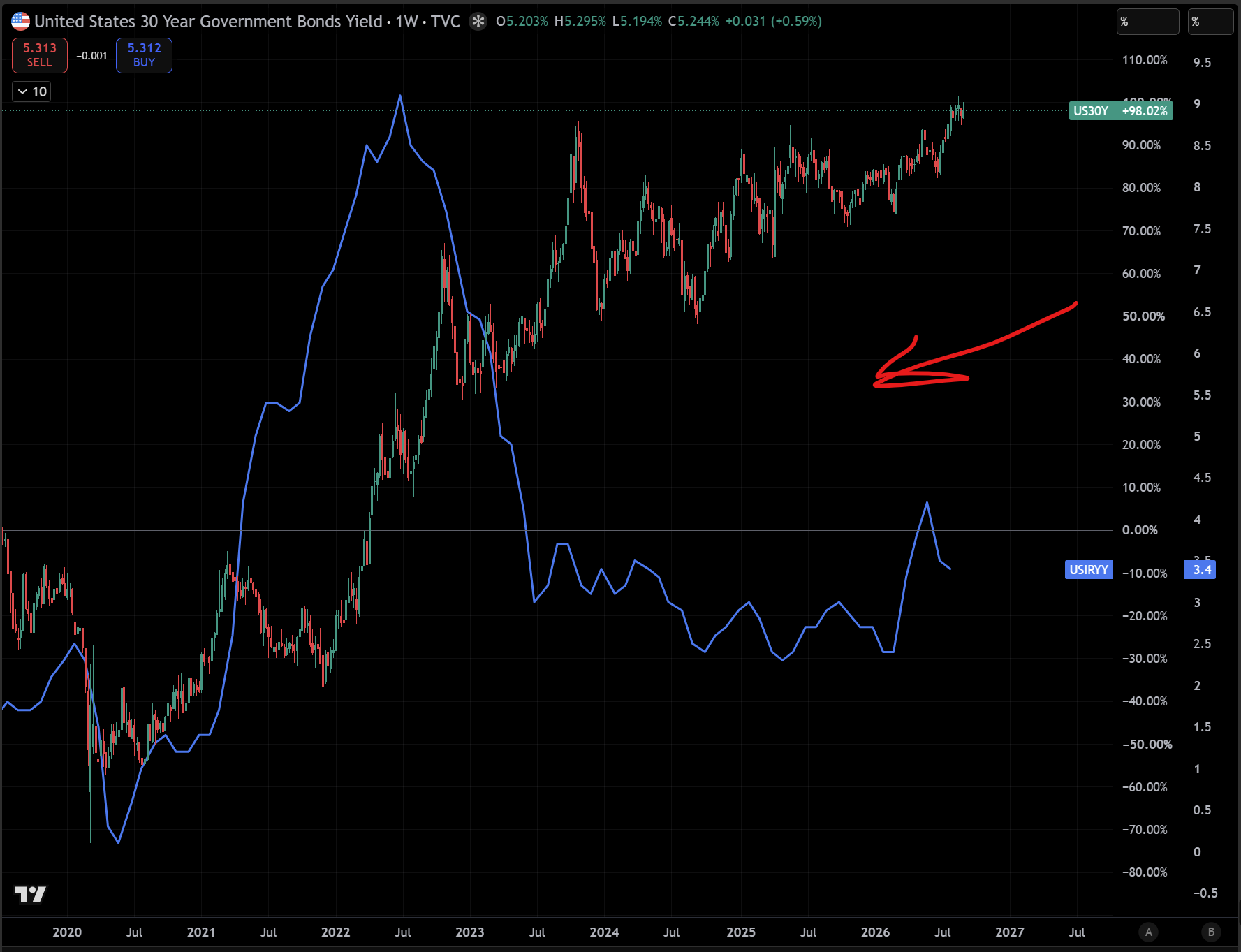
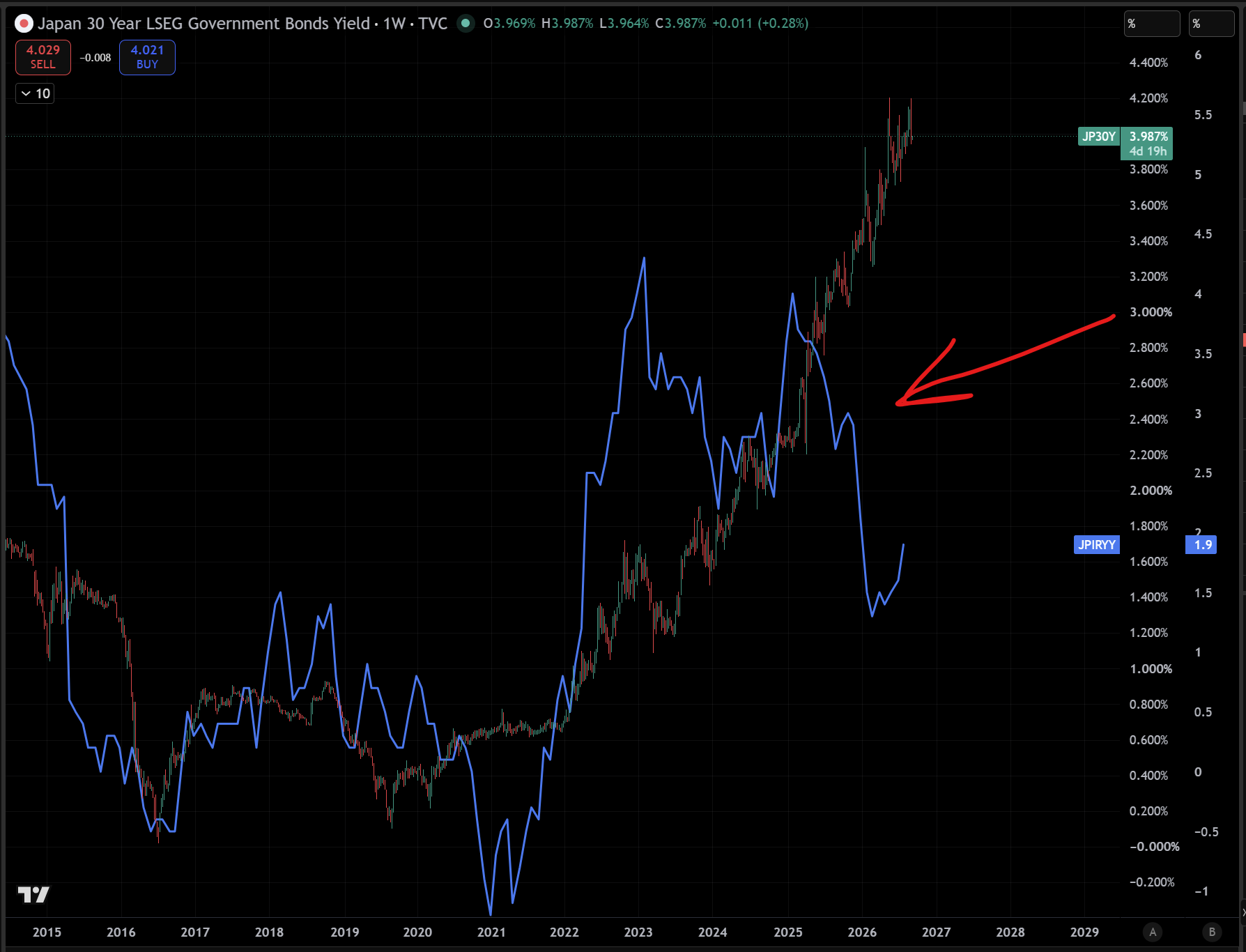
The world does not truly understand the sovereign risks unfolding and how they impact global interest rates and FX markets. These markets are the asymmetric linchpin on which the entire economy turns. Interest rate and FX markets are not two separate markets; they are two sides of the same coin, and every good, service, or asset is denominated in these coins.
Political parties won’t have the willpower to change until they are forced to. The largest changes in the world are ALWAYS driven by changes in policy that cause dramatic changes in interest rates and FX. This is the entire point of global macro: it focuses on these changes and expresses views that have the highest sensitivity to them.
Here is the problem though: while policymakers cloak inaction in virtue signaling, the private sector is trying to make as much money as humanly possible while the music is playing. The amount of credit and liquidity in the system has increased so much that GLOBAL banking sectors are sitting at all-time highs across every major country. The AI arms race has been the destination of all this credit and liquidity, but this doesn’t change the fact that governments are being backed into a corner. While policymakers choose inaction, liquidity is being added to the system because they want to kick the can down the road until they are forced to act. The problem is that WHEN they are forced to act, there will be secondary effects across the private sector that dramatically change the amount of credit and liquidity in the system.
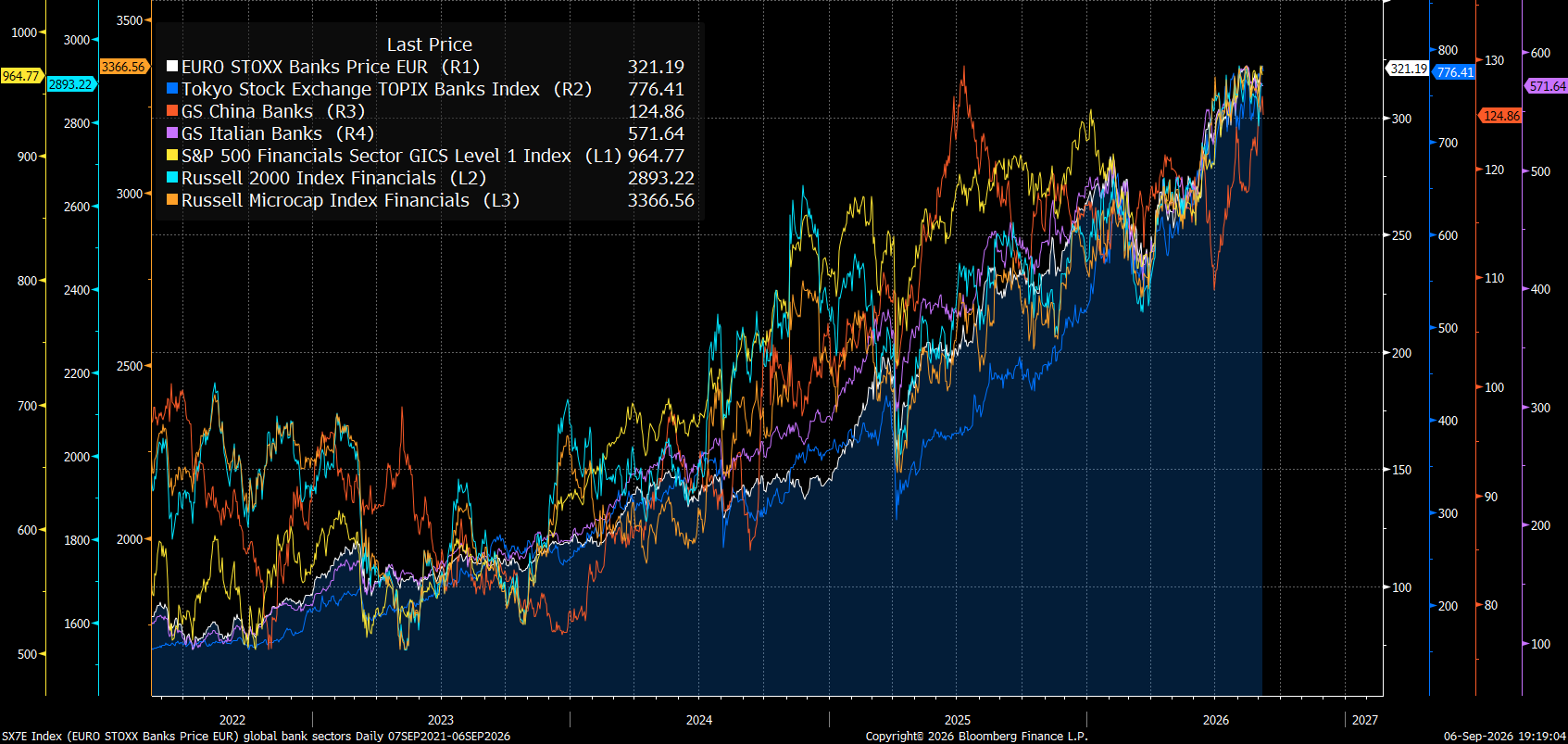
This PATH of policymakers and the private sector riding the trend is the most important factor to navigate over the next 18 months, especially because we are already seeing elements of the sovereign risk being priced into SOME markets, but the inevitable second- and third-order effects have not played out yet. This is what we are going to focus on.