


Global power forces have always had a dominant role in financial markets since the beginning of time. These create significant macro dislocations that global macro traders take advantage of, since they are directly linked to rates, FX, and global trade expressed in the balance of payments. While most investors are focused on buying the next Mag7 that will provide generational returns, global macro investors are focused on identifying extreme events where credit cycle melt-ups or melt-downs occur because policy-driven manipulation is occurring in rates or FX. The primary reason I have focused my trading strategies on global macro is that it is one of the most untapped markets for alpha, with unlimited capacity for putting on risk. On the flip side of the spectrum, the entire venture capital, growth equity, private equity and equity long short space has become so oversaturated with managers putting capital to work that the fundamental returns are priced very aggressively. There will always be opportunities in single-name equities because alpha is always shifting, but this is actually why having an asset-agnostic and country-agnostic approach can be so powerful: you are able to pivot to where volatility is occurring instead of being stuck in a specialized pod where you are forced to concentrate your trades despite opportunities occurring in other places.
Why are the opportunities in global macro only going to increase over time? Because we have entered an era where global trade is the highest it has ever been in history. This means countries are cross collateralized in their capital flows to a degree that has never been seen before.
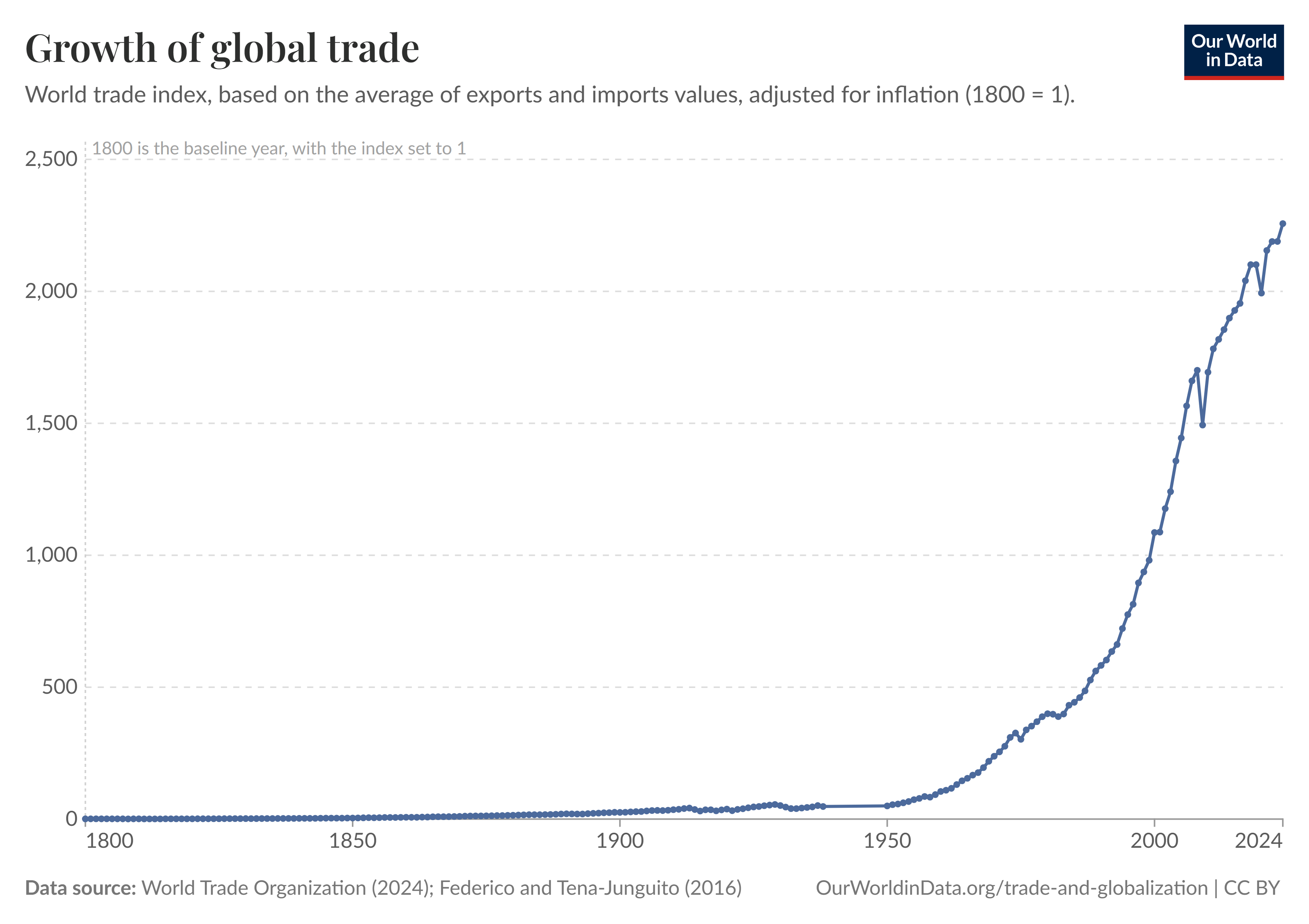
The implication of this environment is that WHEN geopolitics and policy change HOW capital flows, the reverberation will be greater than it has ever been in history. While everyone is focusing on the idiosyncratic risk of specific AI companies, they are missing the larger environment that is determining WHO can even buy those companies in the first place.
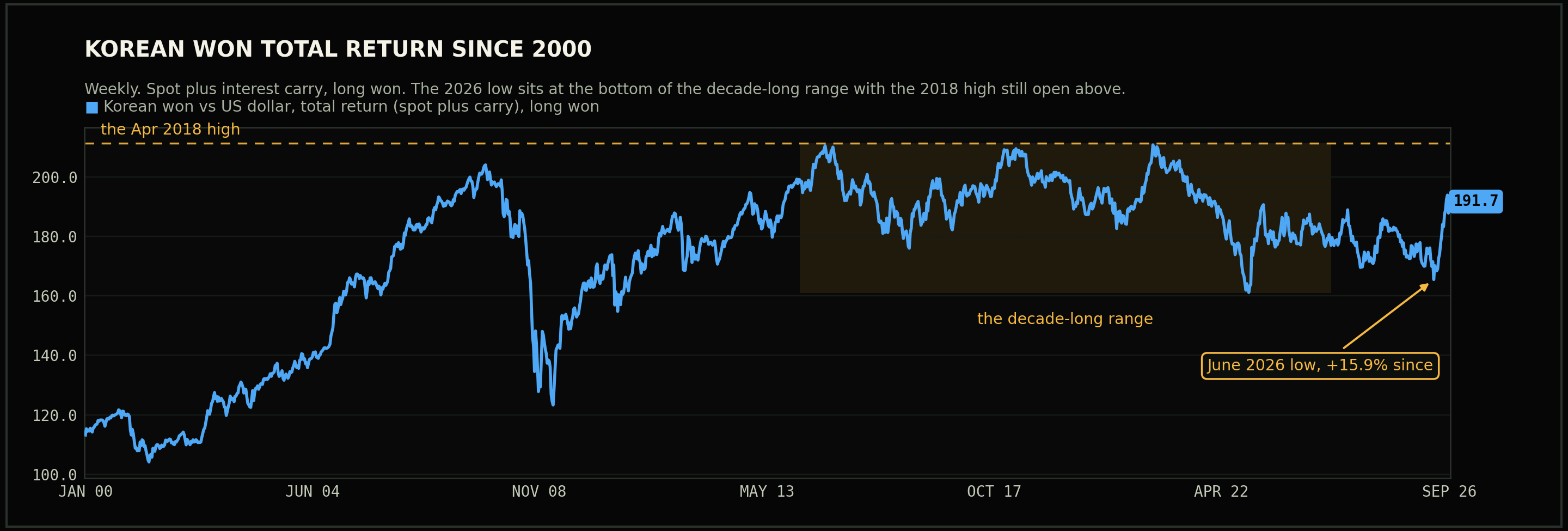
For example, the Korean won has been in a decade-long range and failed to break out in either direction. As countries realize that they need to prioritize their own national interest, so that they can either have leverage over enemies or provide value to allies in order to maintain protection, they implement regulatory change and innovation follows.
The reason I am using South Korea as the example is that it is the most direct link between policy and the AI trade that exists outside the United States. Samsung and SK hynix make the memory that goes into every Nvidia GPU, which means the KOSPI is the first flow on the AI trade every single day. It prints in the Asia session before the Nasdaq opens, and if you have been watching the price action you know that semiconductor flows in Asia and semiconductor flows in New York have become the same trade expressed in two time zones. Foreign investors buy Korea as the levered expression of AI capex, Korean retail buys US tech, and SK hynix now trades in the US. What is critical to understand is that the KOSPI is not trading Korea, it is trading the marginal dollar in the AI trade, and WHO controls that marginal dollar is determined by policy.
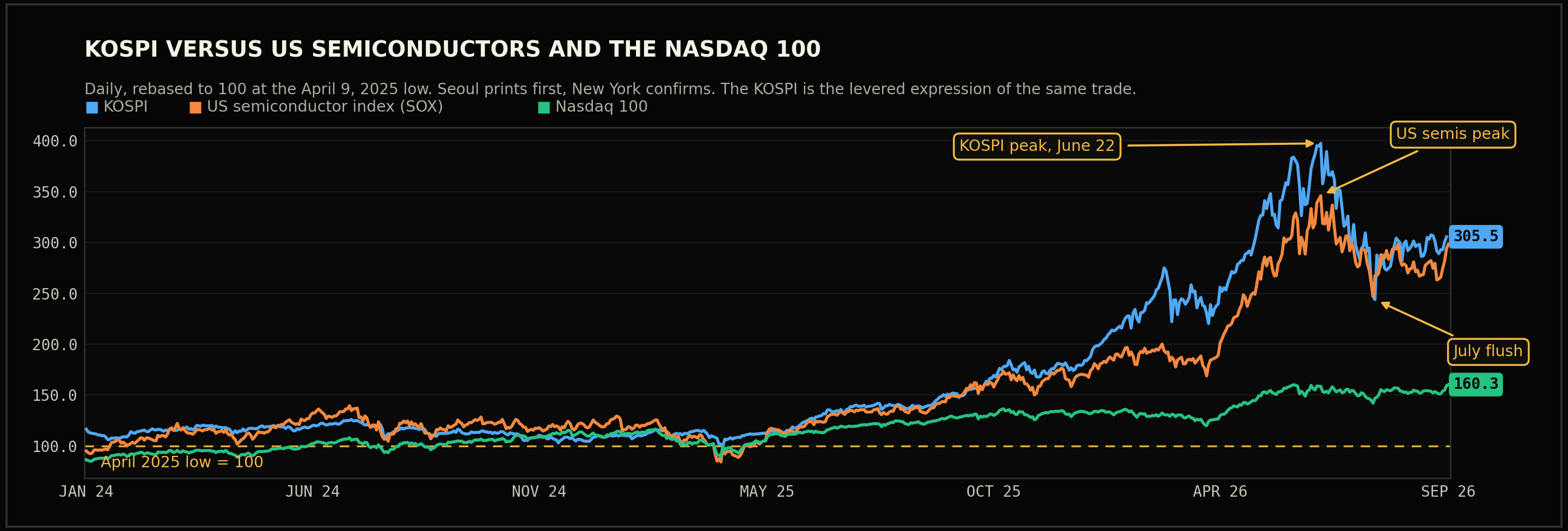
This is exactly the point I made above. Everyone is focused on the idiosyncratic risk of specific AI companies while the larger environment is determining WHO can buy those companies in the first place. Korea changed that environment in two years, and the order in which it happened is the whole point. Think about the policy changes deductively instead of as just a list of headlines. Every one of them falls into one of five buckets, and each bucket frames WHERE capital flows.
Political mandate: who is running the reforms
Martial law, December 3, 2024: declared and reversed inside six hours, the president impeached, the won to 1,480. The political tail risk that always kept Korea cheap became visible to everyone at once.
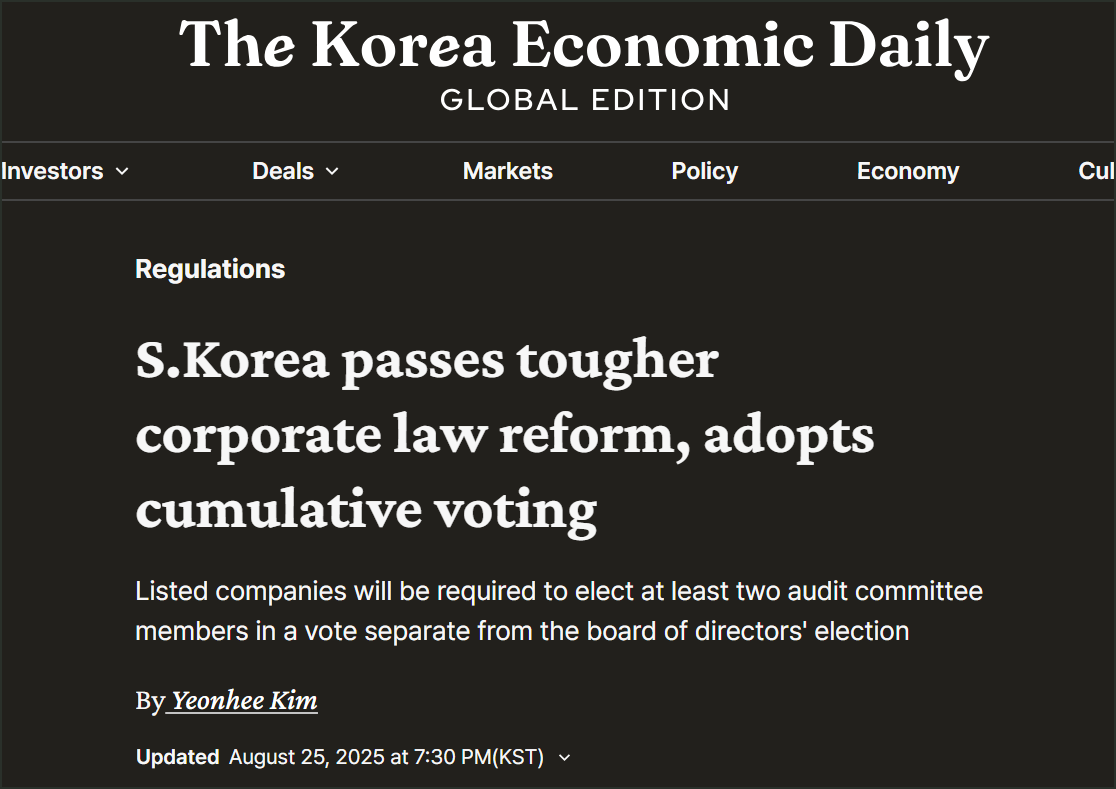
Lee elected, June 3, 2025: the snap election was won on a platform with a KOSPI 5000 target written into it. From that point the index level was tied to the government's approval rating.
Corporate governance and tax: who gets the cash flows
Value-up, February 2024: the Value-up Program pushed listed companies to publish plans to lift return on equity and price to book, Korea's version of the Tokyo exchange reform.
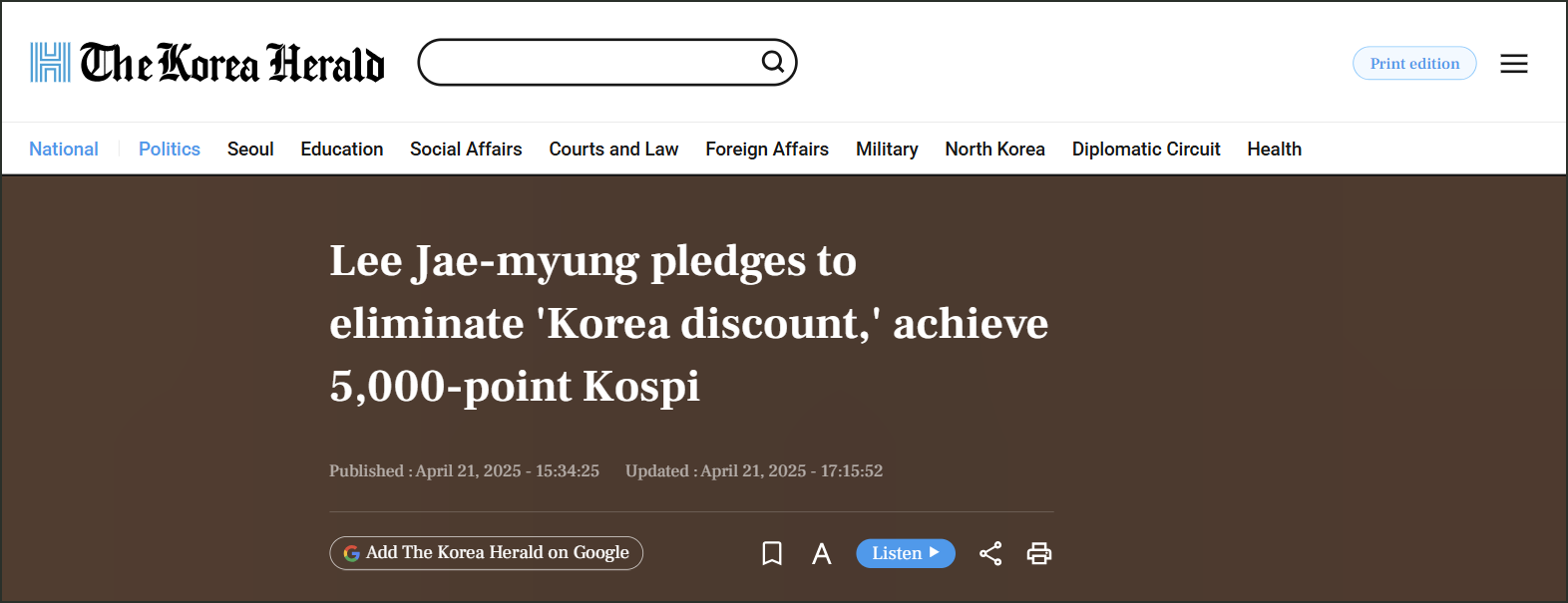
Fiduciary duty, July 3, 2025: the Commercial Act was amended so directors owe a duty of loyalty to shareholders and not just the company. On August 25 the second amendment added cumulative voting and separate election of audit committee members under the 3% cap. This is the legal root of the Korea discount and it changed in two votes.
Dividend tax, December 2, 2025: dividend income from high payout companies moved to separate taxation from January 1, 2026, at 14% up to 20 million won and 20% above that. This is what made Korean stocks competitive with real estate for Korean household money.
Market microstructure: how capital gets in and out
July 2024: FX trading hours extended to 2am Seoul, registered foreign institutions allowed to trade the won onshore for the first time, Korea Treasury Bonds made eligible for Euroclear. Short selling came back at the end of March 2025 after a 17 month ban.
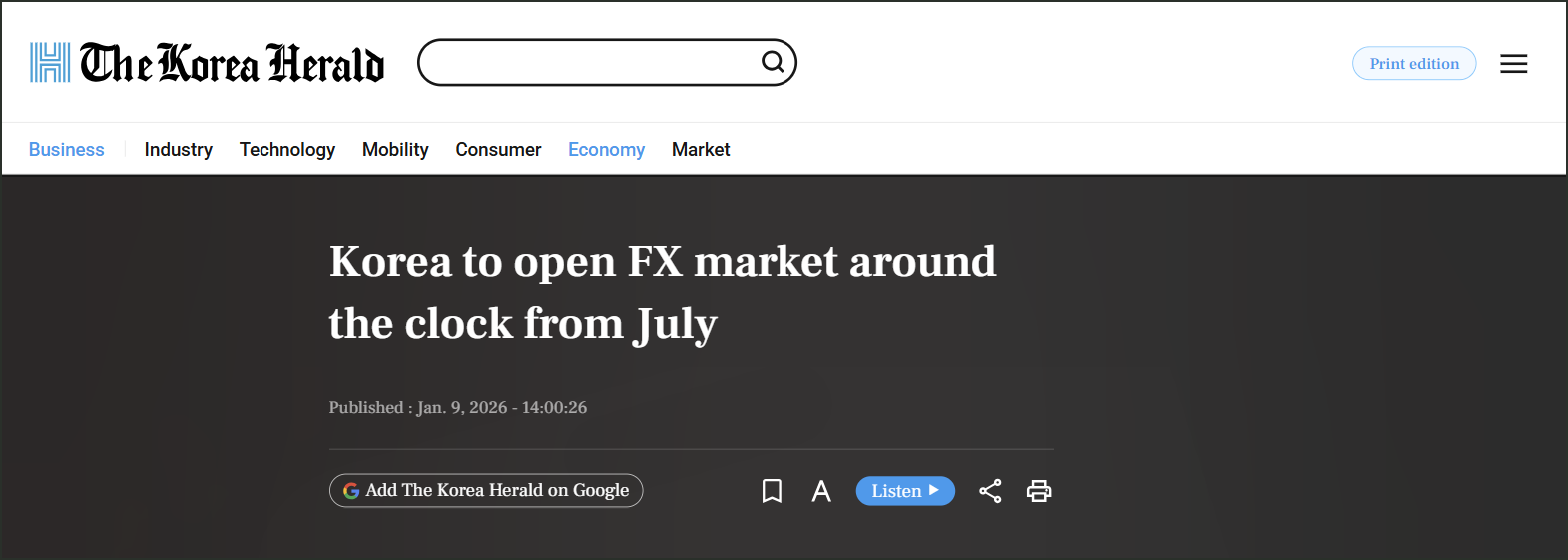
FX roadmap, September 29, 2025: the finance ministry committed to 24 hour won trading from July 2026 and an offshore won settlement system, with the stated goal of MSCI developed market status.
24h FX and the ADR, July 2026: the FX market went to 24 hour operation on July 6 and SK hynix listed on the Nasdaq on July 10, raising 26.5 billion dollars in the largest US listing by a foreign company ever. The offshore settlement pilot started in September and goes live in January 2027.
Index inclusion: who is forced to buy
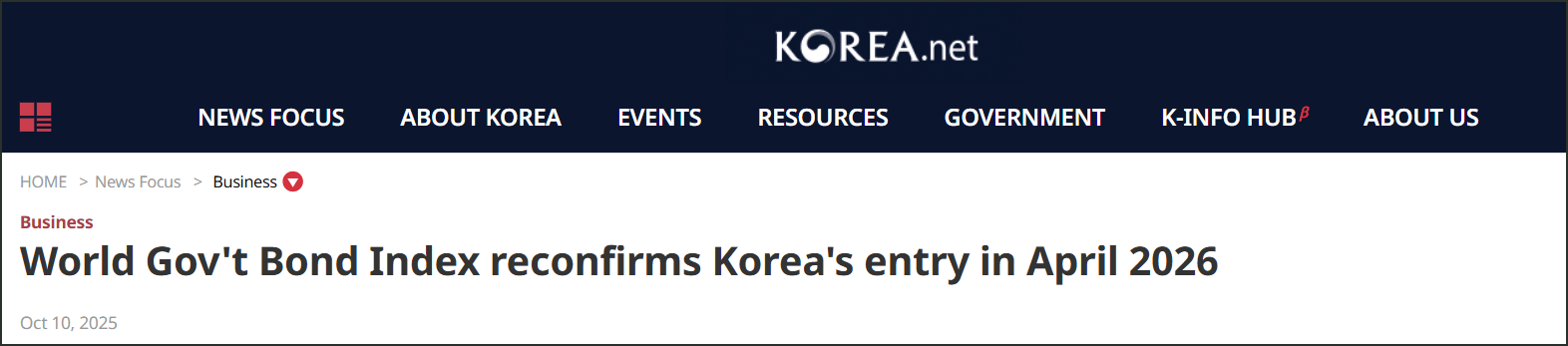
Bond index, October 2024 to November 2026: FTSE Russell announced Korea's inclusion in the World Government Bond Index in October 2024, and the first of eight monthly tranches went live on March 31, 2026 at a 2.08% weight. That is passive sovereign money buying won every month through November regardless of the headlines.
MSCI, June 2027 at the earliest: MSCI kept Korea off the developed market watch list in June 2026 because it wants a full year of observed 24 hour trading. Every global allocator knows the date and front runs it the same way they did the bond index.
Monetary and FX policy: what happens to the dollars
Pension fund hedging, December 2024 and December 2025: the National Pension Service was given a mandate to hedge up to 10% of its foreign assets when the won deviates too far from its long-term average, backed by a 65 billion dollar swap line at the Bank of Korea and extended through the end of 2026.
Exporters told to convert, June and July 2026: the government asked exporters to bring dollar proceeds home immediately instead of holding them offshore.
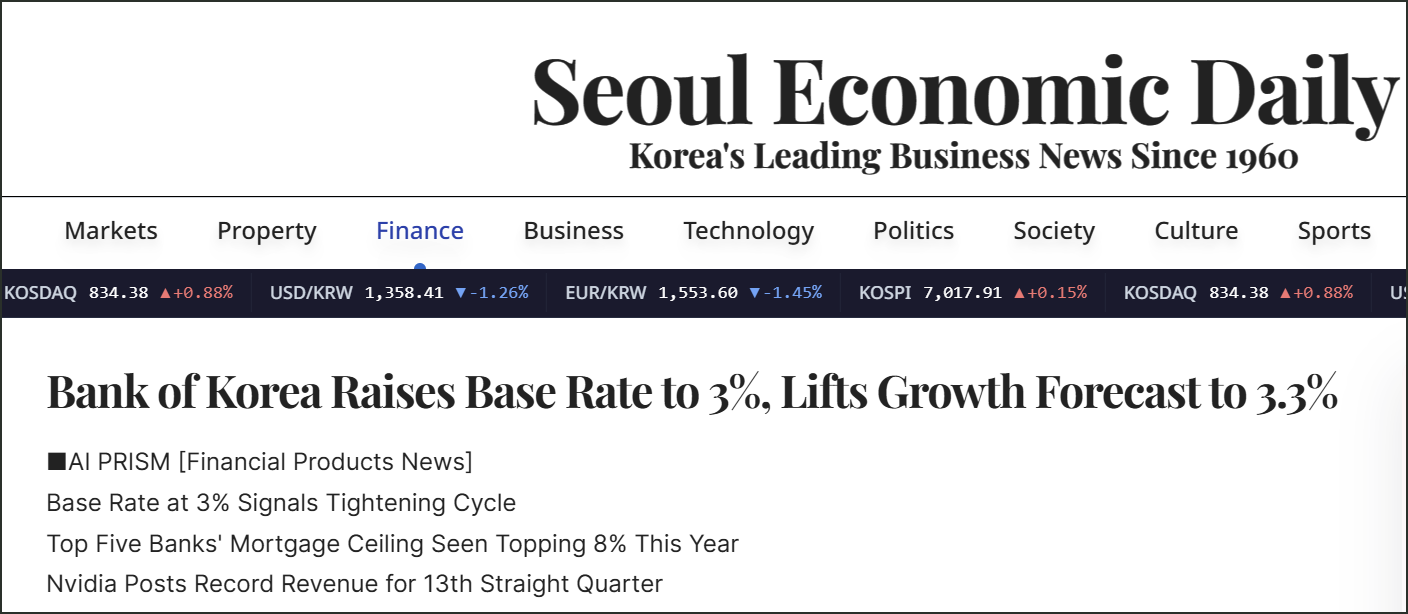
BOK hikes, July 16 and August 27, 2026: the Bank of Korea hiked twice to 3.00% and lifted its 2026 growth forecast from 2.6% to 3.3%, narrowing the rate gap with the United States.
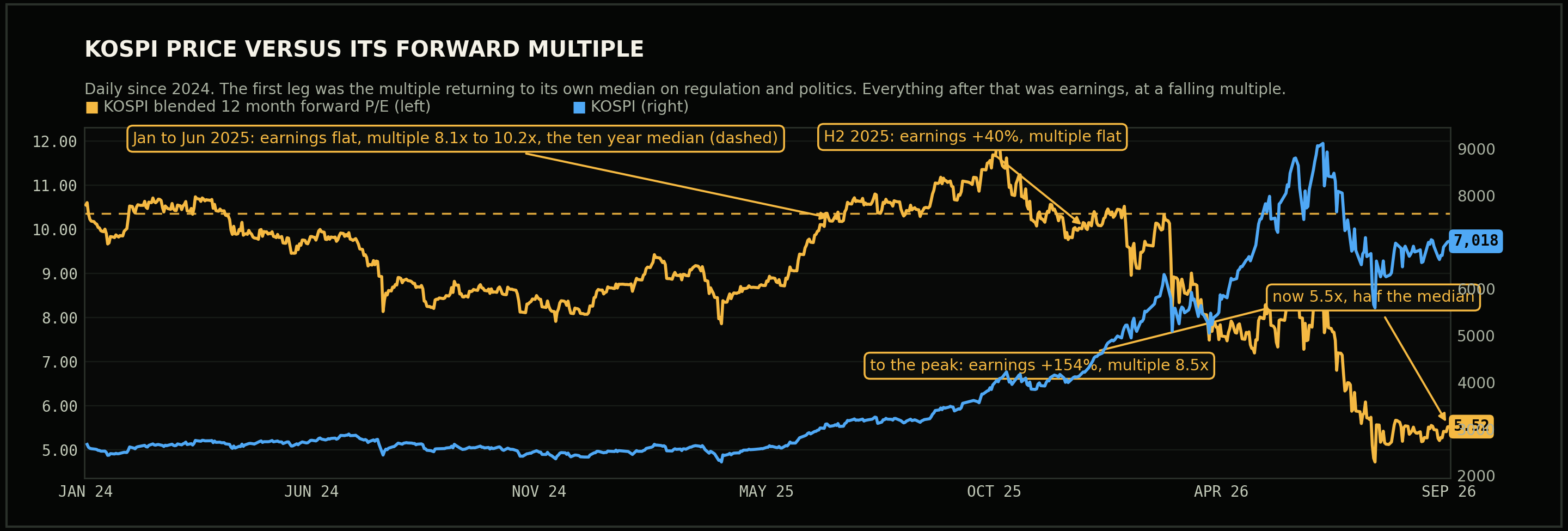
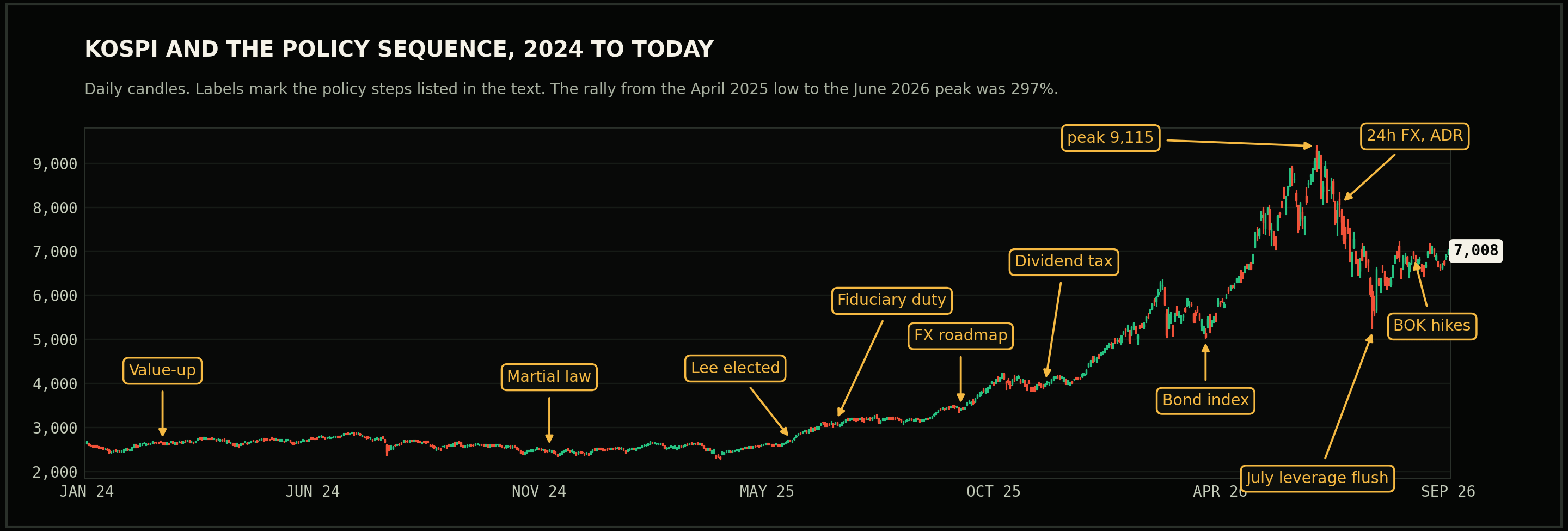
Now look at what the KOSPI actually did with this, because the order matters more than the headline. The first leg of the rally, from the December 2024 low through the middle of 2025, happened before the earnings showed up. Forward earnings barely moved and the market simply stopped pricing Korea at a discount to its own history. That leg was the regulation and the politics: the election, the fiduciary duty vote, and the sense that the discount finally had a reason to close. It also happened with foreign investors as net sellers, which tells you domestic money re-rated the market first. Everything after that was earnings. From late 2025 into the June 2026 peak the index more than doubled while forward earnings roughly tripled, and the multiple actually went down. In simple terms, regulation set the floor and the trade balance built the tower on top of it.
The trade balance is where the size of the move comes from, and it is worth being honest about how much of this is exports and how much is policy. Korea's surplus in 2025 was an ordinary year by its own standards. In 2026 it has been running at roughly three times the pace of the 2017 record, with semiconductors close to half of all exports and memory most of that. Samsung and SK hynix are each making more in a quarter than they made in all of 2018. The 2017 cycle is the clean comparison: a record surplus with none of the reforms produced one good year and then a bear market, because the earnings were a fraction of this and the discount stayed in place. So the exports would have moved the market regardless. What regulation did was make sure that when the earnings arrived, the market was priced at its own median instead of a discount, and foreign capital could own it outright.
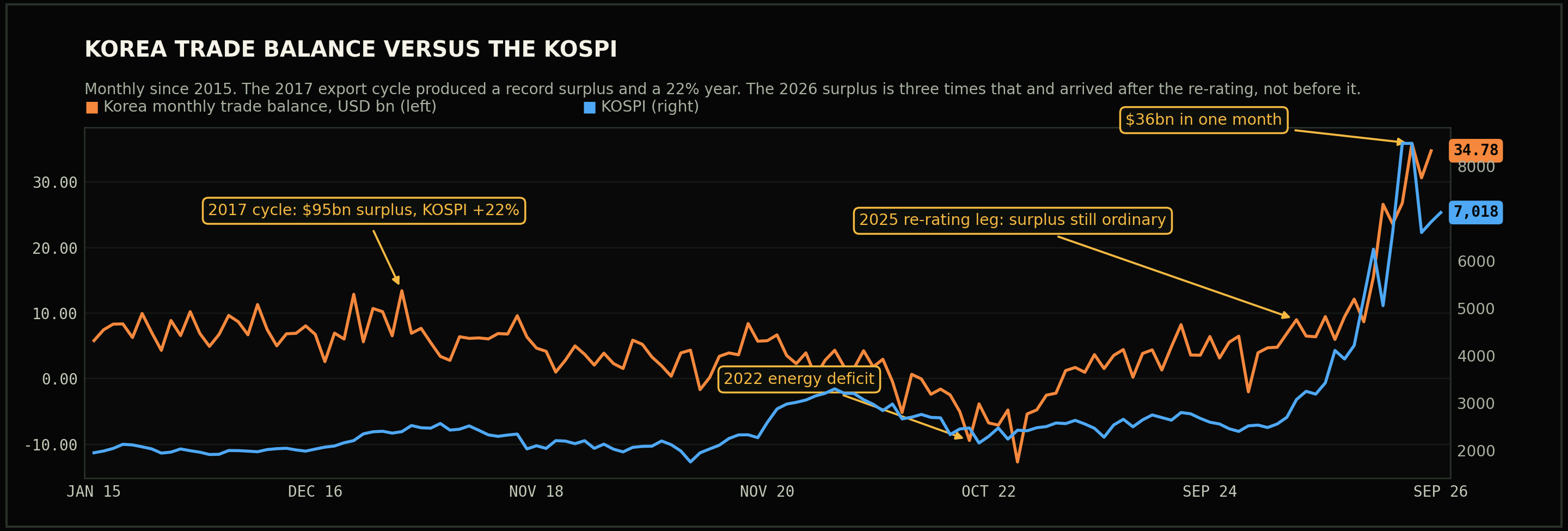
What the multiple says right now is the part that matters for the paid section. The KOSPI trades at roughly half its own long run multiple on forward earnings, lower than it was at the martial law low. That means the market is treating the memory cycle as a peak and not a supercycle. The blow-off top in June was retail leverage chasing those earnings while foreign investors sold into it, and the July flush was that leverage clearing rather than any policy reversal. Not a single reform was withdrawn. So the question from here is not whether the policy story is intact, it is, but whether the earnings persist and who is left holding them when the cycle turns. That is where the regulation buckets earn their keep: they decide WHO holds through the cycle. The chart below has each step labeled on the price action.
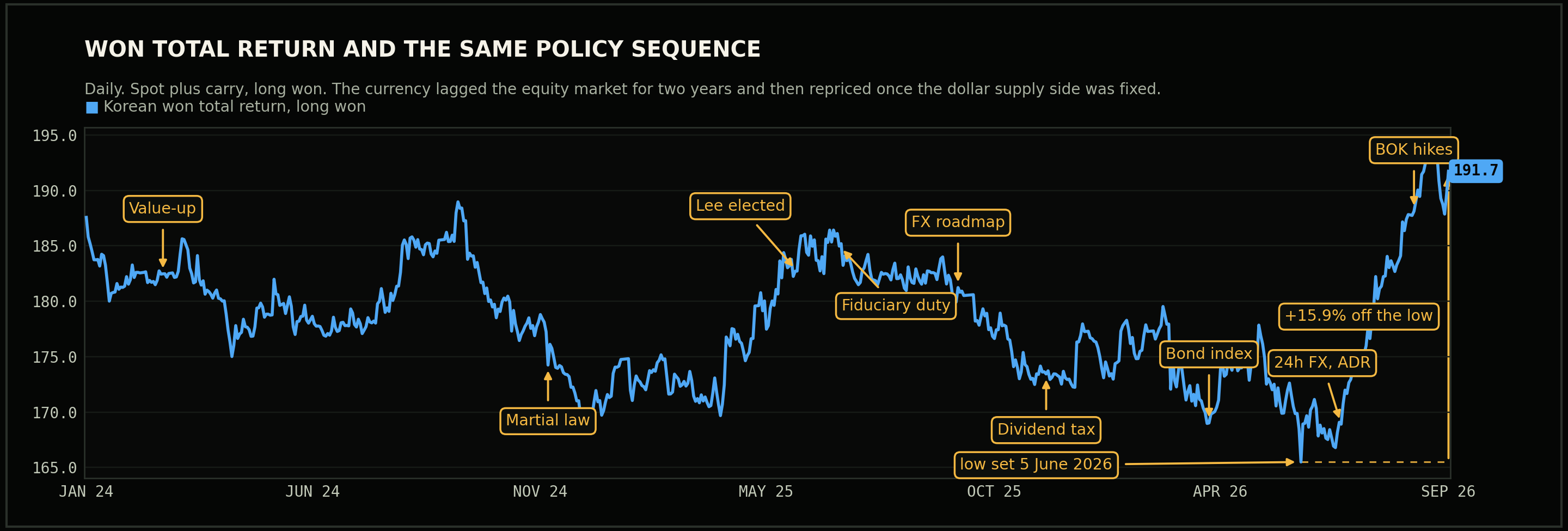
The currency is the piece that did not follow the script, and I want to be careful with it. For two years the won went the OPPOSITE way to the equity market. Korea was exporting the AI cycle while the won traded the capital flow cycle: Korean retail was buying US tech, exporters were keeping dollars offshore, foreign investors were hedging their Korean exposure, and the tariff deal added a scheduled outflow on top. Then the oil shock in the spring of 2026 pushed the won to its weakest level since 2009 even as the surplus hit records. Attributing the recovery since June to any one policy move would be a stretch. What I can say is that the pieces that determine whether surplus dollars actually get converted into won, the exporters, the pension fund, the 24 hour market and the bond index flows, all changed at roughly the same time, and the won has rallied hard since. The chart below is the total return of being long the won, spot plus carry, which is what a foreign investor actually earns. It is still below its 2018 high with the scheduled flows ahead of it.
Zoomed in on the last two years, with the same policy labels as the KOSPI chart:
This brings it back to the thesis at the top. Regulation decided WHO could own Korean cash flows, the trade balance decided how big those cash flows were, and the currency is where the two have to settle. The KOSPI is consolidating around 7,000 after a blow-off top, at a multiple that says the market does not believe the earnings, and it is still the first vote on the AI trade every day before the Nasdaq opens. Where it goes from here is a question about US tech as much as it is about Korea, and the answer runs through oil, interest rate volatility and capital flows, which is exactly what I break down below.