


There is a larger game at play right now inside the political establishment, one that is systematically orchestrating the movement of global capital flows and trade to secure US dominance in the AI arms race. Few people even recognize the chess pieces being moved in the background because the players themselves are concealing their actions and misdirecting public markets, while political commentators on both the left and the right demonize every player on the board.
This is not about conspiracy theories. If the “conspiracy theories” actually had validity to them, they would contain monetizable alpha that could be extracted from markets. Yet we do not see the “gatekeepers” of these “secrets” making significant sums of money in markets, which in itself speaks to the degree of misdirection embedded in the algorithm. The actual players are concealing, not revealing, the full picture.
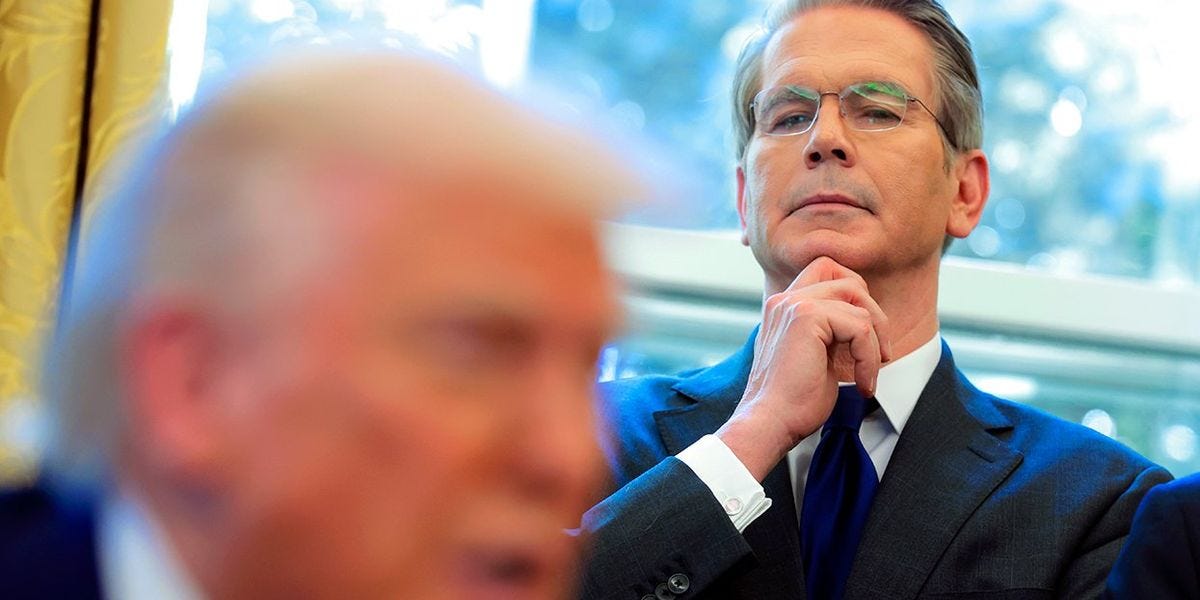
For anything I lay out below to have validity, there needs to be explicit quantification and a direct connection to financial markets, not sweeping statements built on broad generalizations. By the end of this report, it will be clear that Kevin Warsh (Fed Chair) and Scott Bessent (US Treasury Secretary) are actively coordinating to advance the larger goal of US dominance over its adversaries through economic and financial counterattacks, executed in response to the coordinated economic and financial attacks coming from China. This is directly linked to how capital is flowing and how actions are being taken across the entire venture capital space, defense spending, AI, and the frontier labs.
The Druckenmiller Establishment:
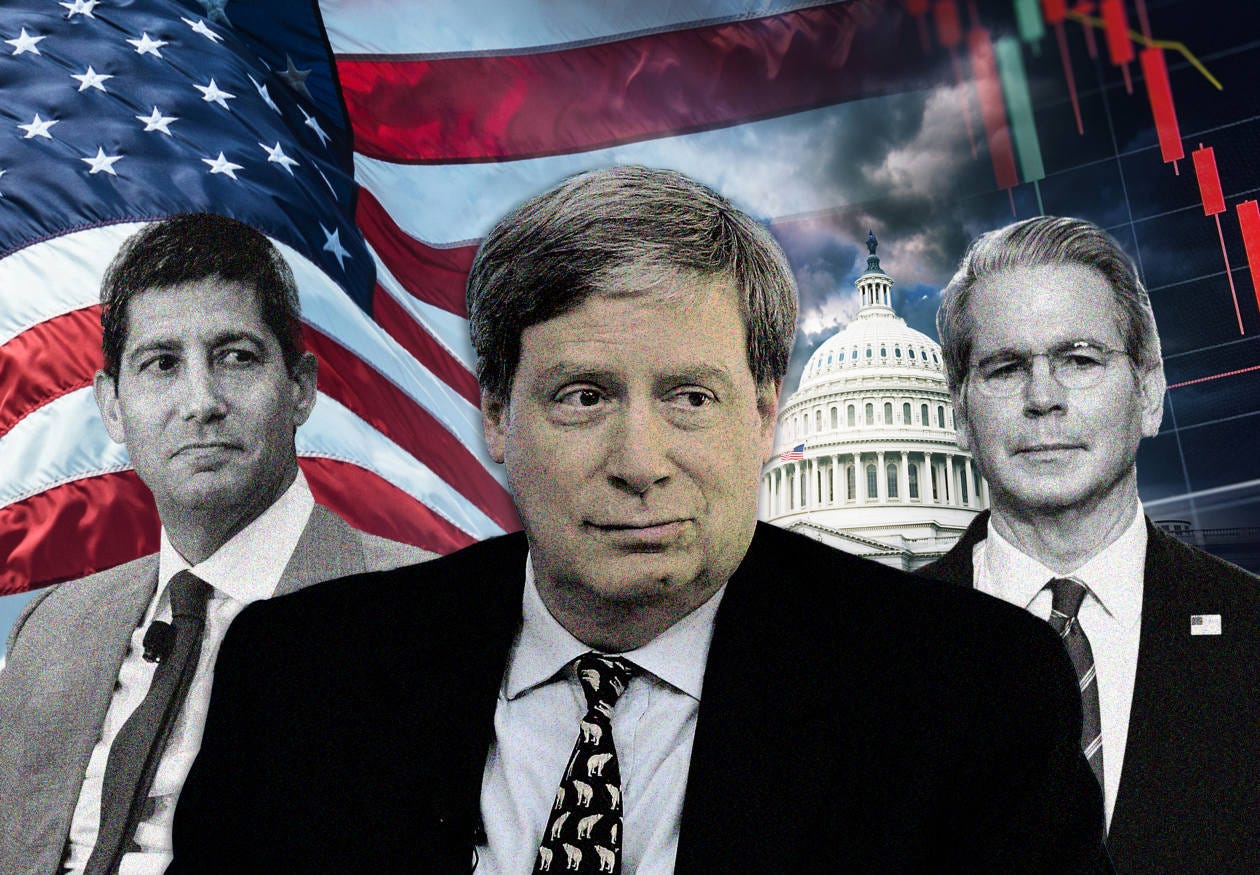
Everything starts with how both Bessent and Warsh traded with and directly under Stanley Druckenmiller, one of the greatest macro traders of all time. Why does this matter? Because both have an intricate understanding of global capital flows as practitioners and risk takers, which is very rare. Druckenmiller has referred to Kevin Warsh as the single individual who understands international flows of money better than anyone else. But why would that even matter? Aren’t the flows of money simply a reflection of the underlying fundamentals? They shouldn’t matter for policy, right?
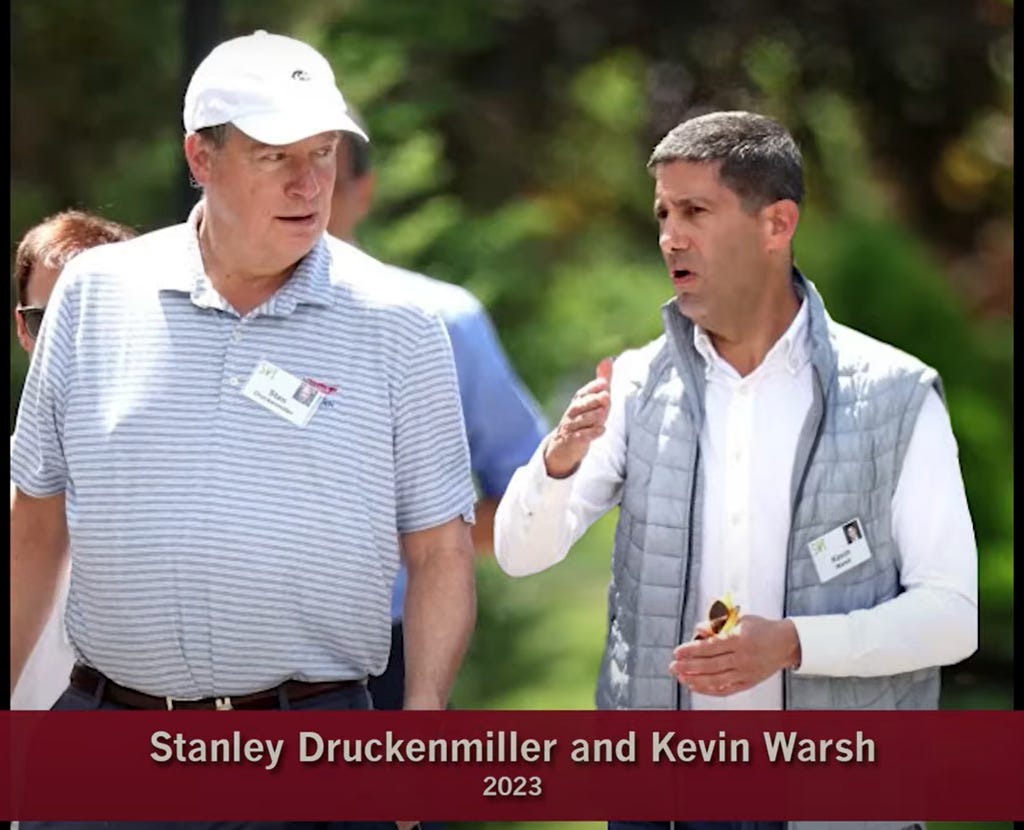
The elusive truth that is constantly shapeshifting into different financial bubbles is that international flows of capital sit as the root cause of the largest economic and financial issues that you face. Druckenmiller’s career has been defined by understanding these flows and their core mechanics, then taking massive bets on how the symptoms shapeshift.
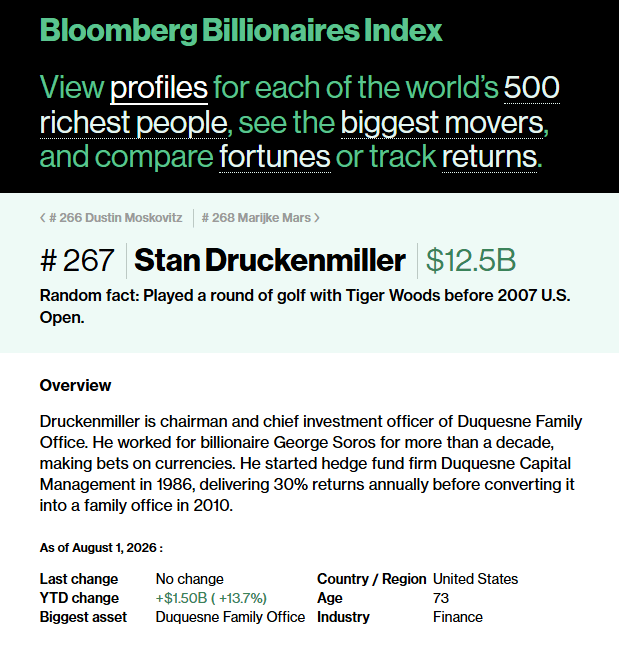
The social media algorithm and political establishment have chased the symptoms of this core problem so that an entire section of society believes absurd ideas like “if we fix the money, we fix the world,” and then suggest that you buy or sell something instead of fixing the largest economic and financial imbalance that the world has ever seen.
One of the largest bets Druckenmiller took was being an early investor in Palantir before anyone was even talking about the AI race between the US and China. Why? Because Druckenmiller and his closest allies understand the core mechanism that is driving the largest economic and financial problems in the world: international flows of capital between the US and China. Every technological advancement is simply another accelerator inside the larger international monetary order that exists. (The entire VC defense space is now running this same playbook, functionally copying Druck)

Alex Karp is one of the few people who have a recorded interview with Kevin Warsh, which speaks volumes about how closely their views on AI, American Dominance, and China overlap.
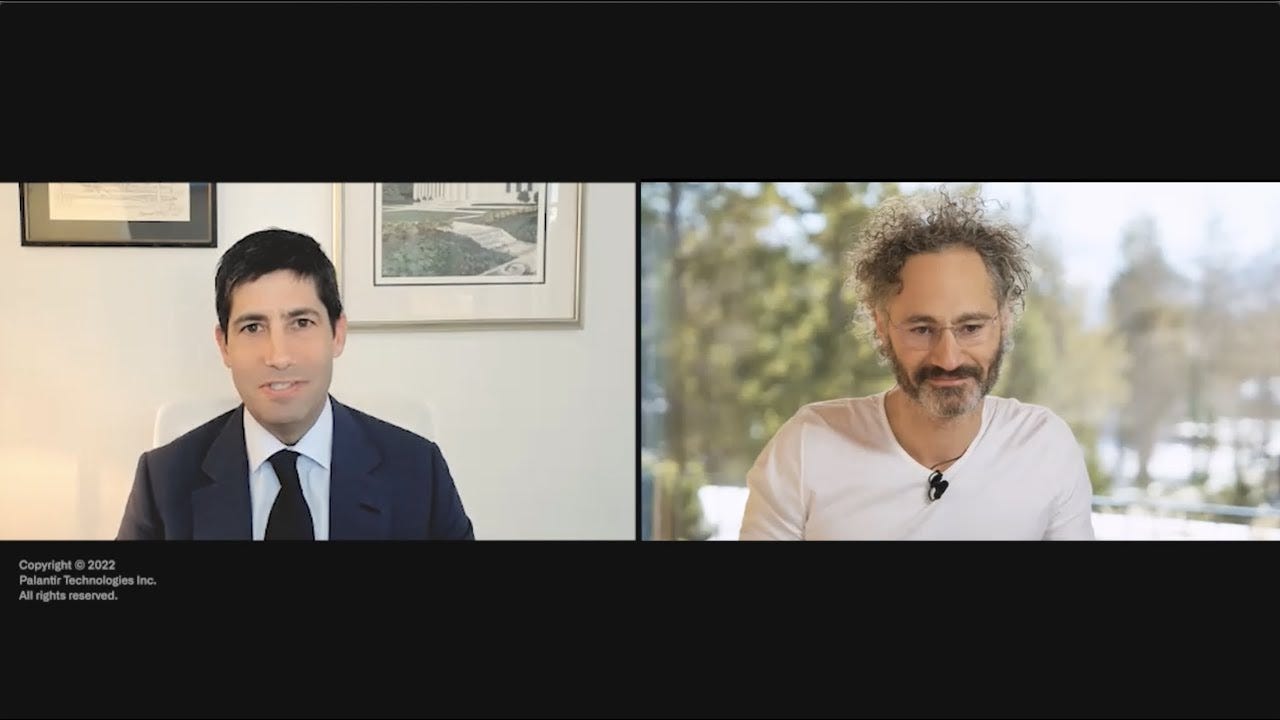
If you understand the core economic and financial problem that exists in the world today (not just the symptoms of it), then you will begin to see WHY Bessent and Warsh were chosen: they have one of the only track records trading the actual core flows and causal mechanics of the system instead of just its statistical reflections. If you can connect this to markets, then you will be able to align yourself with the most core elements of the international monetary order instead of false narratives about broken money.
All of the players, flows, and markets are connected.
The Monetary Order and Macro Endgame:
So WHAT is the core mechanism that pulls all of these players into alignment?
America buys more from the world than it sells; it pays in dollars, and those dollars have to go somewhere. Because the dollar is the reserve currency and the US runs the only financial market deep enough and open enough to take the volume, the world's excess savings get pushed into US assets whether America needs the financing or not.
Now ask the harder question: if America were truly begging the world to fund its deficits, you would expect rising yields and a falling dollar doing the begging. The opposite happened. Through the 2000s the current account deficit widened while real long-term yields fell and the dollar stayed expensive, which tells you these were never profit-seeking investors making a choice. They were policy flows, price-insensitive by design. America does not absorb the world's surplus because Americans chose to live beyond their means. The system is built so that someone has to absorb it, and the dollar makes America that someone. Look at what foreign holdings of US debt did once that system locked in.
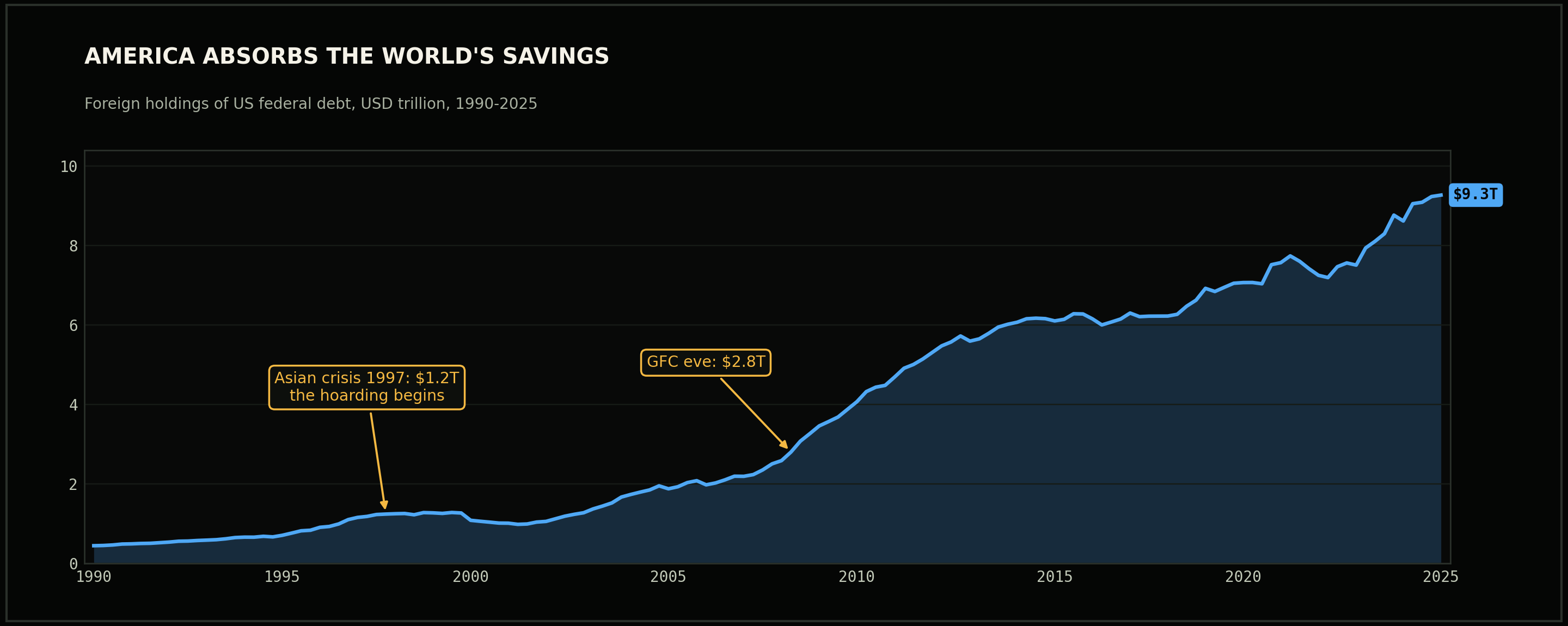
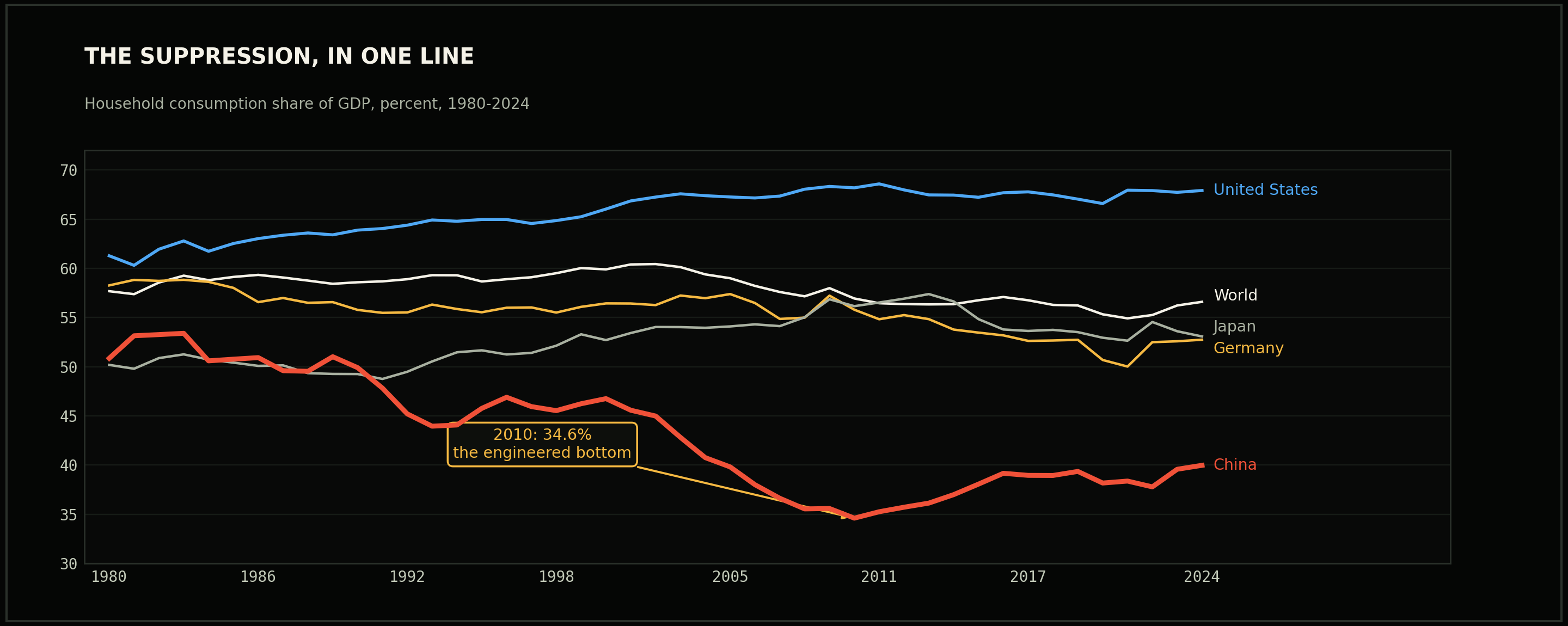
Why does the surplus exist in the first place? Because Chinese workers produce far more than they are allowed to consume. That is not a cultural preference for thrift; it is an engineered outcome (by the CCP). Roughly forty percent of the value Chinese workers create comes back to them as income, against closer to seventy percent in most major economies. For more than a decade, capped deposit rates quietly transferred something on the order of five percent of GDP every year from household savers to state-connected borrowers. Migrant workers pay into benefits they cannot collect in the cities where they actually work. And a currency held cheap functions as a permanent transfer from every household that consumes to every exporter that ships. Add it up and household consumption in China still sits below forty percent of GDP, lower than any other major economy in the world. Income that never reaches households cannot be spent by households, so the excess production has to be sold to someone else. That is the entire surplus. This was never a conflict between American and Chinese households. It is a conflict initiated by the CCP that spills across borders, and Chinese households are losing it just as badly as American workers are. You can see the suppression in a single line below.
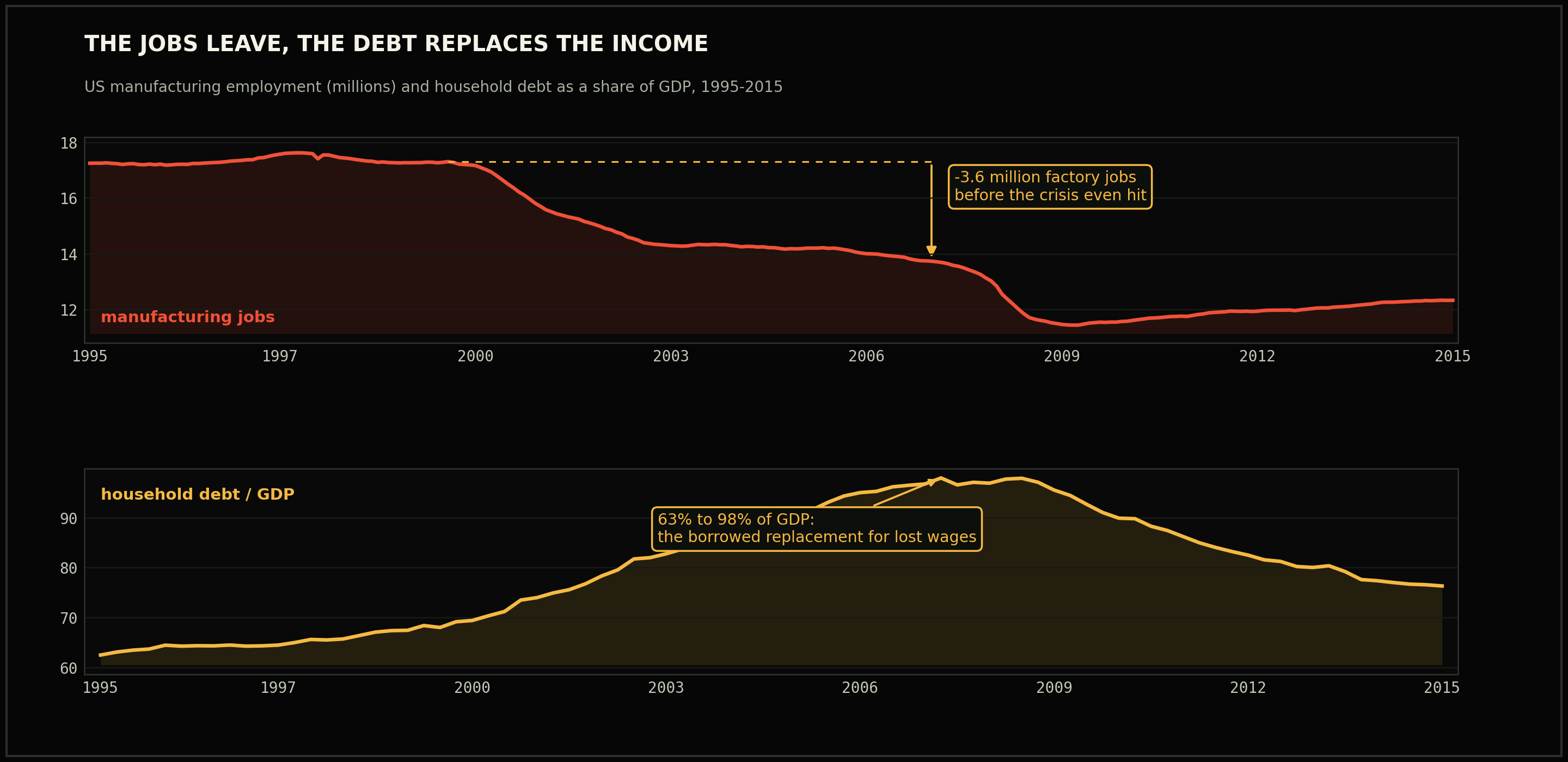
So what happens when those exported savings hit the American system? Money that is forced in does not build factories; it bids up the price of things that already exist. Between 1998 and 2008, foreign official institutions bought roughly four trillion dollars of US assets, nearly the size of the entire US current account deficit over that stretch. There were not enough Treasuries in existence to satisfy the demand, so Wall Street manufactured the missing safe assets out of subprime mortgages, credit standards collapsed because that was the only way to mint enough paper, and households pulled almost five trillion dollars out of home equity to replace the income their jobs no longer provided. And the jobs really were gone: the same inflows kept the dollar expensive, manufacturing output shrank, and over eighty percent of the private job losses in the early 2000s were factory jobs. Unwanted inflows force a country into some combination of rising debt and rising unemployment. Asset owners get rich on the way in, wage earners absorb the displacement, and the bubbles and inequality everyone screams about are not separate problems. They are the exhaust of one machine.
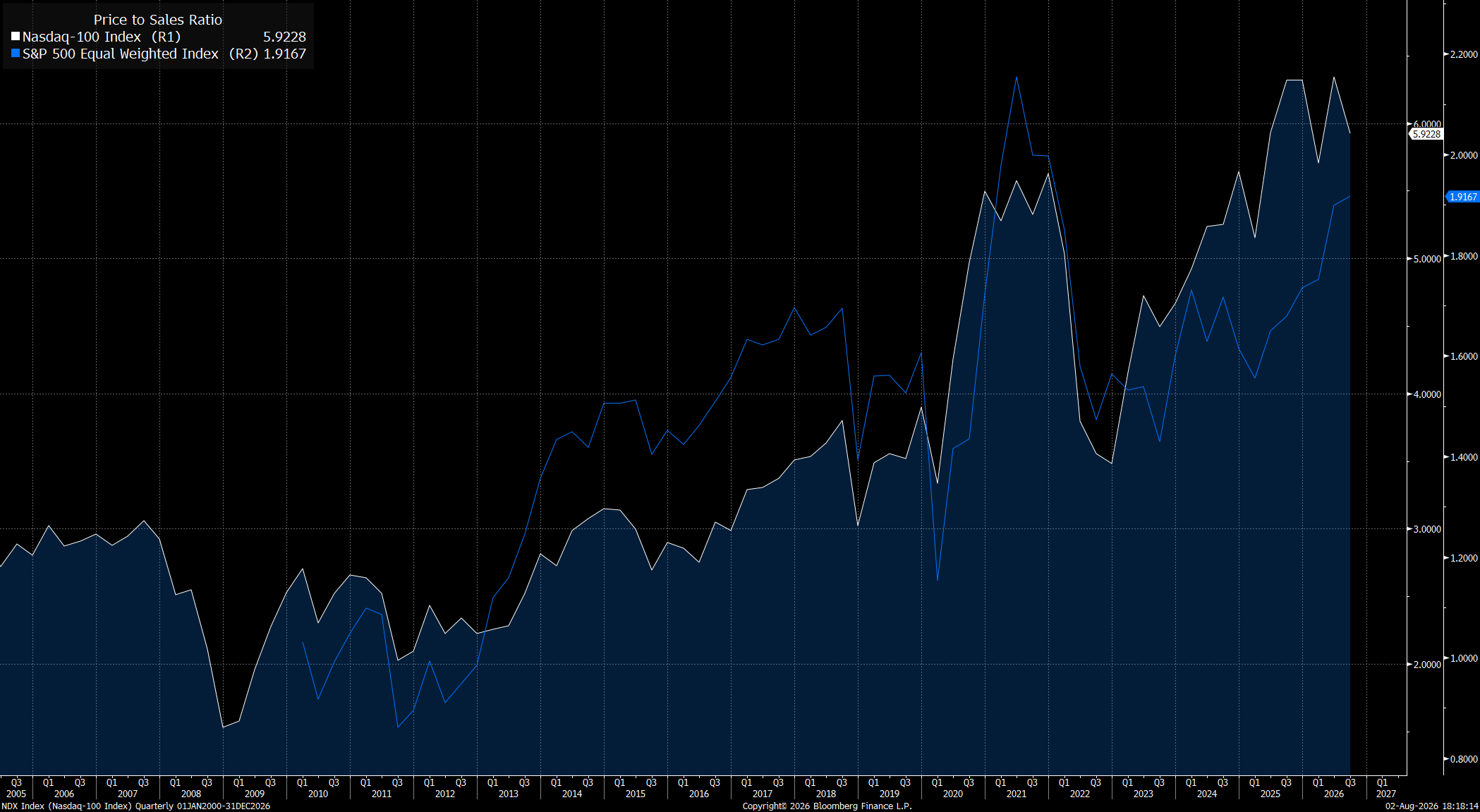
Step back and look at what everyone calls the most expensive equity market in history. WHY are valuations stretched across almost everything, not just the AI names? The standard answer is “euphoria,” and the standard answer misses the mechanism. The excess savings flowing into this country have to be absorbed by financial assets, and the pool of assets does not grow as fast as the flow. When trillions of price-insensitive dollars are forced into the same markets year after year, the price of everything that already exists gets bid up relative to its cash flows, which is just another way of saying valuations rise everywhere at once. Wall Street's core function in this system is manufacturing things for that money to buy, and 2008 already showed you what happens when it runs out of legitimate product. The AI trade sits on top of this machine; it did not create it. Valuations are not high because investors lost their minds. They are high because the world's surplus has nowhere else to go. (This is a mechanical function of flows.)
This is also where the government spending debate goes off the rails. Should you be worried about deficits?
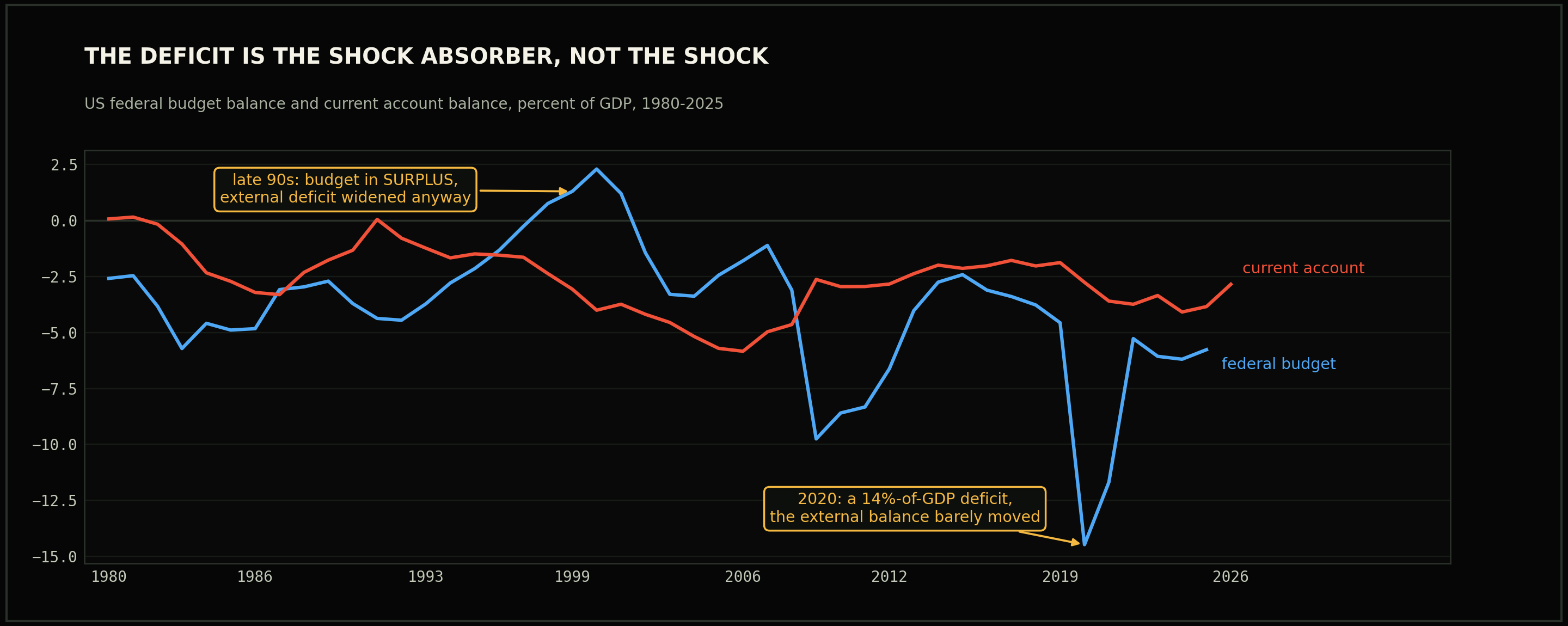
A better question to ask first: WHY does the deficit exist at this size in the first place? The popular story is that Washington spends recklessly and everything else follows. Now look at the accounting. When a flood of foreign savings enters the country, someone inside the country has to run the matching deficit: either the private sector borrows it, which is what households did into 2008, or the government does, which is what has happened ever since. For four decades, every major swing in the fiscal balance has been met by an opposite swing in private borrowing while the external deficit ground on regardless of who held office or what they spent. The external balance is set outside our borders, and the budget deficit is the shock absorber, not the shock. Cut spending without touching the flows and you do not fix the imbalance; you just hand the borrowing back to households or force the adjustment through unemployment. Government spending is a symptom with a mechanical cause, and the cause is the same machine.
If the machine is that powerful, WHY did it disappear from the headlines after 2014? Because it went quiet, not away. China's official reserves have been flat for over a decade, which is exactly what you are supposed to notice. Underneath, the surplus is the largest it has ever been: a manufacturing surplus around two percent of the entire world's GDP, larger than Germany's and Japan's peaks combined, recycled through state banks that have been absorbing dollars at a pace of roughly seven hundred billion per year while the official numbers report nothing. The dollars never left the system; they moved off the central bank's balance sheet into channels that are not counted as reserves. This is what non-kinetic war looks like: pricing power over the goods you depend on, chokepoints like rare earths that can halt your auto production without a shot fired, and a slow bleed of real purchasing power that never announces itself. The attack is designed to be invisible, and the fact that almost nobody is talking about it tells you how well the design is working. The charts below are that silence, measured.
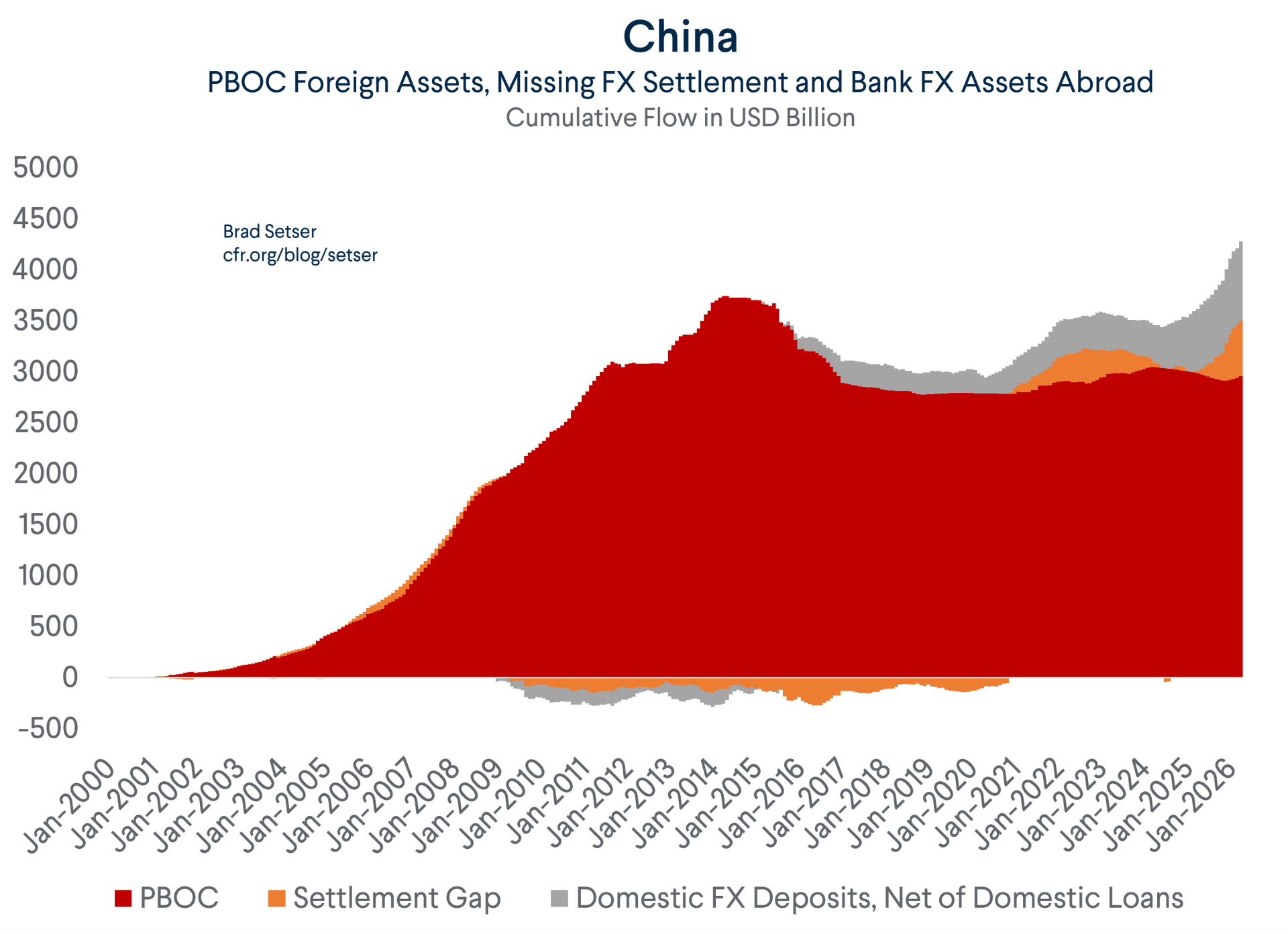
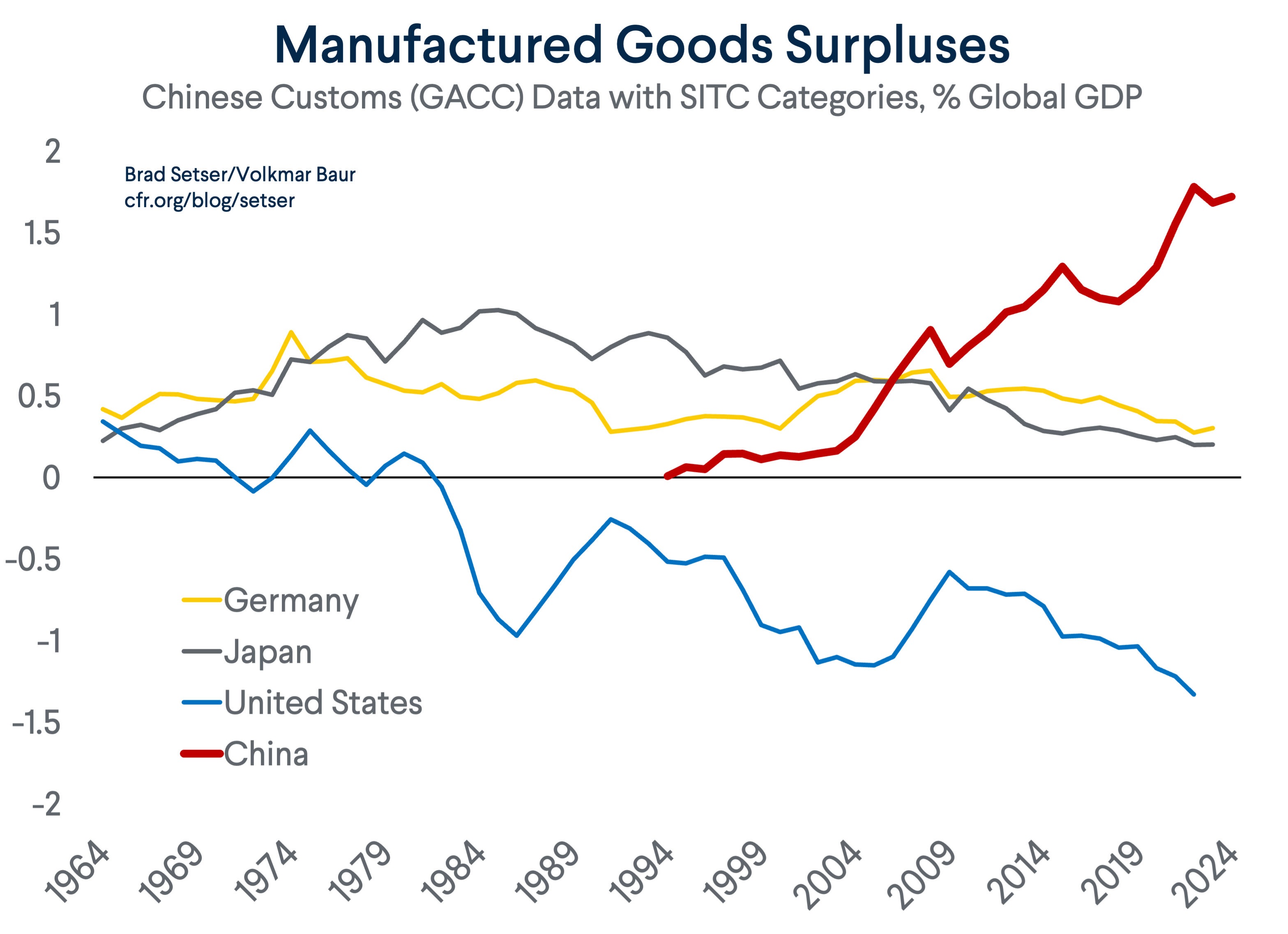
Now bring it back to Warsh and Bessent. Once you see the machine, the appointments were never personnel decisions. They were strategic moves by Trump. You do not install two Druckenmiller-trained capital flow practitioners at the Fed and the Treasury to manage interest rates and issue bonds. You install them because the counterattack has to run through the same channel as the attack: the flows themselves.
The reserve role of the dollar cannot be abandoned; walking away would hand the system to the adversary, so the play is to turn the burden into a weapon. Keep the world's capital flowing into US assets, but steer it away from consumption-financing debt and into productive capacity: the AI buildout, defense, and the frontier labs. That is why the venture capital complex, the frontier labs, and the two most powerful financial institutions in the world are all moving in the same direction at the same time. The flows are the war, and for the first time, the people running US policy actually know it. There is one number that keeps score of the entire game, and it is the chart directly below.
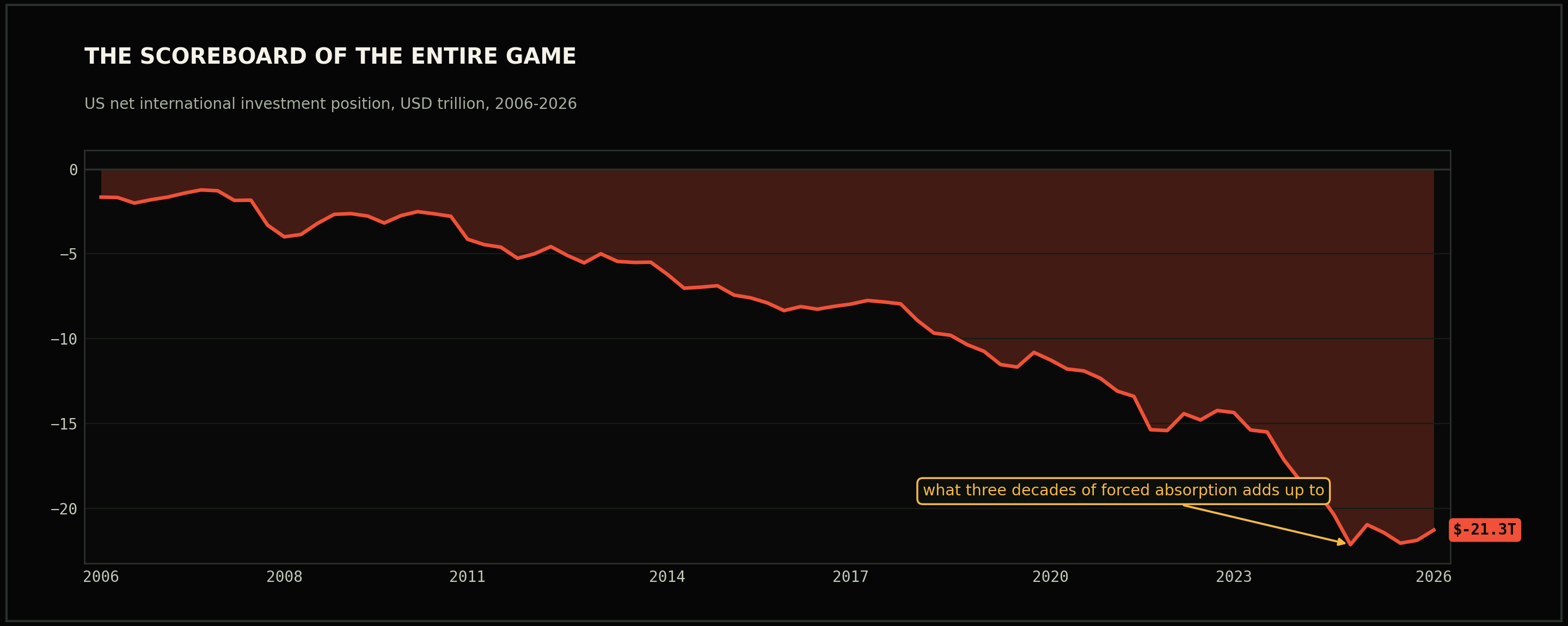
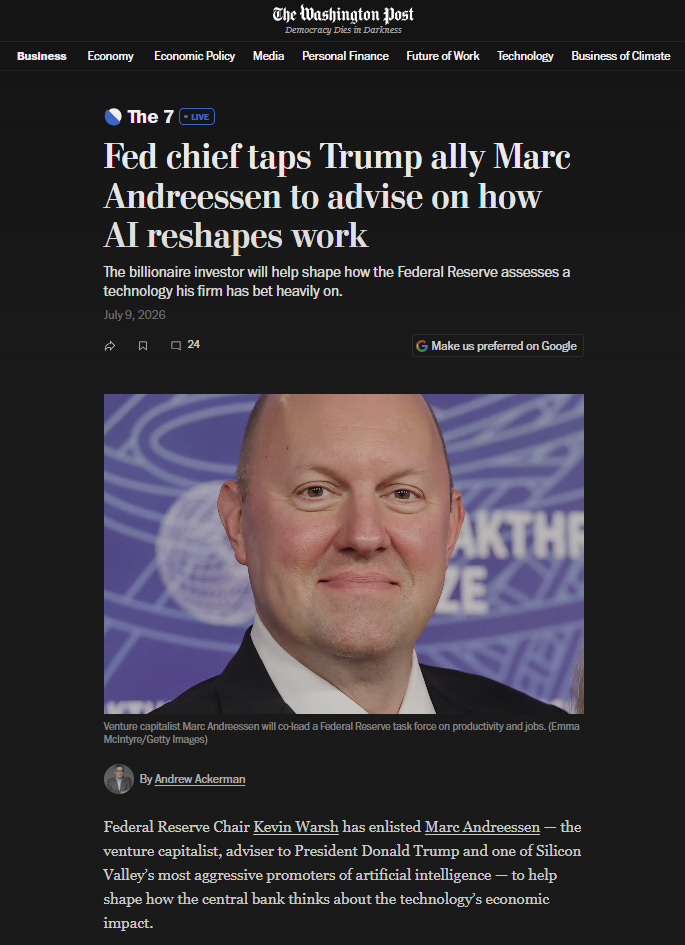
This is likely WHY Marc Andreessen was appointed to the Fed's new AI task force by Kevin Warsh. They already have Alex Karp with Palantir aligned with this strategy, and now they are aligning the capital in private markets. The whole point is that Warsh and Bessent need to align every factor of technological development and flows of capital AGAINST Chinese economic and financial attacks.
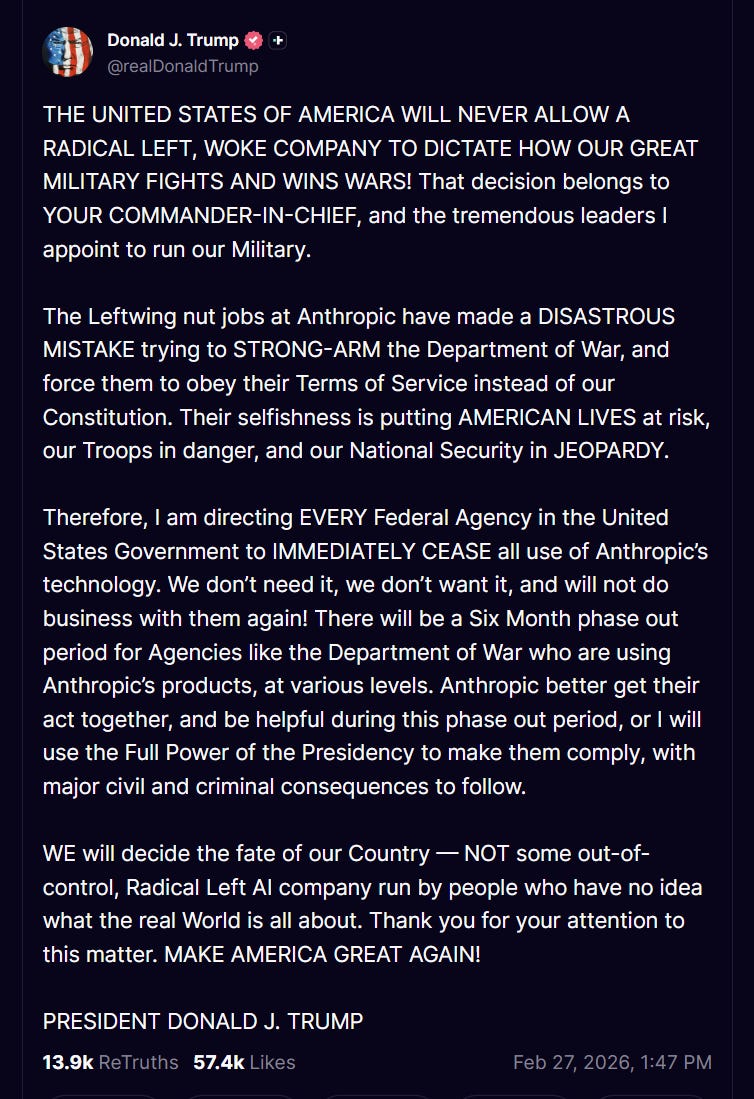
This is also why the actions of Anthropic are significant when you understand them in the proper context. Trump uses colorful language, and Dario will frame the context as “preserving the freedom of the American people,” but understanding the actual structural dynamics shows that if the United States fumbles the AI arms race, it could end up offshoring a lot more than manufacturing jobs. If China won the AI race, the economic and social problems in the United States would 10x!
The Monetary Order and Macro Endgame:
This is the monetary order, and this is the macro endgame: every single one of these players is positioned around the same core mechanism, the international flows of capital between the US and China. Once you see the mechanism itself, the actions across venture capital, defense spending, and AI frontier labs stop looking like isolated headlines and start looking like moves on the same chessboard.
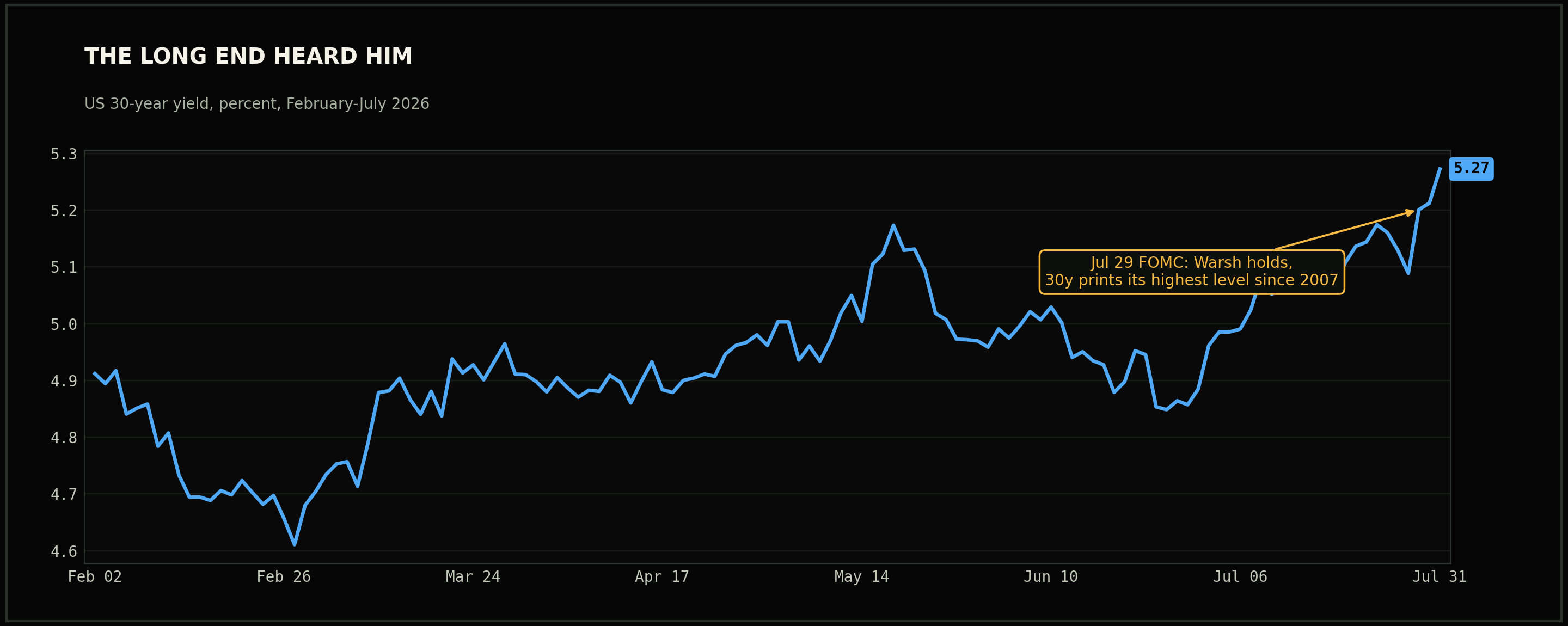
So HOW do you actually watch this coordination happen in real time? Start with Warsh at last week's FOMC meeting. The Fed held rates, three members dissented for a hike, and Warsh spent the press conference talking about capex:
'The most striking feature of the economy is the strong growth of business investment. The surge in high-tech capex has been remarkable.'
- Kevin Warsh at July FOMC
He put a number on it:
'In the A.I.-related category of high-tech equipment and software, the most recent data shows four-quarter growth rates of nearly 20 percent.'
- Kevin Warsh at July FOMC
And he told you exactly how he thinks the buildout connects to the path of interest rates:
'There's a race between supply and demand. And the surge in business capex in and around AI is making that calculation a little harder to judge.'
- Kevin Warsh at July FOMC
Two weeks earlier, he had said it even more plainly to Congress:
'It seems inevitable that what is now called AI investment will soon be called just investment.'
- Kevin Warsh at July FOMC
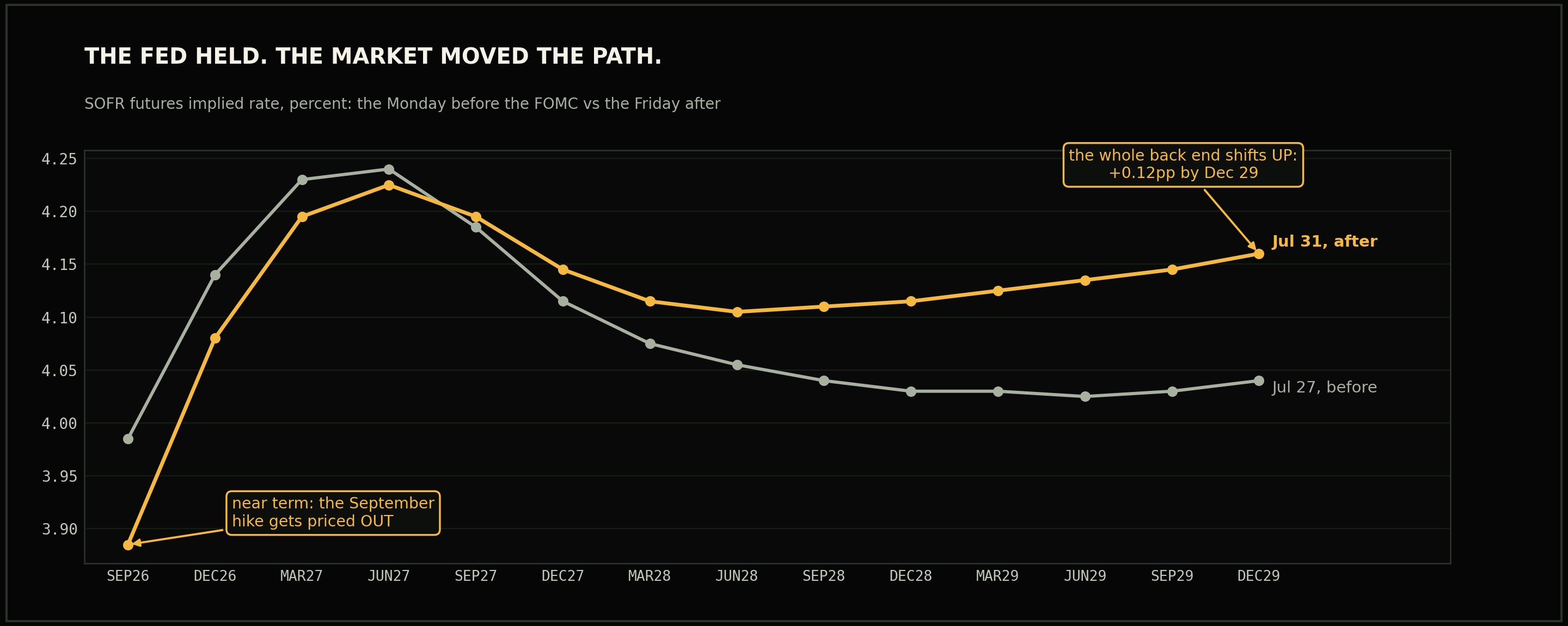
A Fed Chair who thinks in capital flows is telling you that the AI capex cycle is the economy now, and that he is holding the policy rate steady underneath it while the market does the adjusting for him. His own words: 'we haven't done much in 42 days. The markets have done quite a bit.' Look at what the market did with the path the moment he finished speaking.
See my report on rates post-FOMC here:

The Misdirection In Markets:
So how does Bessent fit into all of this?
Where does the marginal dollar of liquidity for this entire trade come from? Japan. The Bank of Japan still runs the cheapest funding rates in the developed world, and borrowing cheap yen to buy dollar assets is the oldest liquidity pipe in modern markets: roughly a quarter trillion dollars of direct cross-border yen borrowing, and estimates near a trillion once derivatives are counted. That funding does not sit idle. It flows into the deepest, fastest markets on earth, which today means US assets and the AI complex at the center of them.
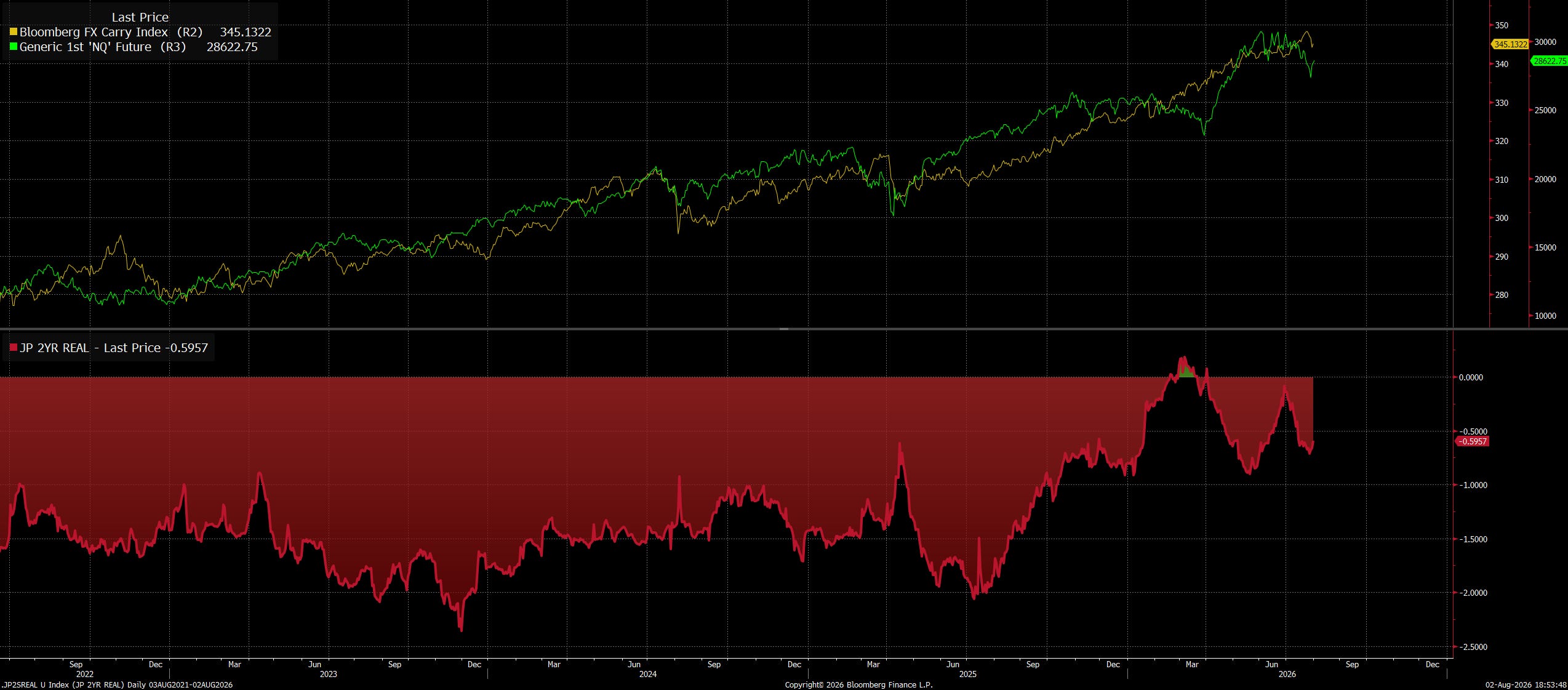
Now watch the sequence from last week. The yen collapsed to its weakest level since 1986. Japan reportedly spent more than fifty billion dollars in a single day defending it, likely the largest intervention ever recorded.

The next day, the US Treasury stepped in alongside Tokyo, with the New York Fed to buy the yen.

Then Bessent went on television and said, in the calmest voice possible, that 'the Japanese yen seems very undervalued to me' and that 'excess volatility in the yen isn't healthy.' The one thing the Treasury cannot afford is for markets to connect the funding currency to the AI trade and start unwinding the pipe while the buildout still needs the liquidity.

Bessent intentionally let everyone see the note he wrote down about the yen, which is a play he has run before. Bessent knows exactly what he is doing in trying to actively shift the expectations of the market (functionally forward guidance in the FX market). The Japanese economy is beginning to face the negative effects of higher oil prices and a weaker currency. Bessent knows that the carry trade needs to stay intact for liquidity to keep flowing to the AI build-out but needs to balance this against helping Japan so its new prime minister doesn’t fall out of favor with the populace due to higher inflation. Bessent would rather be actively involved in order to maintain the flow of capital into the AI trade than let the entire thing actually blow up and cause volatility that’s bad for both countries.


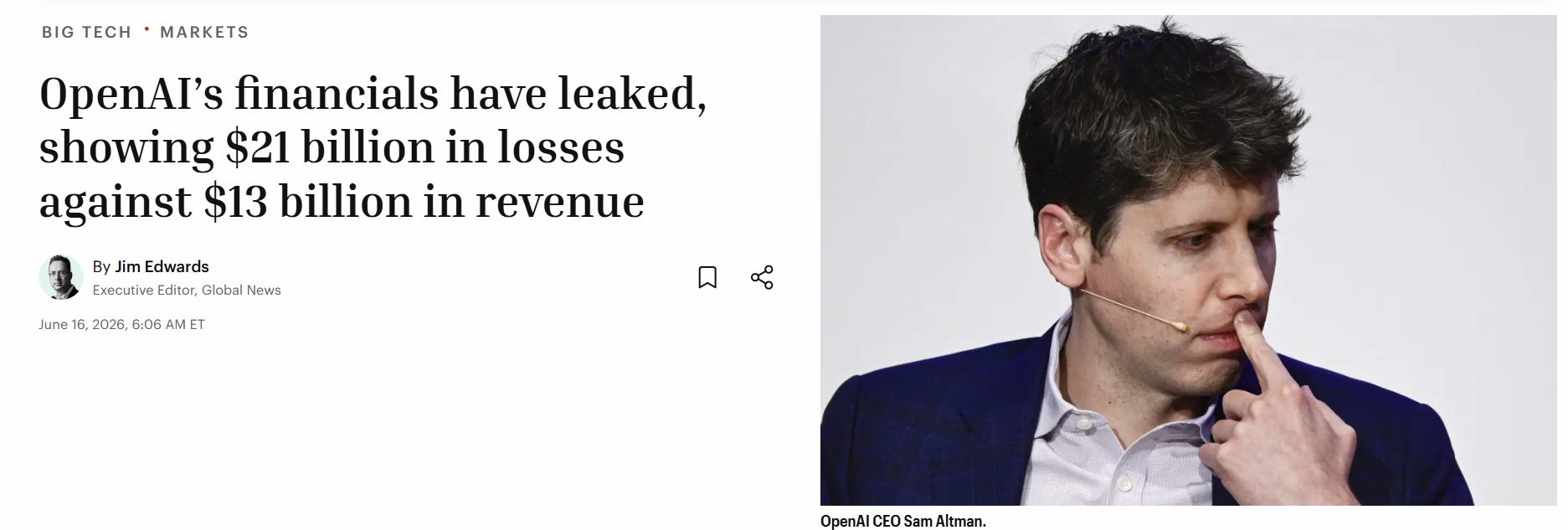
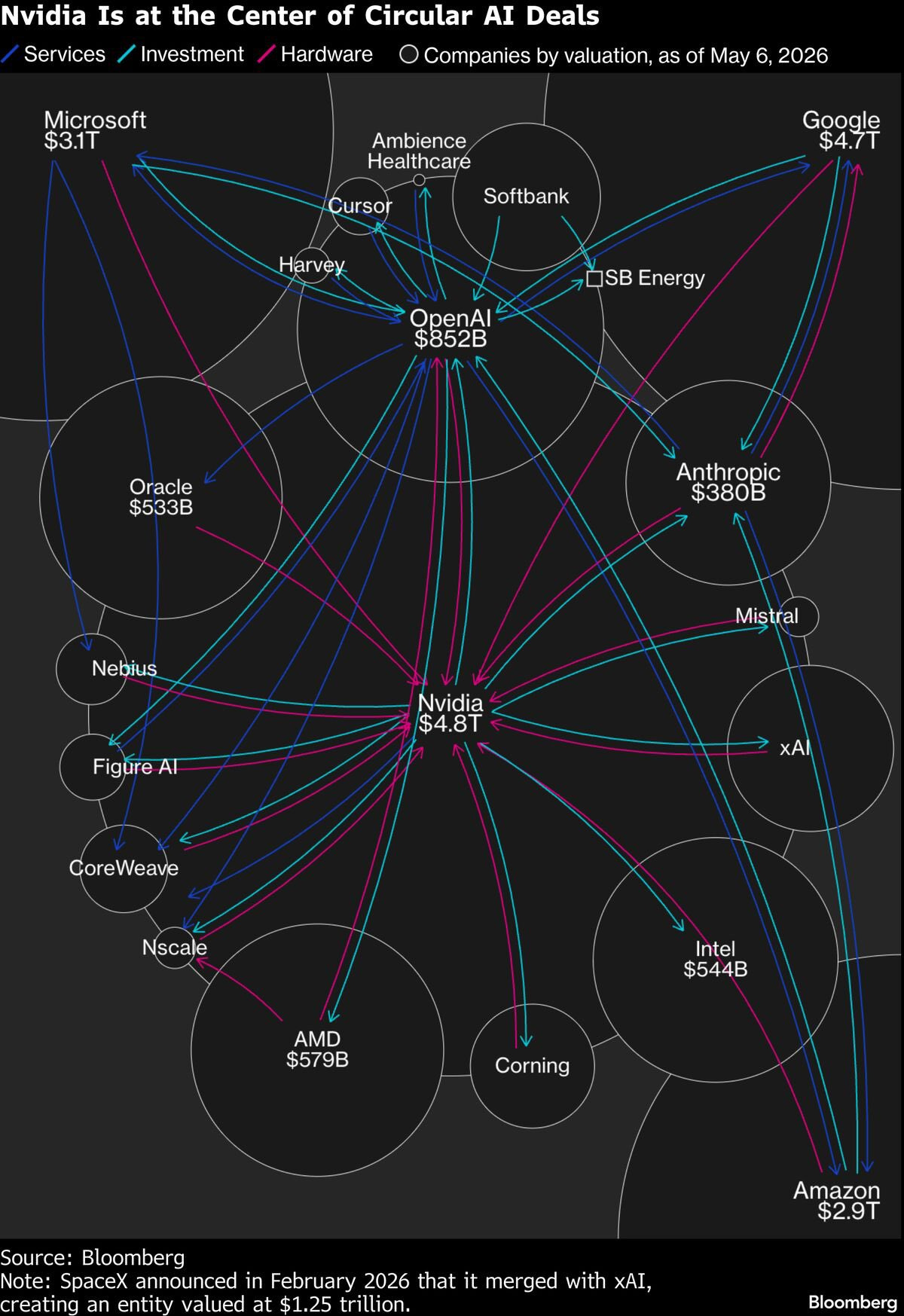
Why does that liquidity matter so much right now? Because the frontier labs are approaching the moment when private money stops being enough. Anthropic went from a nine billion dollar revenue run rate to nearly fifty billion in about five months and has already filed confidentially to go public. OpenAI is running near twenty-five billion and still loses more than a dollar for every dollar it earns, because the compute bill compounds faster than the revenue.
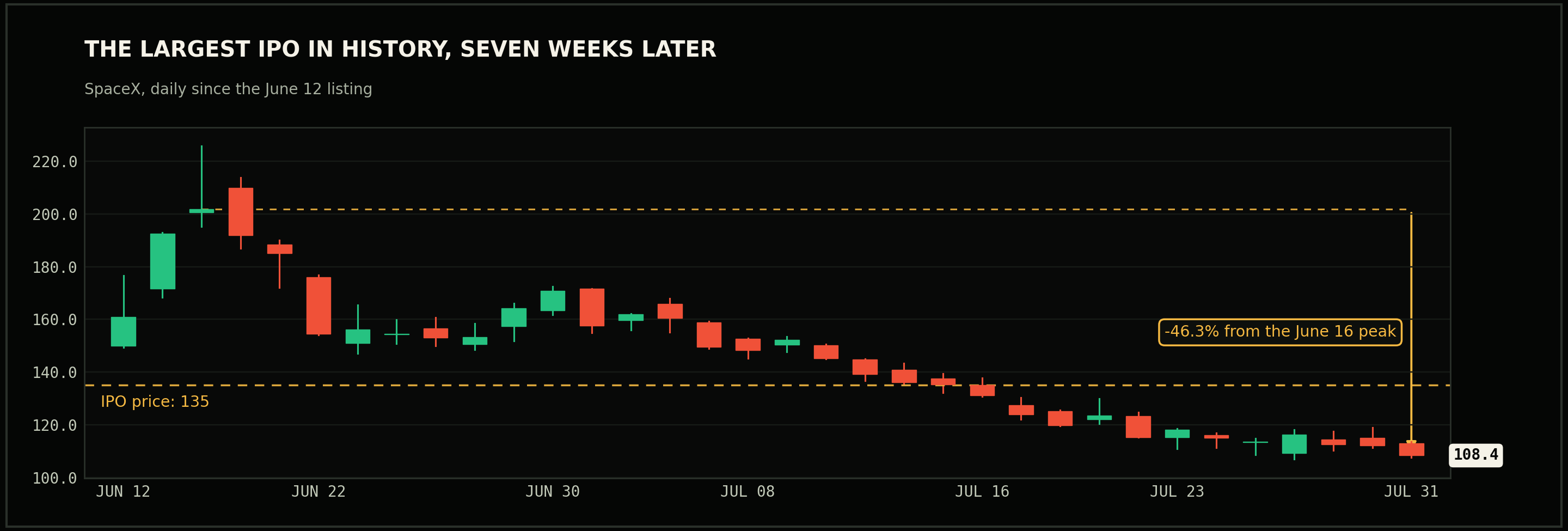
Companies burning at that scale eventually need public markets, and they are arriving at the window exactly as it slams shut: SpaceX, the largest IPO in history seven weeks ago, now trades twenty percent below its offer price and nearly half off its peak, and the semiconductor complex just finished its worst month since the financial crisis.
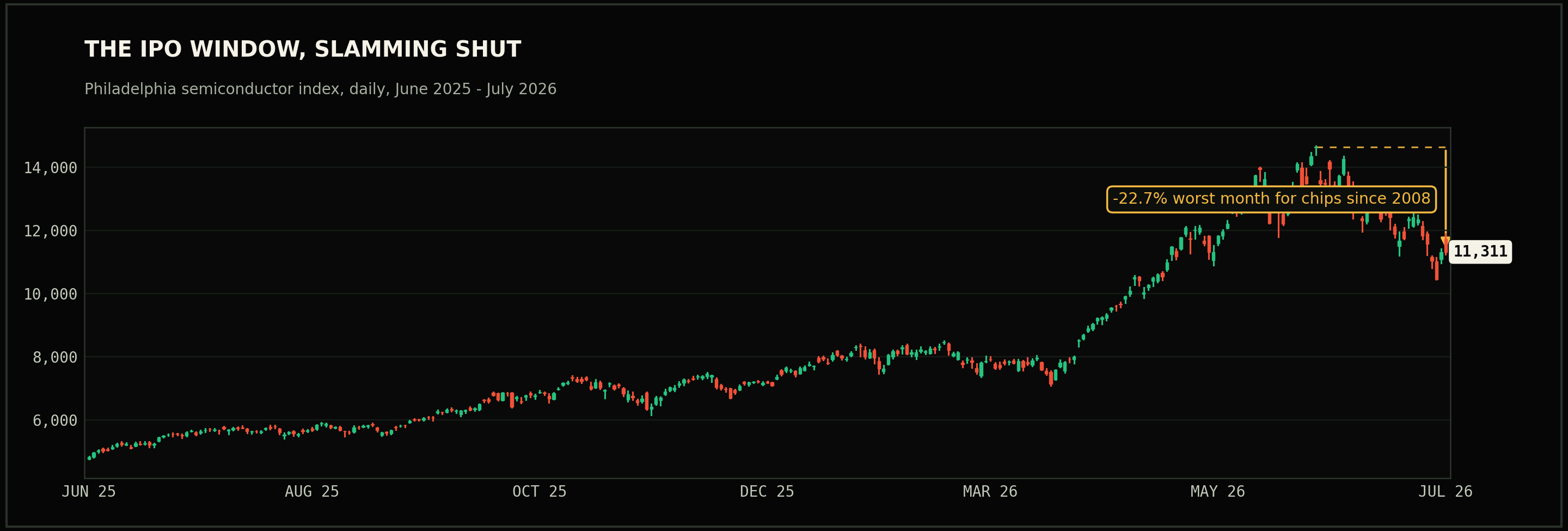
So ask the question the way Warsh and Bessent have to ask it: what happens to the AI arms race if the companies carrying it cannot access public capital? These are not normal companies. They already function as national security assets, with Pentagon contracts and export controls treating frontier models as strategic capabilities. The funding for the entire buildout, the labs, the chips, the data centers, the power, is cross-collateralized, and no leg can fail without pulling on every other. A Fed Chair underwriting the capex cycle and a Treasury Secretary defending the funding currency in the same week is not a coincidence. It reflects the larger mechanism of the global monetary order.
Pulling It All Together:
If you pull everything together, you can see why the misdirection works so well. The forces at the center of all of this, real purchasing power changes and international flows of capital, are incredibly hard to understand, but you can feel the pressure of them in society financially. This is why most people end up structuring their entire narrative around the symptoms of the core issue, while people like Bessent, Warsh, Druckenmiller, Karp, and Andreessen structure everything around the actual mechanics.
This is also the context for why financial markets are at the highest valuations in history, and correlations are functionally all the same. Equities and interest rates are moving together because every flow of capital exists around the core mechanism of China's closed capital account, the dollar's reserve currency status, and the CCP's economic and financial attacks that reverberate across every country in the world.
Neutrality in this world and not acting is just as big a risk as making the wrong decision based on the symptoms in the system. That is why Bessent and Warsh are actively working on the interest rate, monetary, and fiscal side while being clearly connected to people like Alex Karp and Marc Andreessen on the AI arms race and private capital markets side. They are aligning the public and private sectors in one direction of actively pushing back on all of the attacks by the CCP, especially within the AI arms race. All of their actions seem arbitrary without understanding the context of international monetary flows.
The most important factor to understand in this context is that policy decisions are going to be structured around the core issue as opposed to the symptoms. This is WHY a lot of the policy decisions to date have not made a lot of sense to people. The tariffs in 2025 that crashed the stock market didn't make sense to people because Trump implemented them at the expense of the stock market. Whether it causes a melt-up in financial assets or a melt-down, the priority is adjusting around the core mechanical issue and the biggest factor in the international monetary system and macro endgame. All of this is taking place while interest rate volatility and FX volatility are incredibly low and complacent relative to the amount of risks building under the surface, and the highest equity valuations in history only add to the compressing of tails.
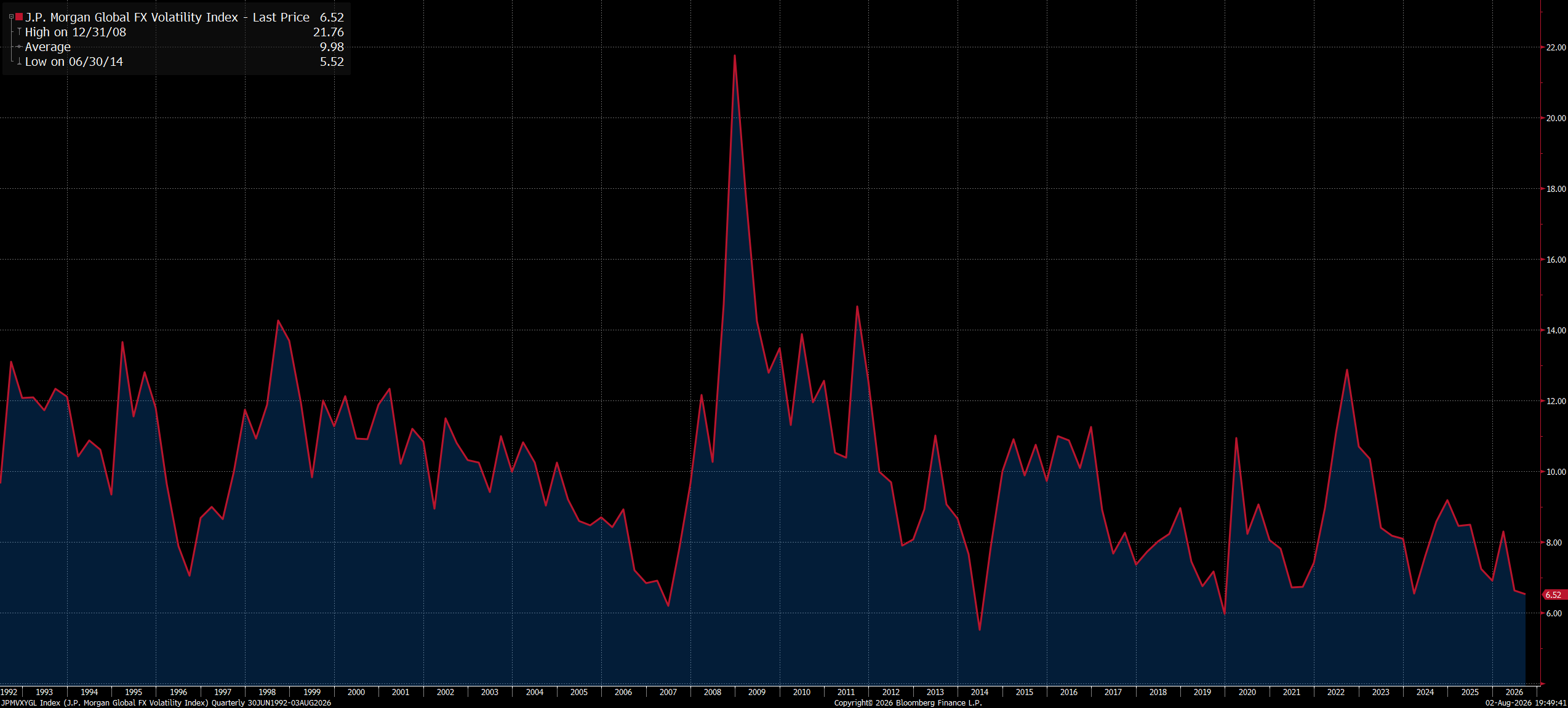


Right now, we are in the macro endgame that will be remembered in the history books. The opportunities for active traders who understand these mechanics will be some of the best in history. This is why I am here. I believe that the United States MUST win this battle against China, and I fully support the strategic coordination taking place in order to improve the lives of everyday Americans. However, we know this isn’t going to be a smooth ride. Volatility exists to take money from the weak and give it to the strong.
Expect volatility. This is WHY trading and investing exist.
I will be expanding on all of this tomorrow at 11:30am PST in the Private Members livestream. We are covering these flows in real time and going over the tangible connection between all of these structural factors and current market price action.
The information on this website/Substack is for information purposes only. It is believed to be reliable, but Capital Flows does not warrant its completeness or accuracy. The information on the website/Substack is not intended as an offer or solicitation for the purchase of stock or any financial instrument. The information and materials contained in these pages and the terms, conditions and descriptions that appear, are subject to change without notice. Unauthorized use of Capital Flows websites and systems including but not limited to data scraping, unauthorized entry into Capital Flows systems, misuse of passwords, or misuse of any information posted on a site is strictly prohibited. Your eligibility for particular services is subject to final determination by Capital Flows and/or its affiliates. Investment services are not bank deposits or insured by the FDIC or other entity and are subject to investment risks, including possible loss of principal amount invested. Your use of any information which is proprietary to Capital Flows or a third-party information provider shall only be used on individual devices without any right to redistribute, upload, export, copy, or otherwise transfer the information to any centralized interdepartmental or shared device, directory, database or other repository nor to otherwise make it available to any other entity/person/third party, without the prior written consent of Capital Flows.
Great piece, with a profound understanding of the current links between financial markets, tech and geopolitics. What if you consider the excess US consumption - the trade deficit - as the starting point. An excessive (structurally imbalanced) demand that China and other natons by the way only fill and respond to? It does not change the flows of course and your excellent reading of the current coherence in US policies
Are you pivoting away from your earlier analysis on the credit cycle that this won’t end well?