


Bonds remain in a low volatility regime on both an implied and realized basis. Realized volatility (yellow) has ticked up marginally as Warsh and Bessent take an overly accommodative stance into heightened nominal GDP, but the dominant regime remains low volatility, as the MOVE index remains low as well. This low volatility regime is setting the stage for significant complacency in markets.
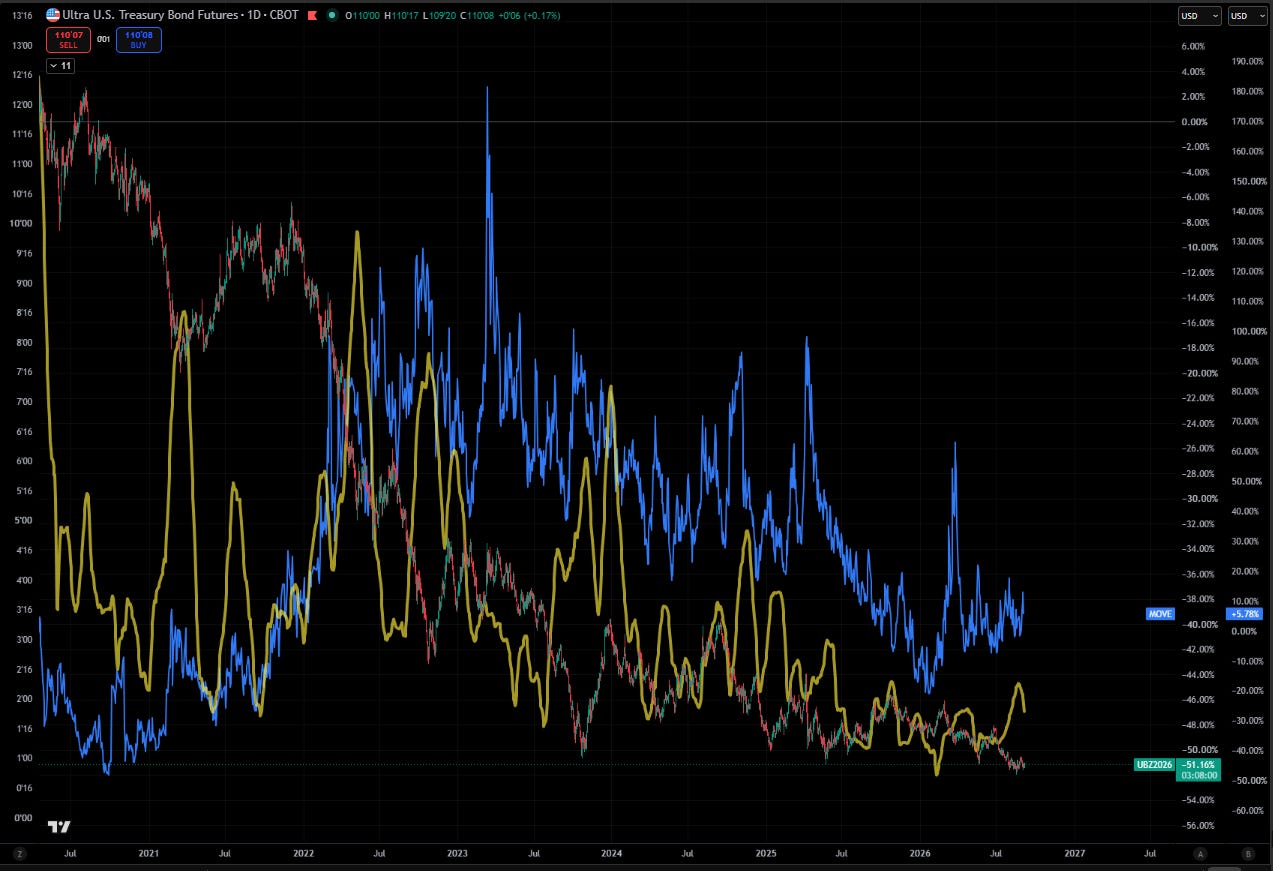
As I have consistently laid out, the greatest risk to financial markets continues to be the carry trade and interest rate risk. Both of these are sources of liquidity that are now being actively manipulated by policy actors. Policy actors do not operate within the same risk management framework as market practitioners because they are operating on the calendar schedule of the political cycle and don't have the same P&L constraints that help drive efficiency on the active risk-taking side of financial markets.

The most important question to answer in this regime is: HOW can we actively implement a strategy in this low-volatility period so that we know WHEN to execute around these policy errors?
The following report explains this and provides you with the tools to implement the ideas. If you haven’t already, you can download the entire codebase for the models I provided. They are all free, and you can feed them into AI and ask it to actively implement the ideas explained in these reports.