


Macro Risk and Policy Error
Risk can never be destroyed, only transferred. This is a fundamental presupposition for HOW capital flows through the system and WHY it moves. The challenge begins once you realize that risk is expressed in both nominal and real purchasing power terms across global markets, not in siloed systems.
What is the tangible implication of this? The system is ALWAYS operating under both nominal and real constraints. These underlying constraints are the mechanical drivers of capital flows. As these constraints channel how capital moves under the surface, market incumbents create narratives about these mechanics that are like trying to explain the mechanics of a car by showing everyone its shadow on the wall. While there might be dim reflections of the truth in the shadow, you’ll never understand the true nature of the machine unless you actually pop the hood.
These misinterpretations by various market participants and policymakers set the stage for errors on both a nominal and real basis. A company could misinterpret the macro environment and decide to take on significant sums of debt, which puts a nominal constraint on the company. In a similar way, policymakers are operating under nominal AND real purchasing power constraints since they are the issuer of the currency. They have to decide how much they want to preserve or dilute the real value of the currency, in the same way an oil refinery needs to determine the quality of the oil it produces, because that quality will determine how nominal dollars price those barrels.
These implicit distinctions become explicit when you put the weight of the global financial system on them. Small changes can have a big effect, and everyone realizes a lot faster that they can’t destroy risk, only transfer it, and that they need to transfer it as fast as possible.
When everyone is trying to transfer risk faster than everyone else, it is similar to converting the entire global system into a drop shipping “company” that buys inventory and sells it, but instead of using its own working capital to warehouse the inventory, it uses credit cards and just keeps rolling the balance from one card to the next, hoping the inventory sells before the payment comes due.
This game of always trying to turn over risk and find ways to make money with other people’s capital is what the entire global liquidity system, interest rate complex, and FX market are built on.
This is WHY I have written a comprehensive set of educational primers on every aspect of macro and markets, and provided every major model you’ll need to map these flows.
All the educational primers, book recommendations, and financial models: LINK
TradingView models: LINK
When you recognize that we are operating in a constraint-based system, where people wait until the last possible moment and only act when they are literally forced to, you will begin to see why the Fed is always moving from one policy error to the next.
Once you understand WHAT got us here, WHERE we are going will make a lot more sense.
Past Errors:
The chart below shows 1 year real yields, which means it is mapping the spread between 1 year rates and 1 year inflation expectations. Simply put, are short term rates paying you a premium ABOVE or BELOW inflation? Short end rates are exclusively controlled by the Federal Reserve. It doesn’t matter HOW they conduct forward guidance because at the end of the day, they control the short end. When real rates turn positive and rally (green), the Fed is being more restrictive relative to inflation in the system. When they allow real rates to turn negative (red), they are being overly accommodative relative to inflation.
In 2021, when the Fed pushed real rates to their most negative position in history (below -4% on the chart), they set a historic context that we are still feeling to this day. When Warsh thinks about inflation risk in the system, it is still framed by 2021, when so much mortgage debt was locked in at historically low rates and so much malinvestment took place that still has not been unwound to this day.
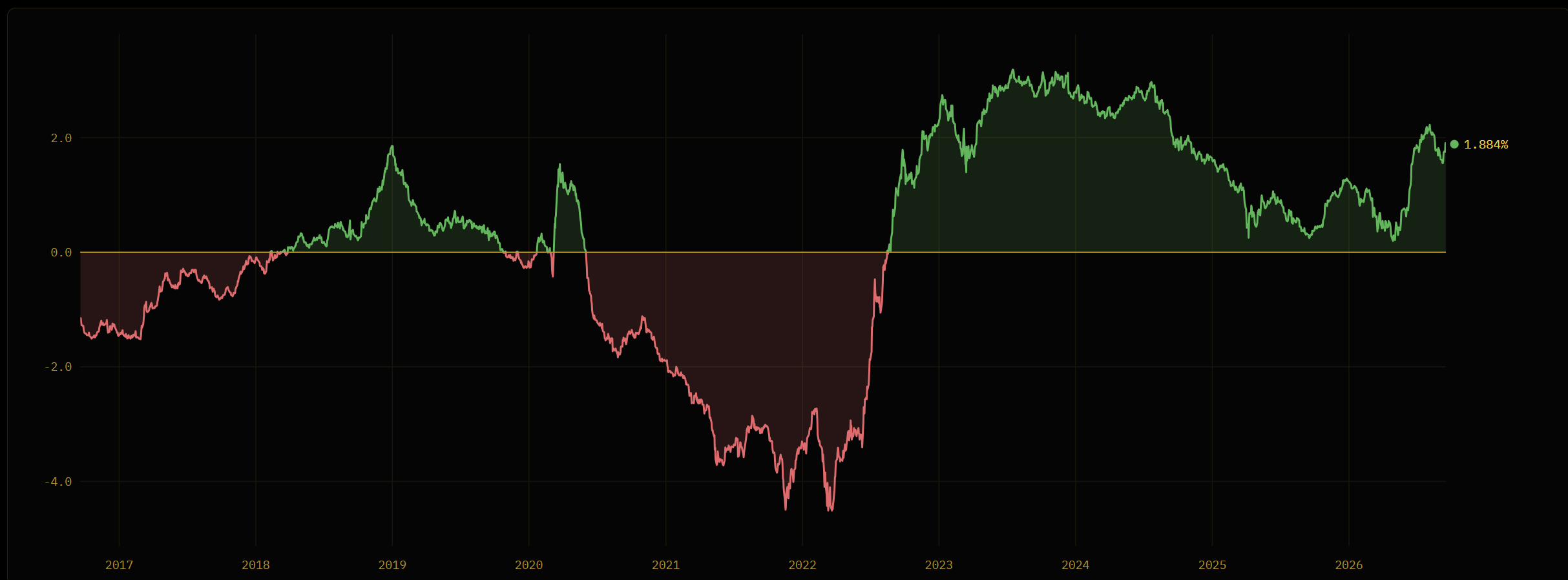
Here is the main idea you need to take away from today: 2021 was a structural policy error by the Fed that has fundamentally changed the structure of the global economy and financial markets. The only way it gets truly unwound is with an equal and opposite policy error, the Fed being too hawkish on the other end. We are nowhere near this, which is why growth and inflation remain so elevated in the system. Notice in the chart above that even today’s real rate, at roughly +1.9%, sits well below the 2023-2024 peak, let alone anything that would offset 2021.
Even though real rates have been rising recently, I have explained that the entire question right now is about growth, not just inflation.

If we take 1 year real rates and connect them to credit spreads, the regimes show that the system is able to absorb a lot of the higher real rates because of higher growth. You will notice in the regimes below that earlier this year, when the oil shock happened, the Fed paused into it, which is why real rates dropped. More recently, they have been trying to play catch up even though they are falling behind. This has caused some marginal selling pressure in equities, but not a ton. The scatter on the right makes the point: real yields are rising (blue line at +1.47 sigma) while credit spreads sit flat (pink line near zero), which puts today’s reading in the “growth absorbs restriction” quadrant rather than “restriction biting.” In simple terms, the higher rates are marginally more restrictive but nowhere near enough.
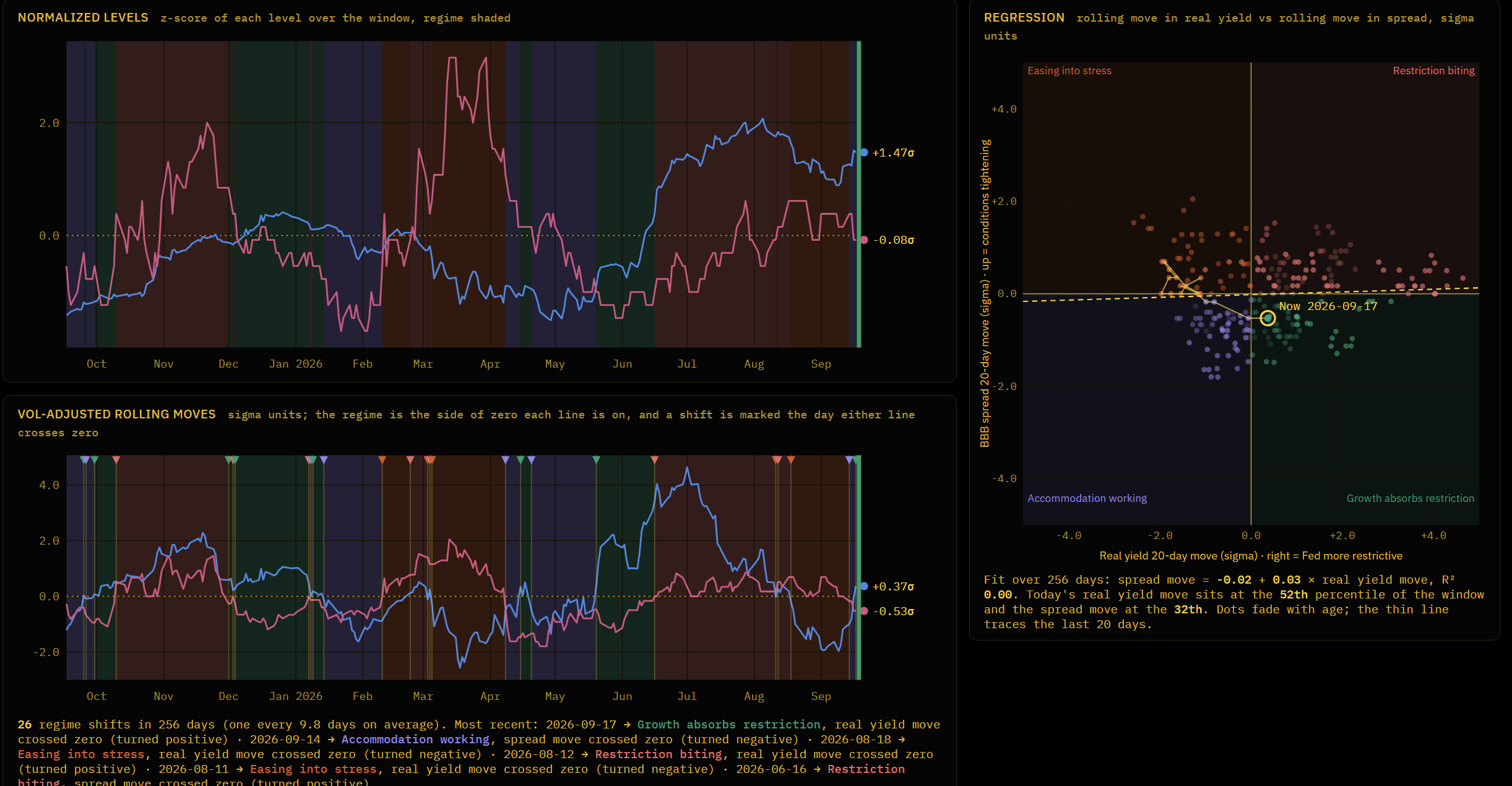
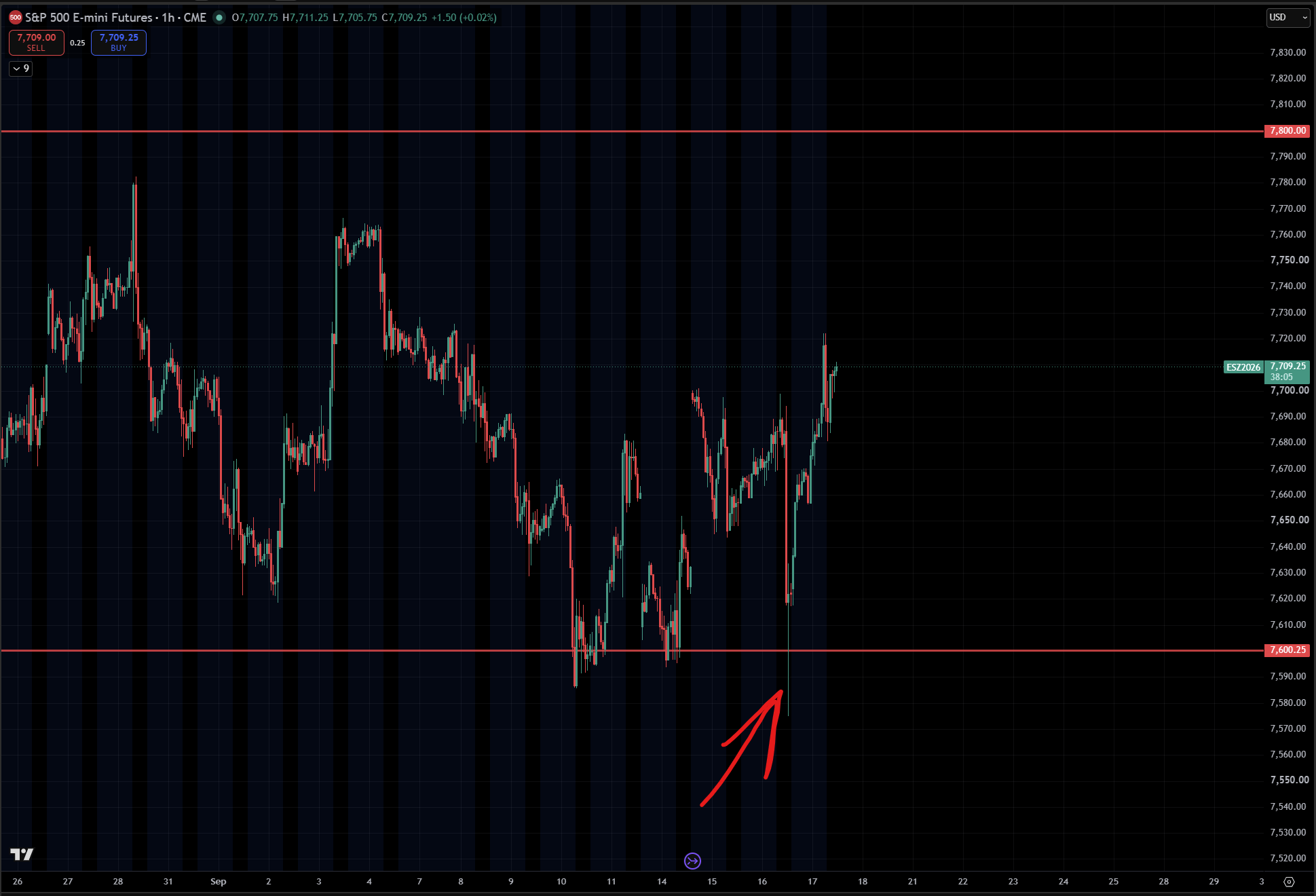
This is exactly WHY we have been oscillating between the 7800-7600 levels as I laid out in the chat prior to FOMC yesterday:
You will notice that ES was not able to remain below the 7600 level (the red arrow on the chart below marks the wick), and as soon as we moved through the Globex session, the short-term imbalance mean reverted back toward the middle of the range. This exact dynamic perfectly illustrates the environment I have been explaining. It shows that there are competing factors both bidding and selling equities:
The only way ES transitions into a bear market is if the Fed makes a real policy error by being too hawkish or too dovish. Either one will push risk assets into a corner. If Warsh is too dovish, it will stimulate inflation, long end rates will blow out, and we have a 2022-style inflationary bear market again. If Warsh is too hawkish, he will begin contracting liquidity, which will severely impact equities since their valuations are at all time highs.