


You need to get the big things right
Most people are focused on being right in all of the ways that don’t matter
Growth, Inflation, Liquidity:
MAIN IDEA: We are in a period where growth is running significantly above trend at the same time as an energy shock. The growth that is taking place is due to 1) AI capex increasing the amount of investment in the economy, and 2) New AI models disrupting and benefiting companies across the economy. If you understand these big ideas, they will frame HOW the short-end interest rates are mispriced as well as the directional skew in equities.
Paid members of Capital Flows are well aware of both the views and execution in bonds. The imminent flows that would create significant selling pressure in bonds were explained at the beginning of September. I also provided real-time models that map the flows and volatility in order to align the macro thesis with real-time execution. These can be found in this report:

Even in August, I laid out that the terminal rate was too low relative to the amount of growth and inflation in the economy (link): From August report
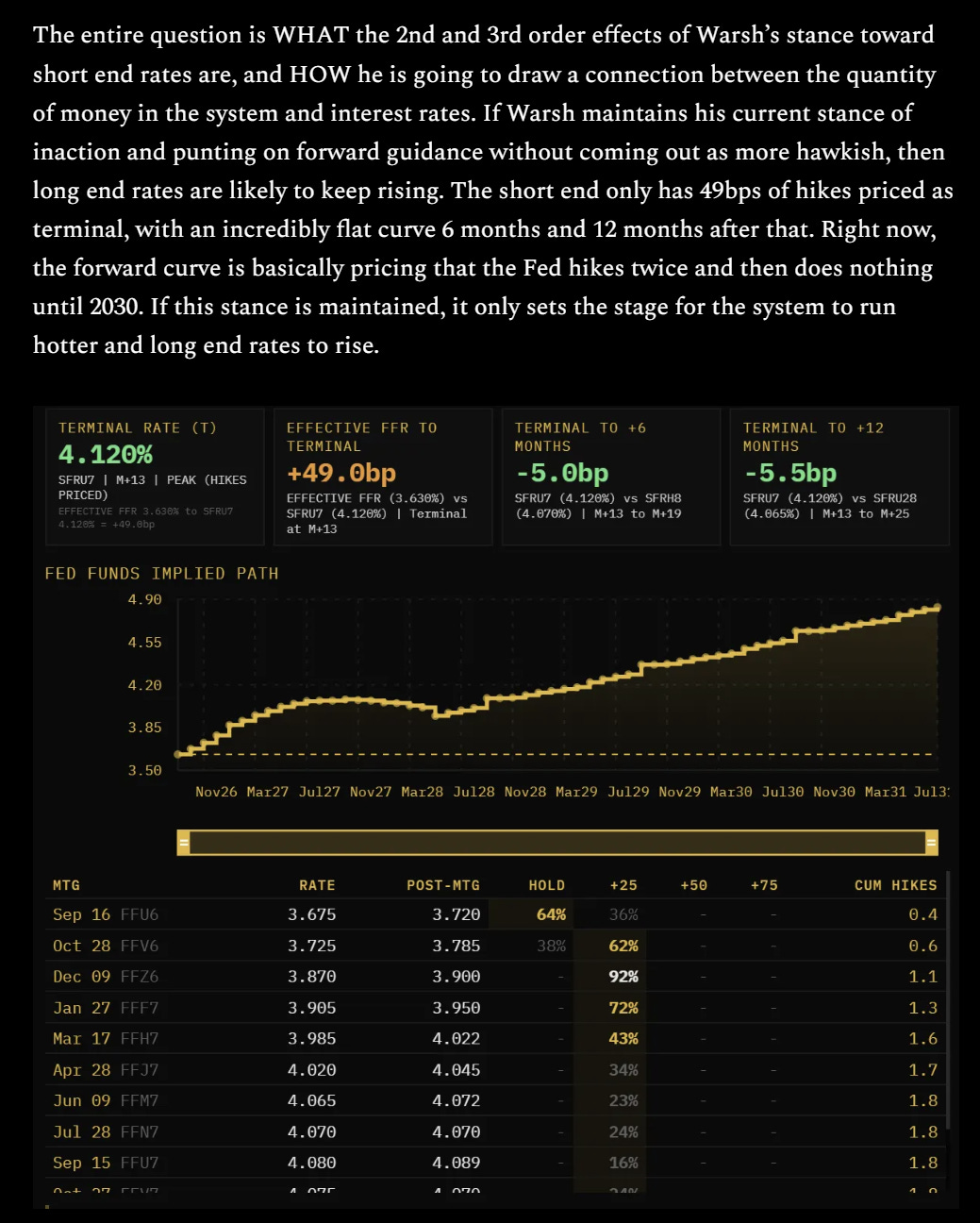
When trading interest rates, you only size up for a directional bet when BOTH the drivers for short-end and long-end rates are significantly mispriced. When only one of them is mispriced, this is when expressing a view with a curve is likely more beneficial. Mispricings in interest rates ALWAYS lead to dramatic changes in macro liquidity and the credit cycle.
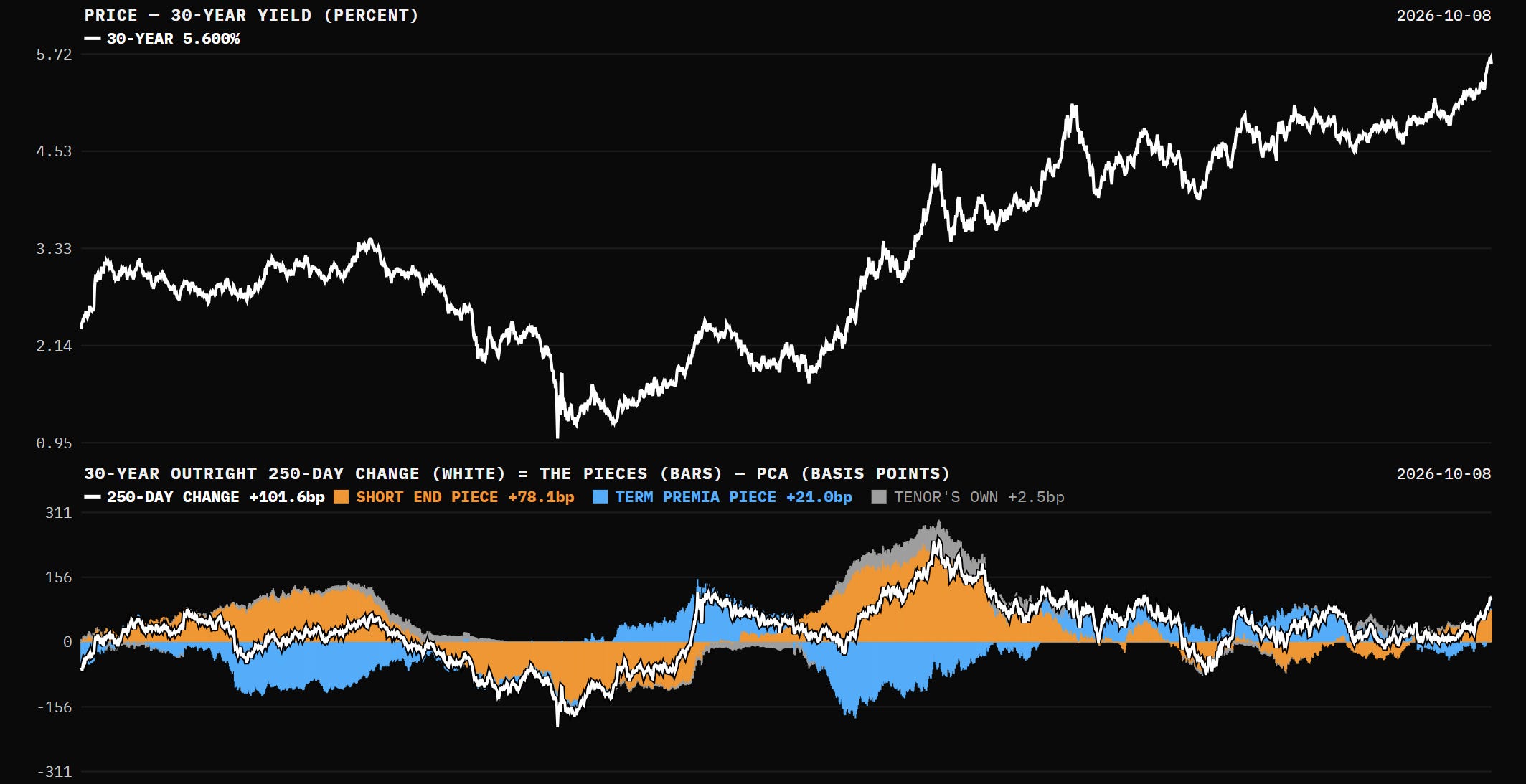
Even if there is inaction by the Fed or long-end interest rates become mispriced relative to the economy and financial conditions, the amount of money in the underlying system will begin to get significantly cheaper on a real purchasing power basis, which will push capital out the risk curve and cause a significant rally in risk assets as valuations expand.
If you want to understand macro liquidity or the credit cycle for your equity positioning, it is impossible to understand it without understanding interest rates.
Let me say this again, IT IS IMPOSSIBLE TO UNDERSTAND MACRO LIQUIDITY UNLESS YOU UNDERSTAND INTEREST RATES.
If you don’t understand macro liquidity, then all you are doing is using the momentum in risk assets as your signal. This is totally fine, but it just means you’re operating at a significant disadvantage.
(There is a reason I turned neutral bonds and bullish ES at the same time. The ES long I shared with paid subscribers has been printing. See here: link)
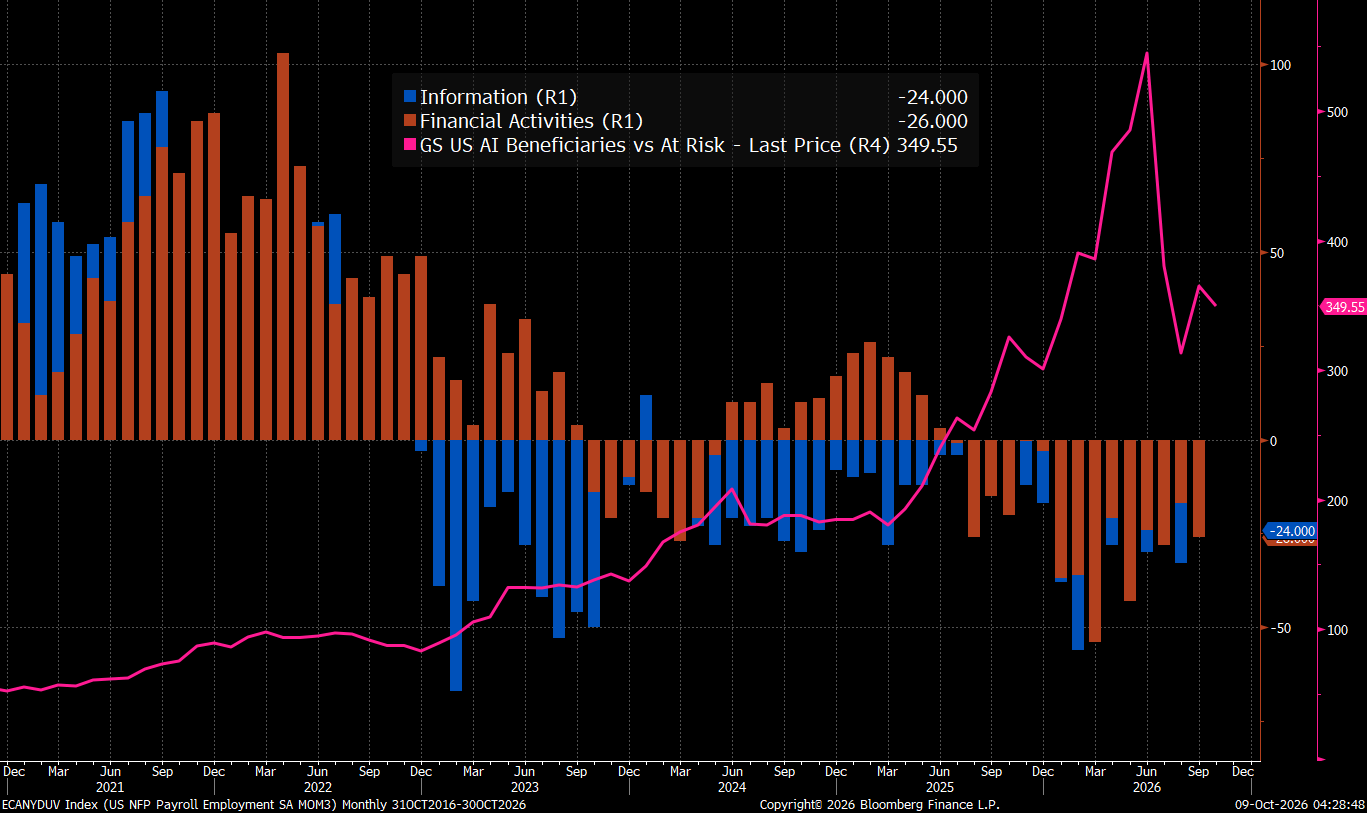
For example, AI is clearly causing a dispersion and disruption in the labor market. Ever since ChatGPT was launched in 2022, jobs are decreasing in the information tech and financial activity line items of nonfarm payrolls. This disruption in the labor market is moving in lockstep with how equity flows are pricing the disruption, as reflected in the Goldman Sachs AI beneficiaries vs. at-risk:
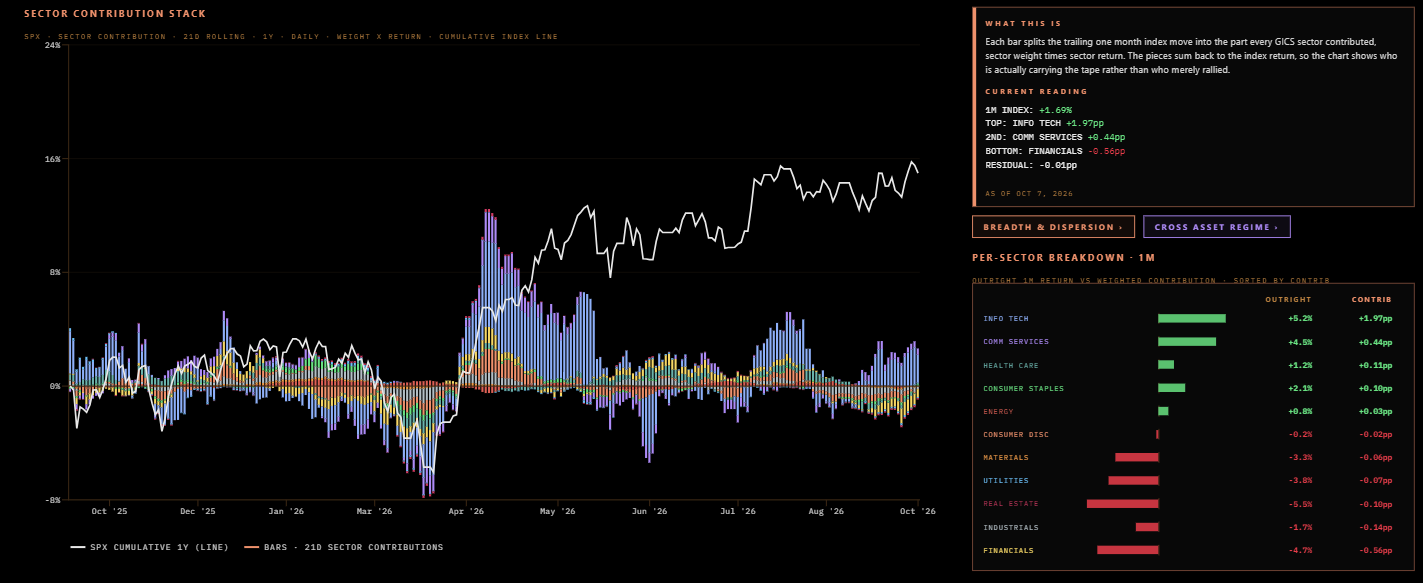
The labor market on net is growing every month, but there are significant rotations UNDER the headline number, which is not shocking at all because significant rotations are taking place in the equity complex too, as tech and AI names account for the majority of changes in the index:
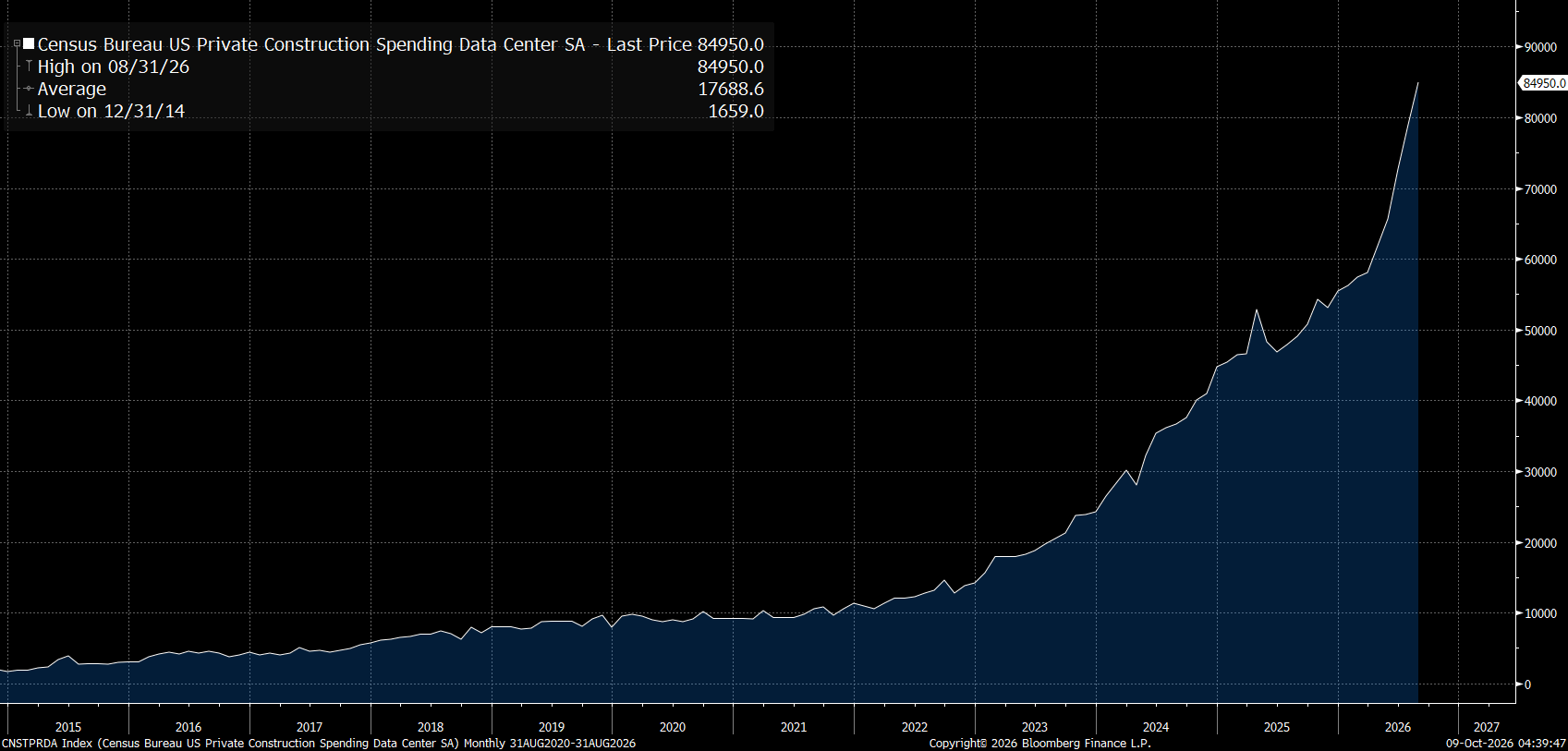
It is well known and completely priced into markets that a massive data center build-out is taking place.
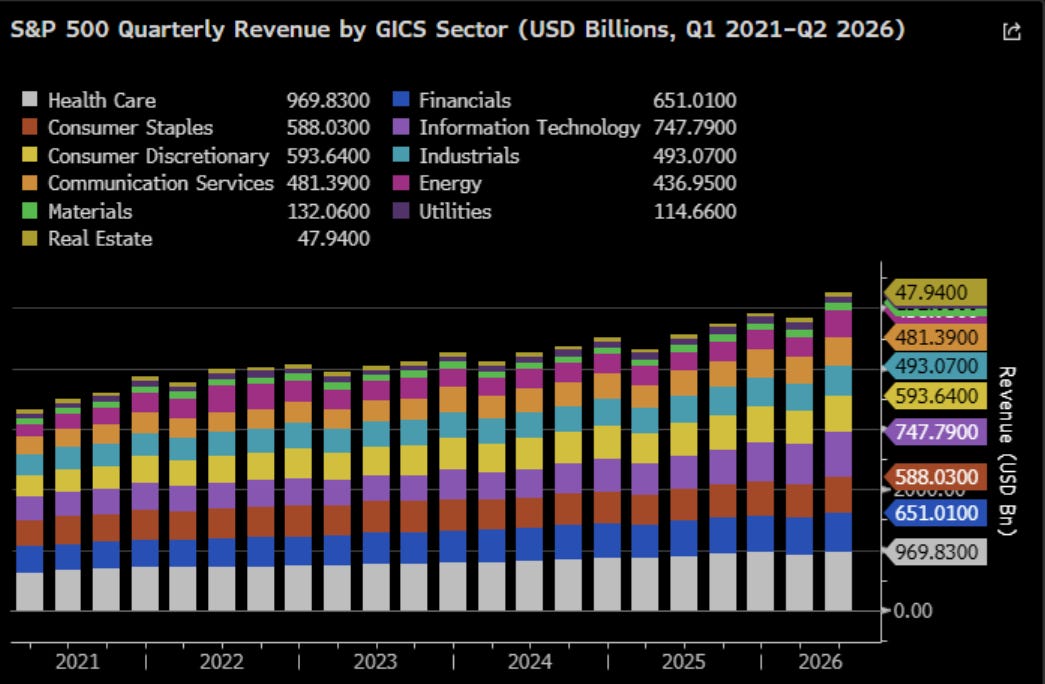
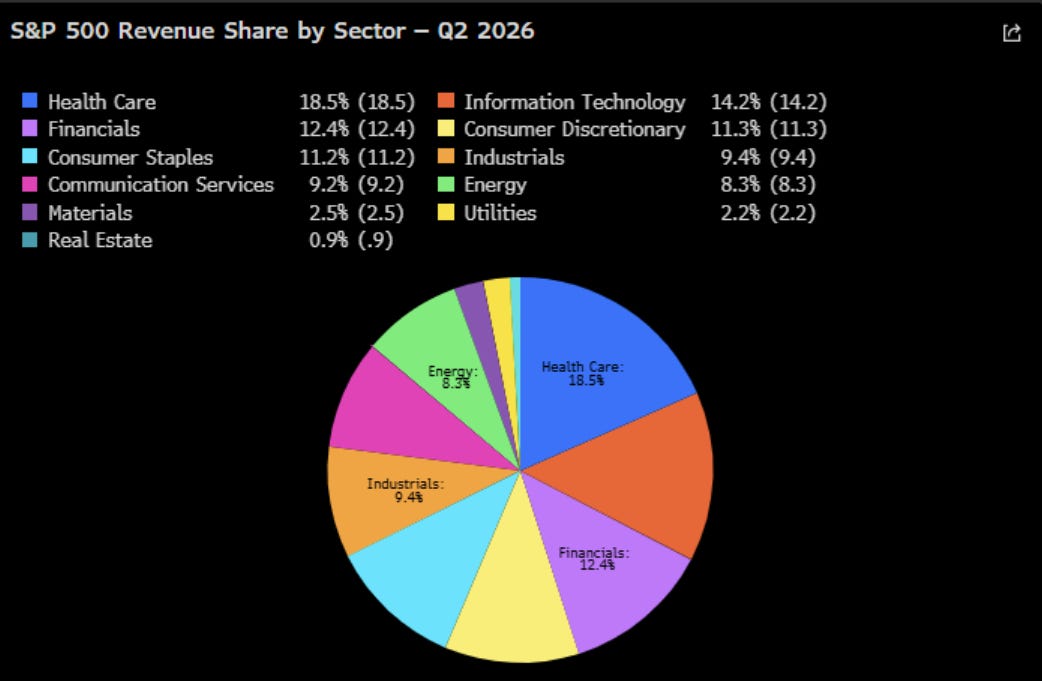
The CAPEX build out disproportionately benefits the names in the index with the highest weighting: technology, which accounts for 40% of the index weighting. You will notice that the technology sector contributes comparable amounts of revenue to the topline index revenue, but it’s the sector that contributes significantly more bottom-line earnings. Simply put, tech doesn’t produce as much revenue as other sectors but it contributes significantly more profits which is why it’s weighted MORE in the index.
Revenues for more than half of S&P500 sectors are greater than those of the tech sector:
EPS is where the divergence becomes explicit. Tech is the largest contributor of earnings, accounting for 30% of EPS.
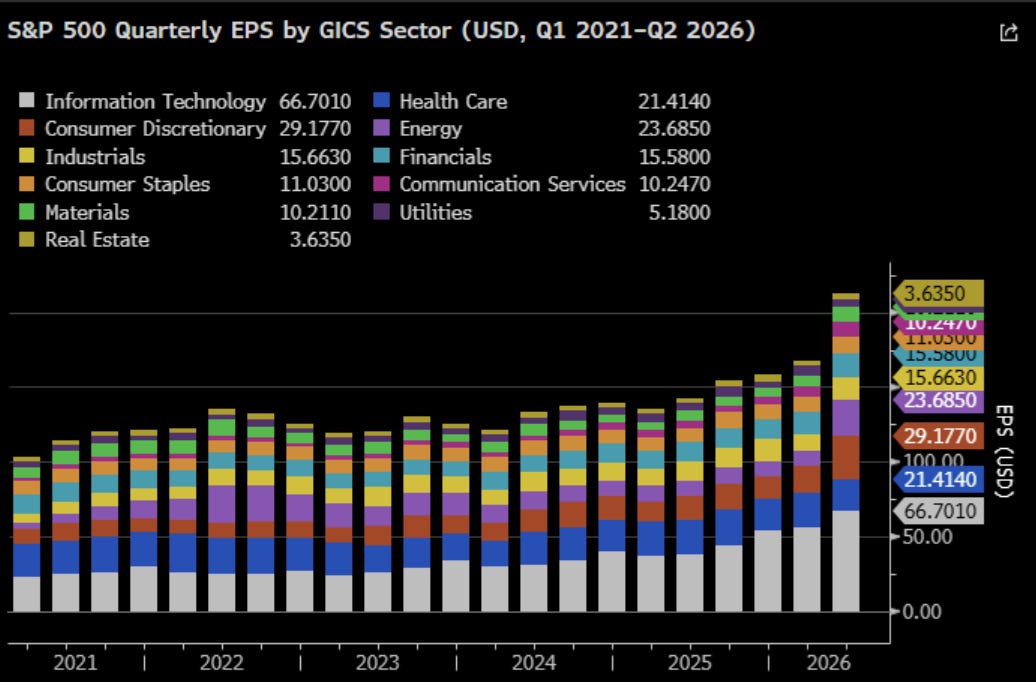
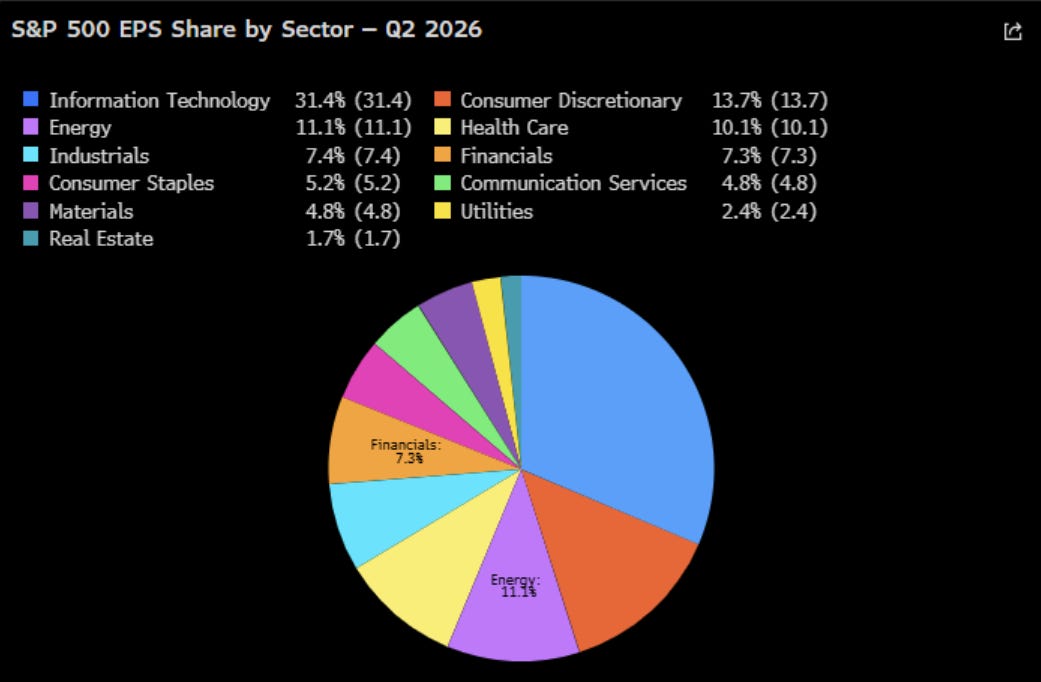
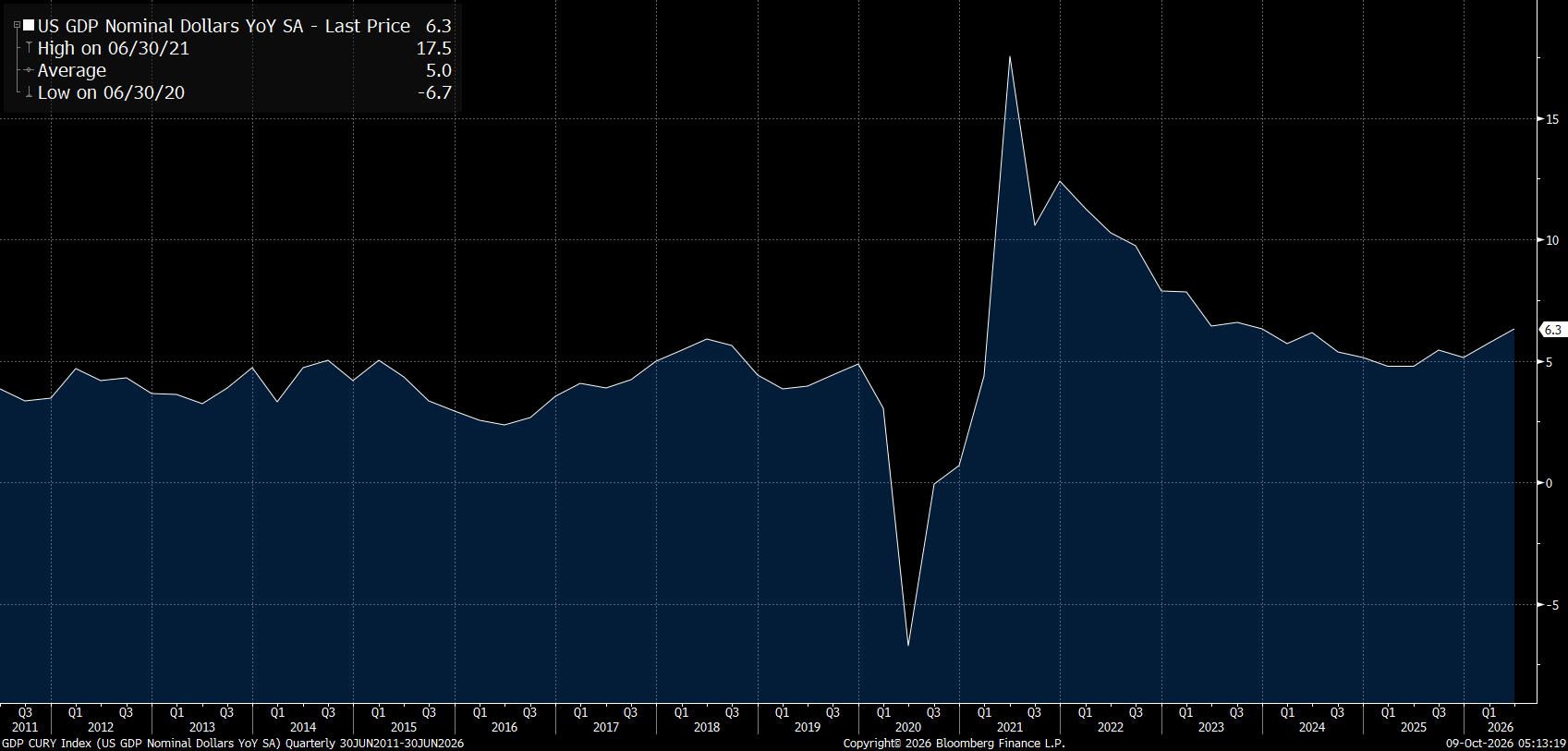
Why does this structure matter? Because the technology sector is roughly on par with other sectors in its contribution to top-line growth but not bottom-line earnings. So when nominal GDP is running at 6.3%, we are seeing top-line growth, NOT bottom-line profits. GDP is about the total growth in the system, not the profits that result from it.
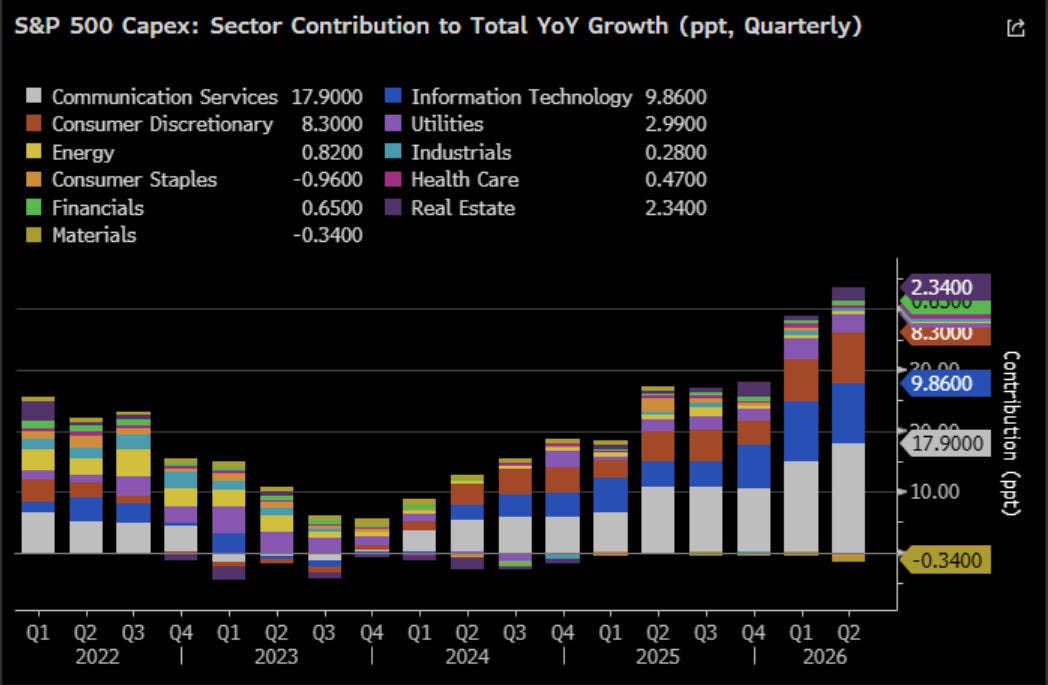
However, the amount of corporate profits from tech and the Mag7 is important to understand because these profits are what are being recycled into capex spending. Notice that the communication services, consumer discretionary, and information tech sectors account for functionally all of the capex since 2024:
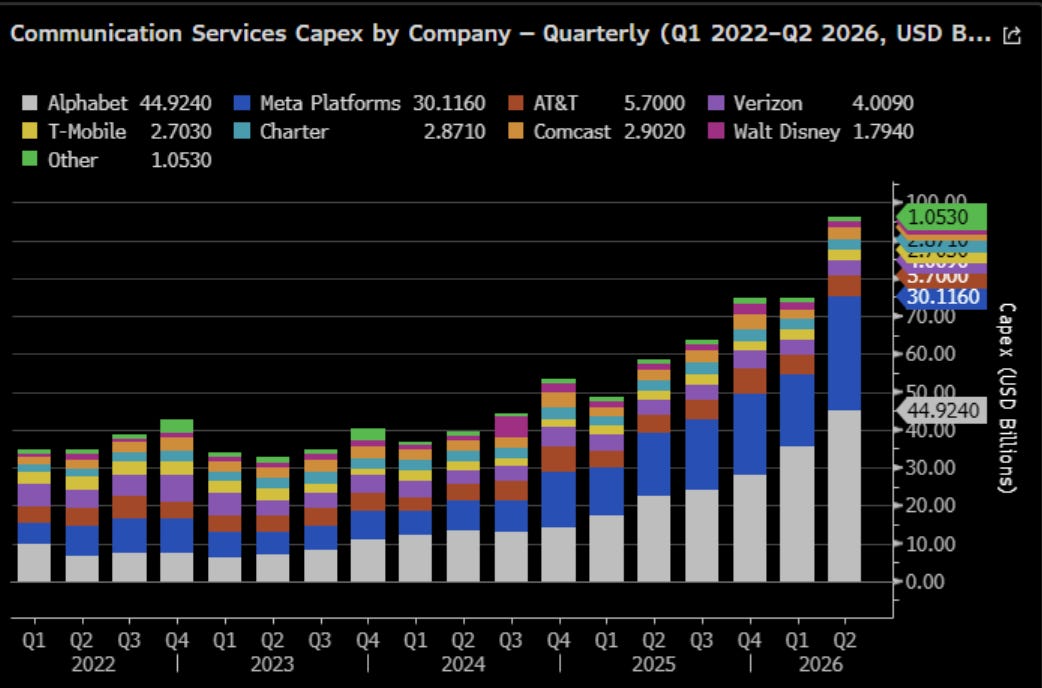
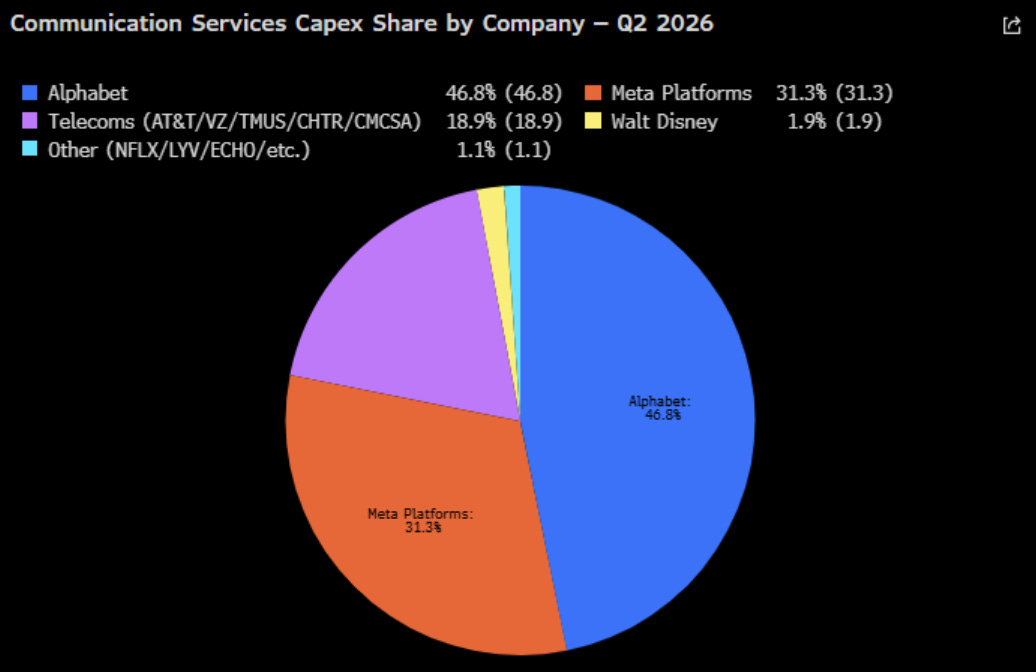
Which companies in these sectors are driving capex spending? In the communication sector, it’s functionally all GOOGL and META (both Mag7 companies):
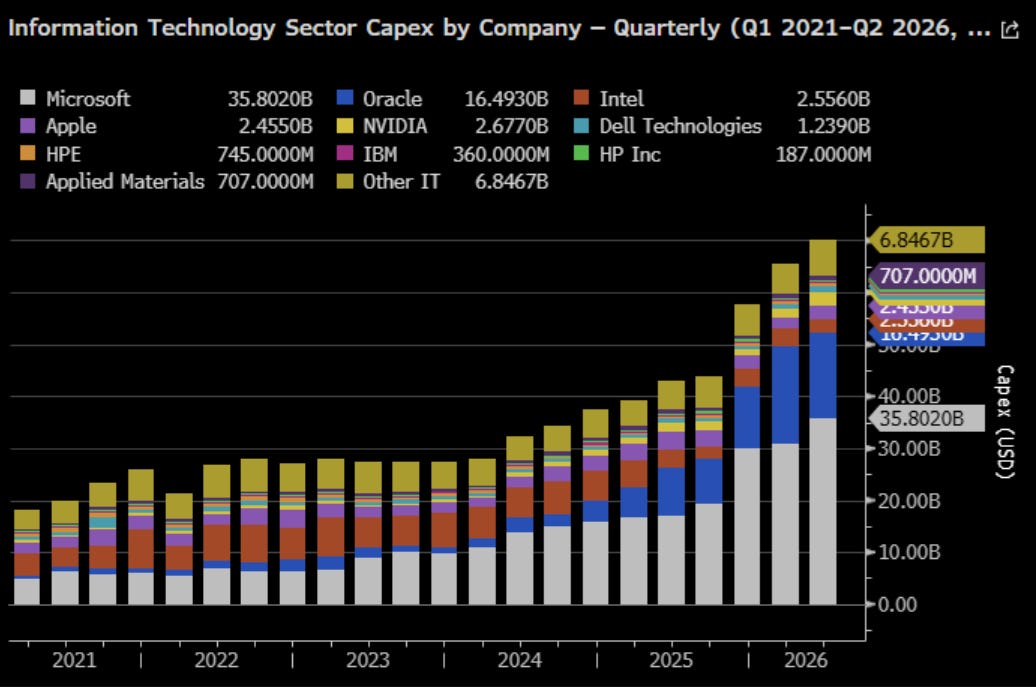
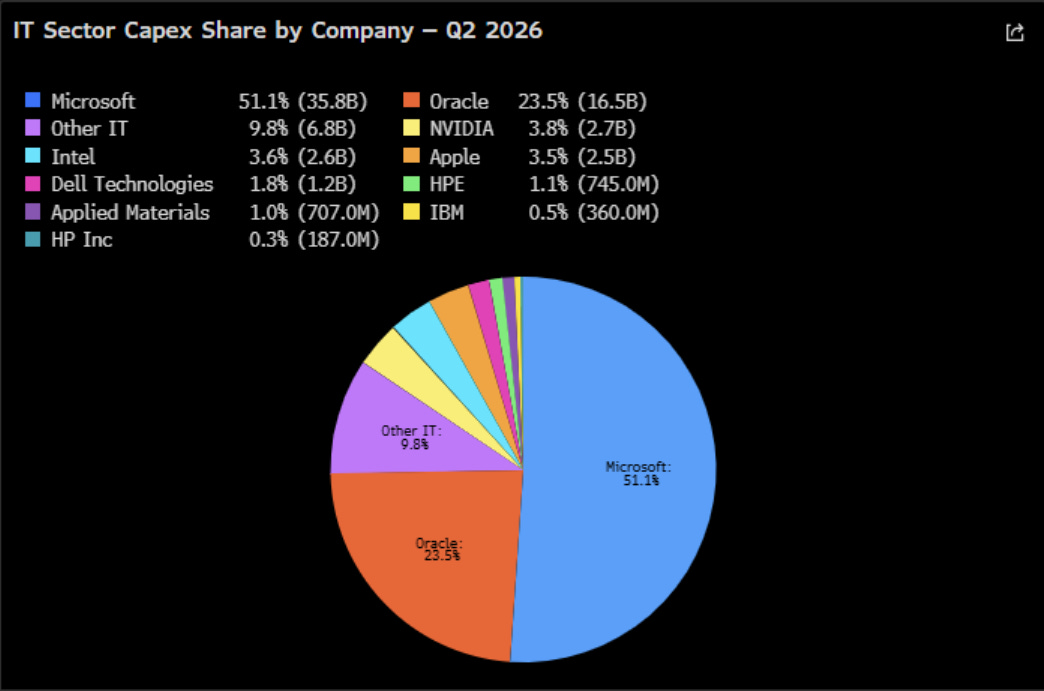
In tech, all of the spending is concentrated in MSFT and ORCL:
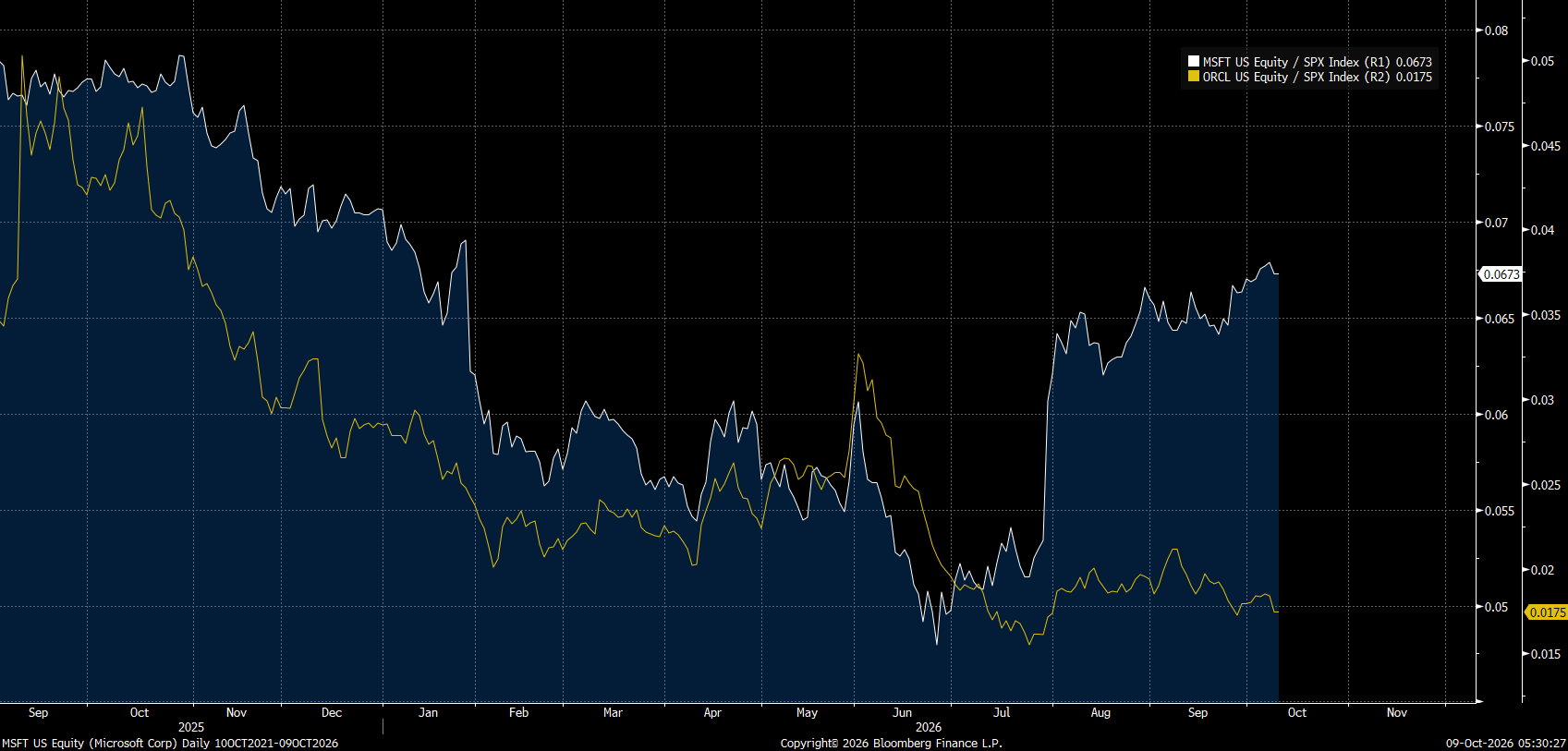
Which makes sense given how much both have underperformed the index because they are sacrificing present cash flows for future profit:
The final sector that has contributed a lot of capex to the S&P500 is consumer discretionary, but this is almost exclusively from Amazon:
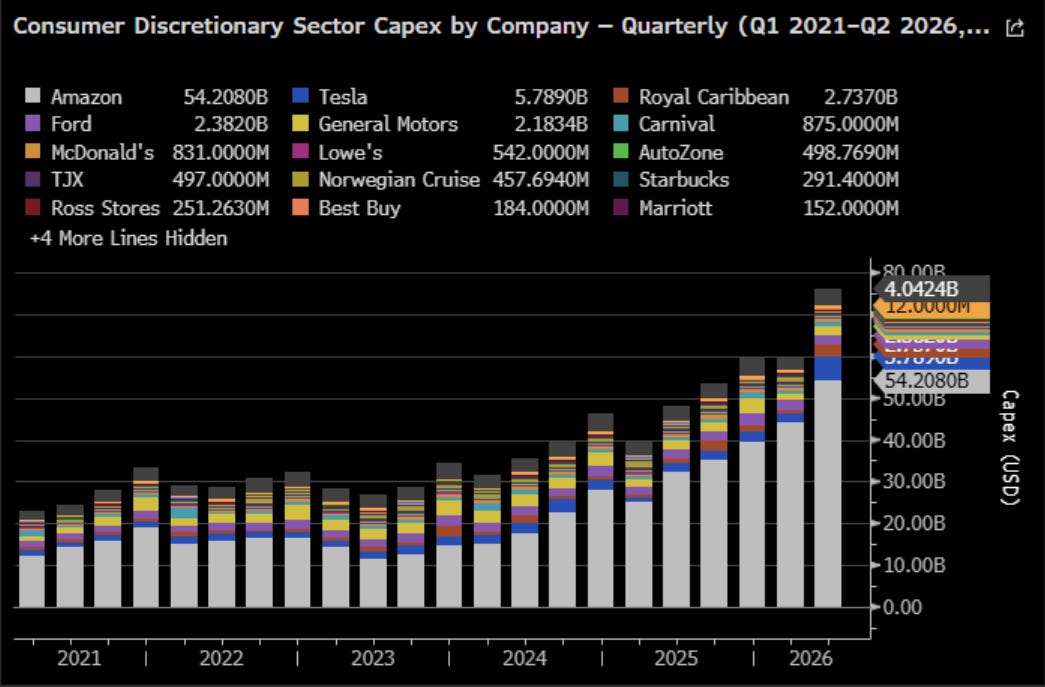
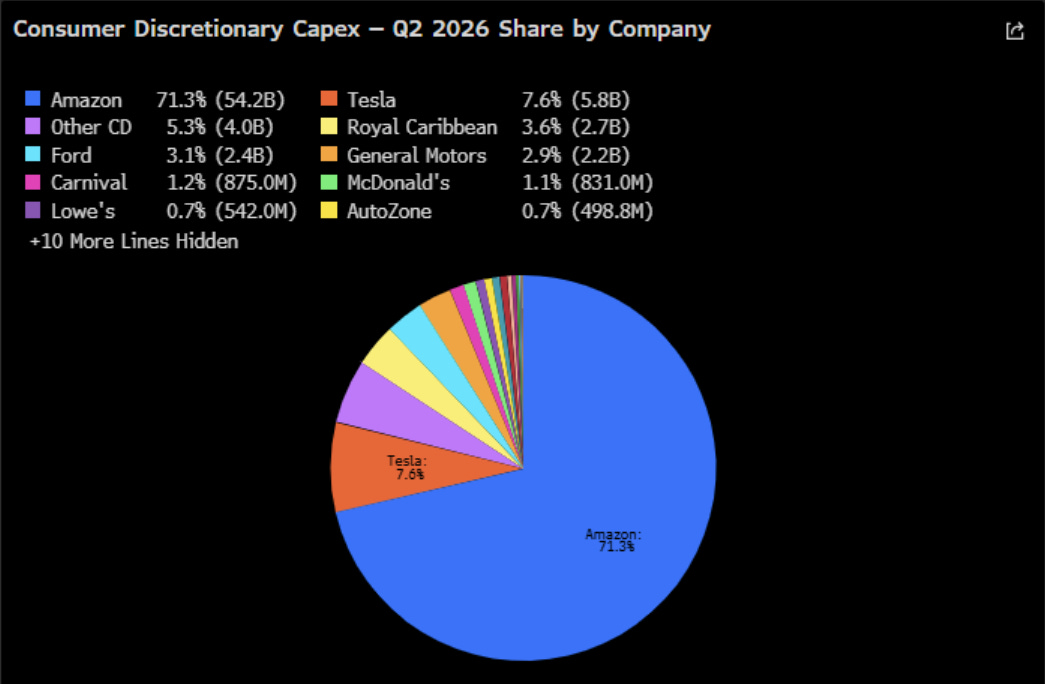
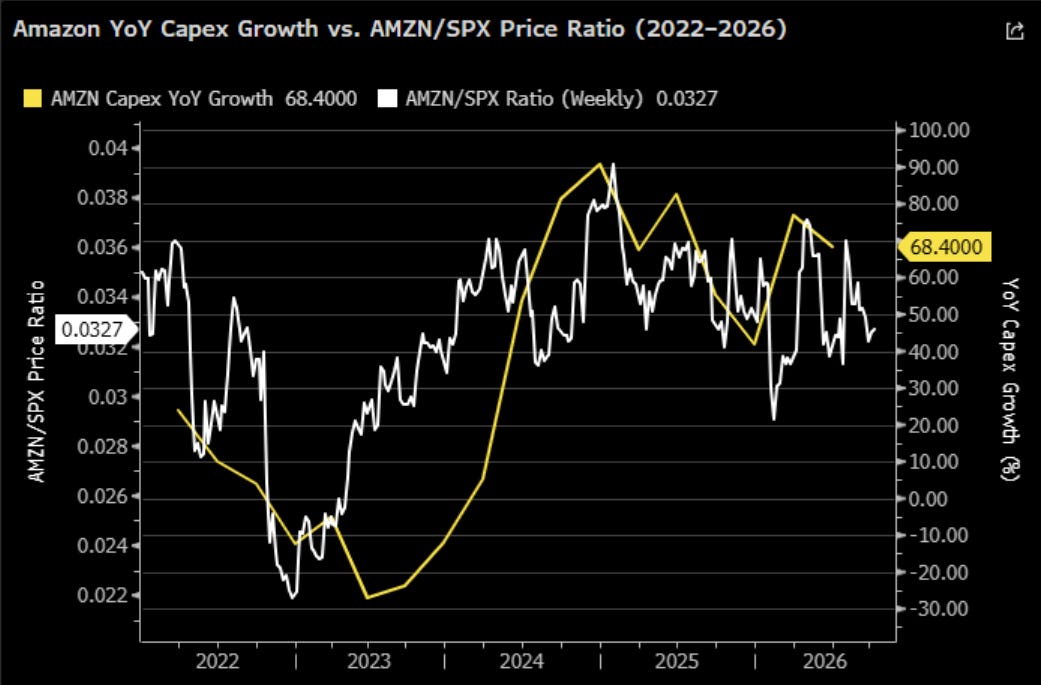
Notice that as soon as YoY capex for AMZN begins to rise, AMZN price vs the index just starts moving in a range. Similar to MSFT and ORCL, AMZN is spending now to increase profits later:
Remember the main idea we started with: the underlying dispersion in equity fundamentals and the growth/inflation data frame WHERE we are.
MAIN IDEA: We are in a period where growth is running significantly above trend at the same time as an energy shock. The growth that is taking place is due to 1) AI capex increasing the amount of investment in the economy, and 2) New AI models disrupting and benefiting companies across the economy. If you understand these big ideas, they will frame HOW the short-end interest rates are mispriced as well as the directional skew in equities.
If you understand WHERE we are, then you will understand WHAT opportunities exist, and this brings us to the opportunities in interest rates and equities right now, where I am focused on running trades.