Intro To Country Primers:
We aren’t slowing down at all! The following Country Primers have been written:
All of the educational primers on macro, trading, risk management and capital flows can be found here:
Research Synthesis / Direction Of Capital Flows Substack

Hello everyone, There has never been a time in history when understanding the world from a global perspective and interpreting it accurately paid such a high premium. Since the very beginning of this Substack, I have talked about the nature of the time we live in and how to act intentionally in it.
Today we are focusing on Argentina because it will be one of the single most important countries for the geopolitical regime we are moving into.
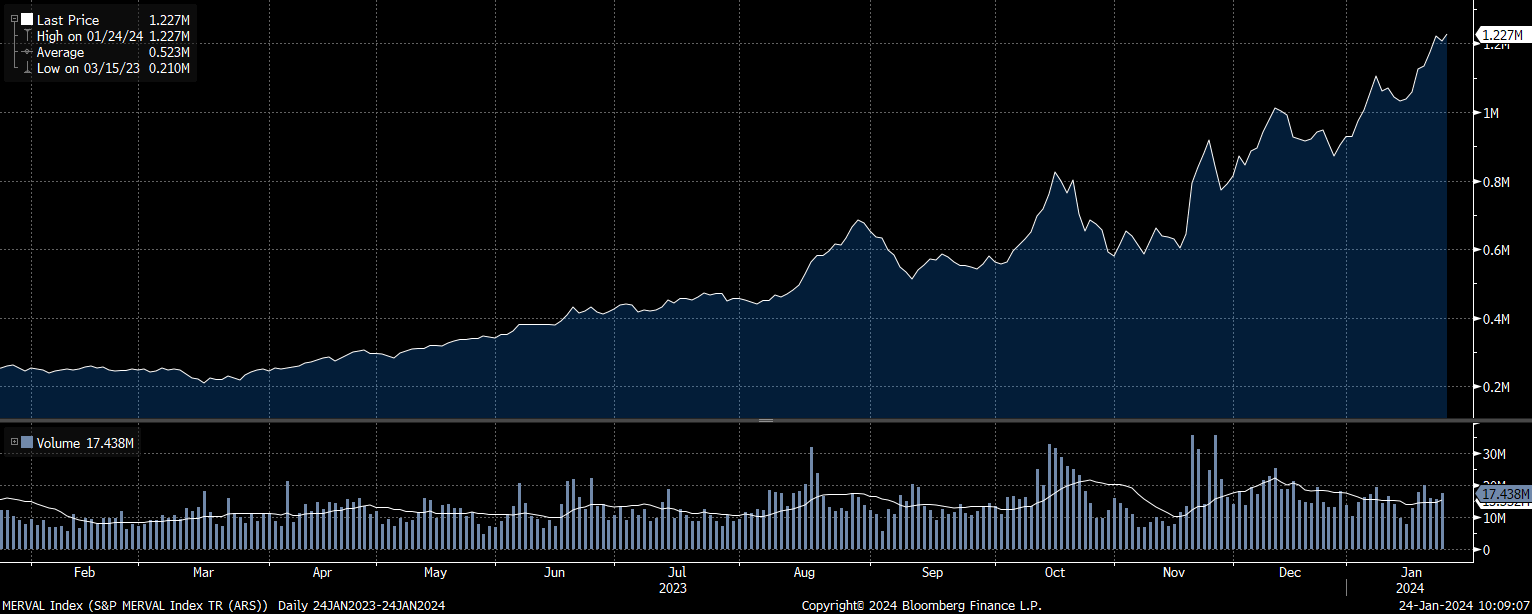
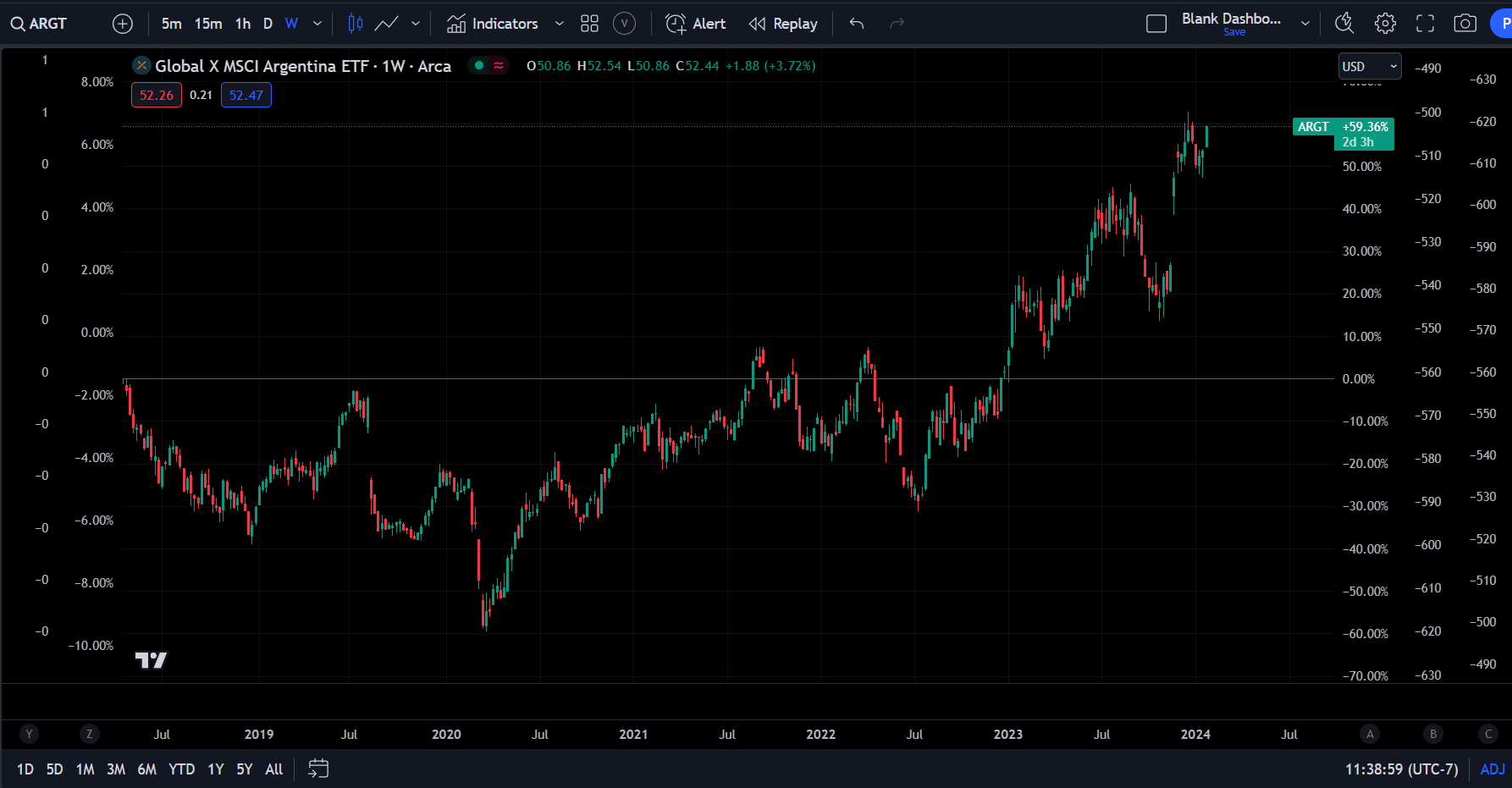
Their stock market is going parabolic right now:

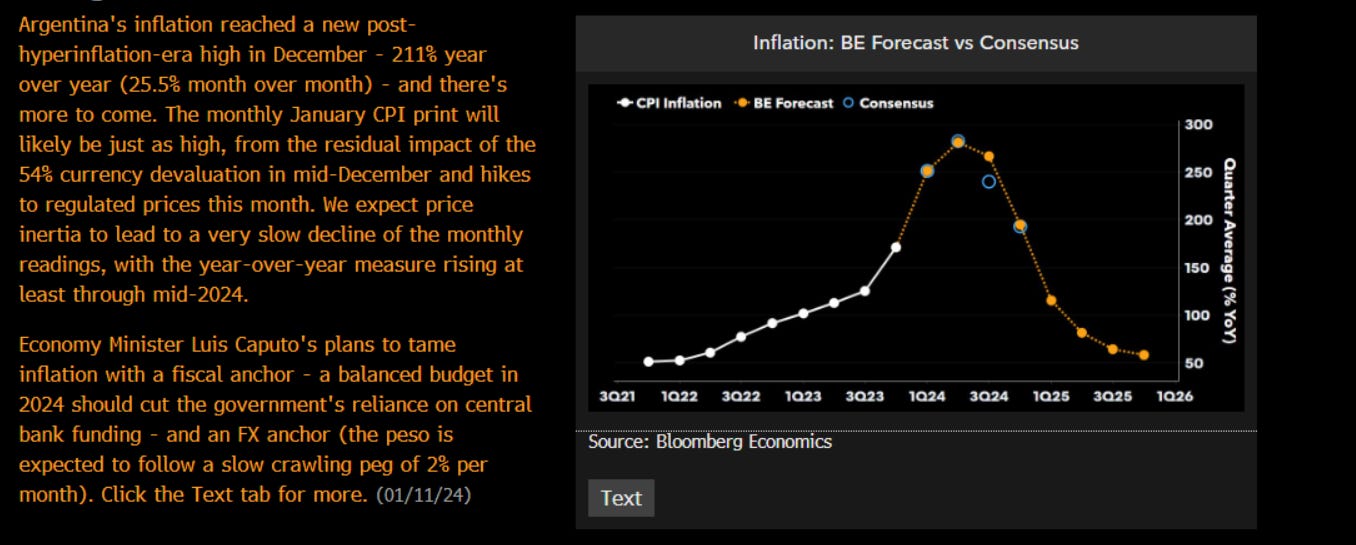
And this is occurring as inflation is making an explosive move to the upside:

The central bank has been moving rates up on the short end to curb inflation:

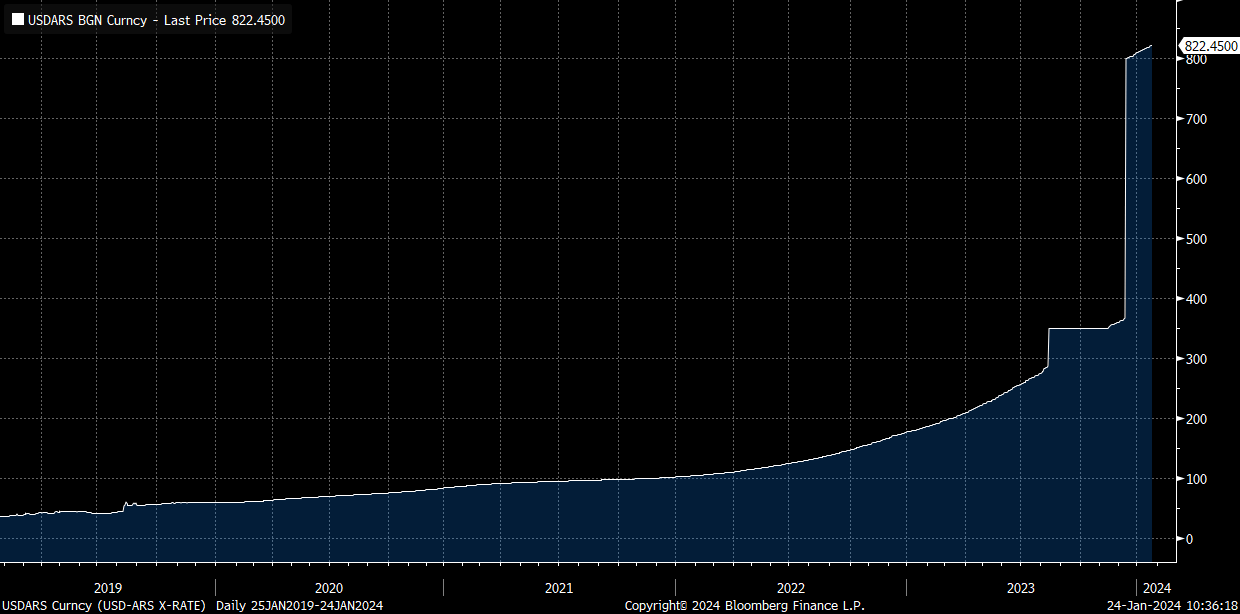
And a currency devaluation has been taking place:

These are exactly the kind of events you want to see for generating asymmetrical trades because large moves are taking place that constrain large players to move significant portions of money.
While there are a lot of things happening in the short term, these events are occurring in a bigger picture context that sets the structural skew for the country as a whole. This is what we are going to break down today: the structural AND cyclical dynamics in Argentina.

As a reminder, I wrote a 5 part FX primer breaking down how to analyze and trade currencies. This will be a helpful resource for Argentina because its central bank actively manages its exchange rate. (see how countries fall on the impossible trinity for more on this):
The Research HUB: FX Primer, Pt 5

Hey everyone, This is Part 5 of the FX Primer! 5-Part FX Primer Breakdown: Part 1: FX - Resources, The Big Picture, Variables, Aggregating Knowledge, and Essential Tools. Part 2: FX - Synthesizing Information from Part 1: Theory, Practice, Causal Mechanics vs. Regression Analysis.
Overview: Here is the structure for this primer
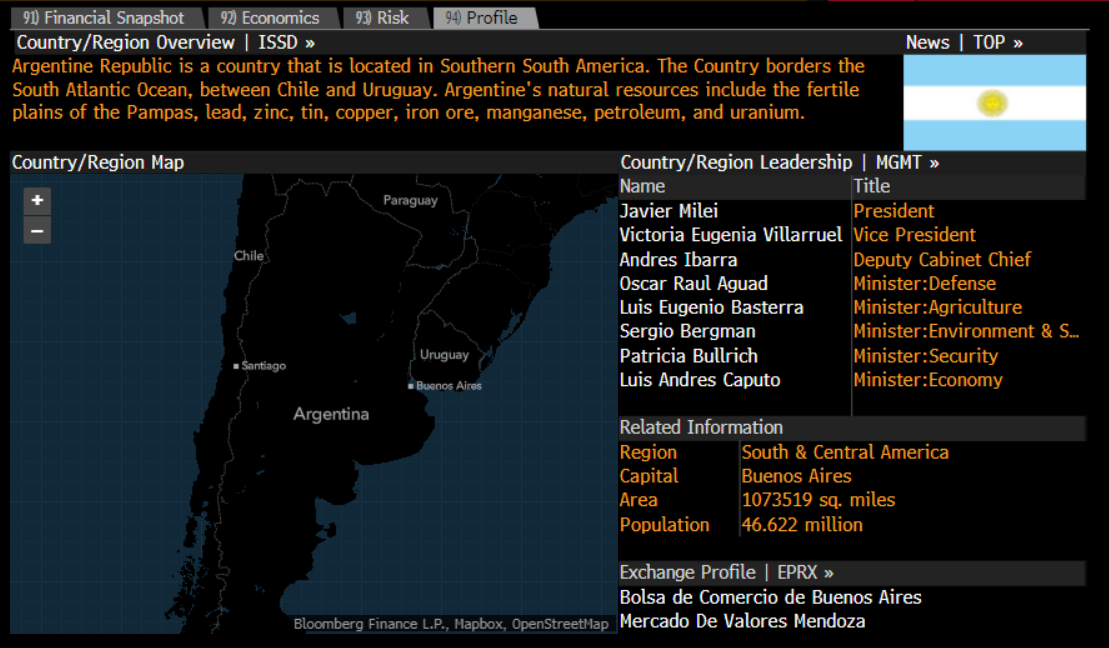
Country Overview
Geography and Demographics
Economic Data: GDP, GNI, BoP, and Balance Sheets
Financial Markets: Stocks, Bonds, and the Argentinian Peso.
History of growth, inflation, and liquidity on a structural and cyclical basis
Current growth, inflation, and liquidity regime and its connection to each financial asset
Additional resources for research and trading in Argentinian markets
Country Overview:
Background
In 1816, the United Provinces of the Río de la Plata declared their independence from Spain. After Bolivia, Paraguay, and Uruguay went their separate ways, the area that remained became Argentina. The country's population and culture were heavily shaped by immigrants from throughout Europe, with Italy and Spain providing the largest percentage of newcomers from 1860 to 1930. Up until about the mid-20th century, much of Argentina's history was dominated by periods of internal political unrest and conflict between civilian and military factions.
After World War II, an era of populism under former President Juan Domingo PERÓN - the founder of the Peronist political movement - and direct and indirect military interference in subsequent governments was followed by a military junta that took power in 1976. Democracy returned in 1983 after a failed bid to seize the Falkland Islands (Islas Malvinas) by force, and has persisted despite numerous challenges, the most formidable of which was a severe economic crisis in 2001-02 that led to violent public protests and the successive resignations of several presidents. The years 2003-15 saw Peronist rule by Néstor KIRCHNER (2003-07) and his spouse Cristina FERNÁNDEZ DE KIRCHNER (2007-15), who oversaw several years of strong economic growth (2003-11) followed by a gradual deterioration in the government’s fiscal situation and eventual economic stagnation and isolation. Argentina underwent a brief period of economic reform and international reintegration under Mauricio MACRI (2015-19), but a recession in 2018-19 and frustration with MACRI’s economic policies ushered in a new Peronist government in 2019 led by President Alberto FERNÁNDEZ and Vice President Cristina FERNÁNDEZ DE KIRCHNER. Argentina's high public debts, its pandemic-related inflationary pressures, and systemic monetary woes served as the catalyst for the 2023 elections, culminating with President Javier MILEI's electoral success. Argentina has since eliminated half of its government agencies and is seeking shock therapy to amend taxation and monetary policies.
On a lighter note, anytime the President of a country is running around with a chainsaw, you know things are about to get fun ;)

Geography and Demographics:
The geopolitical situation for Argentina has a ton of positives but also some unique tensions you need to keep in mind.
Argentina’s geography is one of the best in the world. There are a series of rivers that meet and flow into the Atlantic Ocean. The confluence of rivers is called the Rio de la Plata. Right next to these rivers is Buenos Aires which is the commercial hub for processing goods, services, and financial activity. So there is an amazing transportation network directly next to highly populated cities.
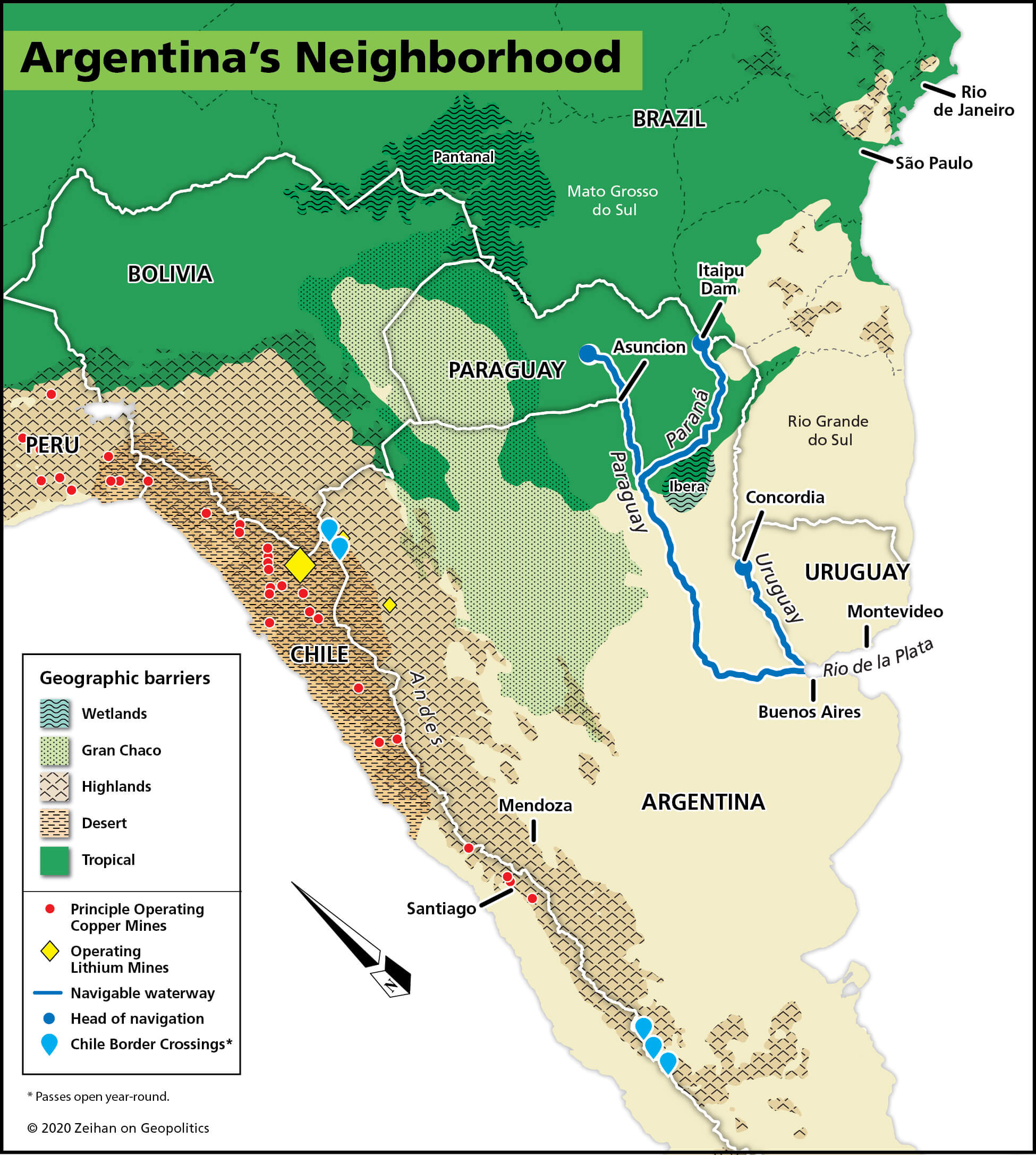
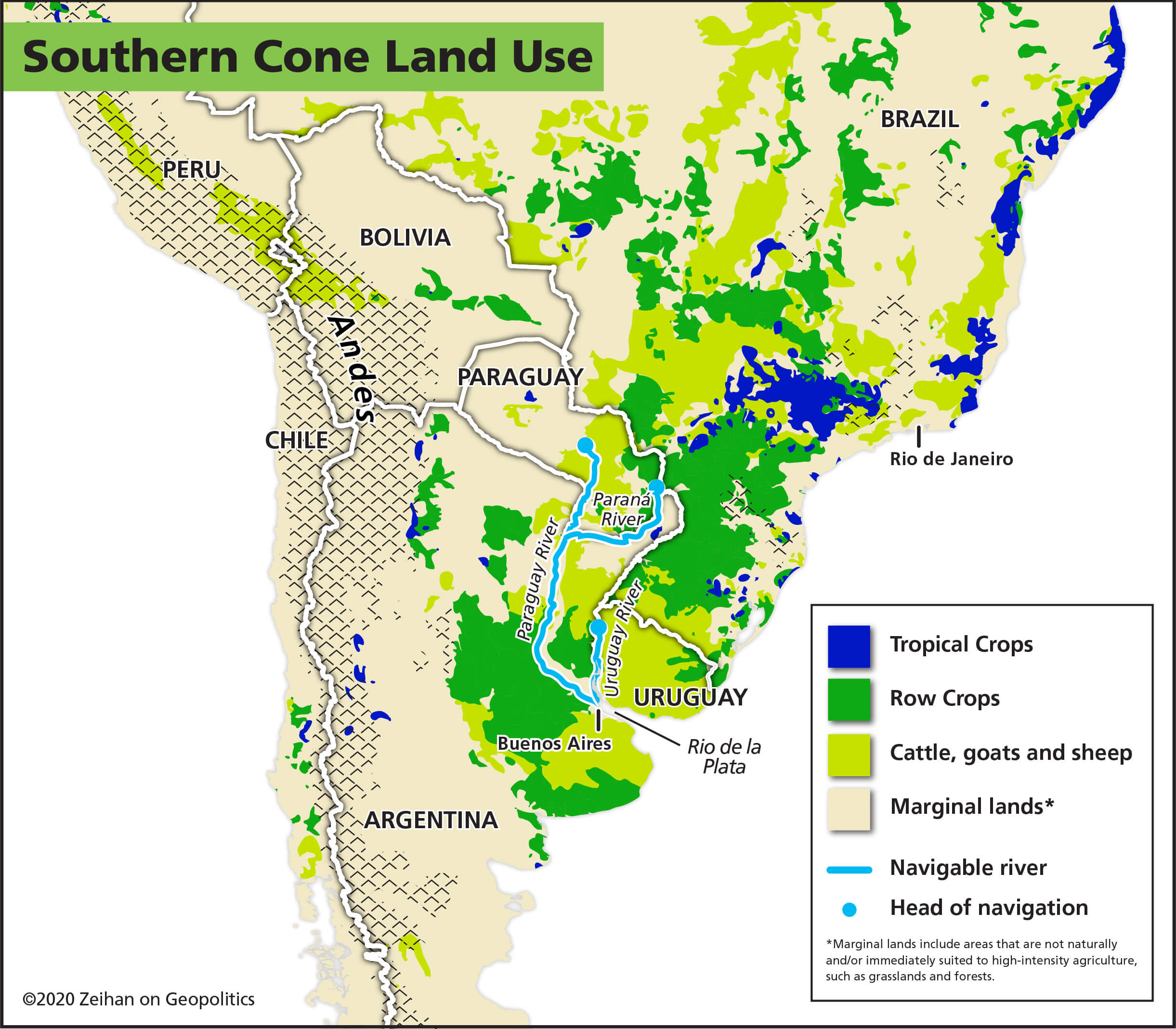
On top of the transportation network, Argentina has an exceptional array of minerals of agricultural wealth. It is a leading producer of beef, grain, soy, silver, copper, wine, oil, and natural gas.
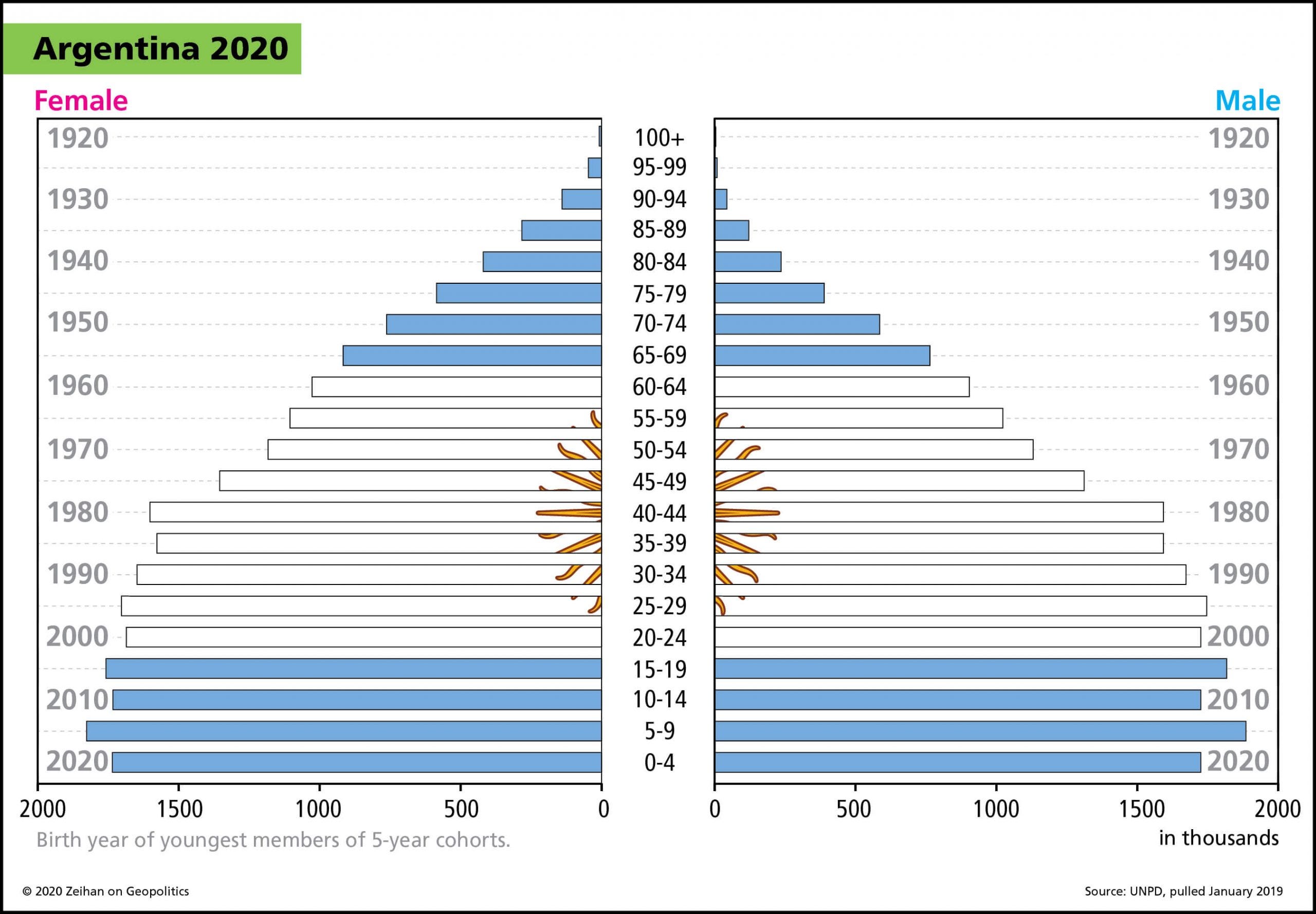
The transportation, agricultural wealth, and geographic benefits are further amplified by the demographic structure of the population. Argentina has a preindustrial population structure with the skilled labor set of an industrial society.1
“In a world of degrading energy shortages, physical insecurity, and demographic collapses, Argentina boasts the resources, land, rivers, geographic position, and demographic structure to make the most in the age of Disorder.”2
Here is a great video breakdown by Peter Zeihan. I would encourage everyone to check out his books on this topic. Check out this link as well:
The position of Argentina sets it up to be a major trading partner for many countries.
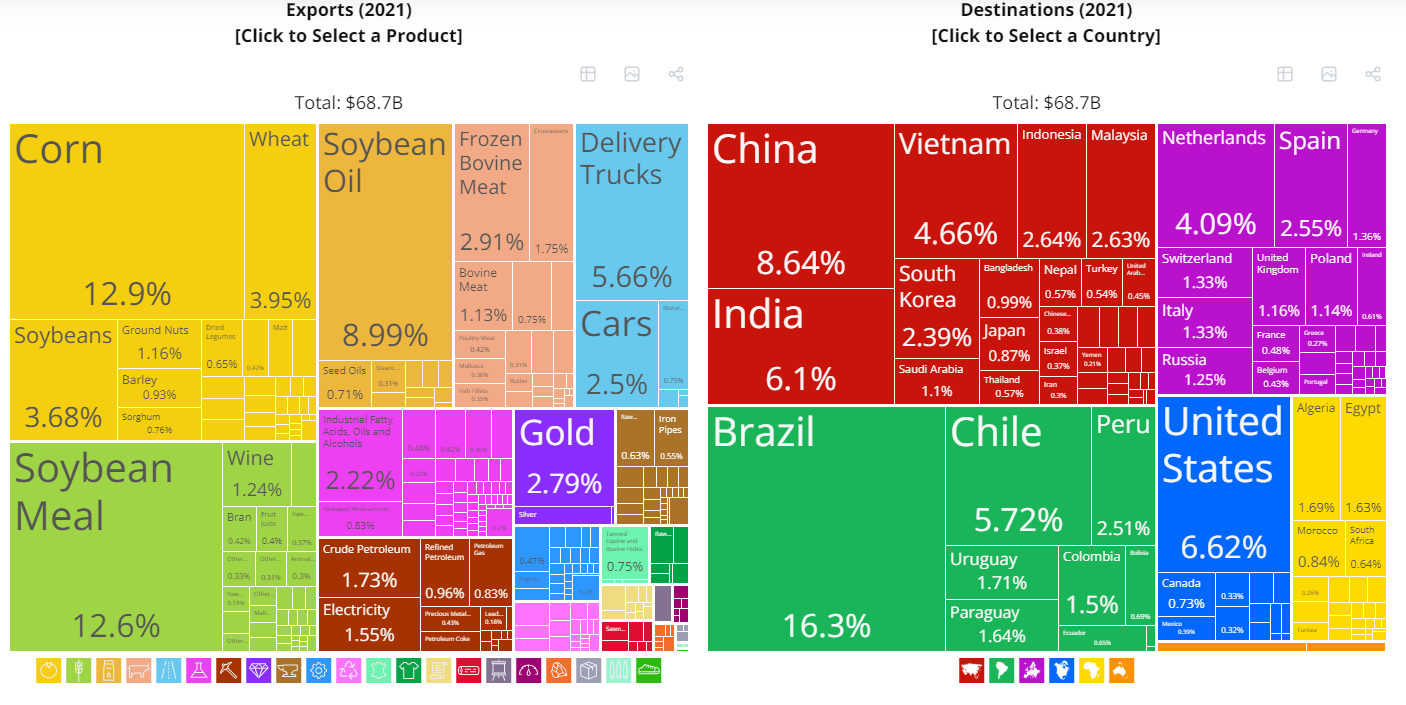
Exports - partners
Brazil 16%, China 11%, United States 7%, Chile 5% (2019)
Exports - commodities
corn, soybean products, delivery trucks, wheat, beef, gold (2021)
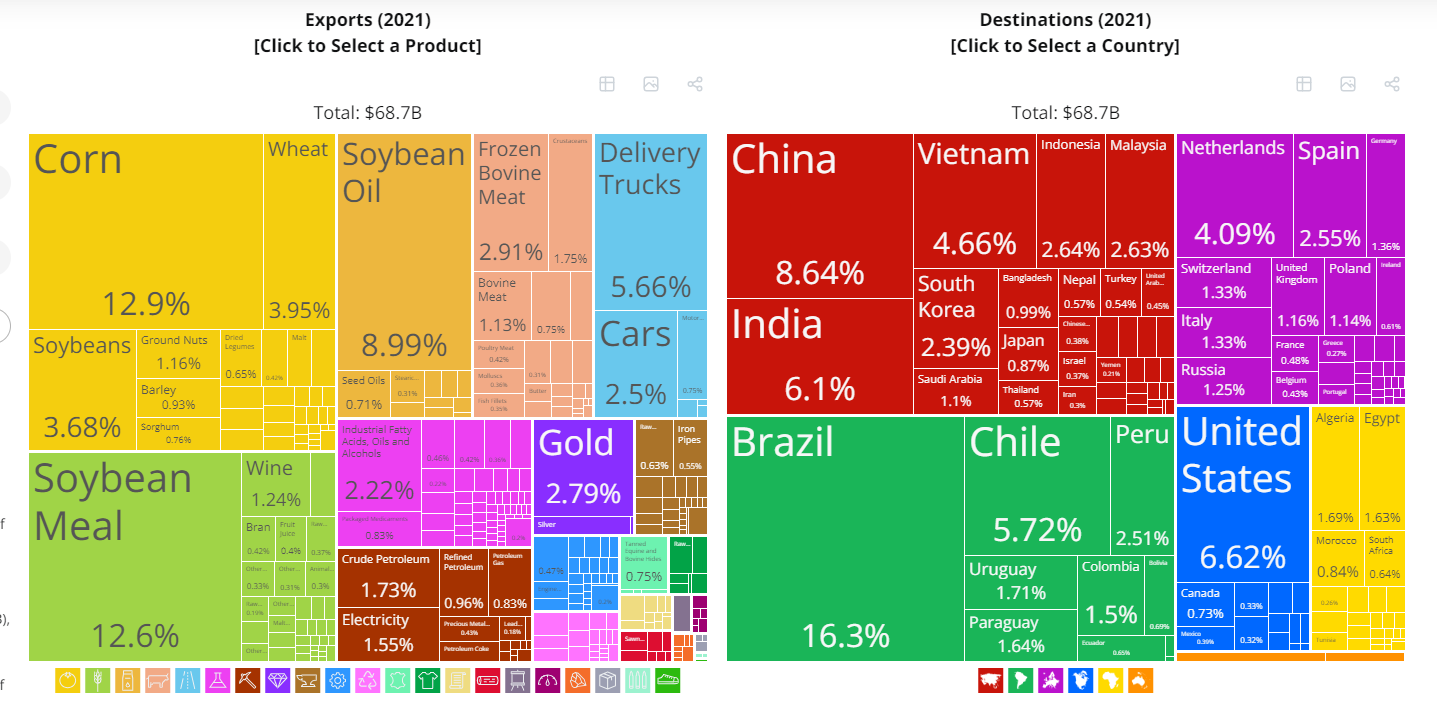
https://oec.world/en/profile/country/arg
These bigger-picture themes in Argentina directly connect to its economic data and thereby financial markets. We will now quantify these structural dynamics with economic data in order to have testability for our views.

Economic Data: GDP, GNI, BoP, and Balance Sheets
Now that we have the big-picture context for Argentina, we need to quantify each moving part of the economy with data. When we approach economic data, we want to quantify the FLOW and CAPITAL STRUCTURE for each agent (households, corporates, sovereigns, financial institutions). If you want a good book on this, check out The Volatility Machine.
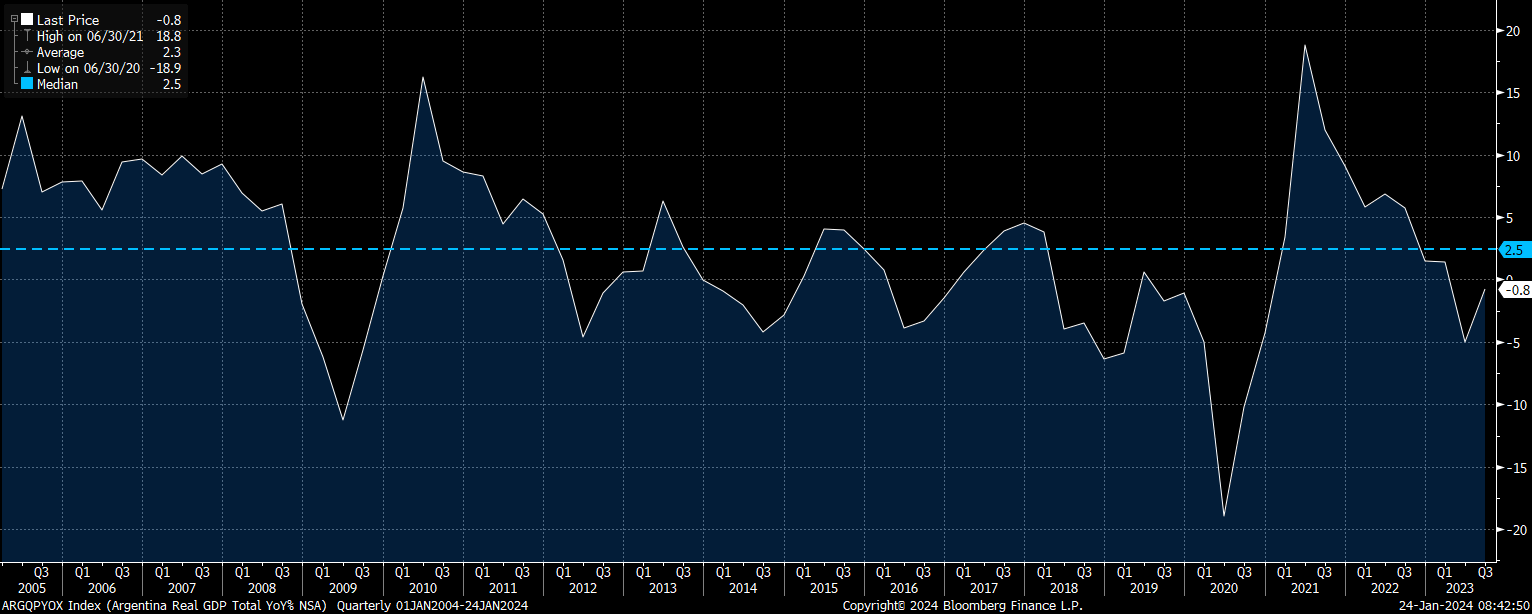
Argentina has consistently had contractions in growth that caused real GDP to move into negative territory. The big question is whether the new change in political power will be able to facilitate a sustainable growth path that unlocks the country’s full potential.
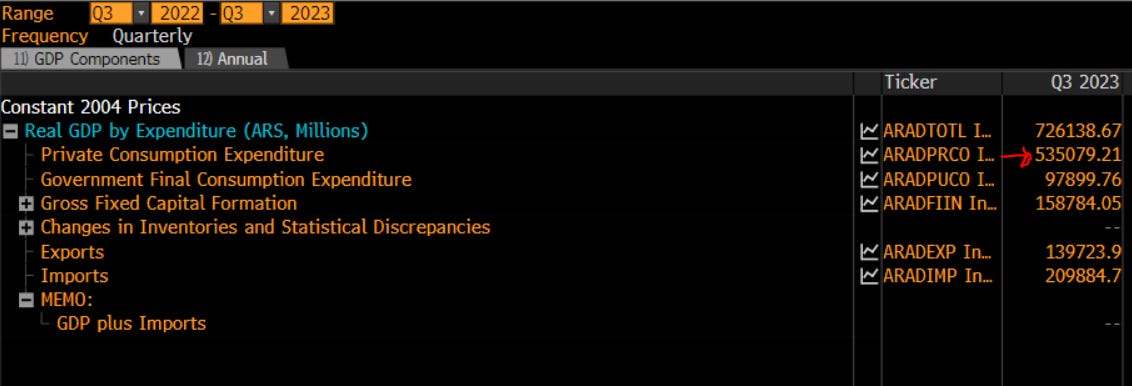
The largest line item of GDP is private consumption:
The chart below shows the components of GDP:
White=investment
Blue=government consumption
Orange=private consumption
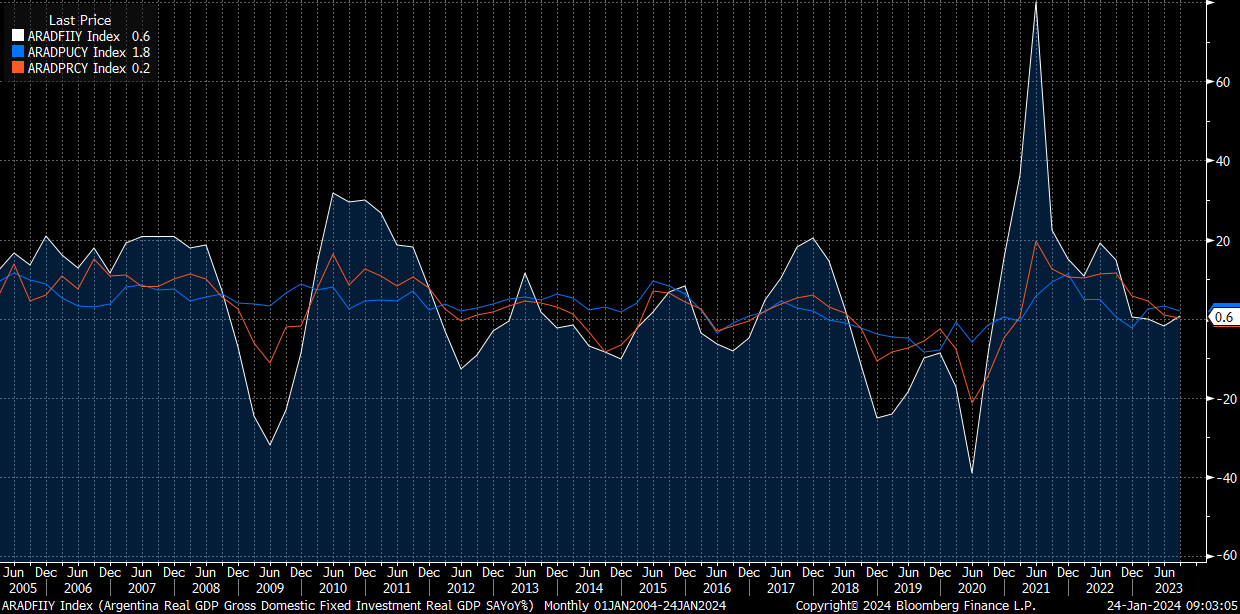
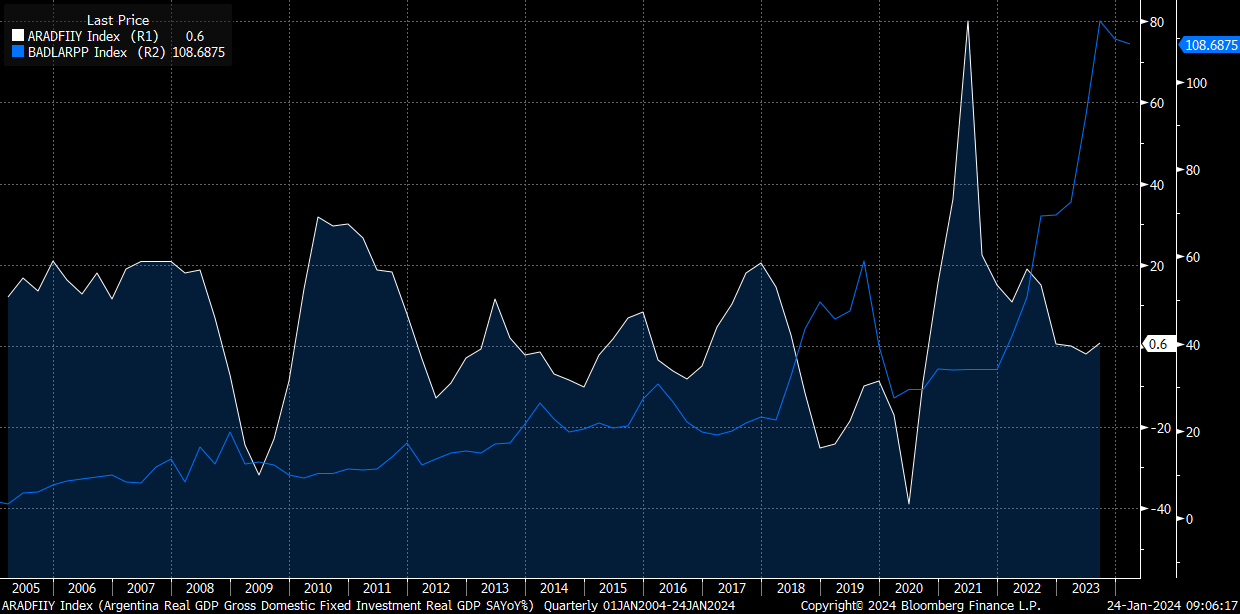
Interest rates on the short end (blue) have typically directly influenced the more volatile investment line item (white) of GDP:
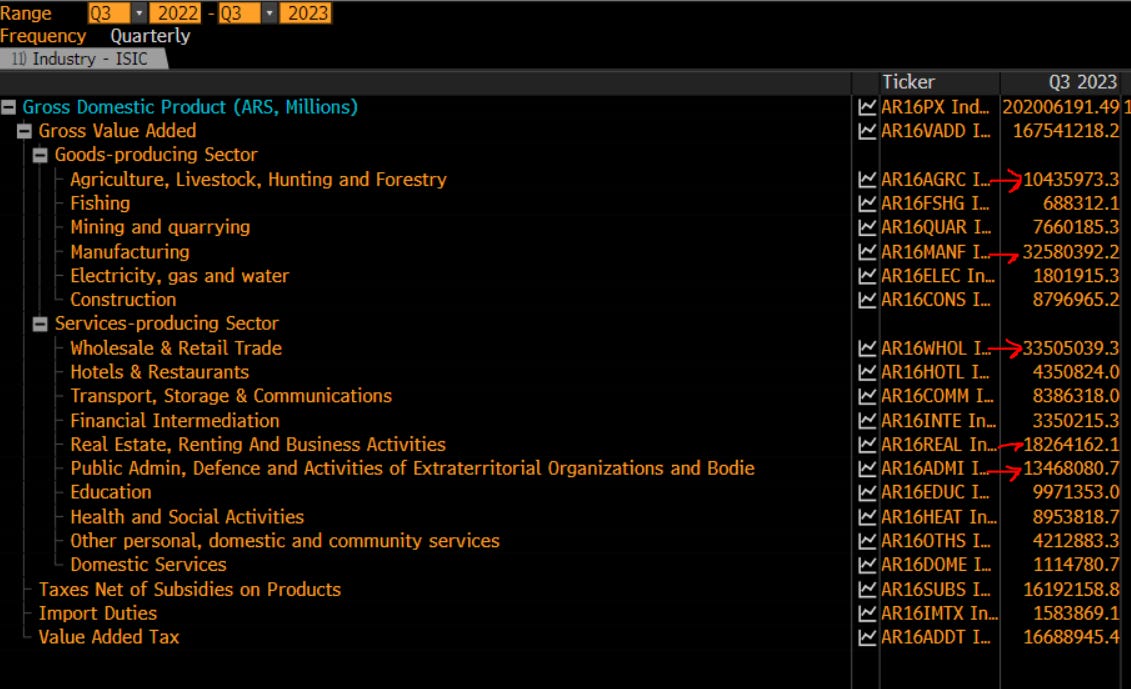
The breakdown of GDP by sector puts hard data to the bigger picture ideas noted in the section above. Agriculture, livestock, hunting, and forest are a large line item for the goods sector. Manufacturing is also a primary component.
The service sector is also a large contributor to GDP with wholesale and retail trade accounting for the largest line item.
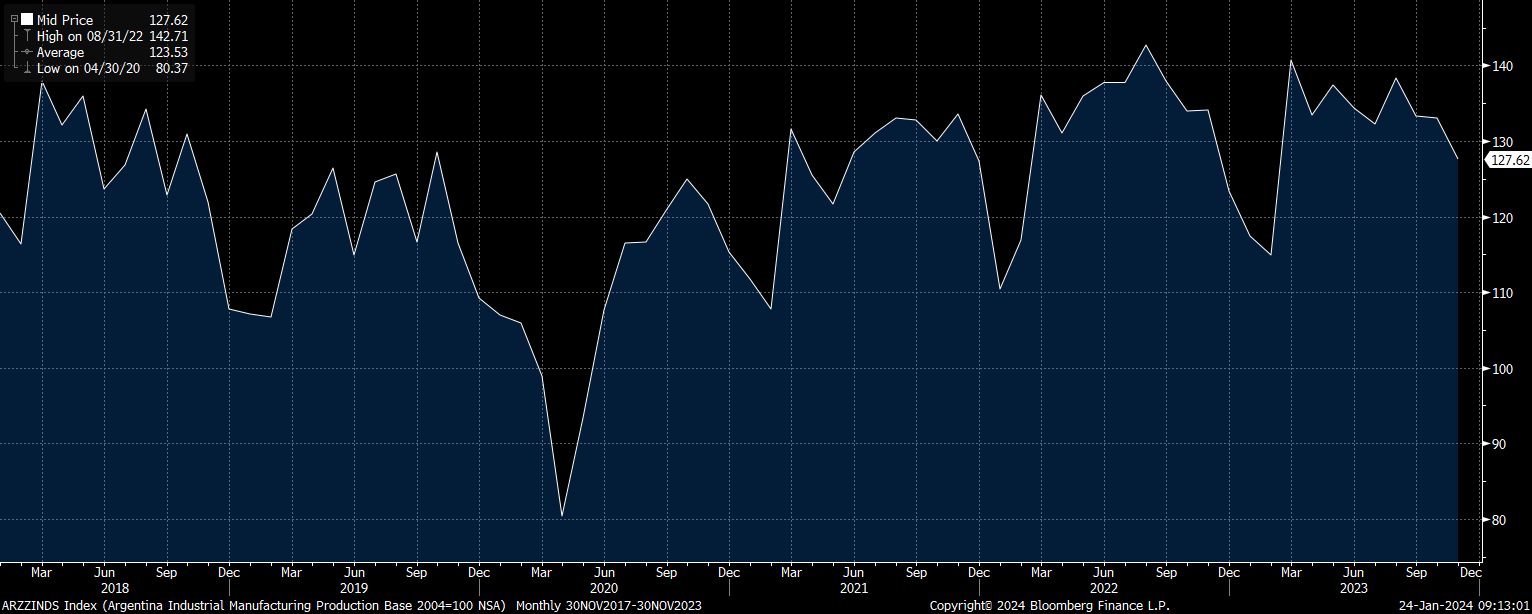
Since there are such high levels of inflation in Argentina right now, it is important to distinguish between actual economic activity/output and nominal price increases. Right now industrial production is positive but decelerating marginally:
Current production and sales are decelerating:

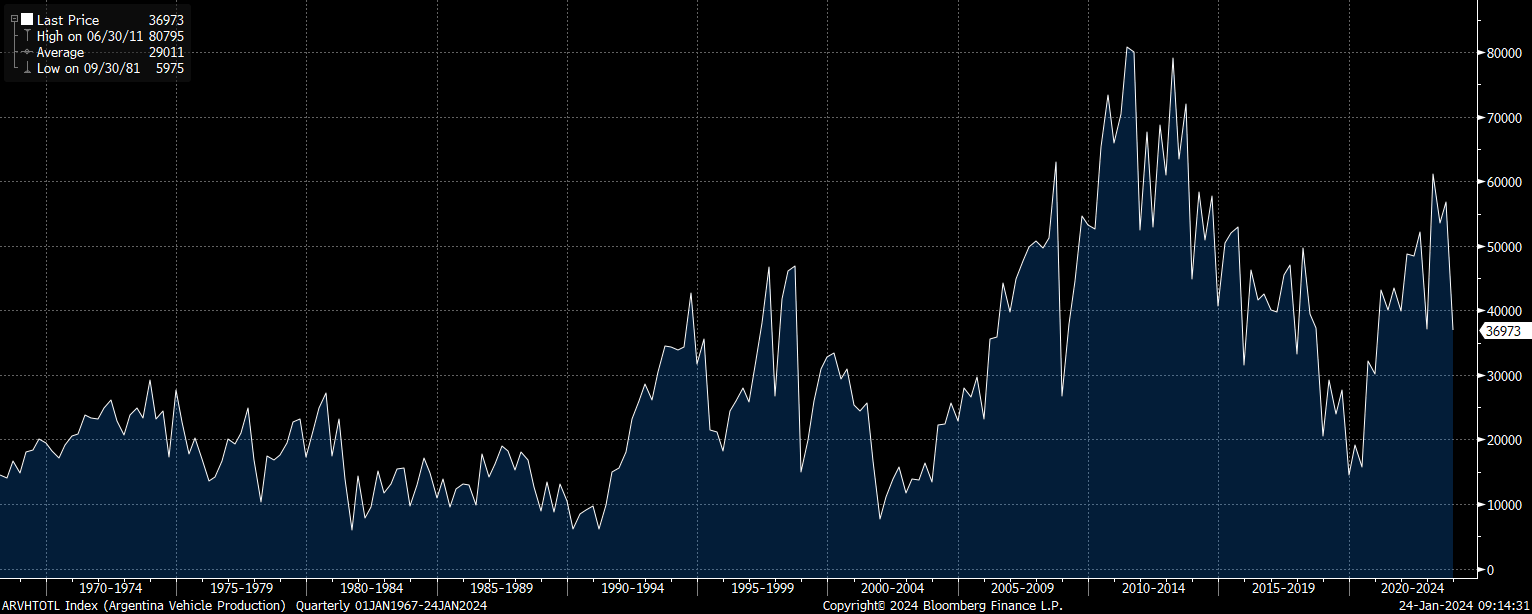
This is occurring as motor vehicle production is coming off its high:
A lot of the most recent negative data prints are directly connected to the new president’s actions:

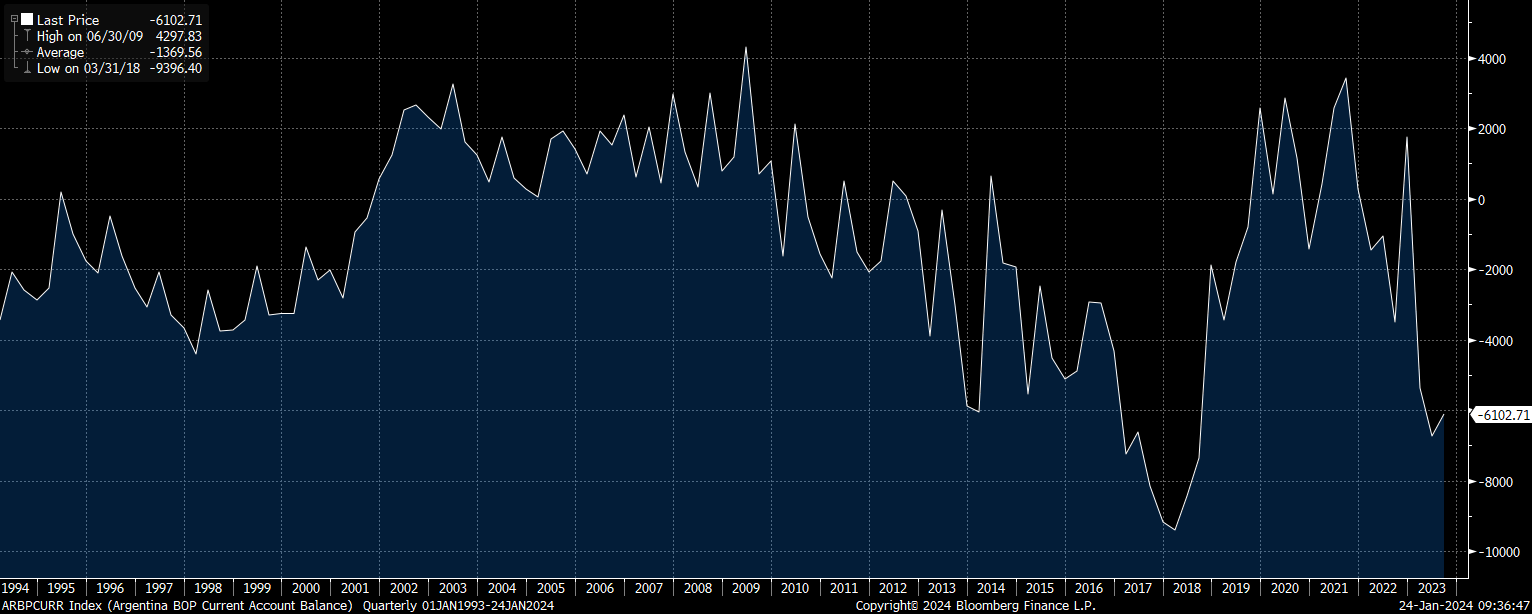
The key thing you need to note is HOW the current account is connected to the AMOUNT of FX reserves the country has. Right now the country is running a current account deficit which means it is importing more than it is exporting:
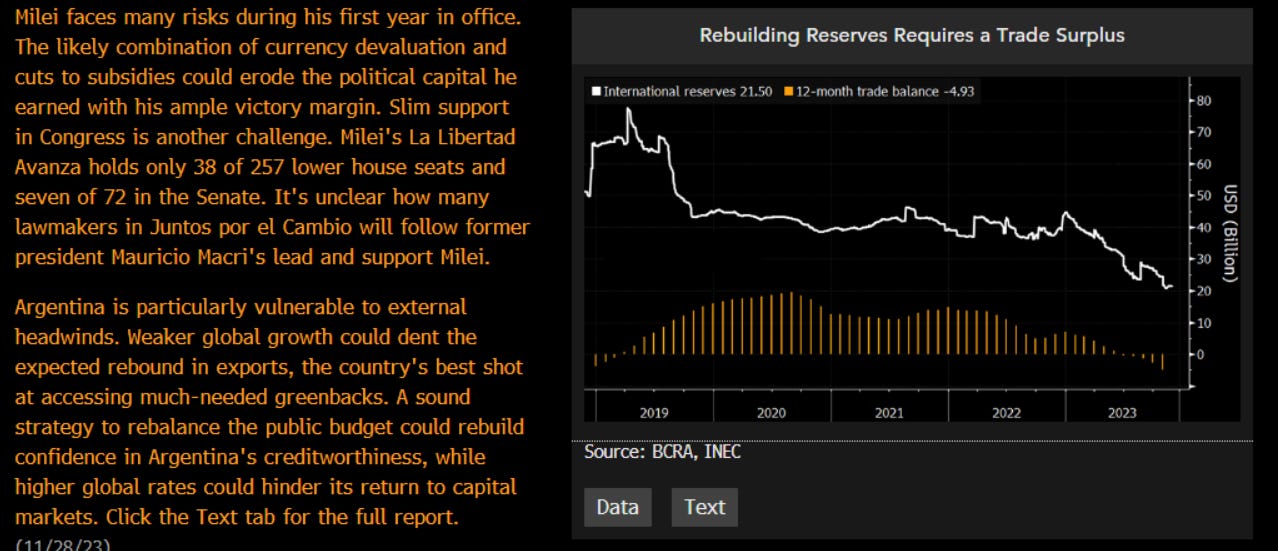
International reserves are trending down and the only way the country can acquire more dollars is by running a current account surplus:
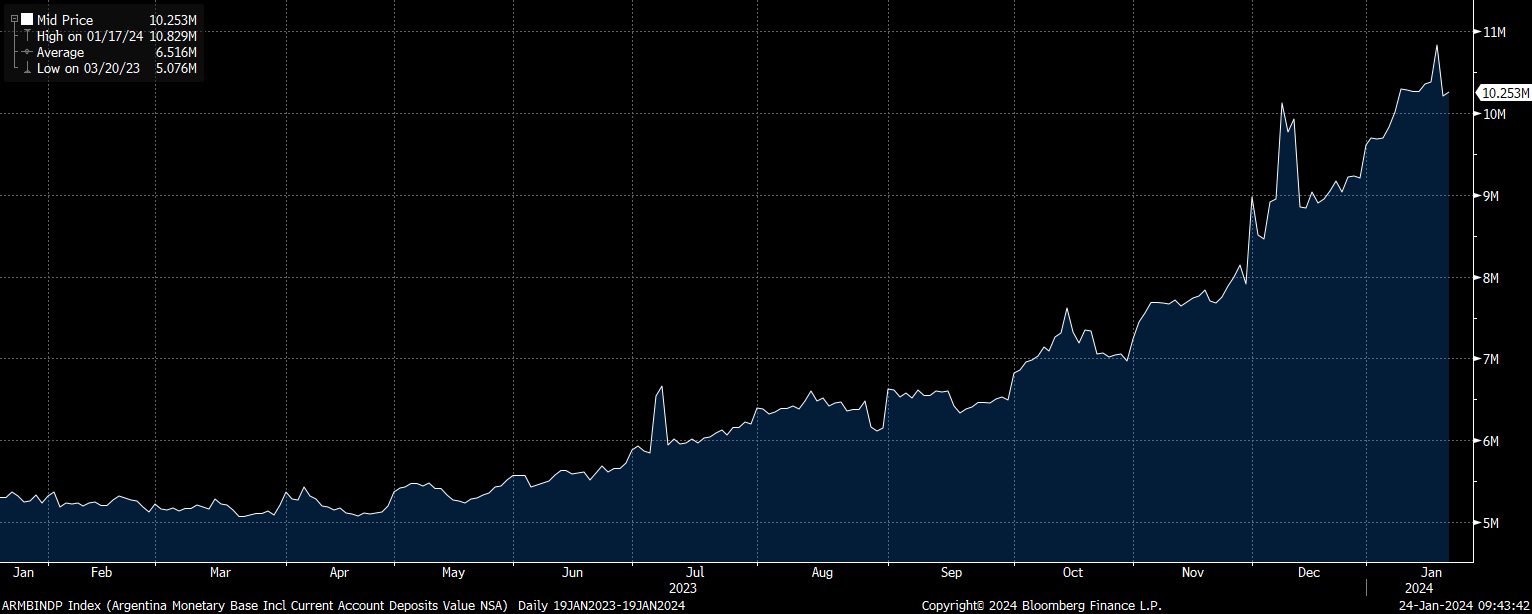
It is the current account and international reserves that will begin to function as a constraint on government actions within the paradigm of the impossible trinity. The monetary base data is already accelerating significantly:
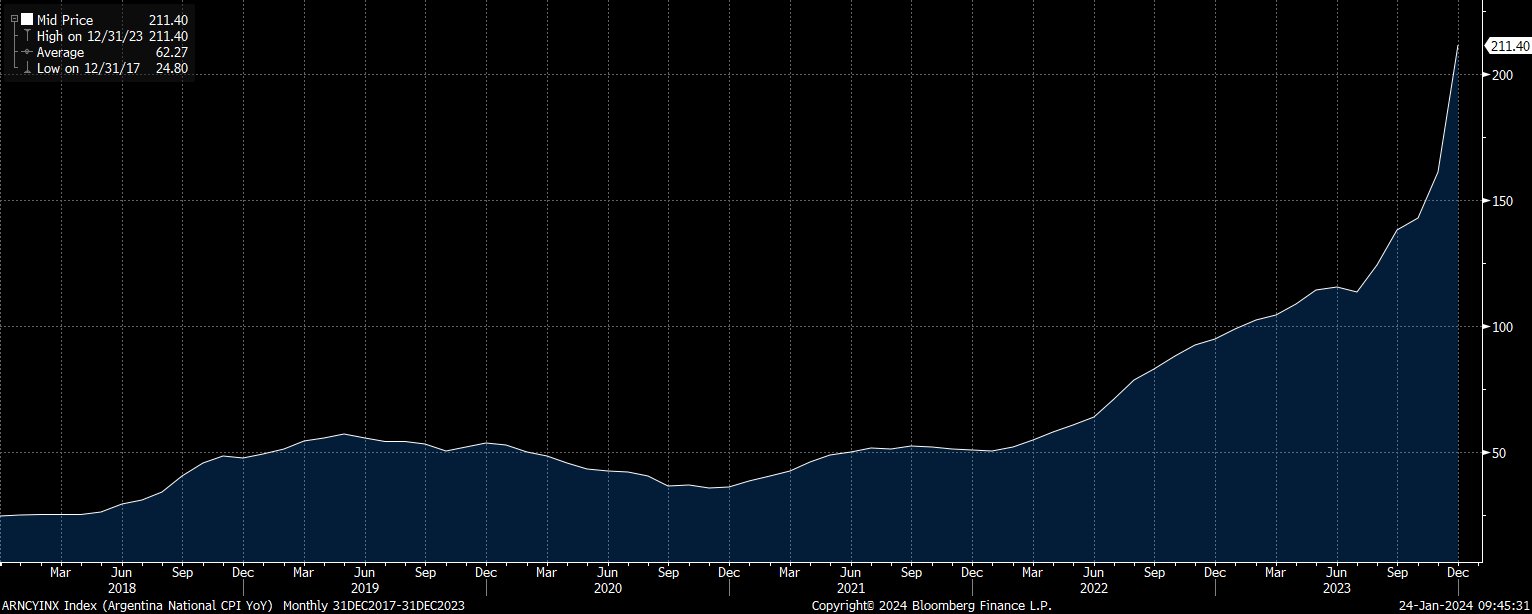
And inflation is rising: CPI YoY
Corporations and the government are the primary agents with debt on their balance sheets:
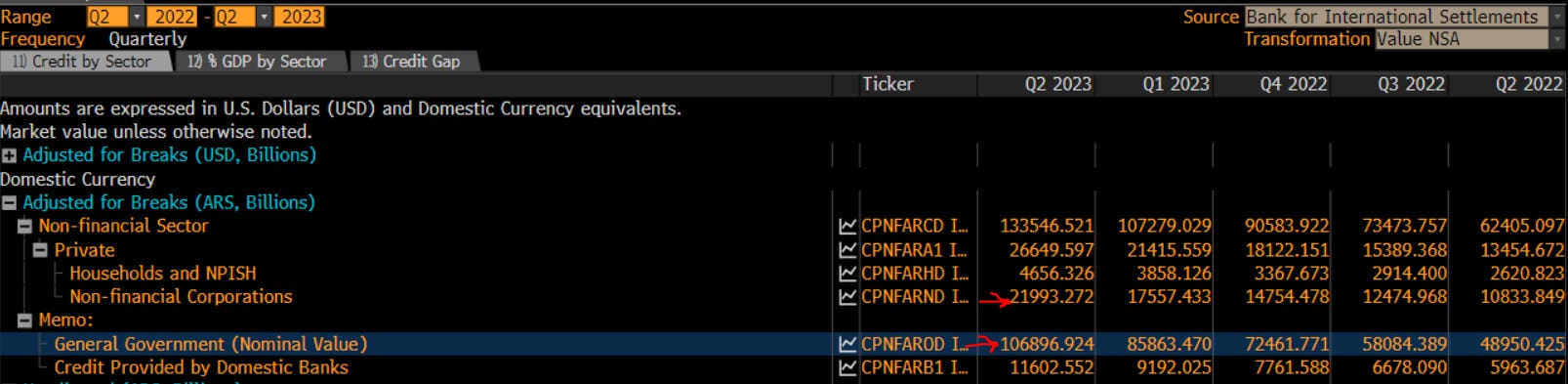
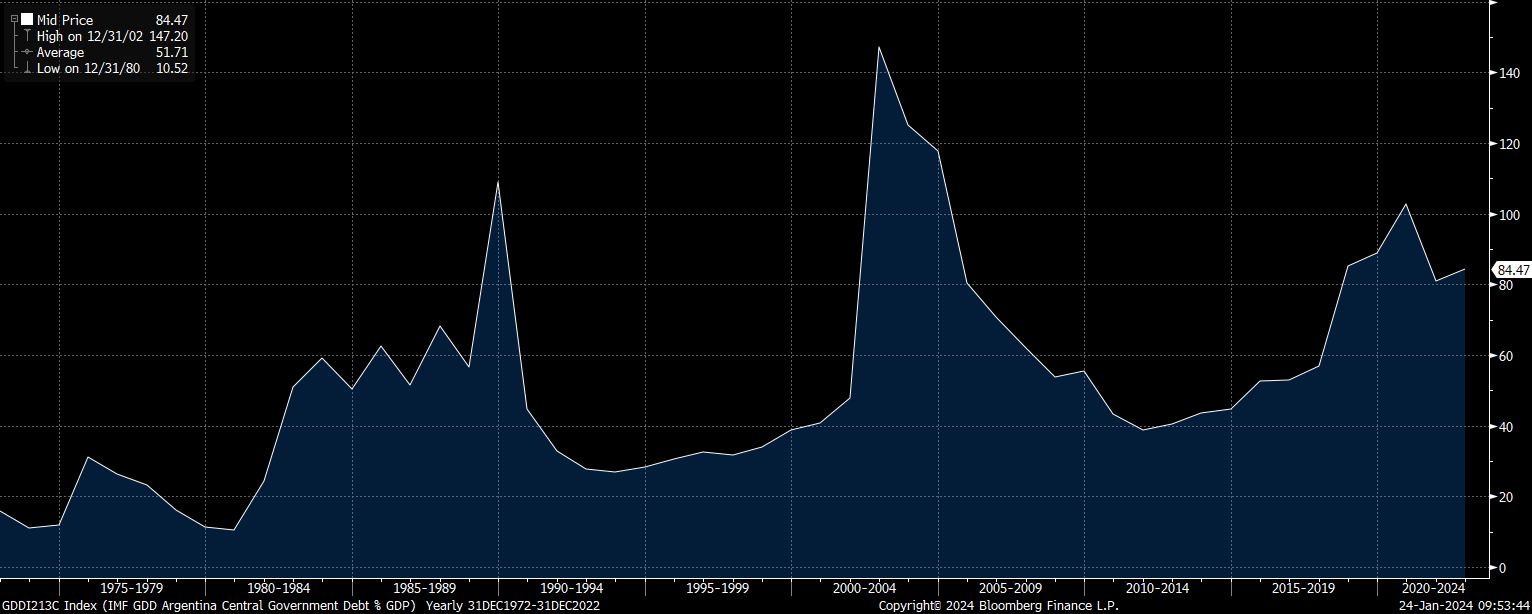
Government debt as a % of GDP is accelerating and must be watched in connection with the country turning its current account into a surplus:
As you can see, there is an exceptional foundation for Argentina due to its geography and demographics. However, the institutions that transmit this wealth are a critical component that can dramatically change the outcome. The current account and international reserves are key things to monitor when making investment decisions.
This is why understanding the import/export make up of the country will be important:
Additionally, review the FX primer and the resources in there to understand how a significant currency devaluation is very possible given the current account deficit and level of international reserves:
The Research HUB: FX Primer, Pt 5
Hey everyone, This is Part 5 of the FX Primer! 5-Part FX Primer Breakdown: Part 1: FX - Resources, The Big Picture, Variables, Aggregating Knowledge, and Essential Tools. Part 2: FX - Synthesizing Information from Part 1: Theory, Practice, Causal Mechanics vs. Regression Analysis.
Financial Markets: Stocks, Bonds, and the Argentinian Peso:
The way you break down financial assets in Argentina is very similar to how you break down assets in any country. However, you need to remember that every market is unique and there will always be different variables you need to account for. On a fundamental basis, the causal mechanics are the same. If you understand the causal mechanics of what drives asset markets in general (and not simply a siloed experience from the US), you will pick it up very fast.
Reference my article on risk on / risk off regimes for further clarification on quantifying regimes in financial assets:
The Research Hub: Risk On / Risk Off Regimes

Hey everyone, There is a lot of discussion out there as to if we are still in a bear market or have entered a new bull market. What complicates things further is everyone seems to have a different definition of a bull or bear market that they assert is “the correct definition”, as if something could even be possible.
The main equity index in Argentina is the MERVAL Index:
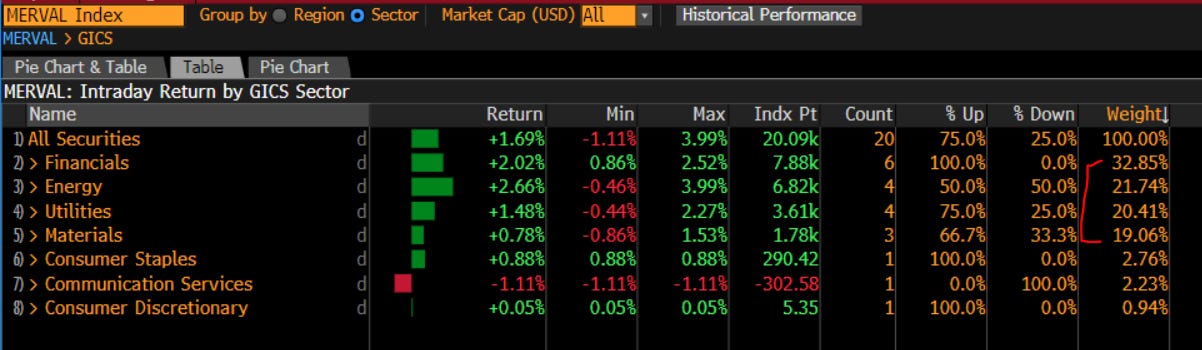
The primary weightings are financials, energy, utilities and materials:
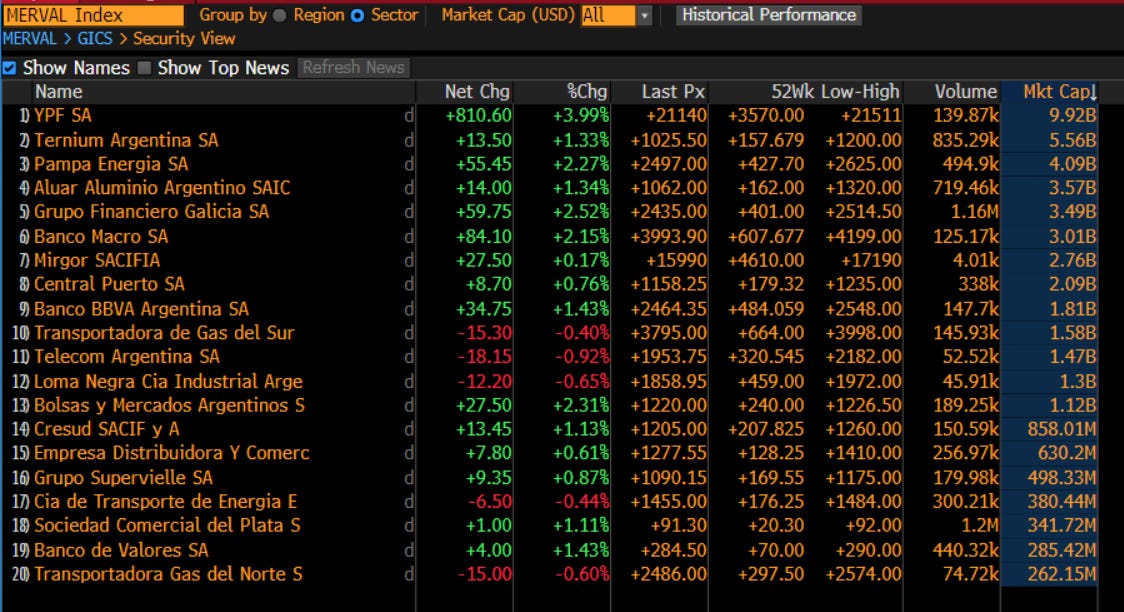
There are only 20 stocks in the index spanning from $9.92B in market cap all the way down to 262m:
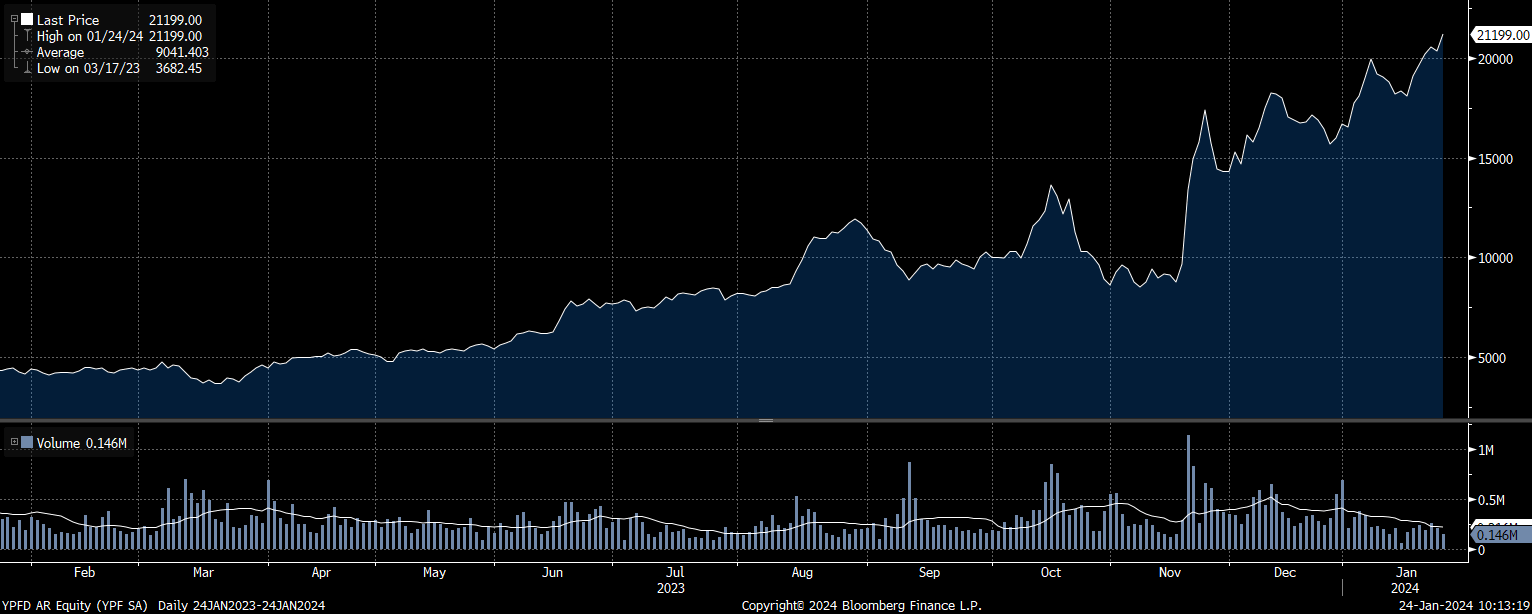
YPFD is the largest stock in the index and is in the energy sector:

It continues to make highs with the surge in inflation:
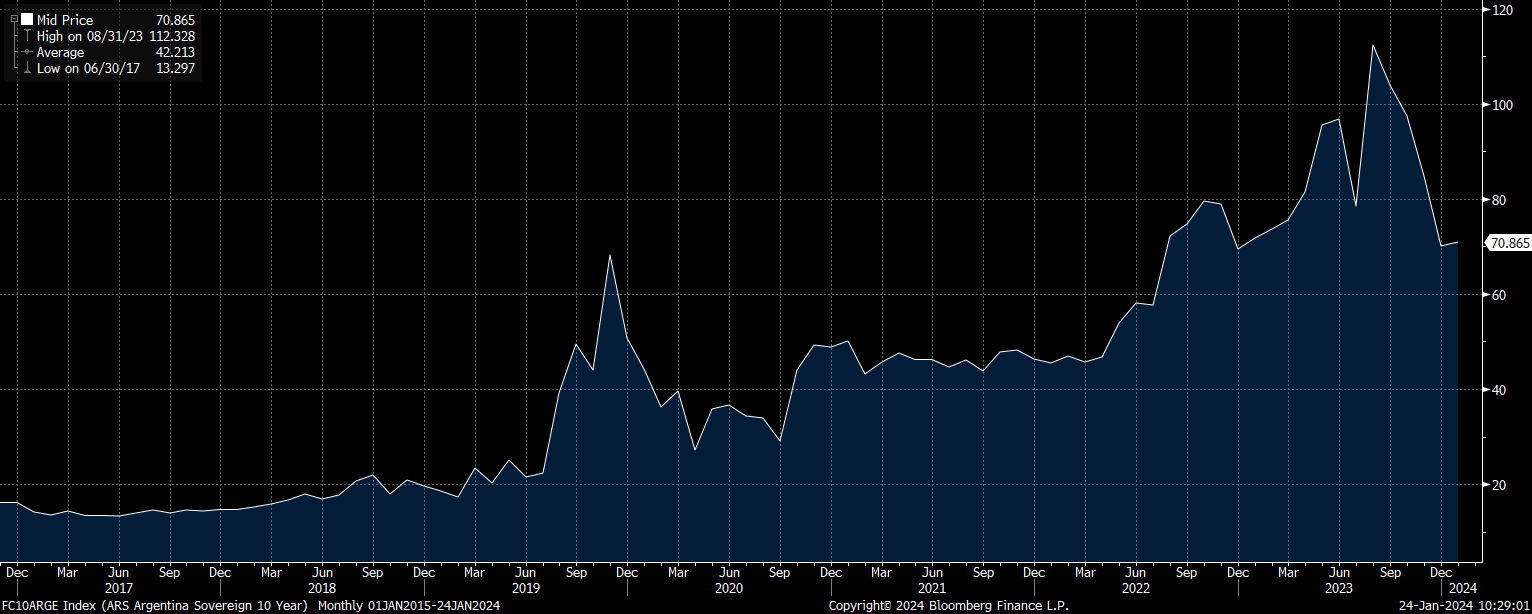
Because inflation is so high, interest rates are like the wild west. The 10 year is currently at 70%
And the 2 year is at 84%
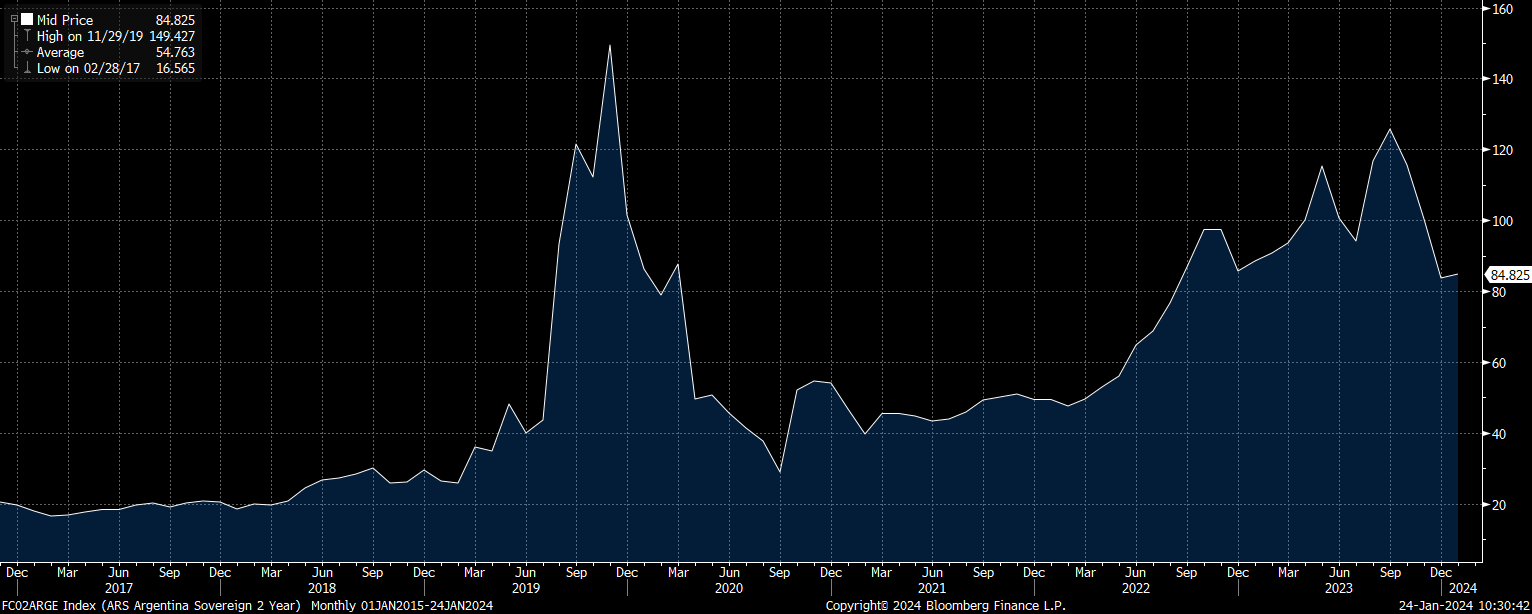
As a result of the inflation situation and current account deficit, the country is actively managing its exchange rate with international reserves.
The local US ETF of Argentina continues to rally though:
The specific opportunities I would be focused on are the parts of Argentina that provide the most promise. There are likely going to be issues with inflation, the currency, and rates for several years until they can run a current account surplus and stabilize the economy.
Emerging markets show the explicit side of global macro and it can further refine how you think about domestic markets. While there will be discontinuities, trading in an emerging market will dramatically improve your ability to think about the rest of the world.
History of growth, inflation, and liquidity on a structural and cyclical basis:
Argentina has one of the most interesting history’s from a financial perspective. I actually wrote an entire article on this book by Paul Plustein. It is one of the easiest and clearest books to read:

Instead of writing a whole section on Argentina, I will point you to my original article below:
The Research HUB: Lessons From Argentina

In this article, I will be sharing lessons from the crisis in Argentina that took place in the late '90s and early 2000s. I will explain how to think about markets in the context of this crisis, connect it with recent examples, and then provide a framework for maneuvering future crises.
Current growth, inflation, and liquidity regime and its connection to each financial asset:
Big picture, inflation is incredibly high, growth is in contraction and there are multiple factors exerting a negative liquidity impulse. The liquidity impulse needs to be weighed against the LEVEL and ACCELERATION of nominal activity in order to correctly determine the net effect on the Argentinian stock market and currency.
As noted above, there has already been an initial devaluation of the currency:

Any type of intentional devaluation of a currency is a negative liquidity impulse attempting to bring inflation under control.
The labor market is strong though:
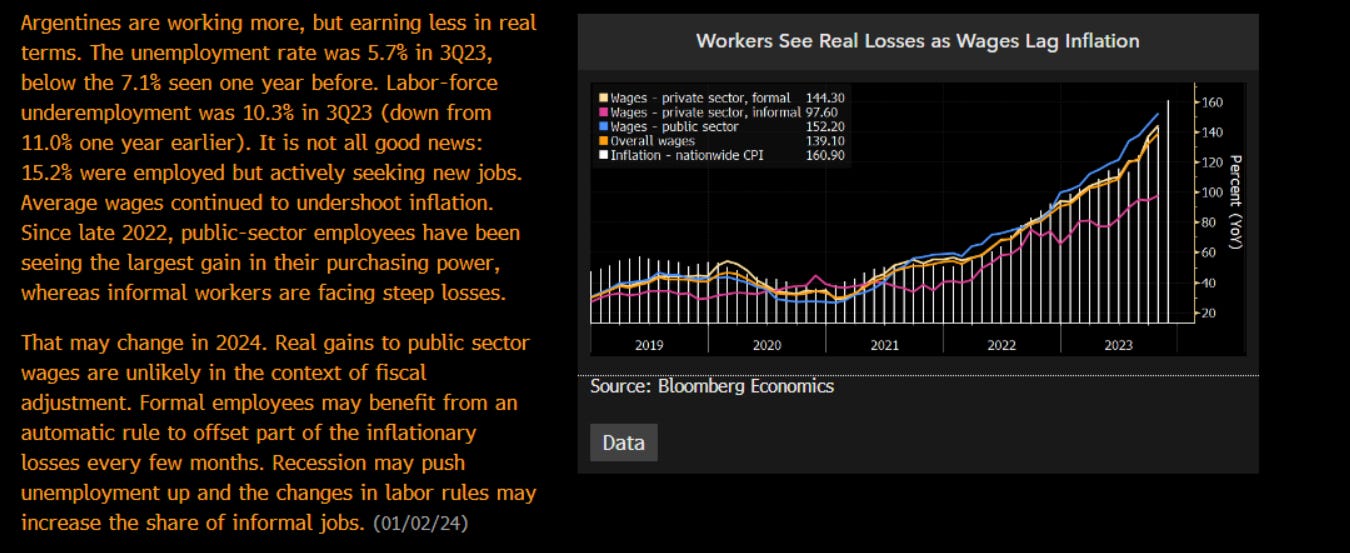
And we don’t see a pronounced and pervasive deceleration in inflation:
Key Idea:
The main thing I want to see for a melt-up in Argentinian equities is a deceleration in inflation WITHOUT a collapse in growth. If we are able to have a strong Argentinian Peso AND an acceleration in growth due to a current account surplus, we are likely to see a situation similar to Mexico where the Peso is rallying and Mexican equities are making ATH.
Additional resources for research and trading in Argentinian markets:
Key Books on Argentina:
And the Money Kept Rolling In (and Out) Wall Street, the IMF, and the Bankrupting of Argentina
Helpful Academic Papers On Argentina:
https://www.imf.org/external/np/ieo/2003/arg/index.htm
https://www.nber.org/papers/w6236
https://academiccommons.columbia.edu/doi/10.7916/D8862P4D
https://academic.oup.com/cje/article-abstract/46/5/977/6607651?login=false
https://academic.oup.com/book/25698/chapter-abstract/193186495?redirectedFrom=fulltext&login=false
https://academic.oup.com/book/3934/chapter-abstract/145538338?redirectedFrom=fulltext&login=false
Conclusion:
We have laid out a lot of ideas and mental frameworks for Argentina. My hope is that you see the opportunity and the qualifications for that opportunity. If everything was straightforward, no one would need you to extract returns or to provide the service of liquidity.
We now have a total of 4 country primers including Argentina!
I will be doing one more Country Primer and then shifting back to a lot more research and macro trades. The final country primer will be incredibly important because it will be one of the most influential countries in the coming decade.
Japan is important because of its function in global capital flows. Mexico, Brazil and Argentina are important because of their role in the deglobalized world and their commodity exposure. India will be the next primer because it presents one of the greatest opportunities for an entire country to shift from an emerging market to a domestic market. If you think technology is a big deal in the United States, just wait till SaaS products reach full adoption in India!