


Intro To Country Primers:
Developing an exceptional base of knowledge is THE differentiating factor between blindly following narratives and knowing what is actually going on. It is the prerequisite to generating exceptional insights that can be monetized.
We started with a Primer on Japan given its position in global capital flows:
Country Primers: Japan

Intro To Country Primers: Global macro trading is made up of generalists who morph across all countries in the world to find asymmetrical returns. To identify asymmetrical returns, you need an exceptional knowledge of every country, sector, and asset in the world.
We then moved to Mexico given its heightened importance in the deglobalized world we are moving into:
Country Primers: Mexico

Intro To Country Primers: I laid out the framework for WHY I am writing a series of country primers in the Japan Primer. There has already been a ton of positive feedback so we won’t slow down. Developing this TYPE of knowledge about a country is comparable to building a factory. Once you set the foundations for operations, you simply need to run the factory to make money. Knowledge of countries throughout the world functions in the exact same way.
We are continuing this focus with Brazil!

Mapping capital flows and the flows of goods/services are two sides to the same coin. Brazil has a very unique place in the world from a trade and financial markets standpoint. Their currency is a reflection of this. While it has been trending up for the past decade, it is now compressing before its next move.
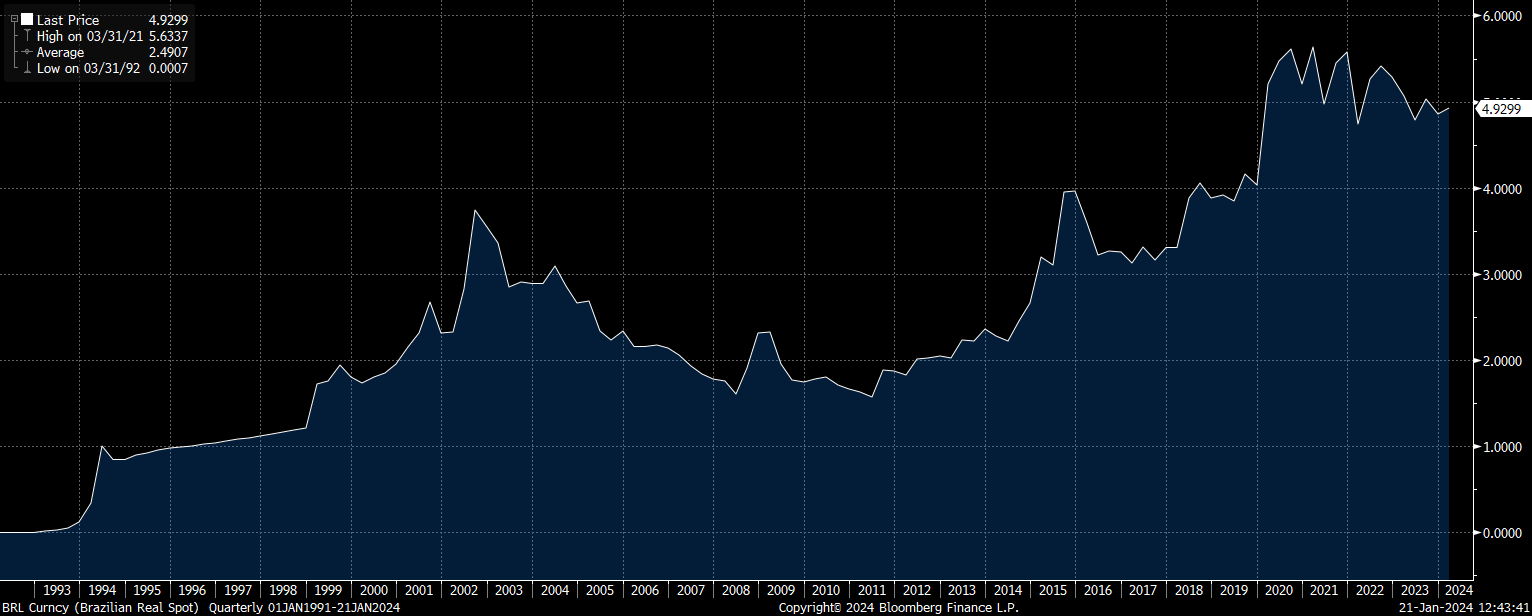
This is occurring as their stock market is making ATHs:
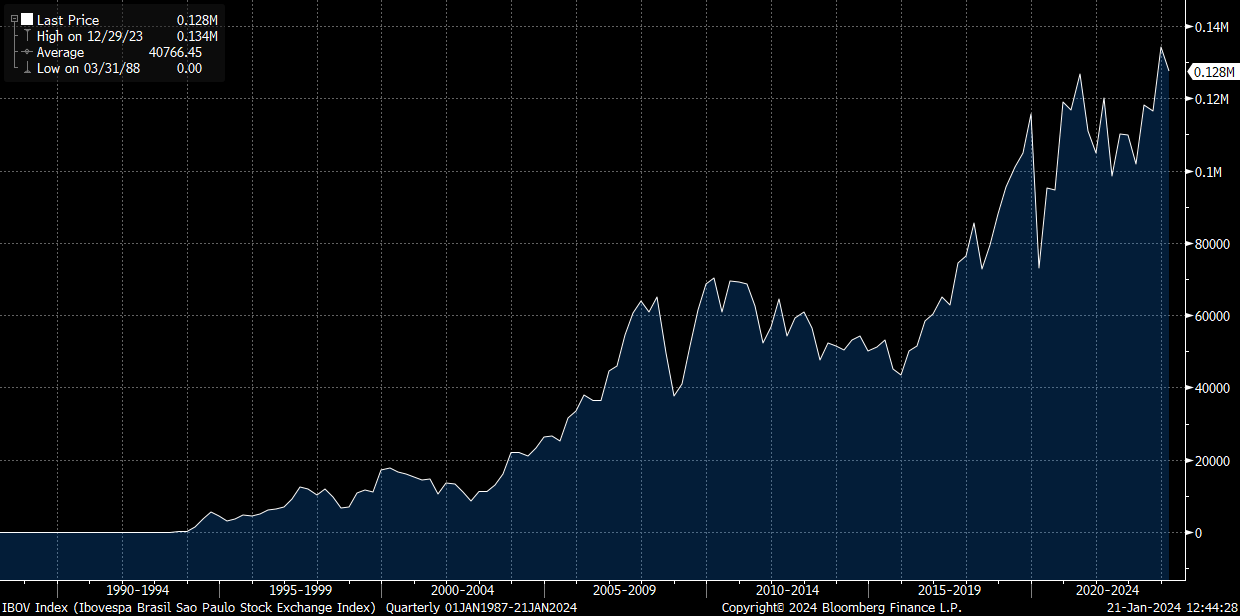
And the largest bank is leading the way. Let me say, that when you have financials and banks leading a breakout in stocks, you know the underlying trend likely has credit creation from banks behind it.
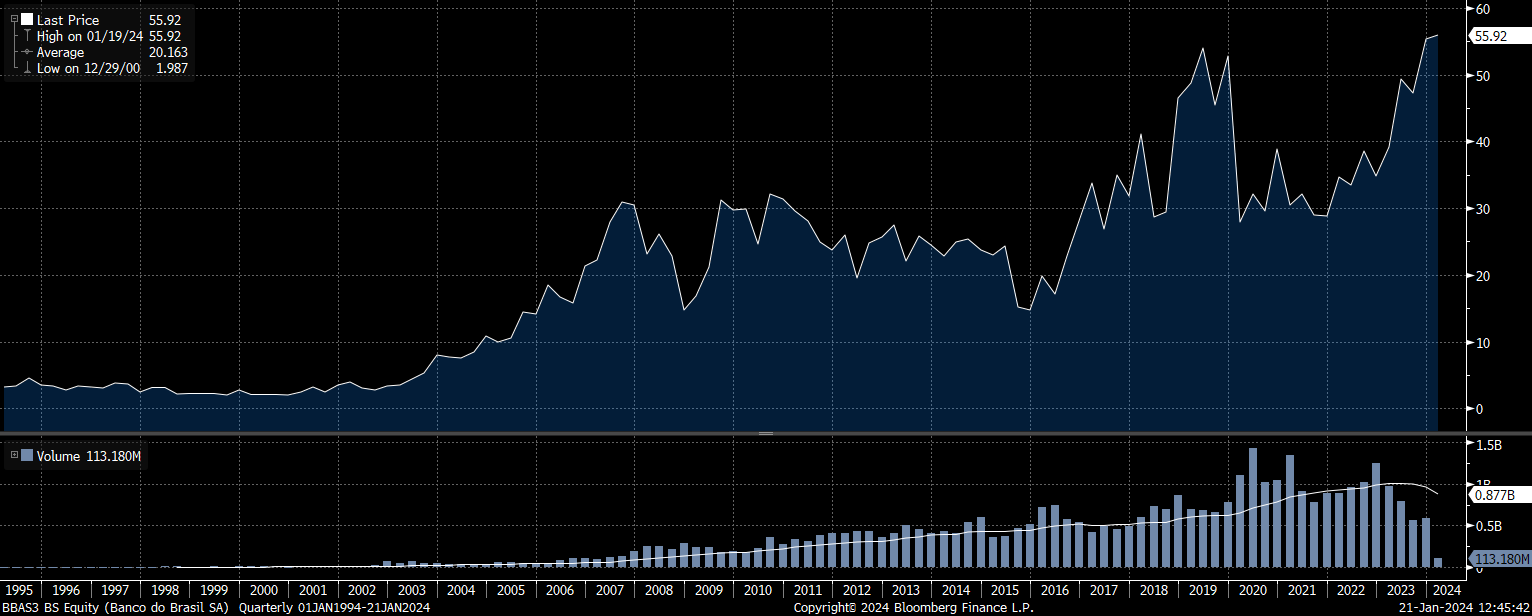
The government owns half of the bank:

And loan issuance continues to climb quarter by quarter:
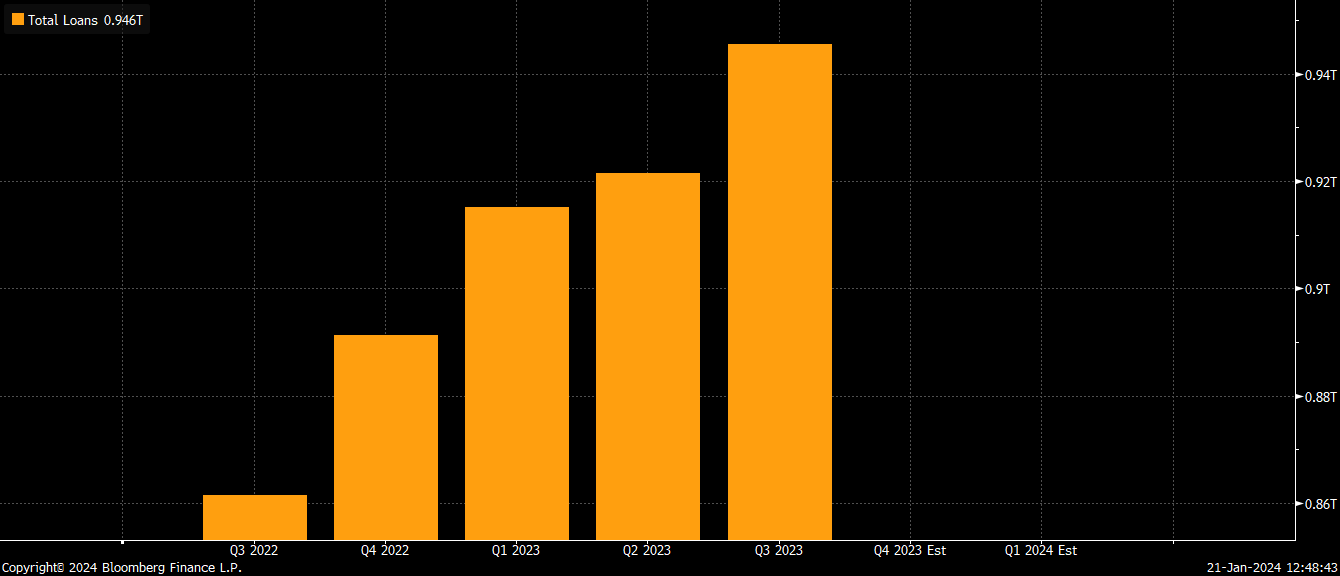
It is signals like these that should cause you to be very interested in what is happening “under the surface.” Most strategies paint broad strokes about countries with reductionistic narratives. This falls apart when you begin running risk as a practitioner. We will build a comprehensive framework by analyzing Brazil's structural and geopolitical regime, and then correctly quantify it with economic data. It is upon this foundation that we can analyze Brazilian financial markets correctly. I will be sharing more and more trades from the countries I write primers on as we progress through the year.
Do the work now to generate the alpha later!

Overview: Here is the structure for this primer
Country Overview
Geography and Demographics
Economic Data: GDP, GNI, BoP, and Balance Sheets
Financial Markets: Stocks, Bonds, and the Brazilian Real.
History of growth, inflation, and liquidity on a structural and cyclical basis
Current growth, inflation, and liquidity regime and its connection to each financial asset
Additional resources for research and trading in Brazilian markets
Country Overview:
Following more than three centuries under Portuguese rule, Brazil gained its independence in 1822, maintaining a monarchical system of government until the abolition of slavery in 1888 and the subsequent proclamation of a republic by the military in 1889. Brazilian coffee exporters politically dominated the country until populist leader Getúlio VARGAS rose to power in 1930. VARGAS governed over various versions of democratic and authoritarian regimes from 1930 to 1945. Democratic rule returned (including a democratically elected VARGAS administration from 1951 to 1955) and lasted until 1964, when the military overthrew President João GOULART. The military regime censored journalists and repressed and tortured dissidents in the late 1960s and early 1970s. The dictatorship lasted until 1985, when the military regime peacefully ceded power to civilian rulers, and the Brazilian Congress passed its current constitution in 1989.
By far the largest and most populous country in South America, Brazil continues to pursue industrial and agricultural growth and development of its interior. Having successfully weathered a period of global financial difficulty in the late 20th century, under President Luiz Inácio LULA da Silva (2003-2010) Brazil was seen as one of the world's strongest emerging markets and a contributor to global growth. The awarding of the 2014 FIFA World Cup and 2016 Summer Olympic Games, the first ever to be held in South America, was symbolic of the country's rise. However, from about 2013 to 2016, Brazil was plagued by a sagging economy, high unemployment, and high inflation, only emerging from recession in 2017. Former President Dilma ROUSSEFF (2011-2016) was removed from office in 2016 by Congress for having committed impeachable acts against Brazil's budgetary laws, and her vice president, Michel TEMER, served the remainder of her second term. A money-laundering investigation, Operation Lava Jato, uncovered a vast corruption scheme and prosecutors charged several high-profile Brazilian politicians with crimes. Former-President LULA was convicted of accepting bribes and served jail time (2018-19), although his conviction was overturned in early 2021. LULA's revival became complete in October 2022 when he narrowly defeated incumbent Jair BOLSONARO (2019-2022) in the presidential election.1
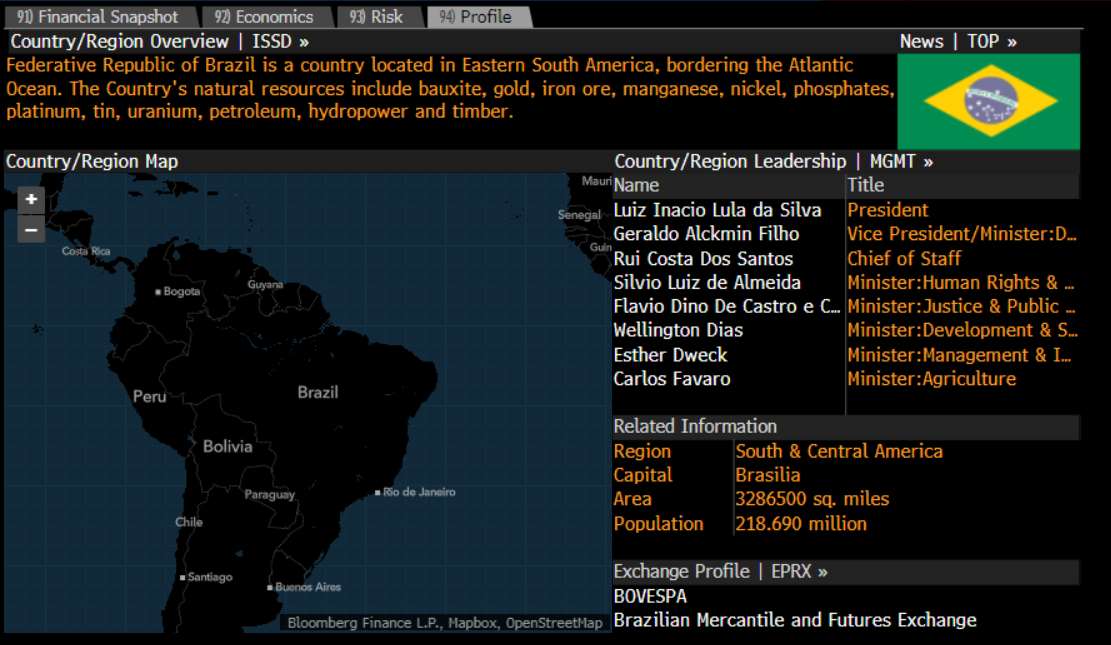
Geography and Demographics:
From a geopolitical perspective, there are many unique tensions you need to keep in mind when framing the growth and risks of Brazil. The country has less of a clear-cut path forward like the views I laid out on Mexico (link).
From a demographic, Brazil is in an advantageous position:
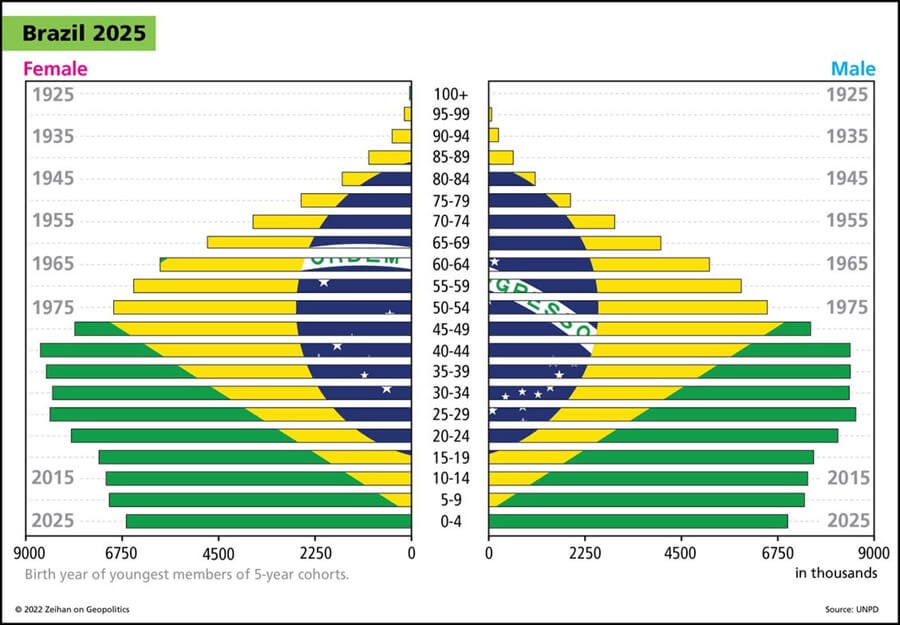
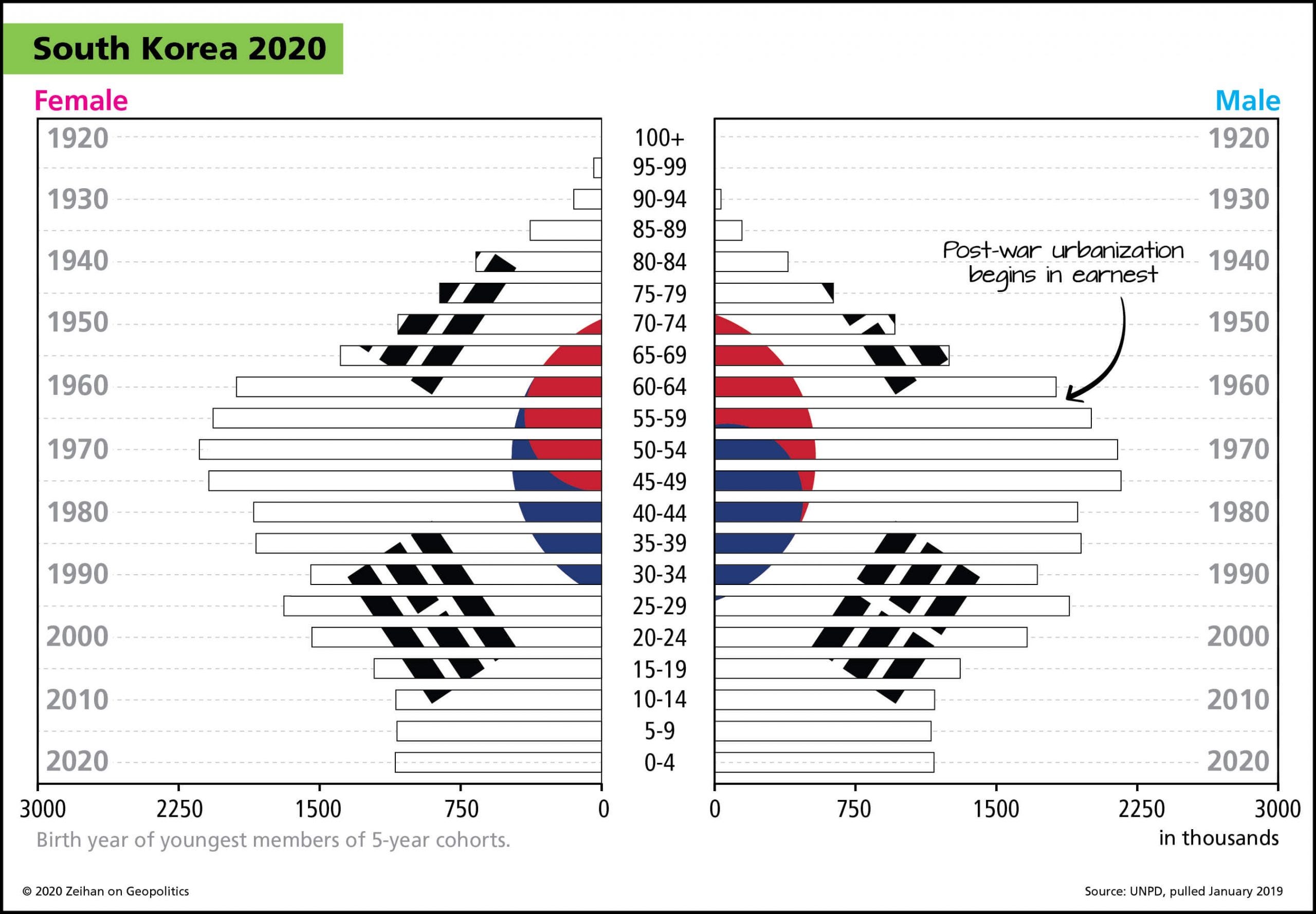
Their demographic structure isn’t primarily older people similar to Germany, Japan, or South Korea:
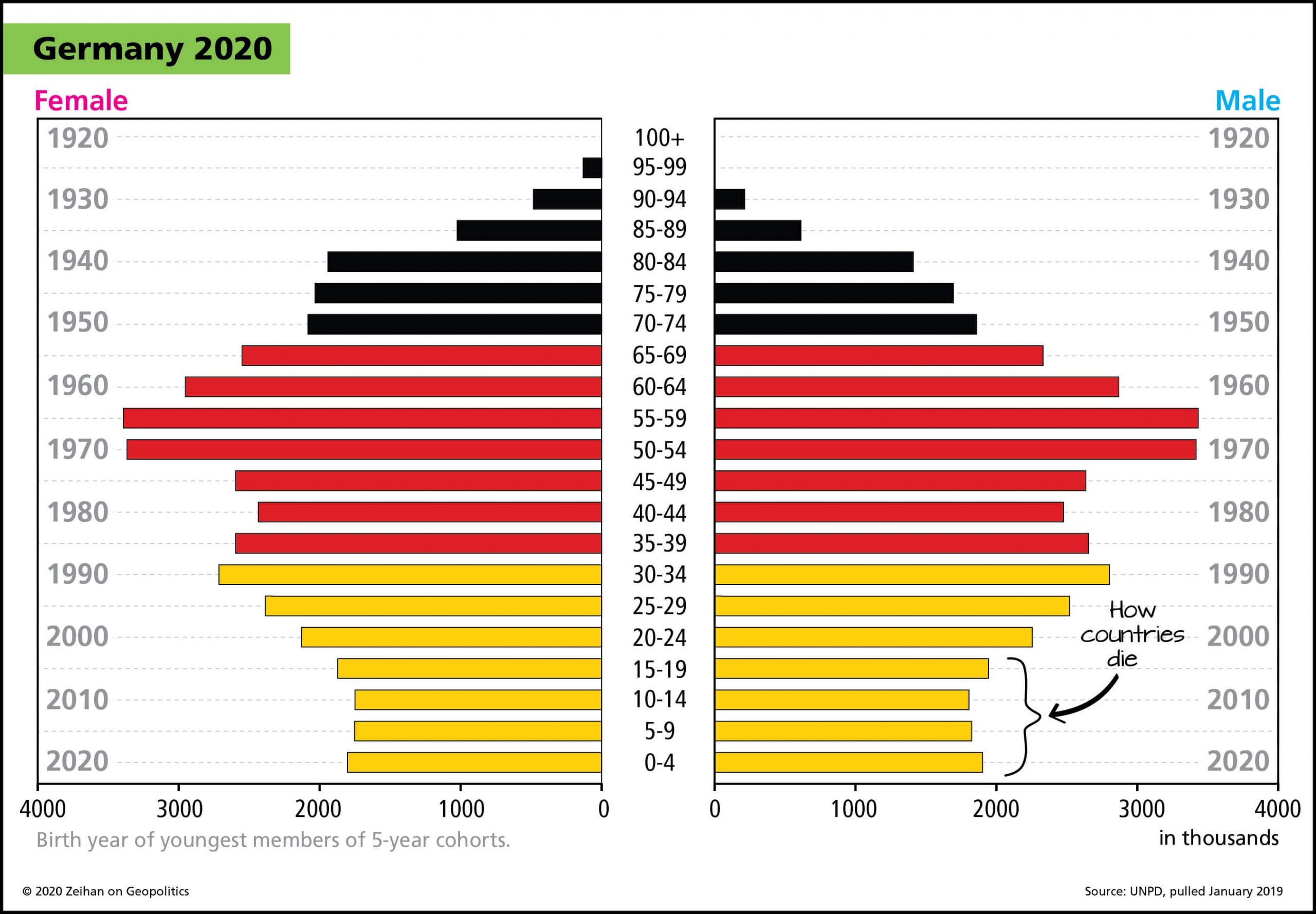
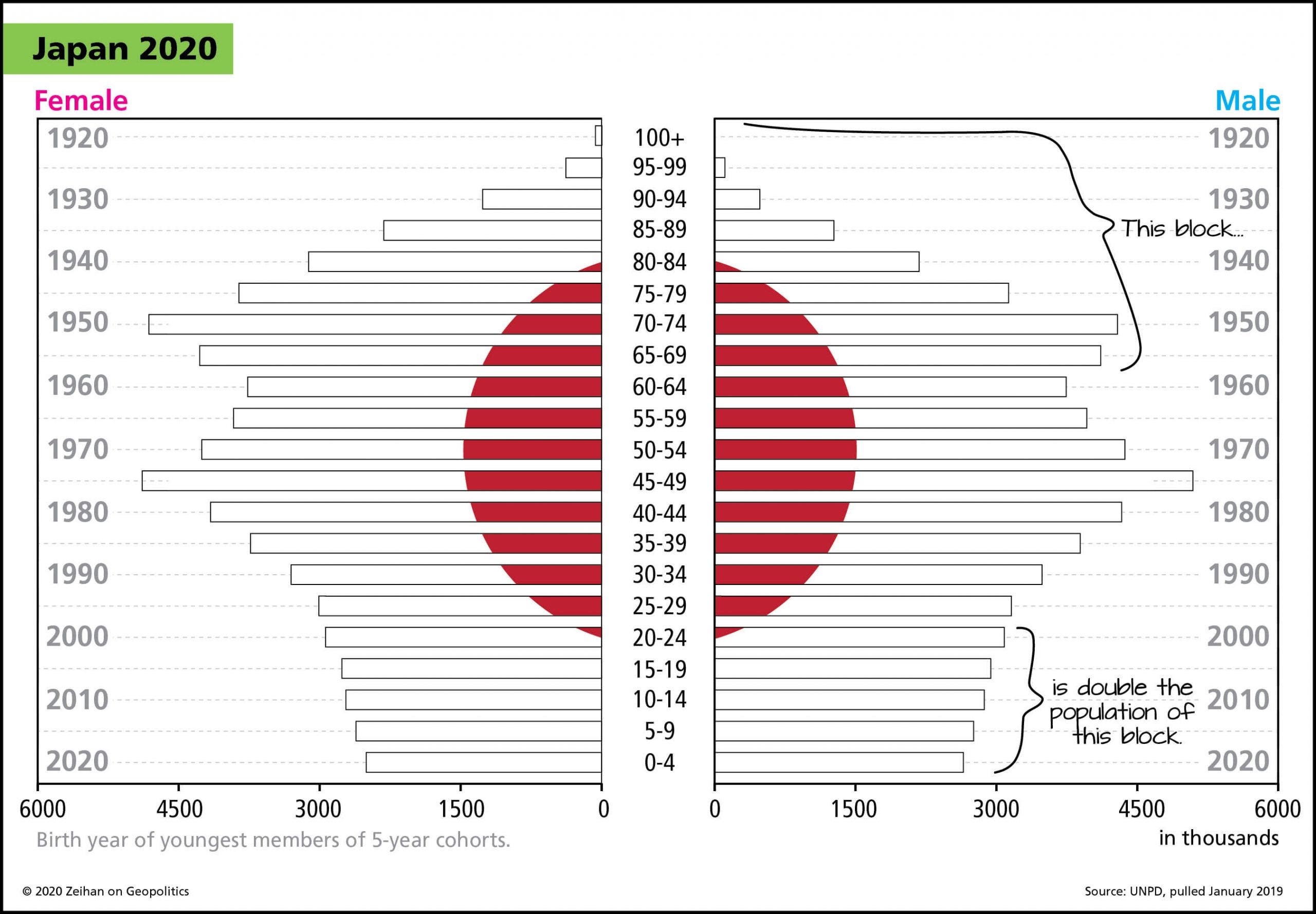
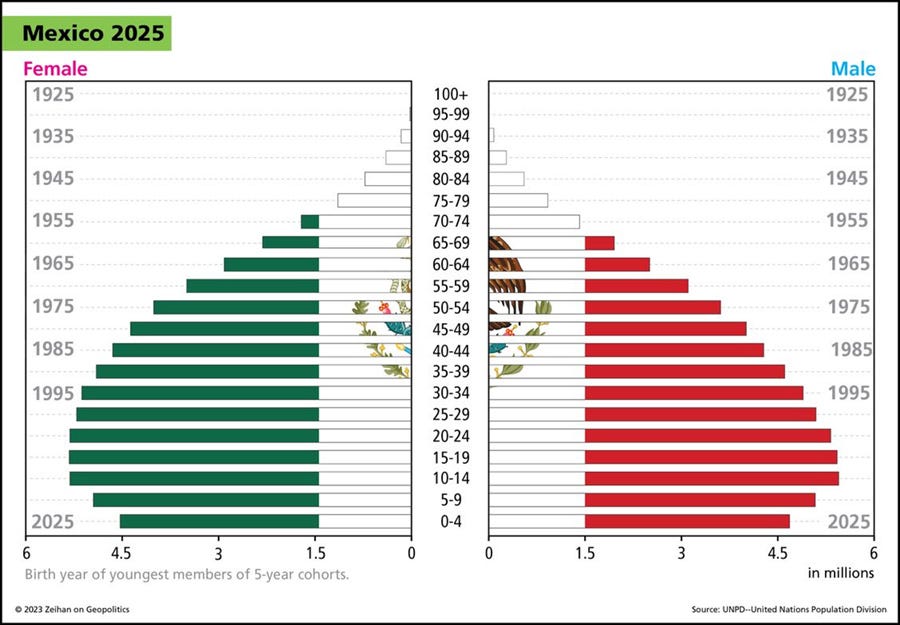
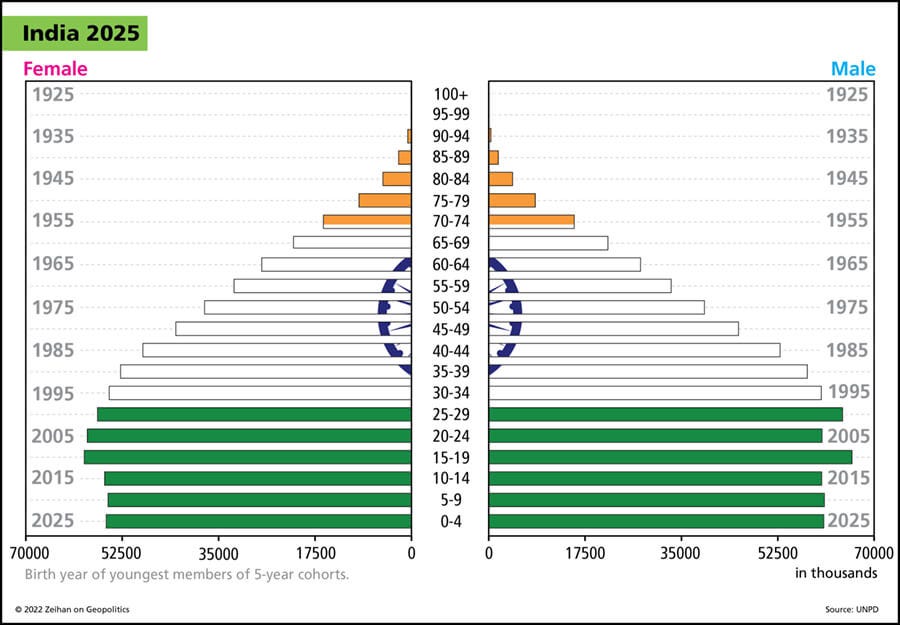
However, it’s not as young as places like Mexico or India:
Key Points:
Brazil has exceptional resources for soy, corn, beef, iron ore, coffee, orange juice, and sugar. Their manufacturing base is recognized globally as excellent. Petrobras is a national oil company that is comparable to global leaders like ExxonMobil.
The limitation for Brazil is transportation. They don’t have the same type of navigable rivers as the US which are easy to develop and build out. Roads are not a clear option either because Brazil isn't incredibly flat. This transportation dynamic doesn't mute the amazing resources and industrial base, it simply creates limitations.
The other problem in Brazil is corruption and inequality. 1% of the Brazilian population owns half of the country’s real estate, with six wealthiest Brazilians having as much wealth as the bottom 50% of the Brazilian population. If you want to understand more of the logic behind inequality’s impact on growth and institutions in a country, check out Why Nations Fail. One of the best books I have ever read on the subject.
The good news is that if foreign capital is invested + foreign demand for Brazil’s goods and services = there can be significant progress made for Brazil as a country. As a trader, you don’t latch onto narratives with confirmation bias. You quantify the moving parts and adapt to the change. This means if we correctly quantify Brazilian growth as it relates to foreign investment and foreign demand, we can have a clear visibility for making the correct decision.
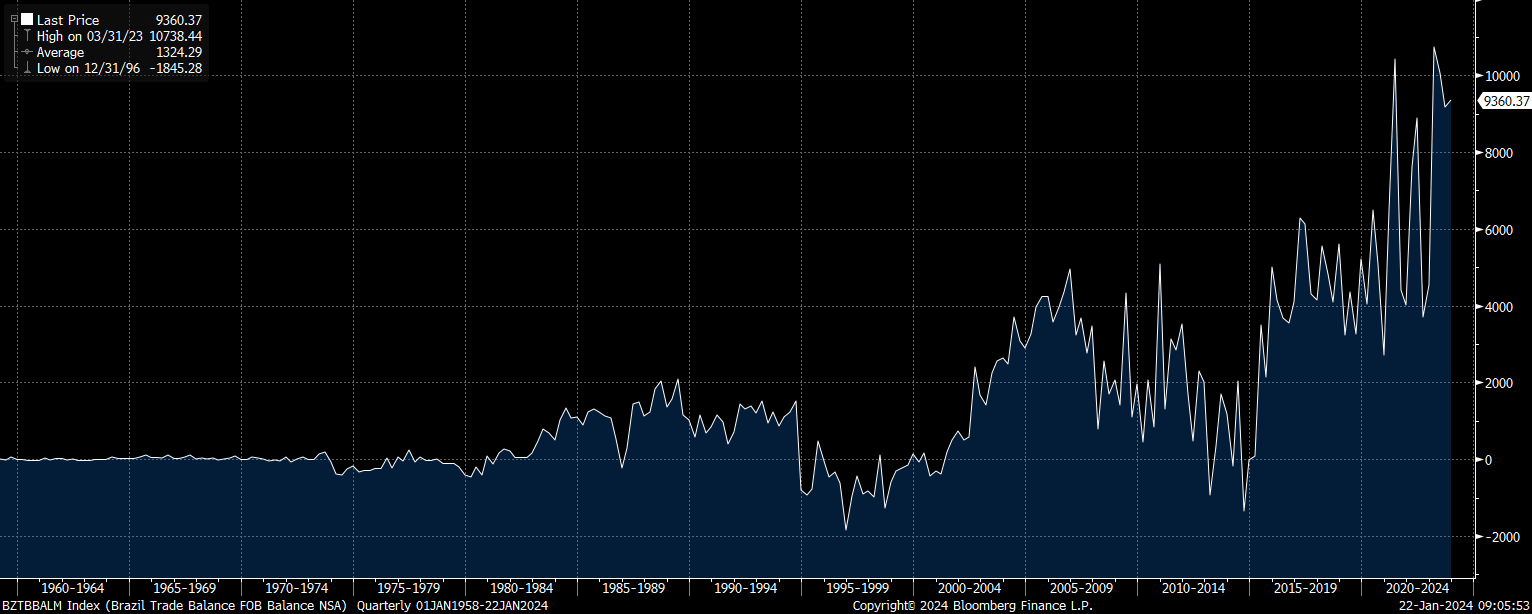
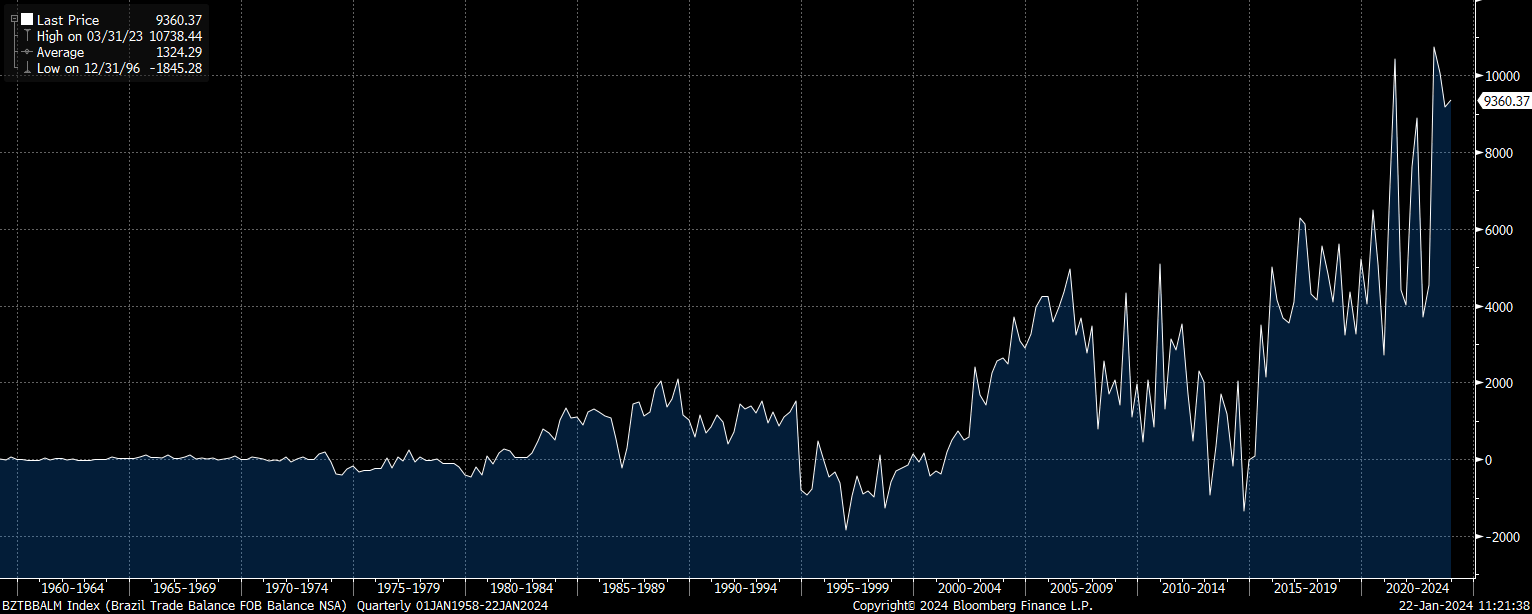
For example, this is Brazil’s trade balance. It is in a HUGE surplus!
And Brazil's foreign investment has been at a net positive for a prolonged period of time.
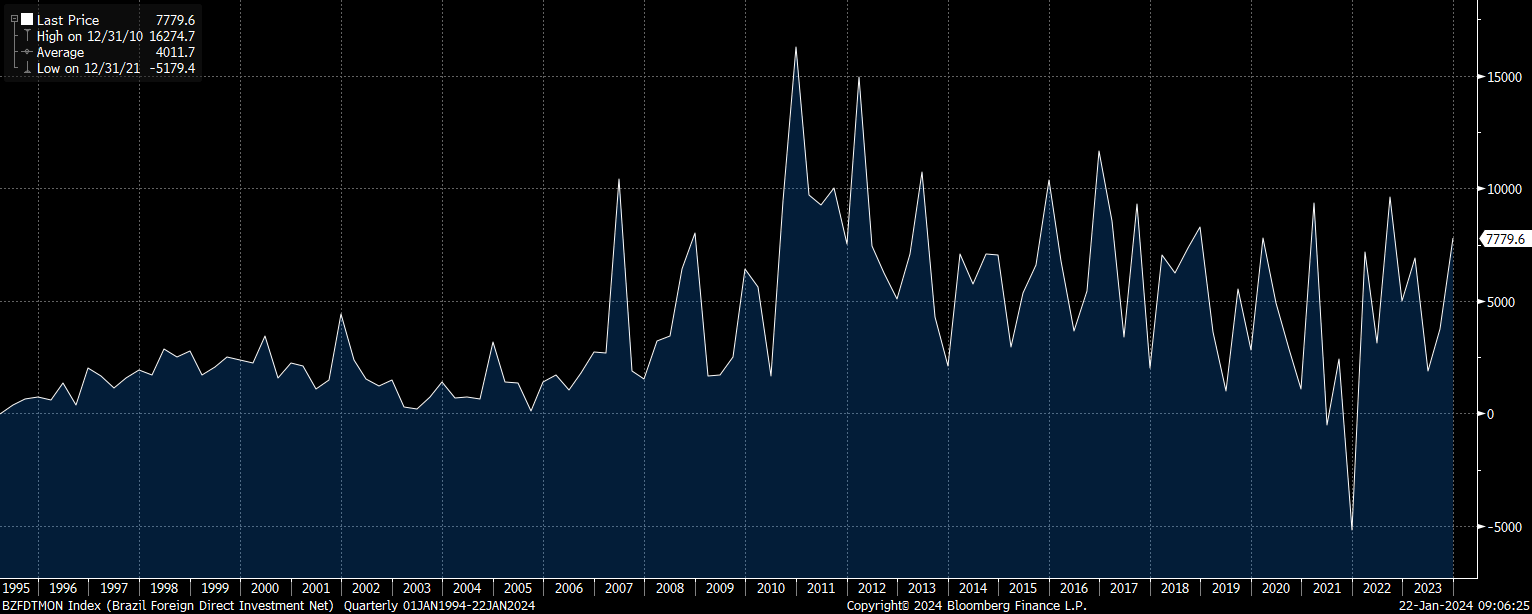
These will be key signals to monitor.
Let’s go over several final points before moving to economic data.
Land use (this is key for understanding natural resources and how they connect to specific stocks)
agricultural land: 32.9% (2018 est.)
arable land: 8.6% (2018 est.)
permanent crops: 0.8% (2018 est.)
permanent pasture: 23.5% (2018 est.)
forest: 61.9% (2018 est.)
other: 5.2% (2018 est.)
Population distribution (this is key for monitoring real estate and development which directly connect to asset markets)
the vast majority of people live along, or relatively near, the Atlantic coast in the east; the population core is in the southeast, anchored by the cities of São Paolo, Brasília, and Rio de Janeiro
Agricultural products
sugar cane, soybeans, maize, milk, cassava, oranges, poultry, rice, beef, cotton
Industries
textiles, shoes, chemicals, cement, lumber, iron ore, tin, steel, aircraft, motor vehicles and parts, other machinery and equipment
With the initial framework in place, let’s move to quantifying this framework with the correct data.
Economic Data: GDP, GNI, BoP, and Balance Sheets:
A quick note about WHY we quantify: If you go onto any major news station or macro strategist service, they will never provide you a framework for decision-making. They will always hand-select a narrative and their data points to support their view. If you are a trader in financial markets, this is incredibly unhelpful. What you want to do is go into a system, aggregate all of the data points and moving parts, quantify how much of an impact/signal they have during various regimes or periods, and then systematize how you generate insights to reduce the margin of error.
This is what we are accomplishing here! We are building a framework so that we can consistently generate trade ideas as opposed to me pitching a single trade. If you are new to financial markets, the way you add value or get hired by a fund is by generating unique insights that produce uncorrelated returns. Built this framework!
Framework For Economic Data:
Now that we have the big-picture context for Brazil, we need to quantify each moving part of the economy with data. When we approach economic data, we want to quantify the FLOW and CAPITAL STRUCTURE for each agent (households, corporates, sovereigns, financial institutions). If you want a good book on this, check out The Volatility Machine.
GDP:
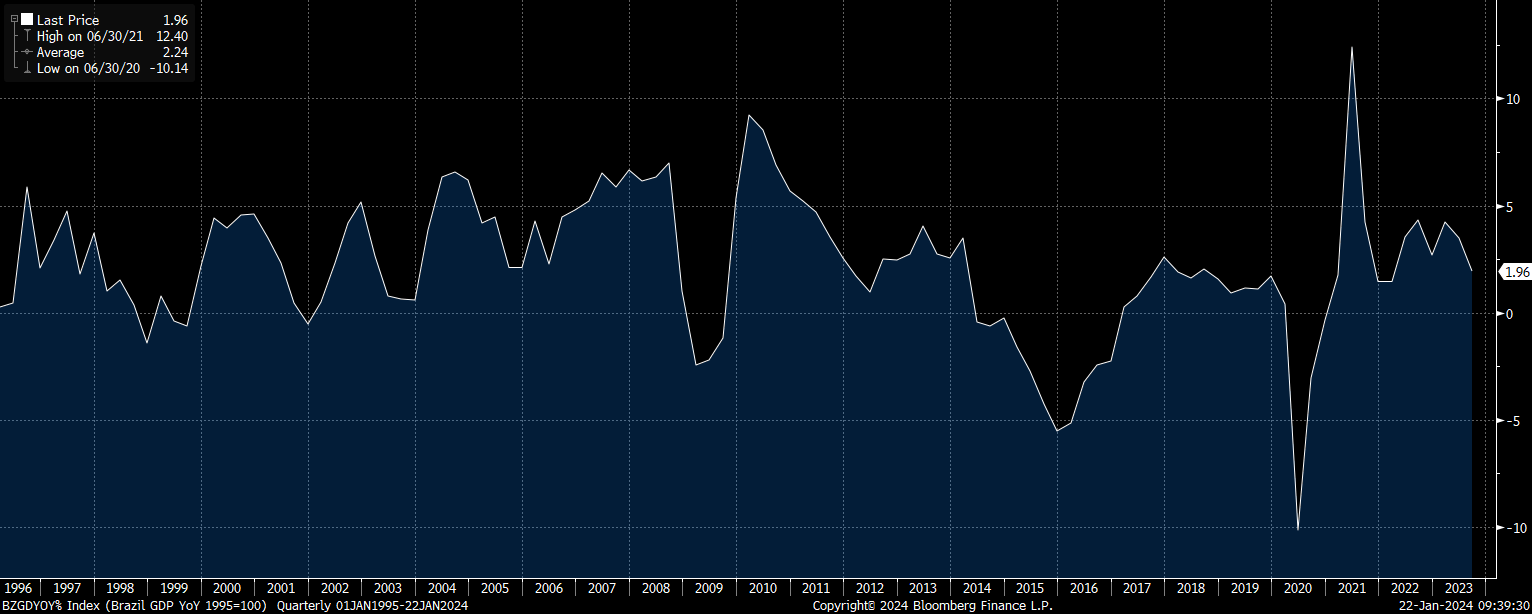
Real GDP is currently running at 1.96% YoY. Brazil had a significant contraction in growth during 2008, 2015, and COVID-19.
The largest line item for nominal GDP is household consumption:
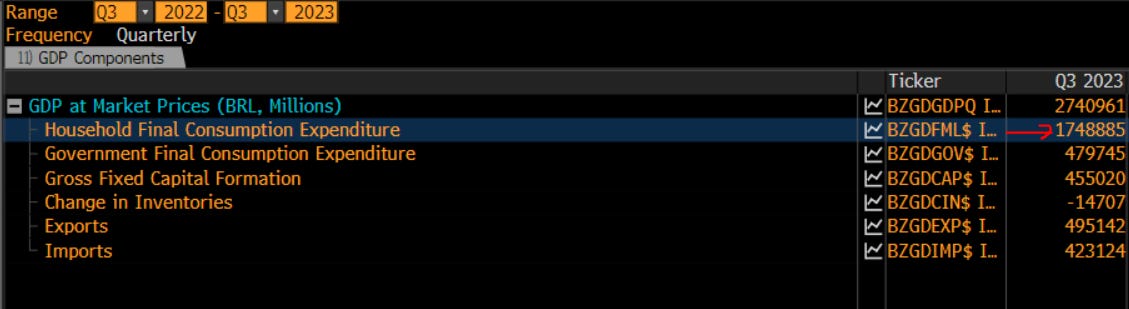
Government spending and gross fixed capital formation moving closely with each other in their trend and contribution to GDP:

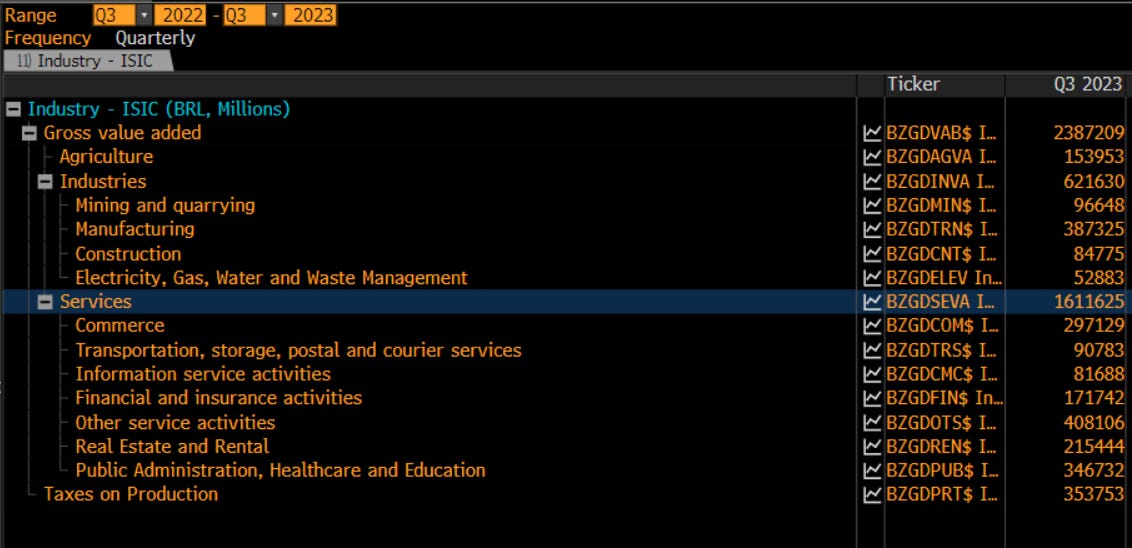
GDP is primarily made up of agriculture, industries, and services. The service sector is the largest contributor:
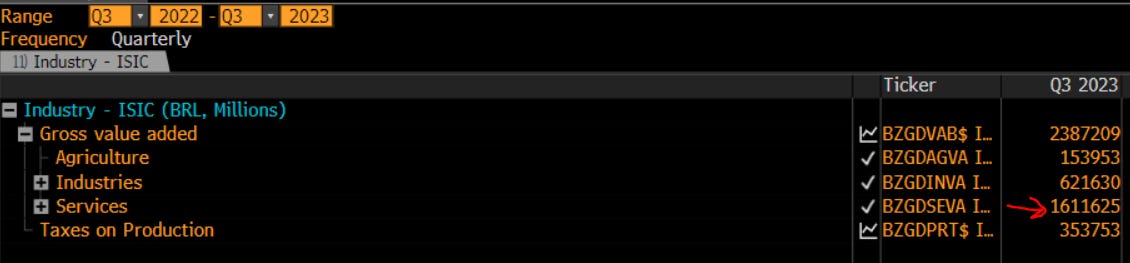
It is important to note that in countries like Brazil, there can be significant divergences in the agricultural sector due to seasonality, supply/demand and the prices of commodities. These factor and their transmission into top-line GDP are key to monitor:

There are typical service sector industries but the manufacturing and mining sectors are key to watch given Brazil’s natural resources:
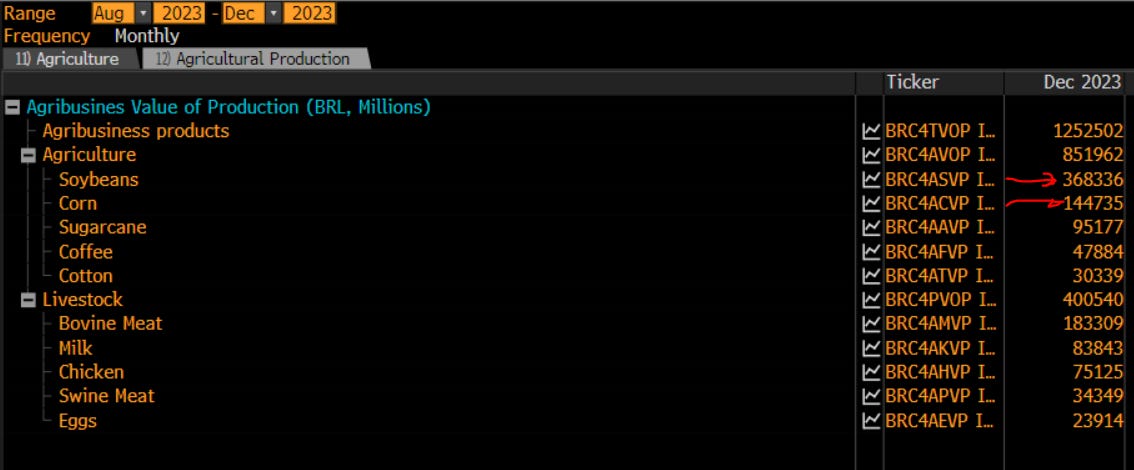
Soybeans and corn are large line items for production:
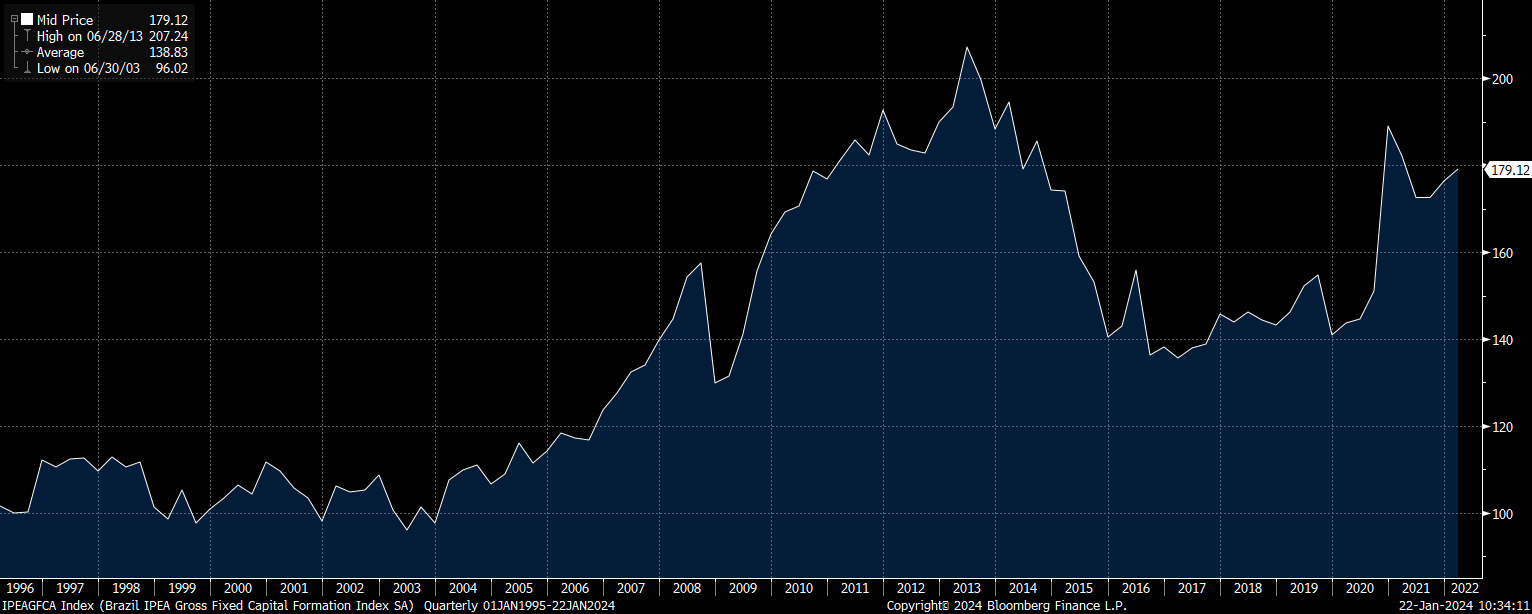
Gross Fixed Capital Formation is accelerating significantly which will be a key data point to watch in connection with foreign investment flows. More investment creates more capacity for production which can respond to foreign demand:
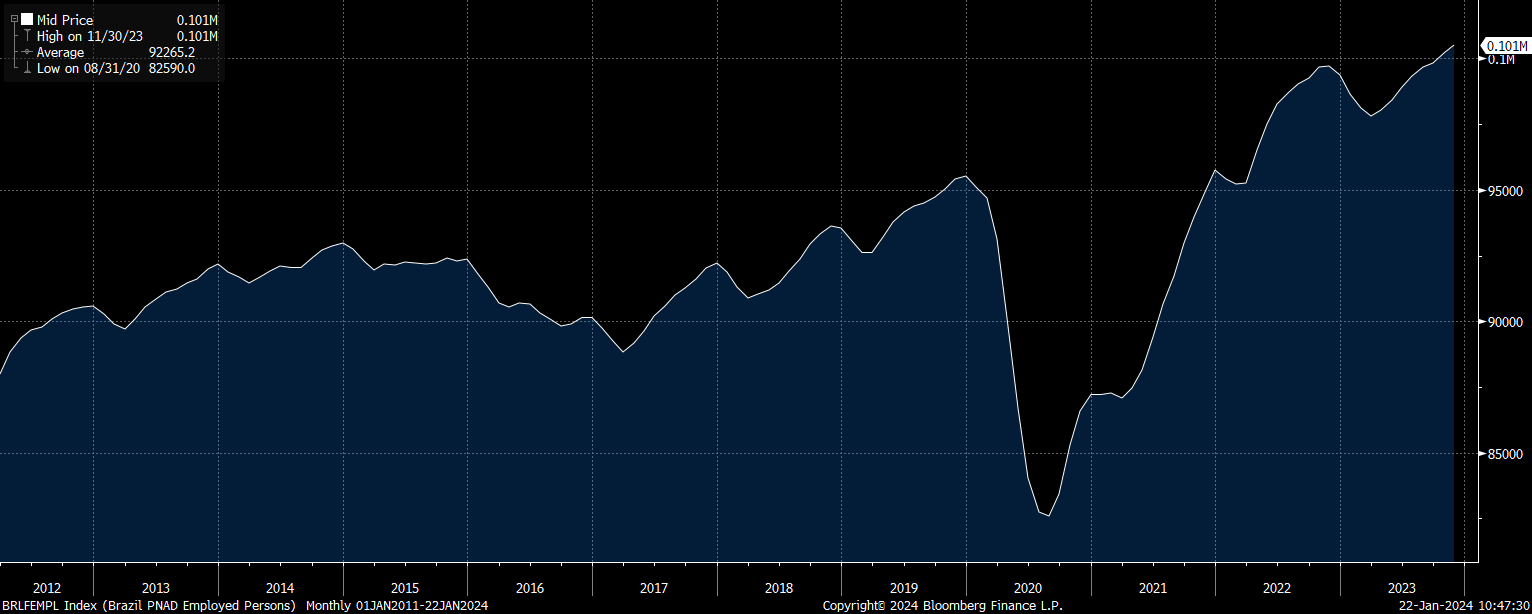
Employment continues to accelerate significantly:
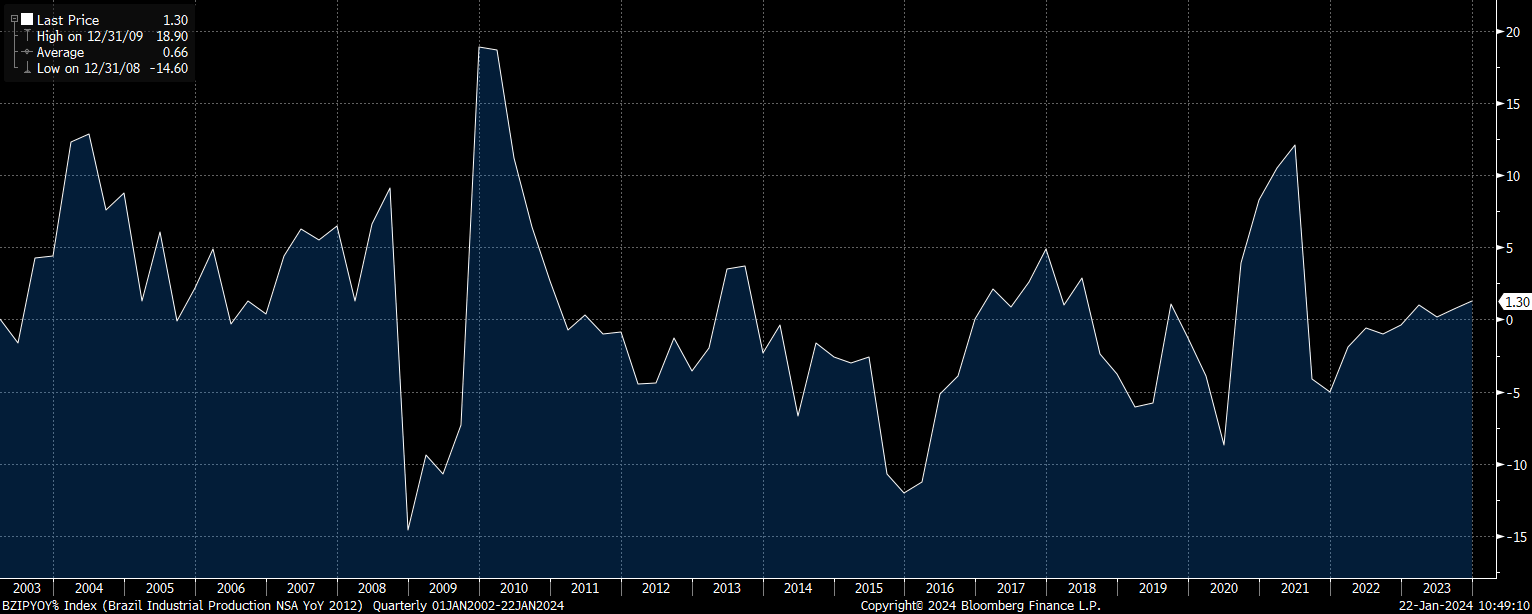
And industrial production is accelerating:
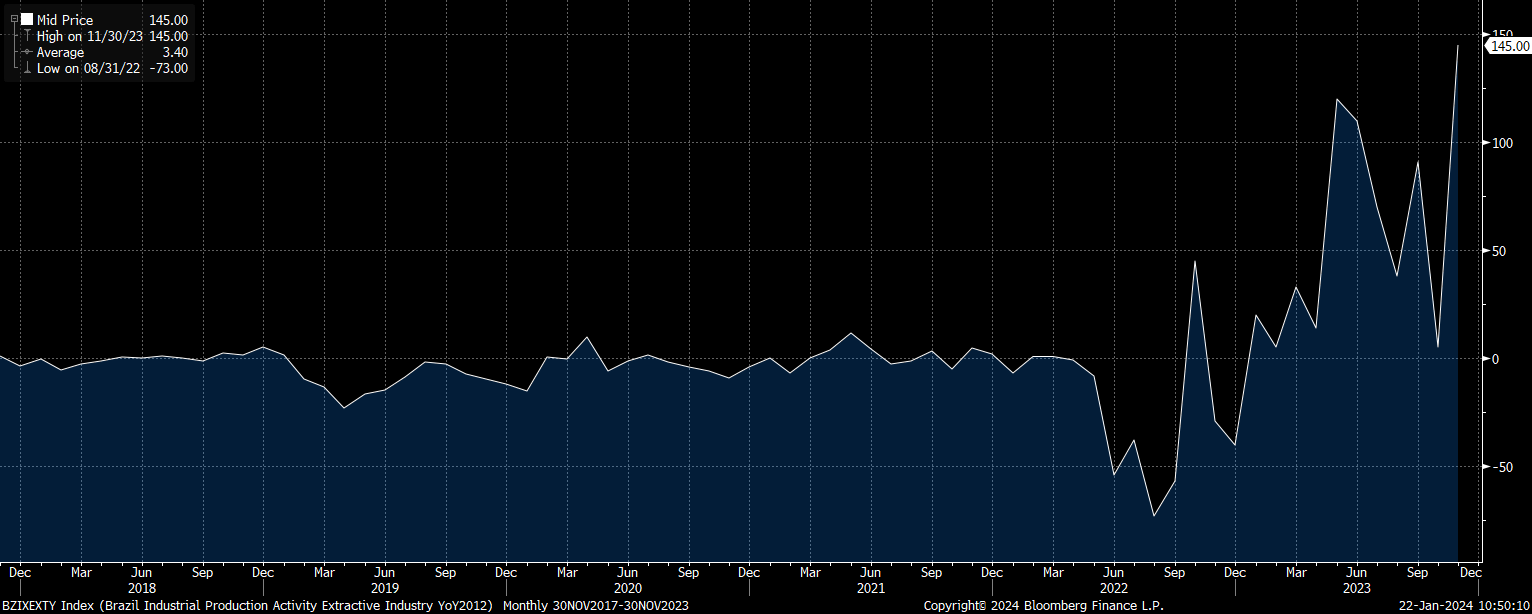
Mining and quarrying production is moving parabolic:
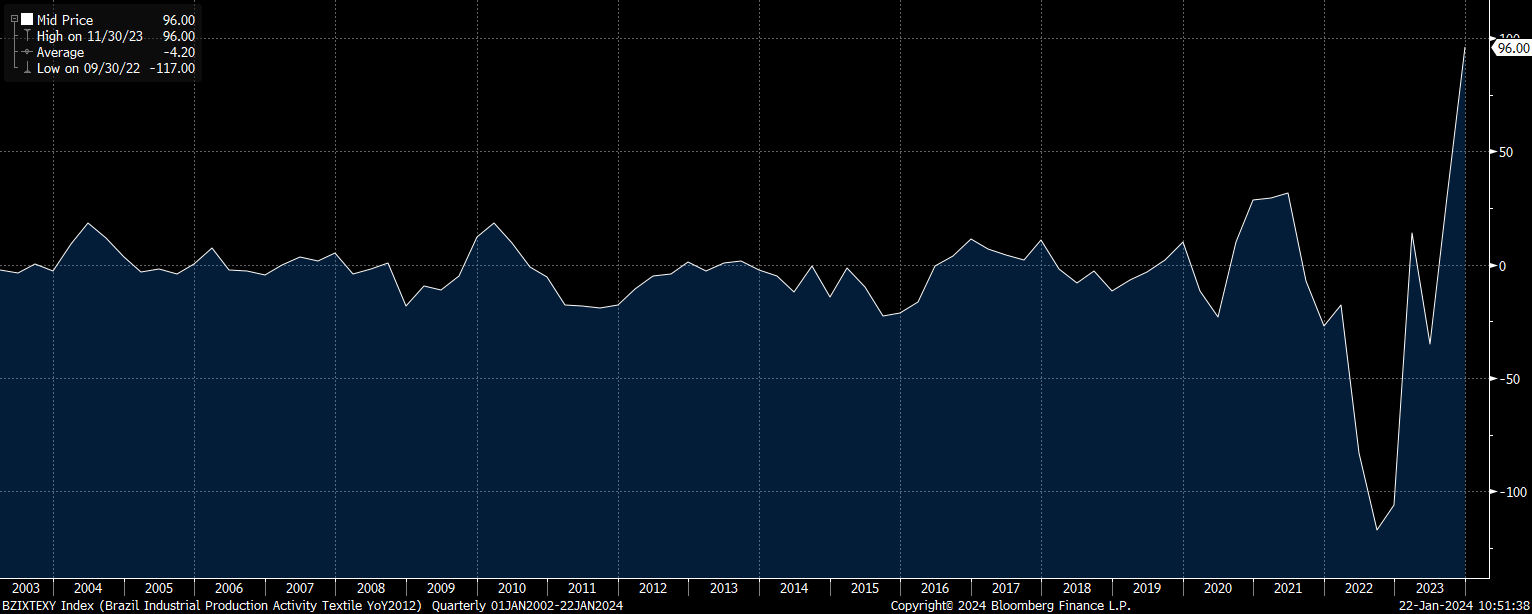
Manufacturing of textiles is also moving parabolic:
Vehicle production is range bound but decelerating marginally:
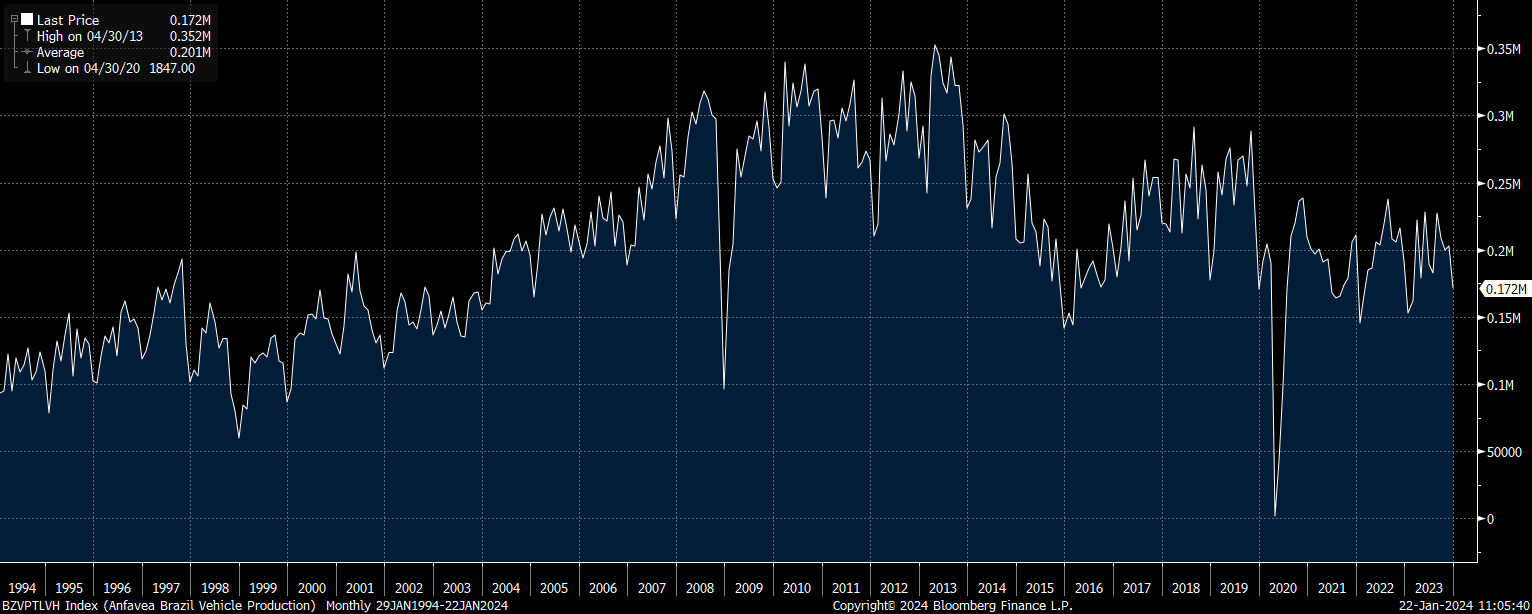
If you go through the underlying sectors in Brazil, you will see a lot of idiosyncratic divergences. These types of divergences create a lot of opportunities for alpha.
As noted above, monitoring the balance of payments for Brazil will be a key signal to watch in connection with its underlying growth, inflation, and monetary policy.
The trade balance is at a high:
The export breakdown is key here:
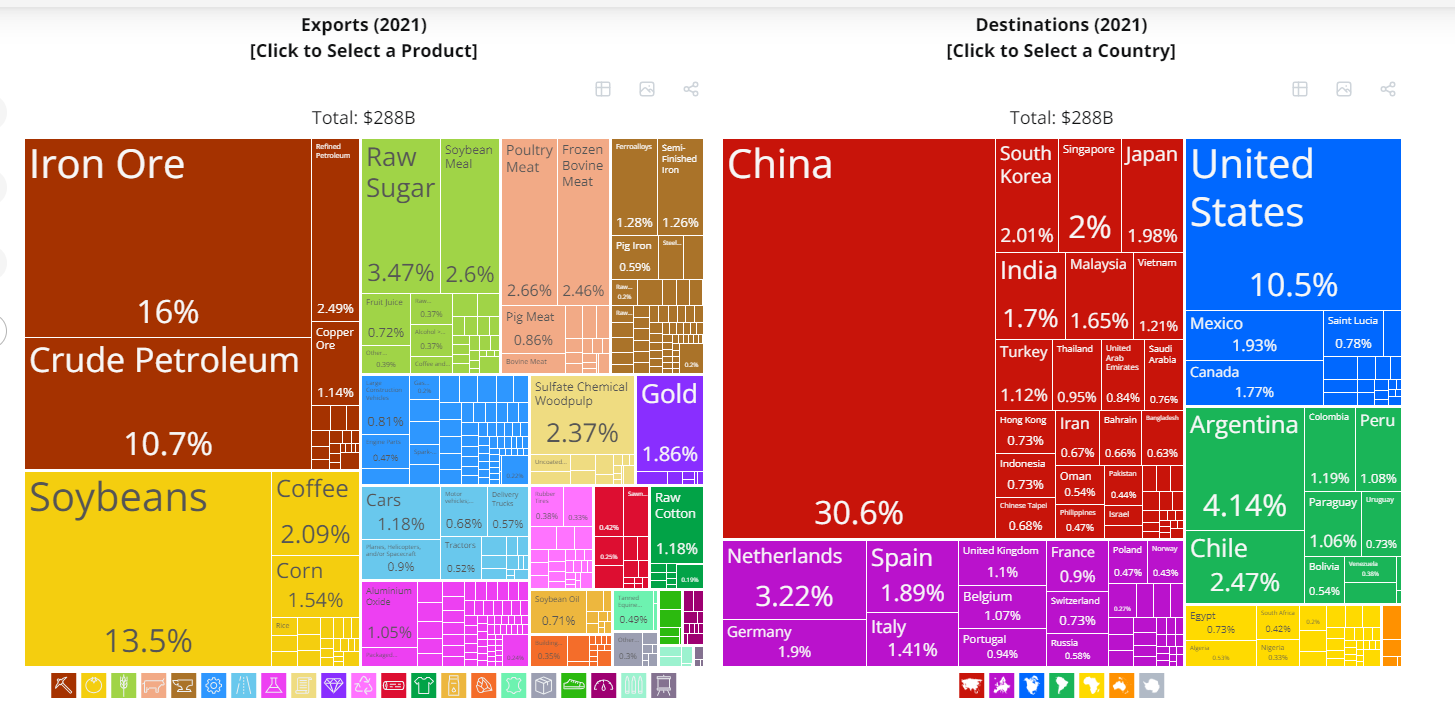
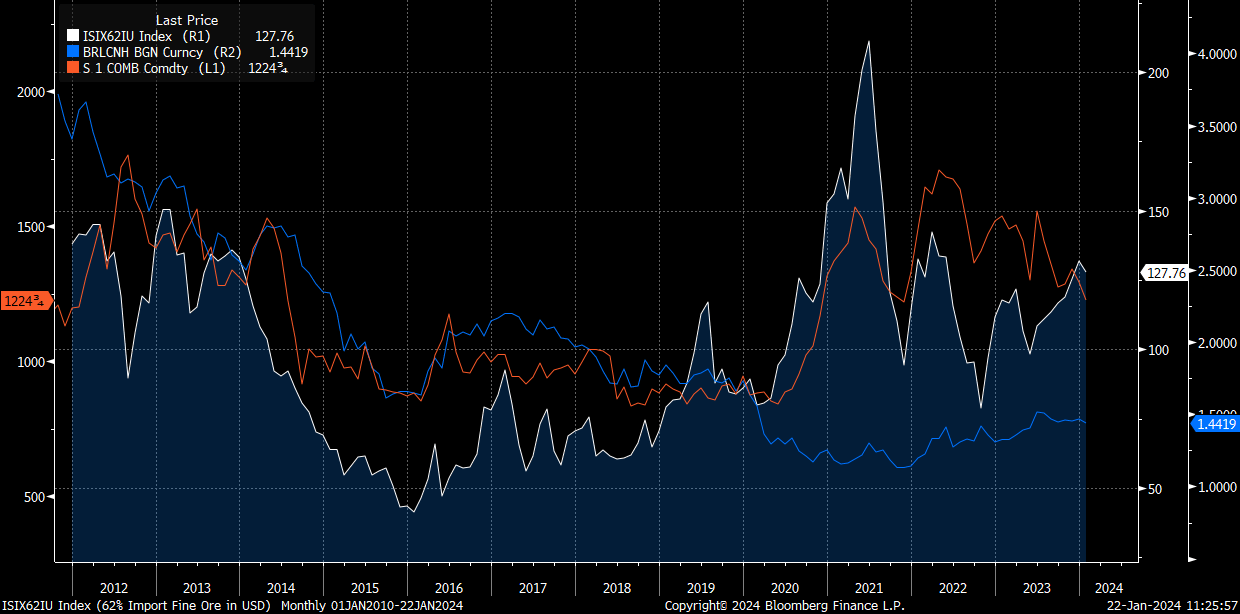
For example, watching iron ore and soybean prices in connection with the Brazilian Real and Chinese Yuan can be very helpful.
Inflation:
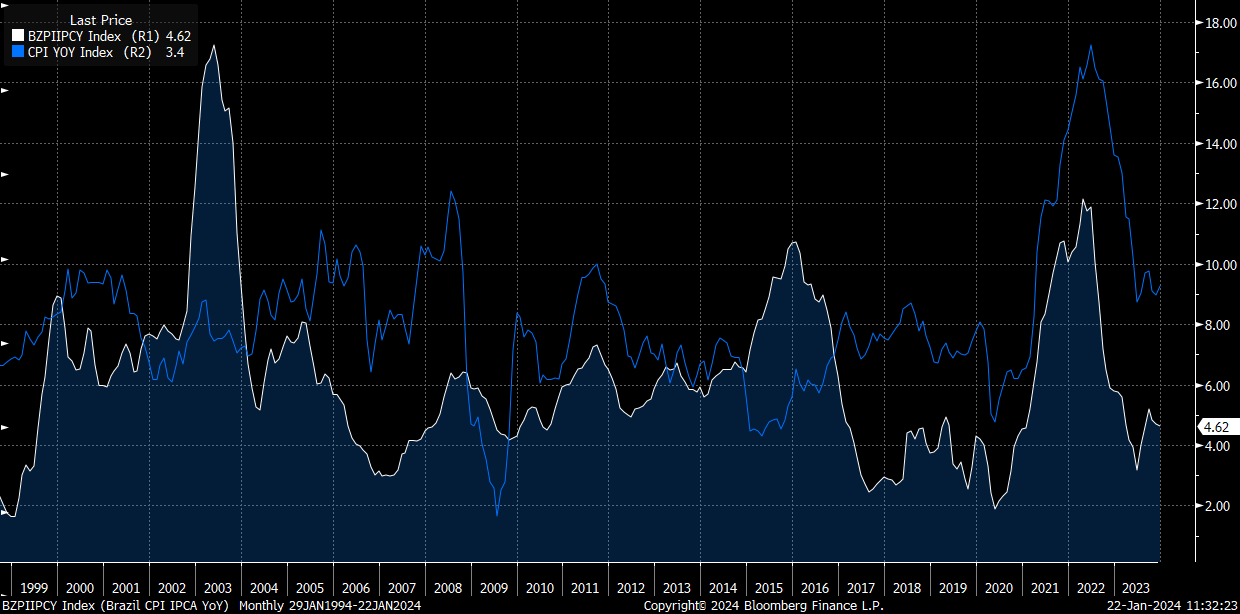
Inflation in Brazil (white line) has a lot more volatility and divergences from developed countries. I have overlaid US CPI (blue) to provide you with a frame of reference:
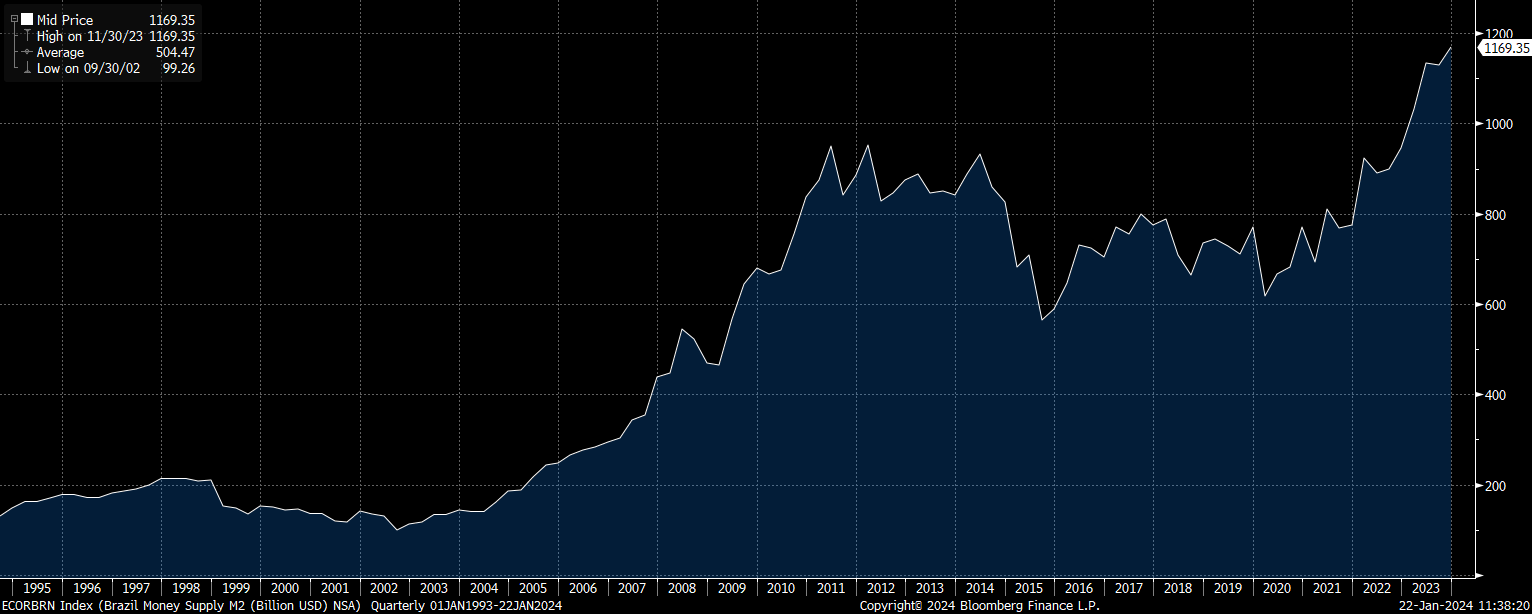
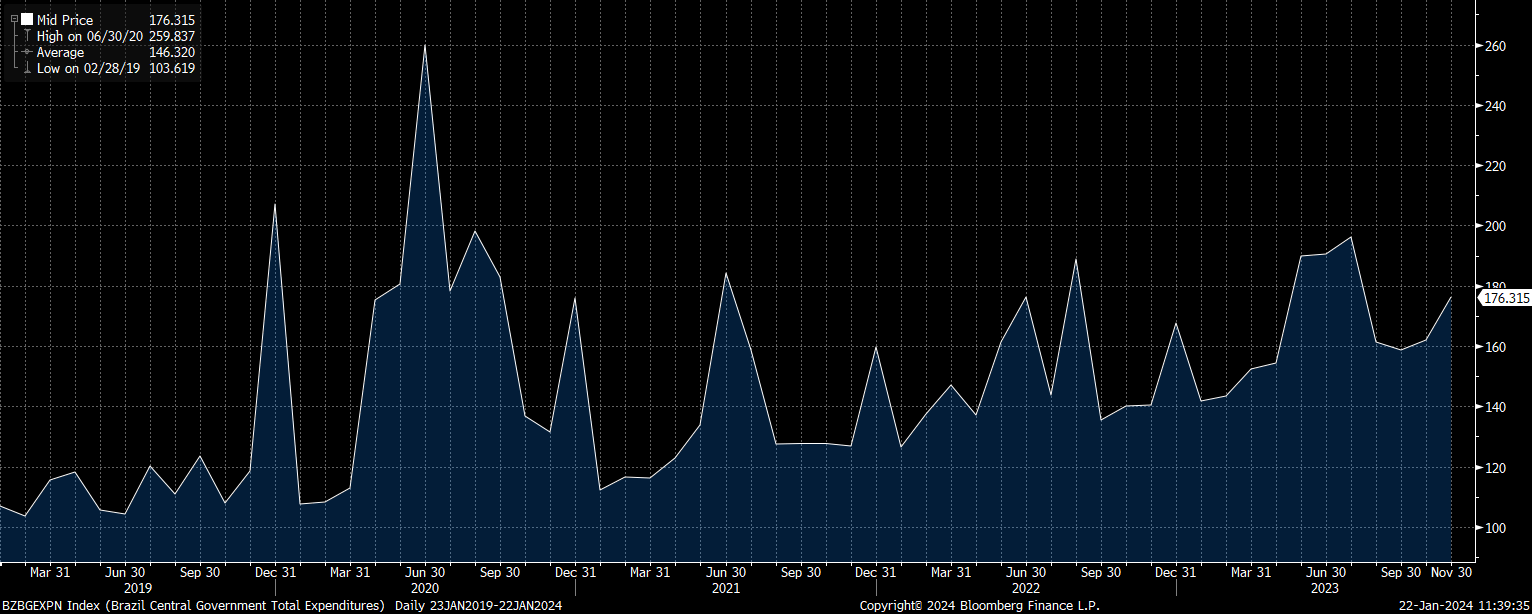
Brazil's money supply continues to rally to ATHs while government spending is increasing:
Government spending:
Capital Structure:
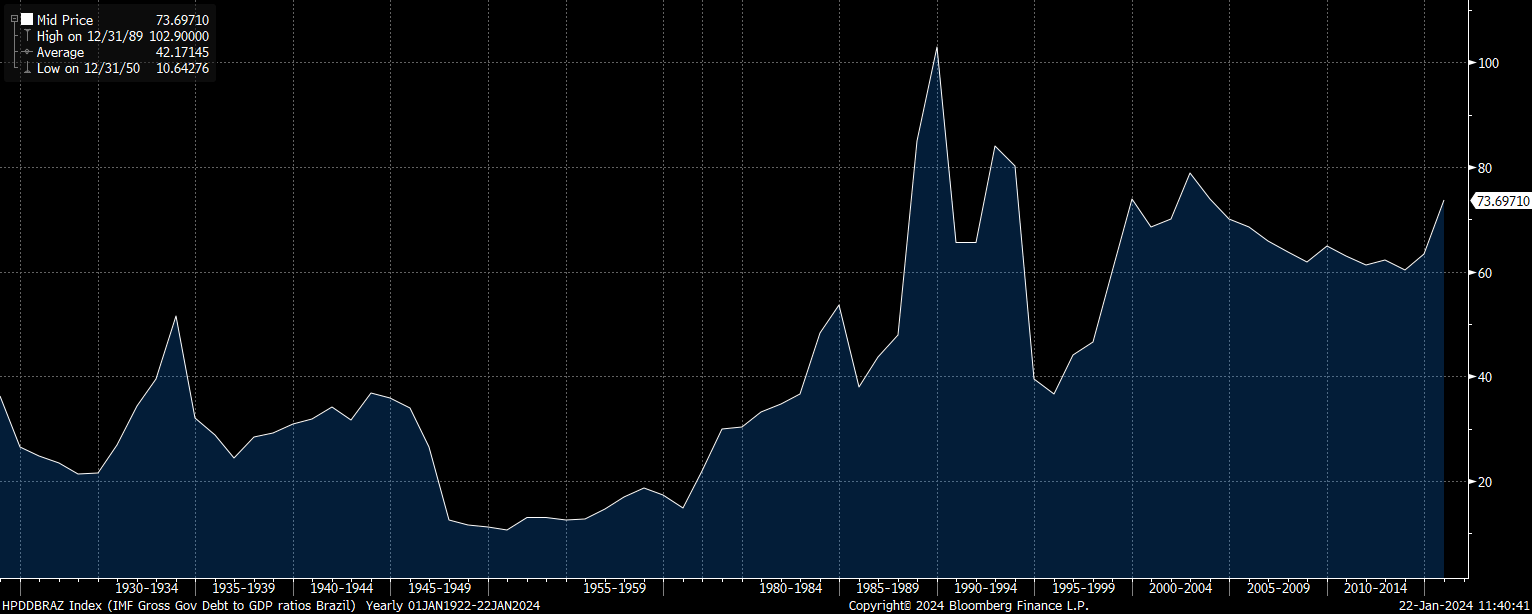
Debt to GDP has been accelerating recently:
And consumer credit has continued to accelerate significantly since 2020:
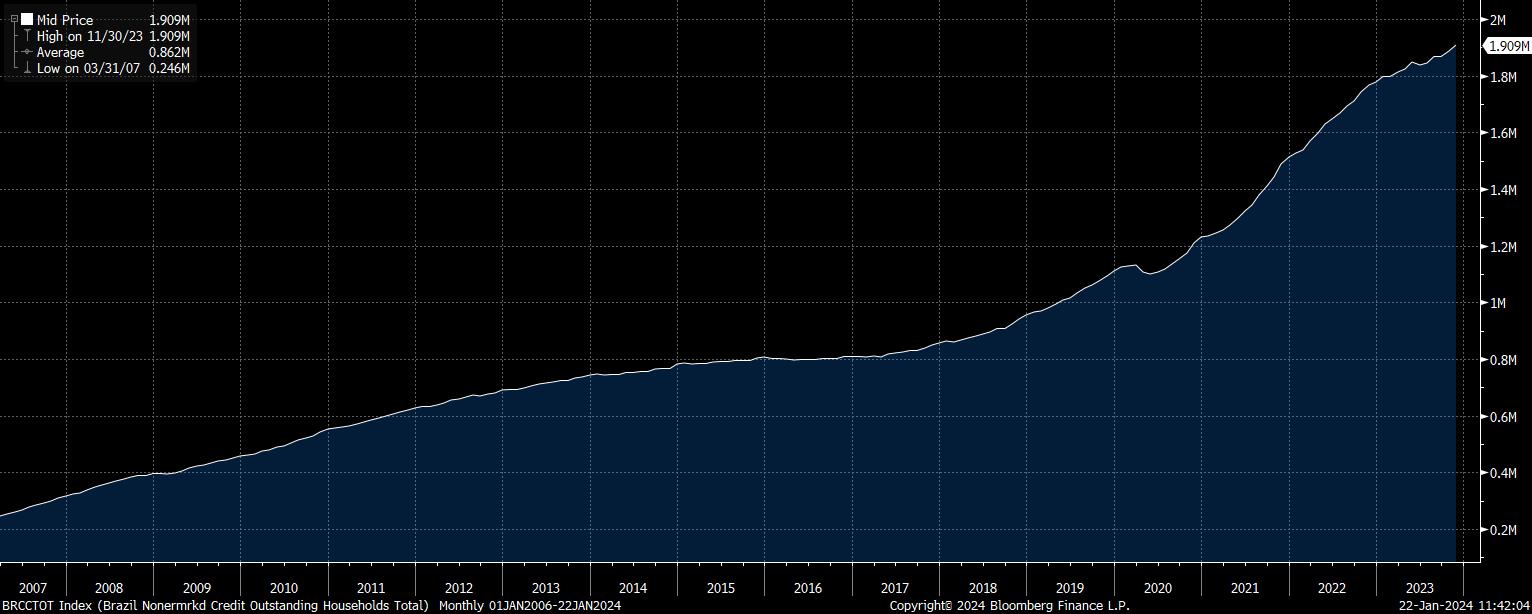
As I noted in the intro, the largest bank continues to increase the amount of loans it is giving out and it is leading the rally in stocks. It is these TYPES of signals you want to watch for because there is a combination of positive real growth, accelerating foreign demand, and an increase in credit creation that fuels asset prices. This brings us to asset prices!
Financial Markets: Stocks, Bonds, and the Brazilian Real:
The way you break down financial assets in Brazil is very similar to how you break down assets in any country. However, you need to remember that every market is unique and there will always be different variables you need to account for. On a fundamental basis, the causal mechanics are the same. If you understand the causal mechanics of what drives asset markets in general (and not simply a siloed experience from the US), you will pick it up very fast.
There is one main idea that you will begin to see: Global markets are ALL connected. The same people who trade US assets also trade Brazilian assets. The PM managing risk in the Magnificent 7 stocks could be a Brazilian hedge fund manager balancing risk in their corporate bond book that is denominated in the Real. Just because you might trade assets in a silo doesn’t mean that is how the world works.
Equities:
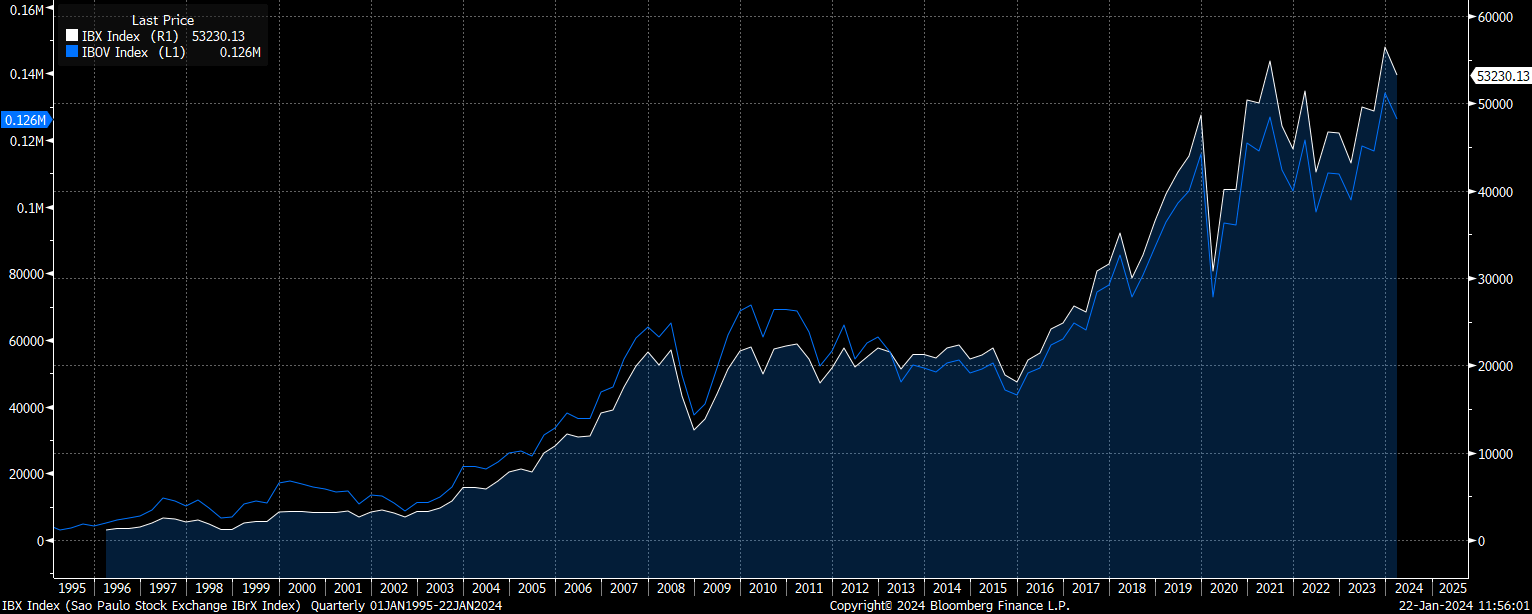
There are two major equity indices in Brazil:
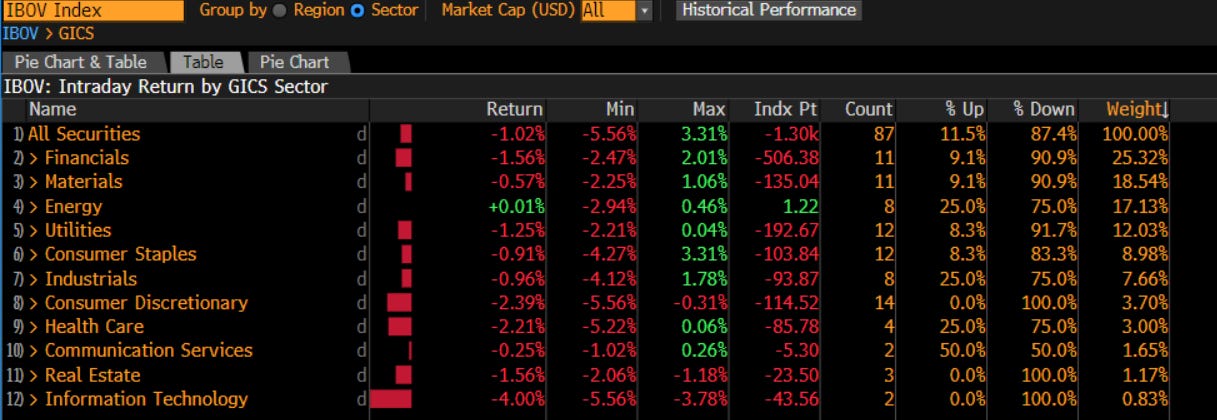
IBOV Index:

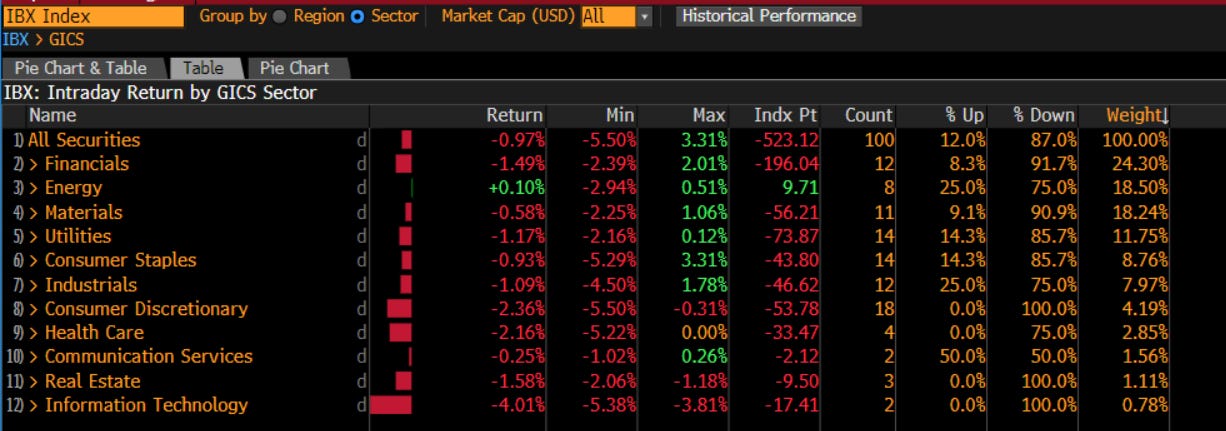
IBX Index:

Both of these track fairly well with each other:
The IBOV Index has a much higher weighting to financials, materials and energy.
The IBX Index has a very similar weighting:
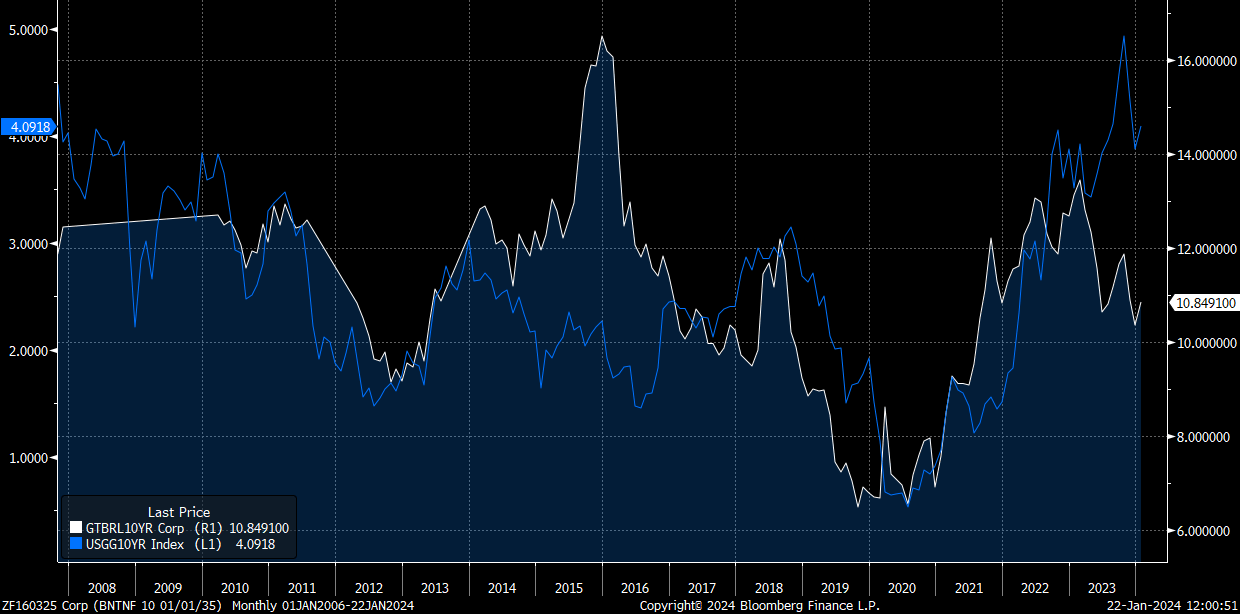
Interest rates between the US and Brazil actually break their correlation frequently:
The same is true of their yield curve:
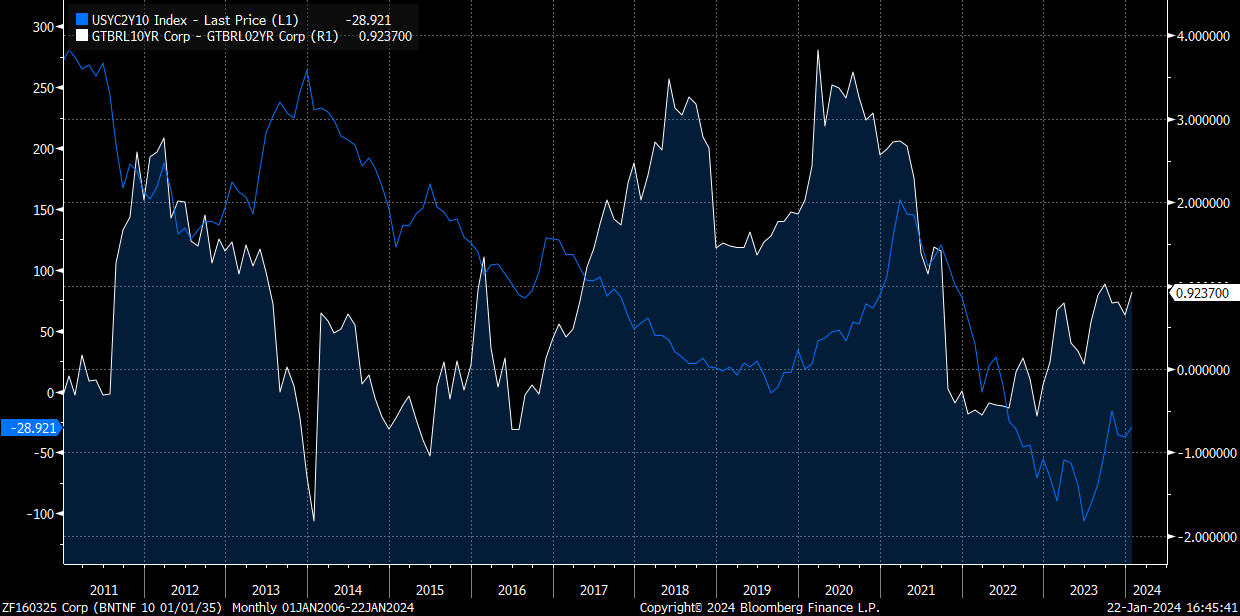
Part of the reason for this is the divergence between the FED and the Bank of Brazil:
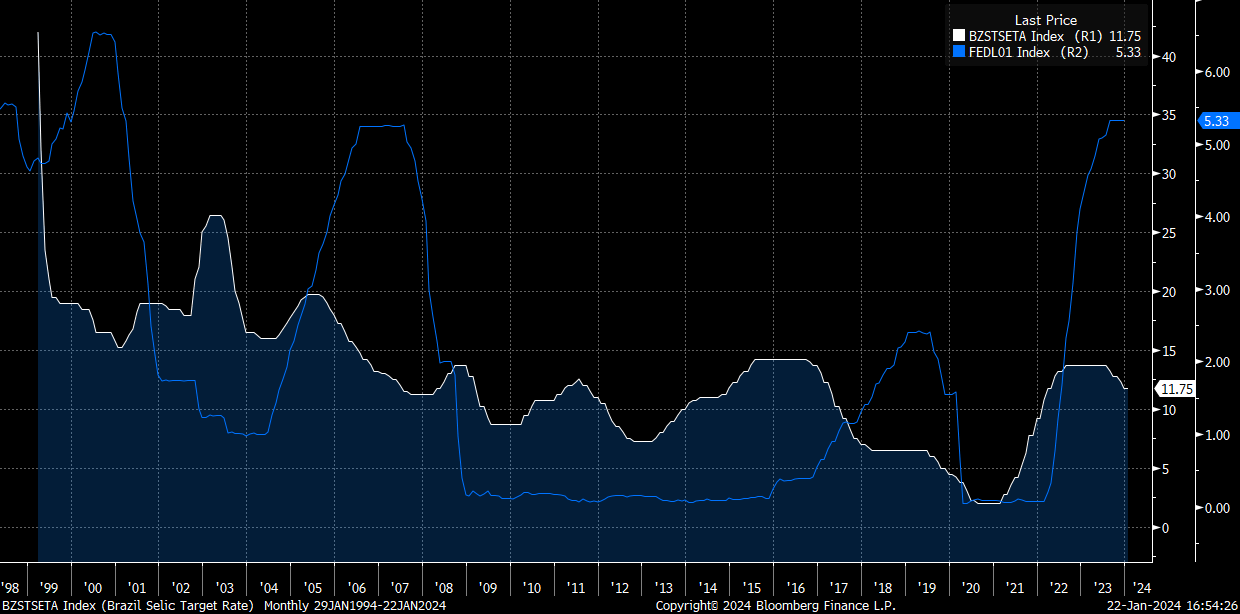
There are several key things to watch for Brazilian markets:
First, the currency has been compressing in a longer-term range for years now. Implied vol has been falling as we move into the new year:
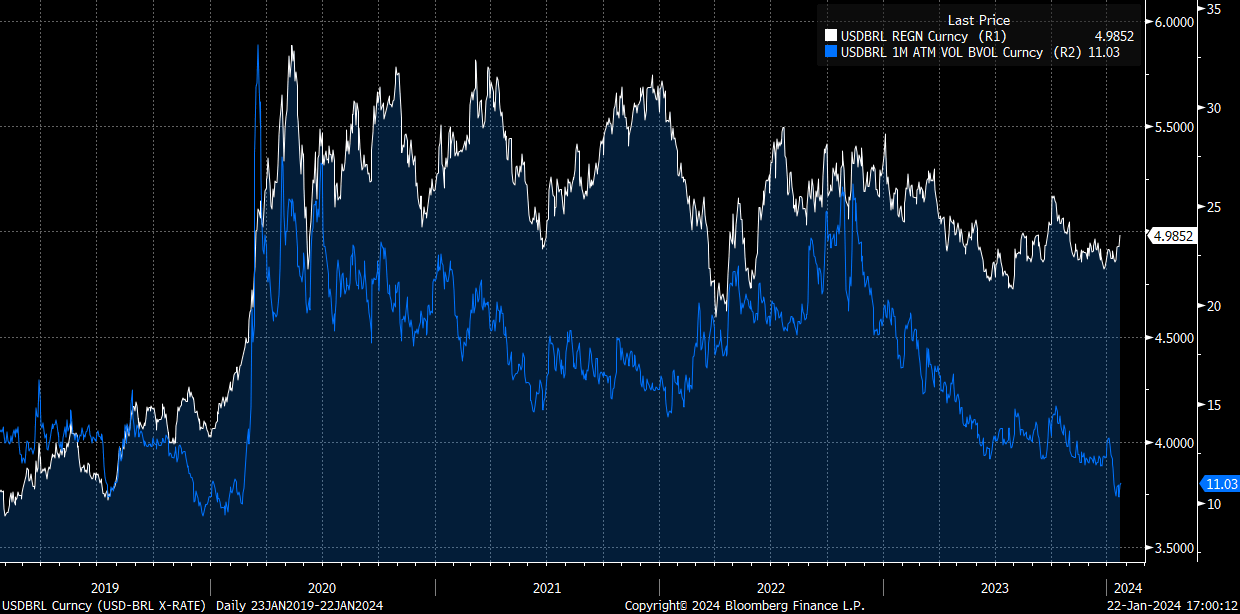
Second, watch the correlation of FX implied vol and the implied vol of the stock market. Earnings expectations have been normalizing in a range for the past year:
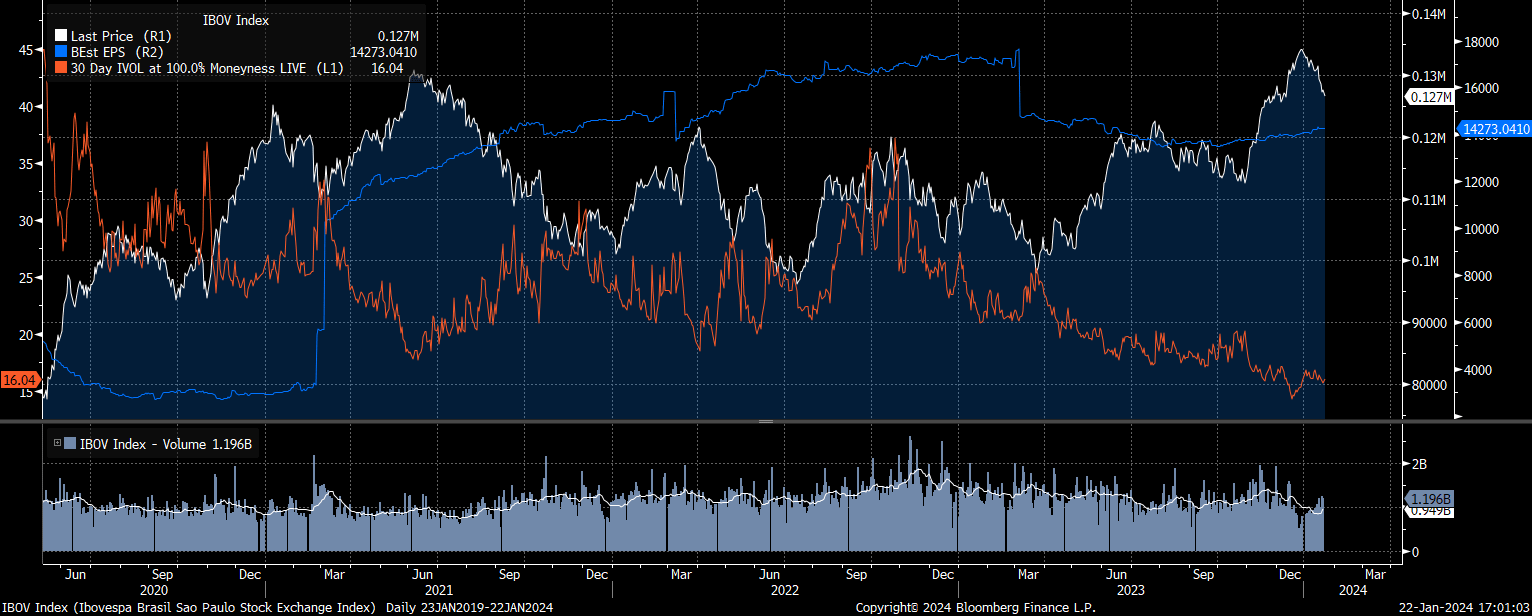
Third, since the market has such a heavy weighting towards financials, materials and the commodities they export, watch the correlation of these commodities with the market. Additionally, watch the central bank because further cuts during positive growth are likely to cause banks to rally further as they continue giving out credit.
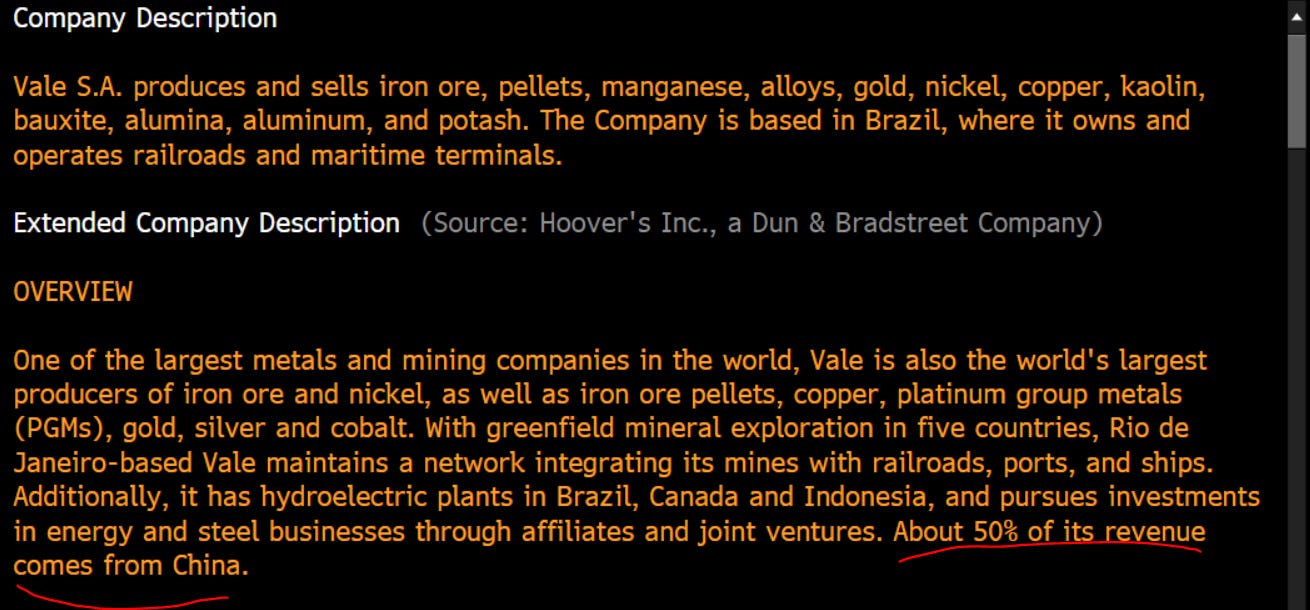
Let’s go through a quick example of the TYPE of insights we can generate in Brazil’s markets: Vale is a key company in Brazil given its revenue generators and relationship with China.
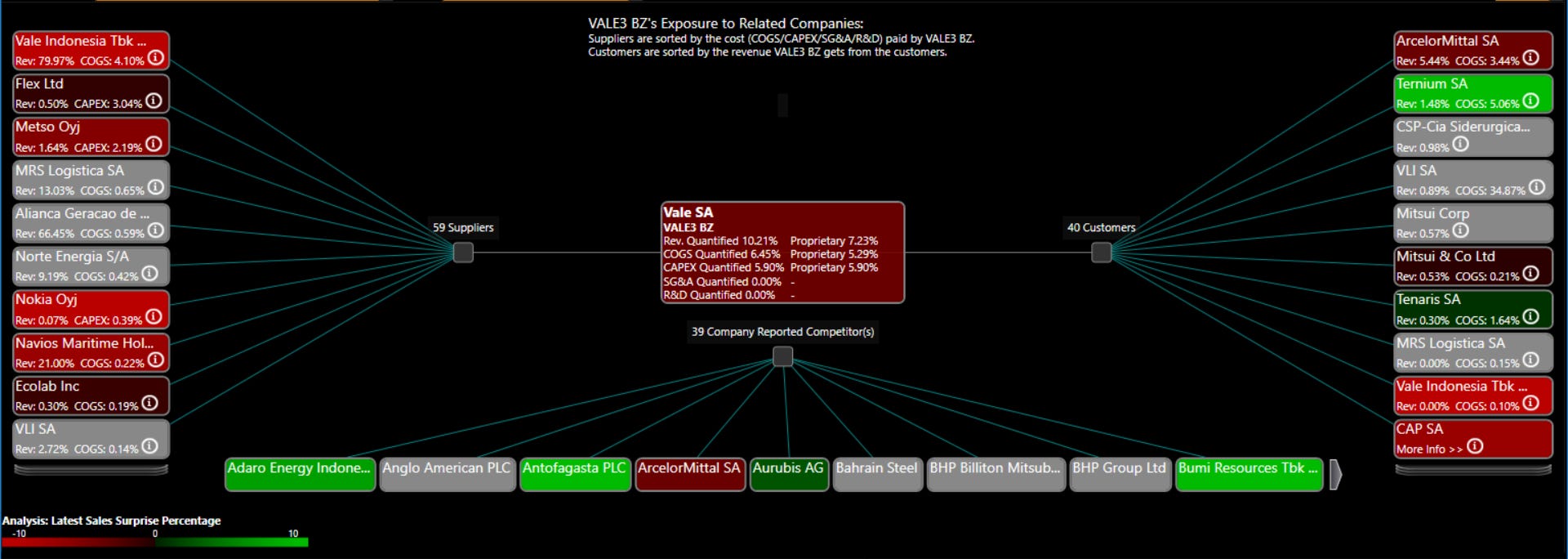
It is integrated with many companies:
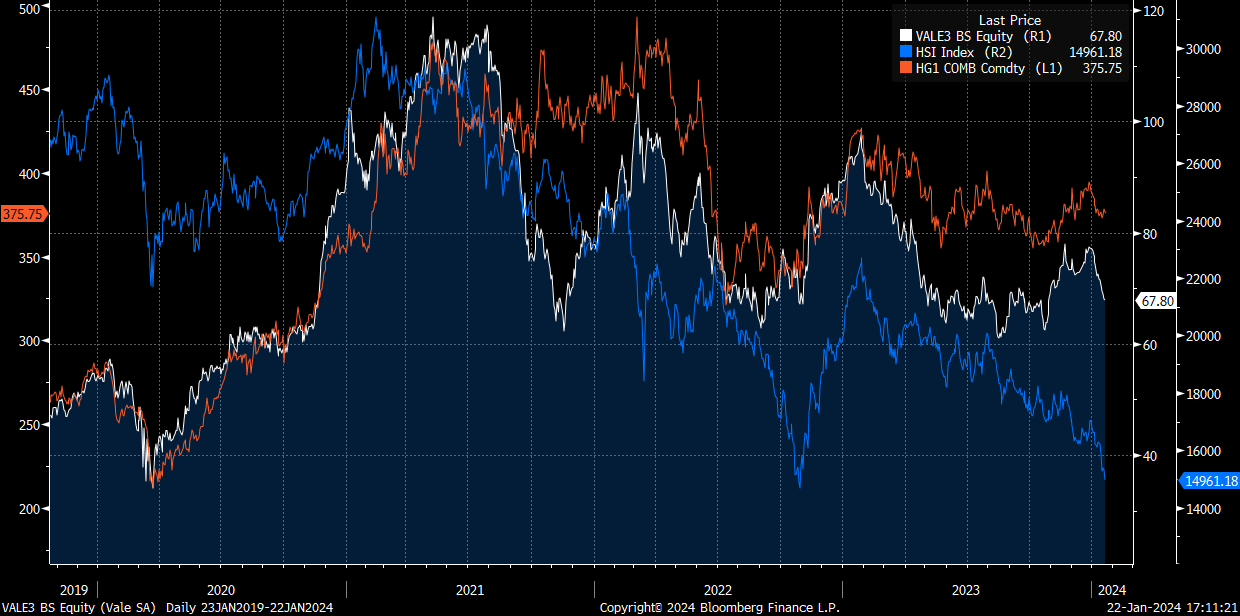
Given Vale’s (white line) role in the metals market and its relationship with China, it makes complete sense why it has been moving in lockstep with the Hang Seng (blue) and copper (orange).
The integration of Brazil in its commodities to the rest of the world directly impacts the flows for its equities and exchange rate. There will be many opportunities to have positive exposure to commodities while also extracting the carry from specific equities. I will be expanding on these opportunities later this year!
History of growth, inflation, and liquidity on a structural and cyclical basis:
The growth trajectory of Brazil's economy has been marked by periods of rapid expansion and significant setbacks. Post-World War II, Brazil experienced a substantial growth phase, driven by industrialization and the expansion of its domestic market. This era, often referred to as the "Brazilian Miracle" between 1968 and 1973, saw GDP growth rates averaging nearly 10% annually. However, this growth was not sustainable and was followed by periods of economic instability, particularly in the 1980s and 1990s. These decades were characterized by slow growth and economic crises, influenced by external debt burdens and inconsistent economic policies. The introduction of the Plano Real in 1994, a stabilization plan that included a new currency (the Real), was a pivotal moment. It led to a significant reduction in inflation and helped stabilize the economy, setting the stage for a period of steady growth in the early 21st century.
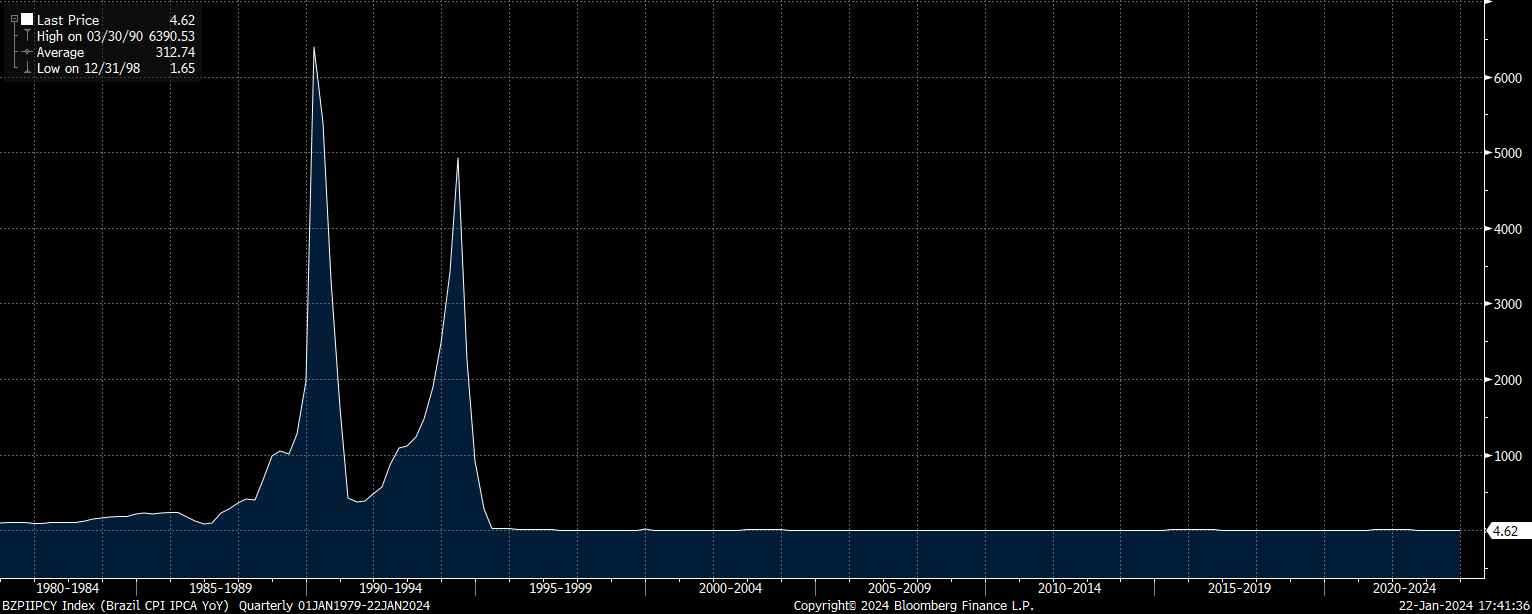
Inflation has been a persistent challenge in Brazil's financial history. During the late 20th century, Brazil experienced hyperinflation, with annual rates peaking at an astonishing 2,477% in 1993. The rampant inflation eroded consumer purchasing power and created a highly unstable economic environment. The implementation of the Plano Real in 1994 was a critical step in controlling inflation. By pegging the new currency to the U.S. dollar and implementing strict monetary policies, Brazil dramatically reduced inflation rates, leading to more predictable economic conditions. However, the fight against inflation is ongoing, with the Central Bank of Brazil frequently adjusting monetary policies to maintain price stability.
Monetary policy in Brazil, largely managed by the Central Bank of Brazil, has played a crucial role in shaping the country's economic landscape. The Bank's primary tool has been setting the Selic rate, the benchmark interest rate, to control inflation and influence economic growth. High interest rates have been used to curb inflation, but they also tend to slow down economic growth and increase the cost of borrowing, affecting both consumers and businesses. Conversely, lower interest rates aim to stimulate economic activity but can risk increasing inflation.
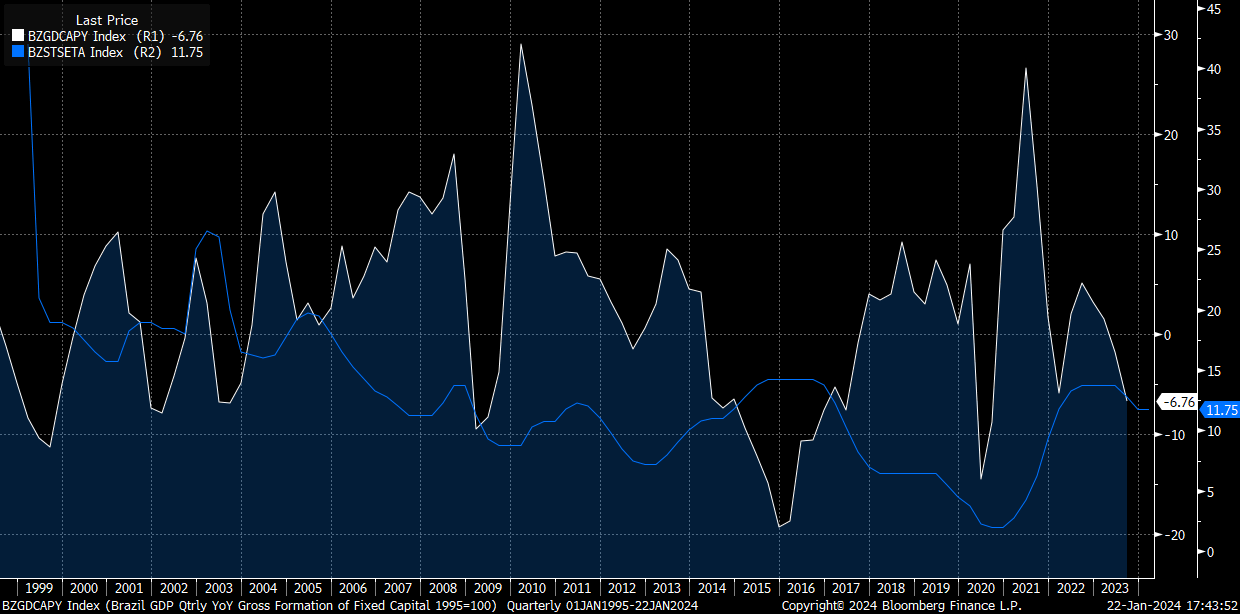
The impact of these economic factors on Brazil's stock market and interest rates has been significant. High inflation and unstable monetary policy often lead to volatility in the stock market, as investors face uncertainty about the future value of their investments. The stabilization of the economy and the control of inflation in the mid-1990s led to increased investor confidence and a more robust stock market, evidenced by the performance of the Bovespa index, the benchmark stock index of Brazil. Interest rates, closely tied to monetary policy and inflation, influence investment in different sectors of the economy. High-interest rates can make borrowing more expensive, potentially slowing down economic growth, while lower rates can encourage investment and spending, thus stimulating the economy.
(Chart: Gross fixed capital formation and the discount rate)
Current growth, inflation, and liquidity regime and its connection to each financial asset:
A lot of certainty has been provided to the Brazilian market in the short term by the President:

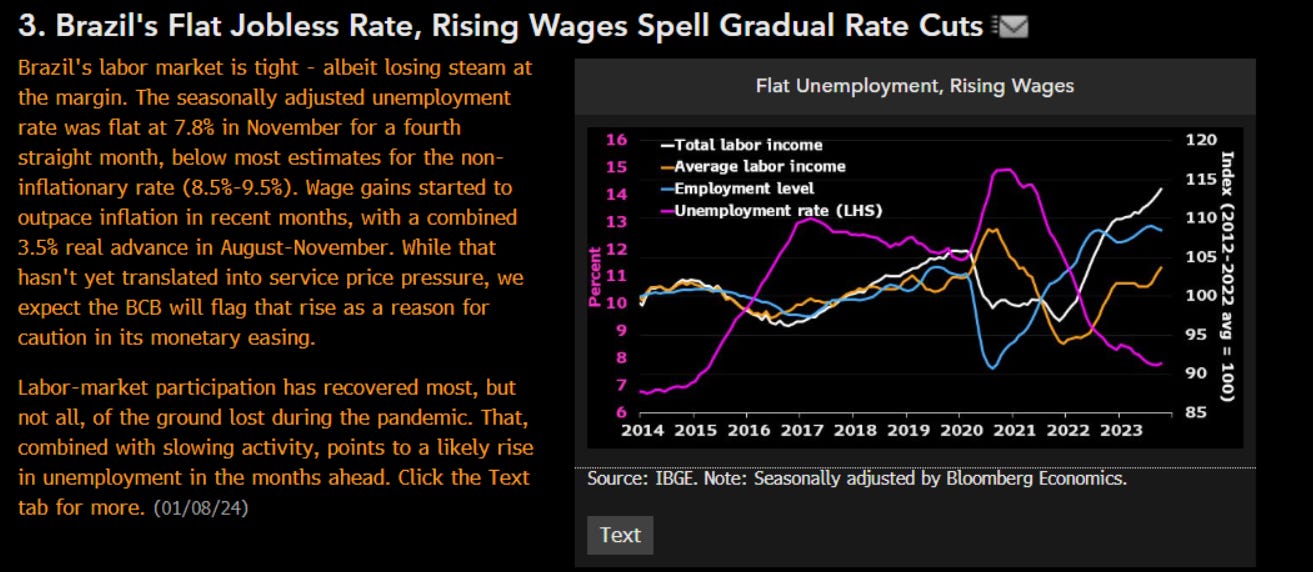
Real wages are currently rising as the labor market remains strong. This is occurring while inflation is falling thereby allowing the central bank to cut interest rates:
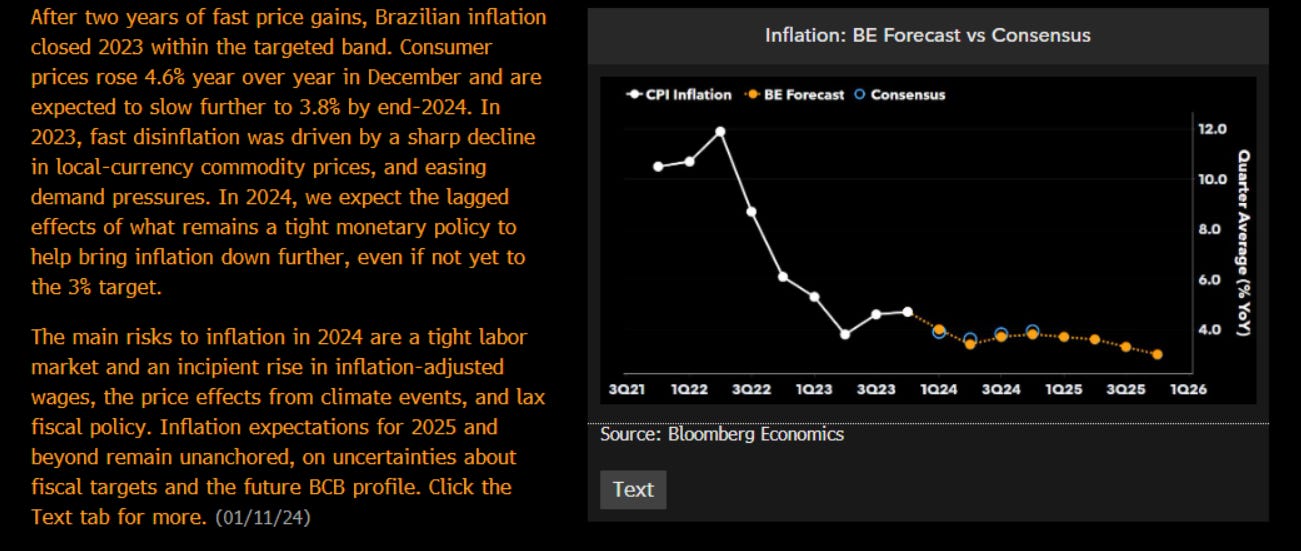
The central bank of Brazil has an inflation target of 3% which we are close to.
However, the discount rate is over 11% right now. As the central bank continues to cut rates, the yield curve is likely to continue steepening and slope upwards:
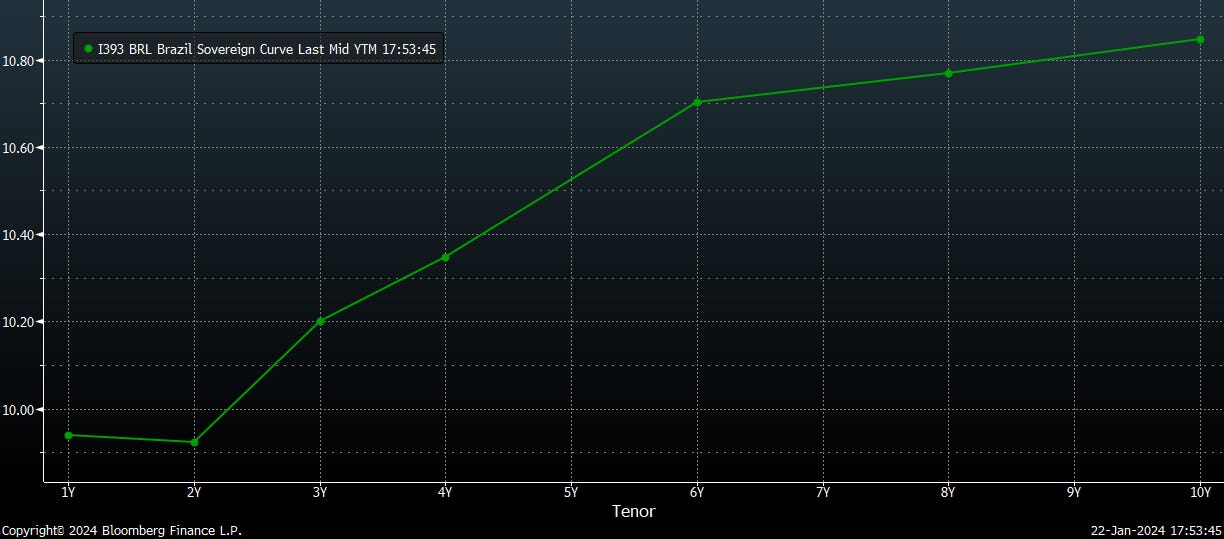
Interest rates on the long end are likely to continue moving down as growth decelerates from its 2023 high and inflation reaches the target:
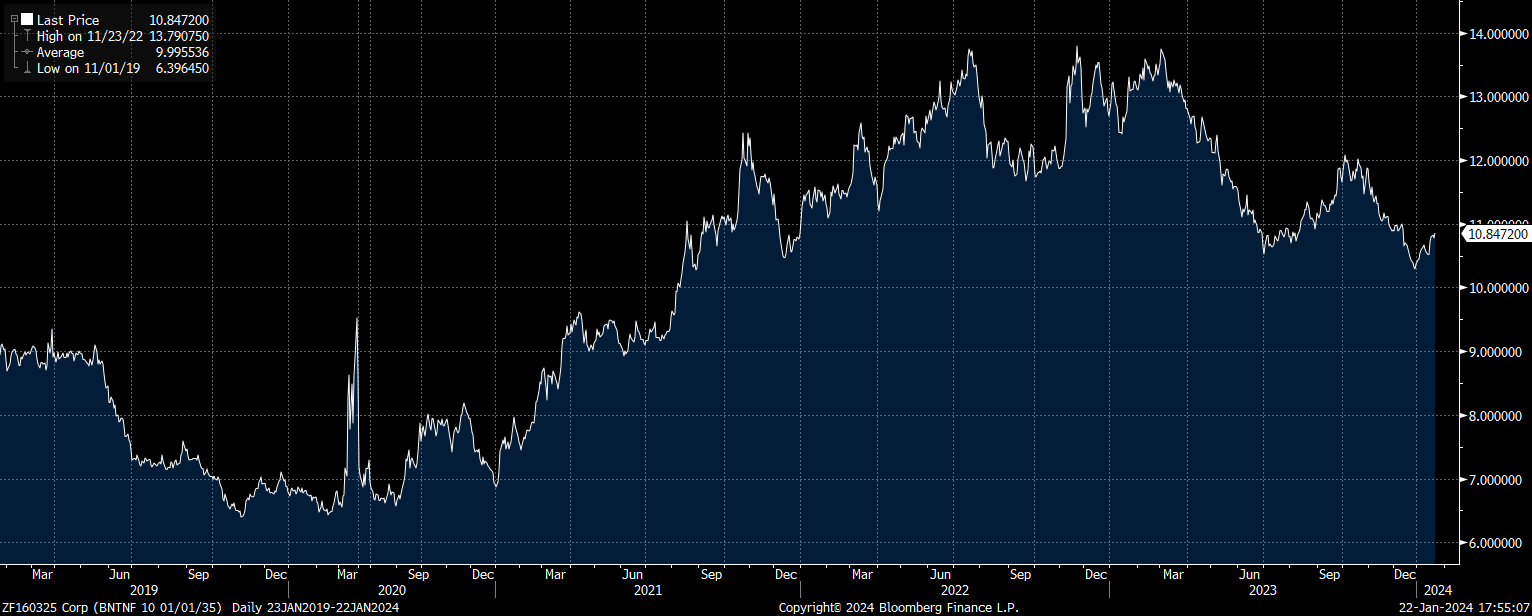
A question that faces Brazil and all countries is whether there will be an acceleration in inflation. An additional question is whether a potential acceleration in inflation will cause stagflation or be more reflationary. To put it another way, will a potential acceleration in inflation cause growth to come under pressure, or will growth accelerate with inflation? Watching commodities and commodity stocks in Brazil will be a great way to have visibility into this dynamic and generate trade ideas.
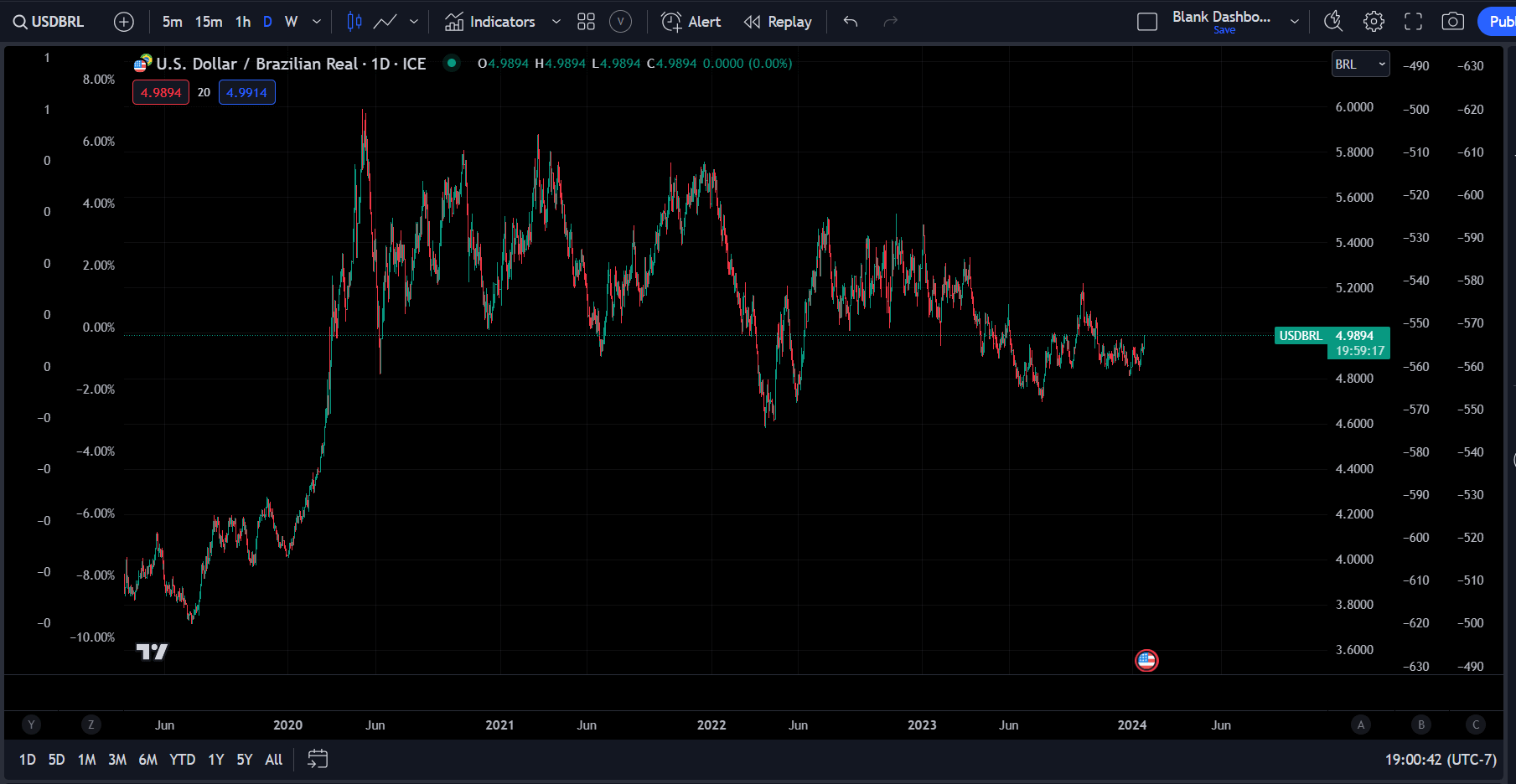
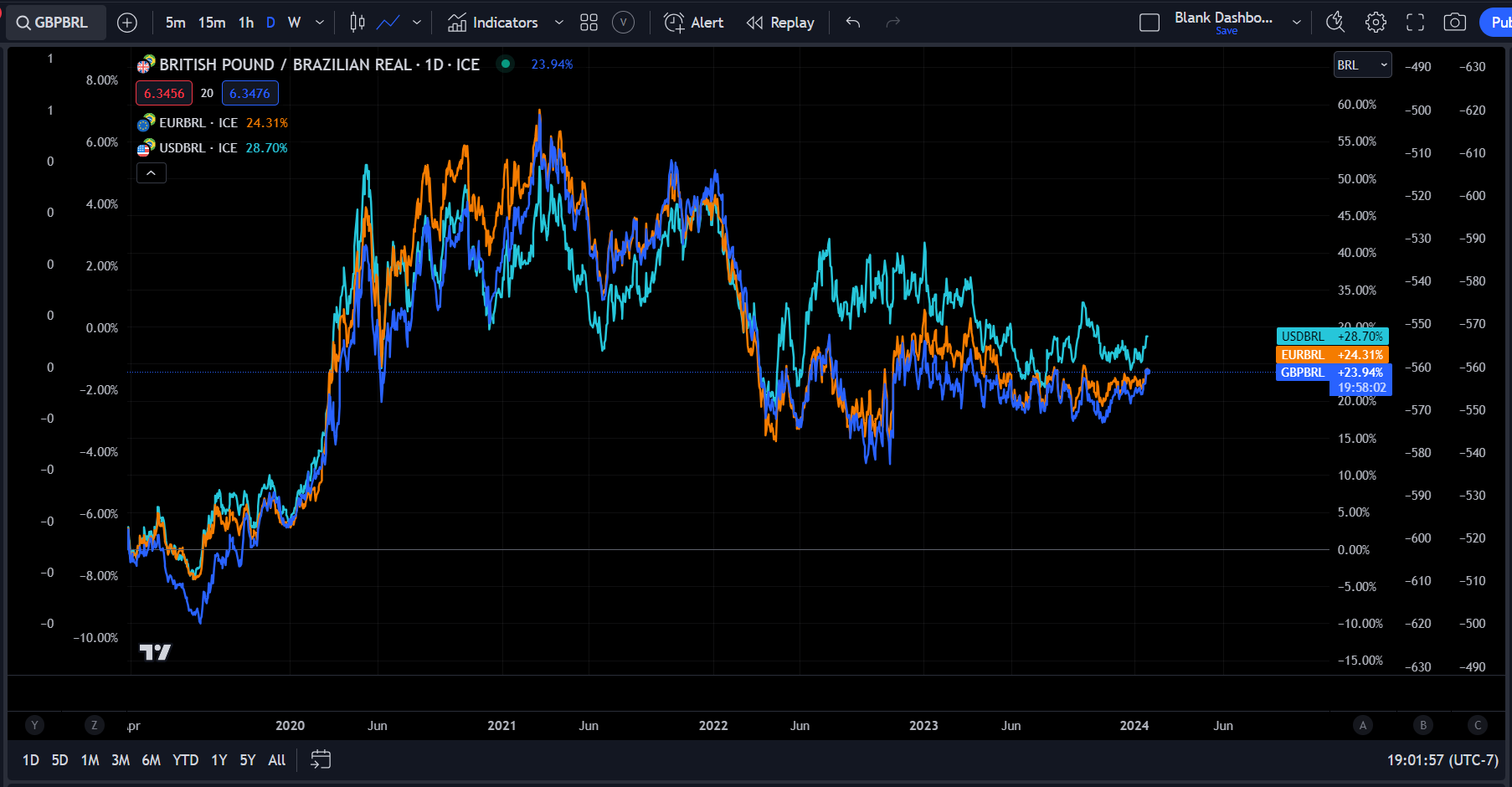
The USDBRL pair is likely to continue rallying as the FED cuts slower than the central bank of Brazil.
We are seeing the same dynamic against the Euro and Pound as well:
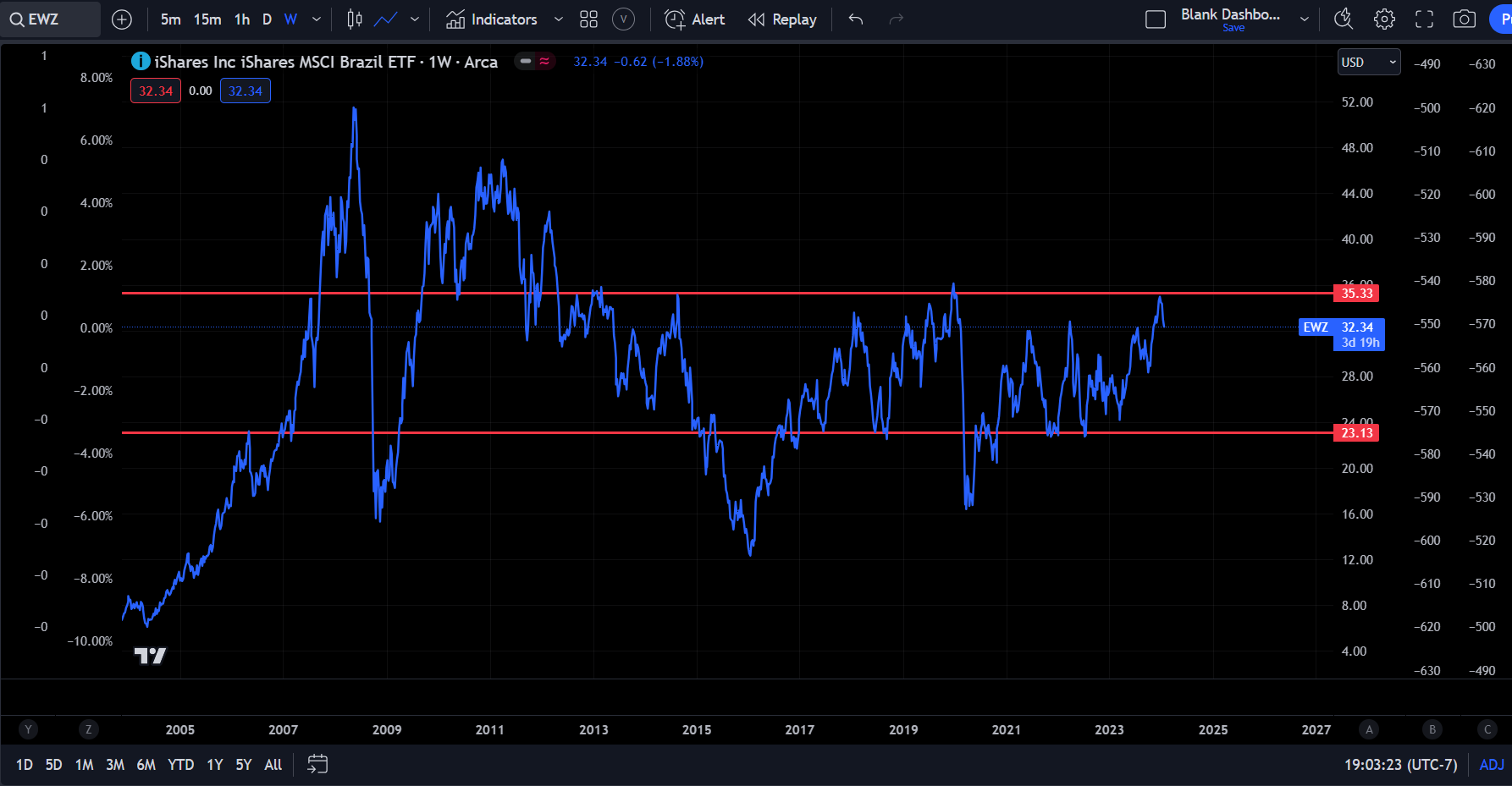
In terms of equities, the broad Brazil market is likely to continue its choppy up trend. This is why bullish views are better taken with specific stocks or sectors in the Brazilian stock market due to the underlying divergences taking place:
Additional resources for research and trading in Brazilian markets:
Two great books on Brazil:
Academic Papers on Brazilian Financial Markets:
Sentiment Analysis Applied to News from the Brazilian Stock Market by Januário et al. (2022) analyzes how company stock values in Brazil can be influenced by published news through automatic sentiment analysis (Januário, Carosia, Silva, & Coelho, 2022).
Share Portfolio Advisory: Use of the Markowitz Method by Melo Neto & Fontgalland (2022) discusses portfolio risk management and return optimization for individual investors in Brazil (Melo Neto & Fontgalland, 2022).
BovDB: A Dataset of Stock Prices of All Companies in B3 from 1995 to 2020 by Cardoso et al. (2022) presents a dataset of the Brazilian Stock Exchange for use in various applications (Cardoso et al., 2022).
Machine Learning Approach for Trend Prediction in the Brazilian Energy Market by Santos et al. (2022) explores the use of machine learning for trend prediction in Brazil's energy market (Santos et al., 2022).
Financial Intermediation and Innovation by Mundo Neto et al. (2022) examines the financial intermediation market in Brazil and its links with international asset managers (Mundo Neto, Donadone, & Ferreira Alves, 2022).
Dynamics and Co-movements Between the COVID-19 Outbreak and the Stock Market in Latin America by Bilgili et al. (2022) studies the effects of COVID-19 on stock markets, including Brazil's (Bilgili, Koçak, & Kuşkaya, 2022).
From Community Pharmacies to Big Pharmacy Chains by Mattos et al. (2022) analyzes the financialization of the Brazilian retail pharmacy market (Mattos, Silva, Da Silva, & Luiza, 2022).
Uniformity and Comparability in the Brazilian Capital Market by Guimarães & Rover (2022) discusses the relationship between financial report characteristics and market relevance (Guimarães & Rover, 2022).
Impact of COVID-19 Outbreak on the Stock Market by Ganie, Wani, & Yadav (2022) explores the effects of COVID-19 on global financial markets, including Brazil's (Ganie, Wani, & Yadav, 2022).
In Good Times and in Bad: High-Frequency Market Making Design, Liquidity, and Asset Prices by Schmickler & Tremacoldi-Rossi (2022) investigates how market liquidity and stability can be improved through market maker programs in Brazil (Schmickler & Tremacoldi-Rossi, 2022).
Conclusion:
The main reason I am interested in Brazil is not because there is a “secular bull” or “secular bear” narrative. My interest stems from the fact that there is likely to be an increase in the amount of volatility and underlying divergences.
As we noted above, the Brazilian stock market has been trending up but there are specific sectors that are making HUGE parabolic moves. It is by isolating these asymmetrical moves that you can generate exceptional returns.
When you have deglobalization, countries with a lot of exposure to commodities are going to be key places for trades. We have set the foundation for additional trades in the future and you can now reference this primer any time we run a trade in Brazil.
Always be proactive in learning so you can recognize opportunities when they present themselves!
Thanks for reading!