


The Liquidity and Credit Cycle:
Deregulation has fueled the entire liquidity cycle and credit issuance since Trump took office at the beginning of 2025. Deregulation is a less explicit element in financial markets because it influences all of the headline numbers we see but never gets the credit for it. CEOs are going to attribute their stellar performance to their own execution, not the deregulation environment. When things get bad, it’s the environment; when things are going well, it’s because of leadership’s execution.
Traders are paid a premium to see through the forward guidance of CEOs to the actual dynamics taking place. Ken Griffin drew attention to the massive change from the regulation under the Democrats and the Biden administration to the far more positive environment the Trump administration has created. Traders and money managers are paid to provide accountability to the market when expectations become delusional.
The Rules Are Changing:
The regulatory regime for AI, the midterms, and the Fed are all coming to a boiling point that will culminate over the next month. When half of all index returns come from AI, this is quite literally a moment that will determine the entire market. The entire AI trade is based on HOW FAST the capex produces a return, and a shift in regulation can slow the pace of everything.
The catalysts for each of these moving parts are already on the immediate time horizon as the midterms will be resolved at the beginning of November, the long-anticipated Anthropic IPO will occur in mid to late November, and the market is pricing a Fed hike in December. Each of these catalysts will incrementally build on the others and shift the rules driving flows in markets.
If you felt like the market was getting difficult to navigate, it is about to get a lot harder. The bar for trades will rise in 2027 because Democrats are taking more control, the Fed is falling behind the curve and will have to play catch-up to inflationary pressures, and the Anthropic IPO is about to provide a lot more visibility into HOW MUCH demand exists for the Neoclouds and Hyperscalers. All of these will reframe the distribution of probabilities, and thereby flows, as we move into the end of the year and the beginning of 2027.
The Regulatory Cliff:
During Biden’s presidency (2021–2025), Democrats had full control of both the House of Representatives and the Senate for the first two years, and then split control for the remaining two years. The Biden administration held a government trifecta during its first two years, which functionally gave it unified control of the government.
This is WHY, when Trump won the election, the entire political regime flipped from Democrat to Republican. For the last 2 years, Republicans have held a government trifecta, which is why so much deregulation and change has occurred in such a short period of time.
The biggest risk to the AI trade and the U.S. economy is Democrats taking control of both houses, because this will put the entire political regime into gridlock. The entire question moving the market right now is whether Democrats sweep BOTH houses. We are already seeing the AI regulation basket move in lockstep with the odds of a Democratic sweep.
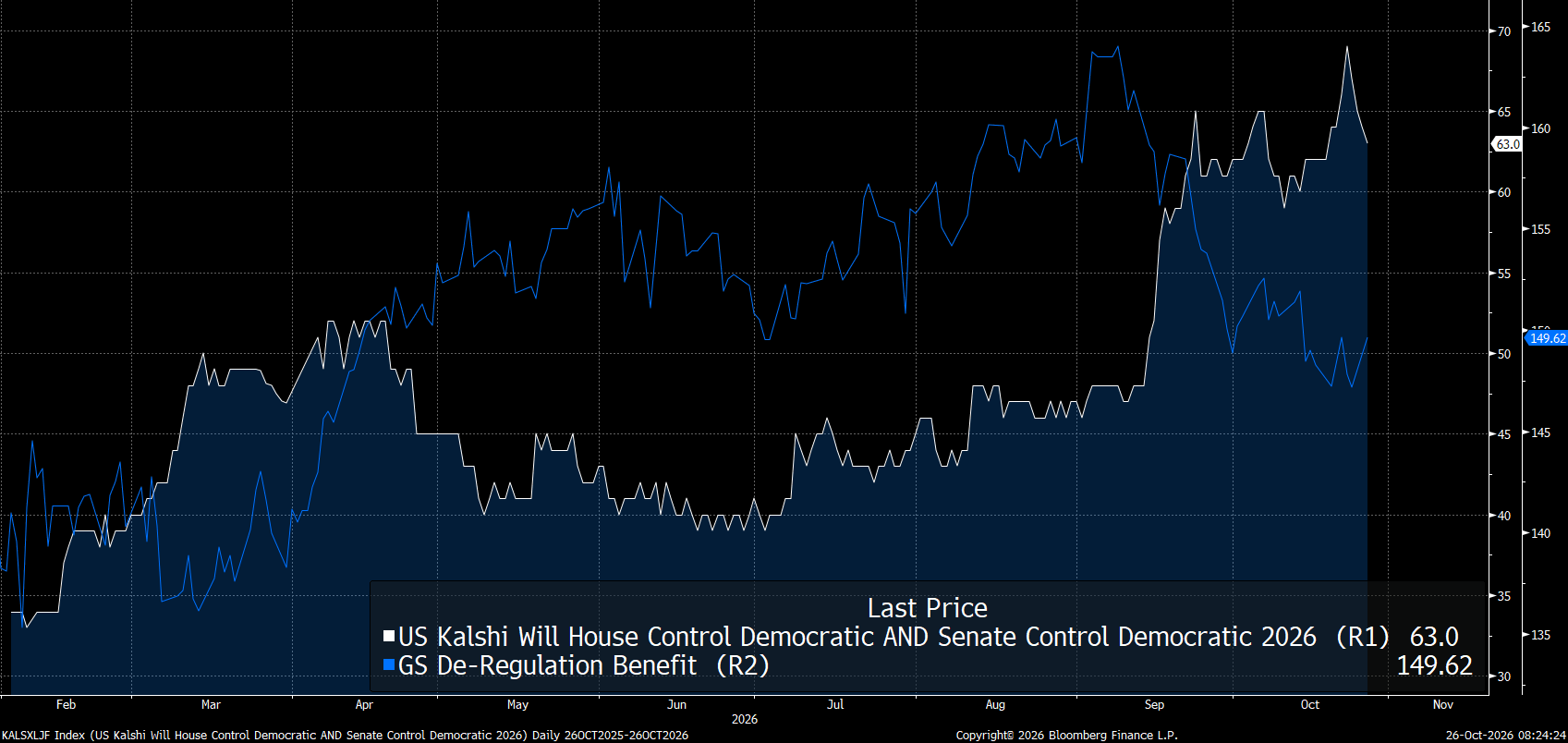
The midterms have heightened importance because so much of AI is leveraged to them at the same time that the capital structure is growing increasingly fragile and all of the index returns have come from AI.
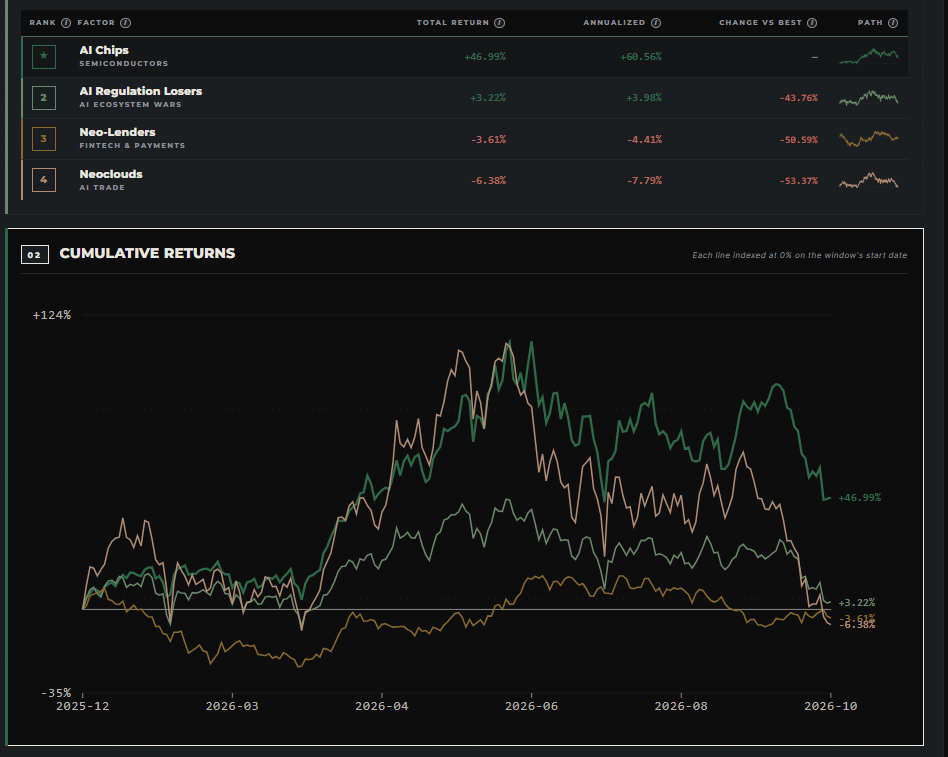
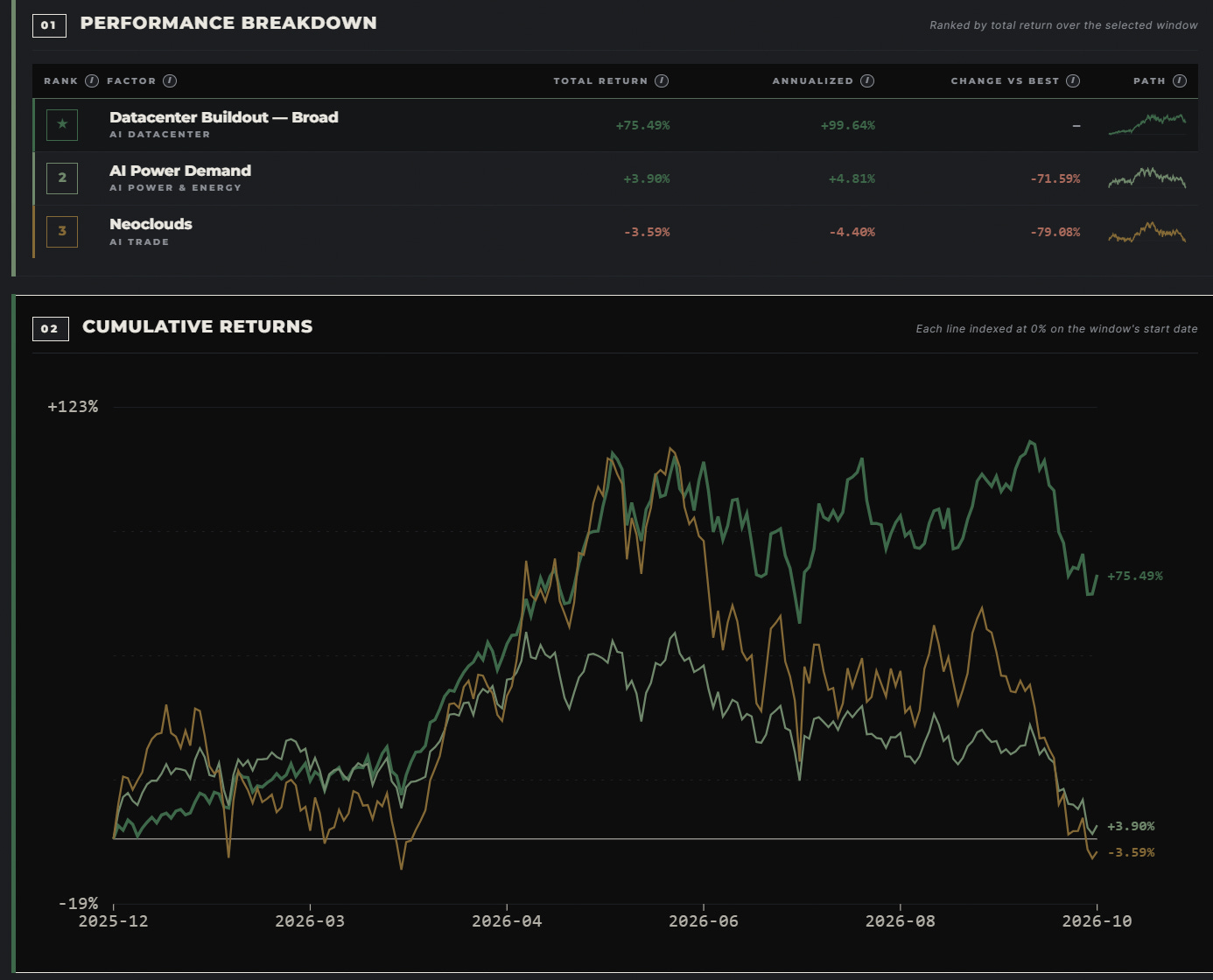
This is what brings us to HOW MUCH pain will be felt in financial markets from the midterms, since we are already seeing the value chain around AI deteriorate. You can see that the Neoclouds and Neocloud lenders are the purest expressions of supply and demand for compute. Think about Neoclouds as the guys who go and build out a datacenter, put chips in it, and then rent out the compute to Hyperscalers while we wait for all the capex to come online. Neocloud lenders provide all of the debt to build all of these datacenters. When we pull these factors together, we can begin to see the risk curve in the AI space, with Neoclouds and Neocloud lenders on the far end of the curve while AI chips and Hyperscalers carry less risk due to their other revenue sources.
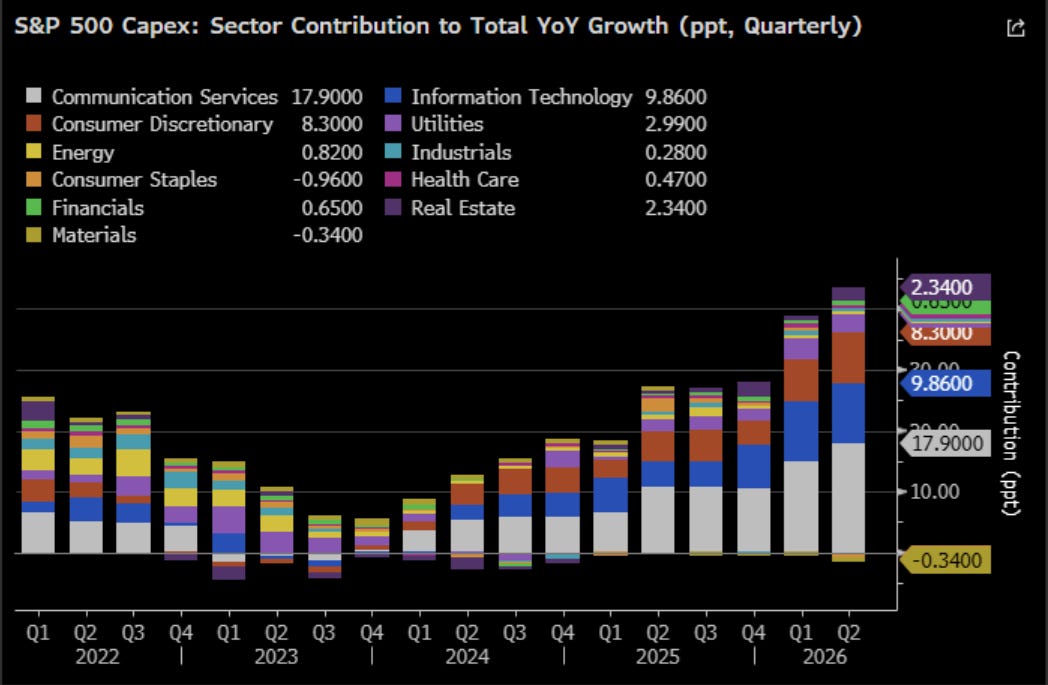
The historic level of capex in the index has brought us to a moment where tech needs to deliver or else the regulatory regime could begin putting some real selling pressure across names.
Alpha Generation and Trades:
The context above frames HOW traders and hedge funds are positioning into the next 2 months. There are significant gaps in expectations forming around how the market is positioning into the midterms, Fed policy, the Anthropic IPO, and CAPEX spending vs. expected returns. Understanding these moving parts will frame the strategy for taking trades in equities and rates.
I want to structure this section as follows:
Midterm flow analysis and implications for sectors
Anthropic S1 and IPO date
Capex Spending vs. expected returns and its impact on sector rotations
Fed policy relative to inflation and regulatory regime
Trading Opportunities
Midterms:
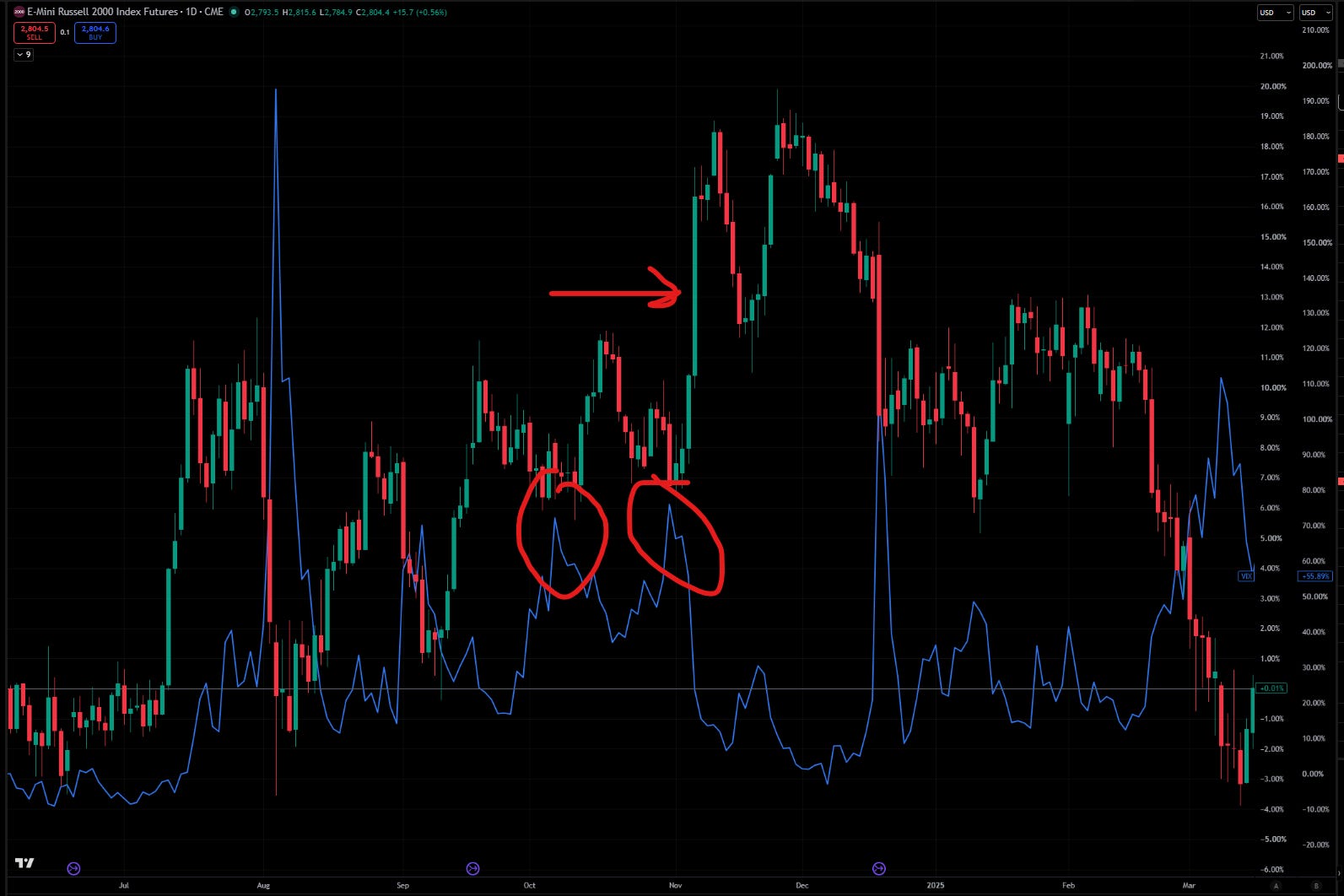
When the final announcement that Trump had won came in 2024, there was a massive rally because hedges were unwound. Market participants didn’t truly understand how bad the regulatory regime was under Biden until it ended. The Russell rallied the most during this time because the expectation of growth in the underlying economy dramatically changed under Trump. CEOs and financial institutions were functionally given the green light to put on a ton of risk. You can see that the day Trump won, there was a massive green candle in the Russell and the VIX got absolutely crushed. This marked a short-term top in the market, but only because Trump decided to begin his term with a tariff war to push back on China. If the tariffs hadn’t occurred, the equity market would have likely just started melting up on all of the deregulation, similar to the back end of 2025.
The deregulation, and the certainty of it with a Republican sweep of both houses, gave the Hyperscalers the green light to spend a massive amount on capex. One company’s capex is another company’s revenue, which means the money Hyperscalers spent on compute went to the companies that actually build it out.
Who received all of this money? Materials, energy, and industrials.
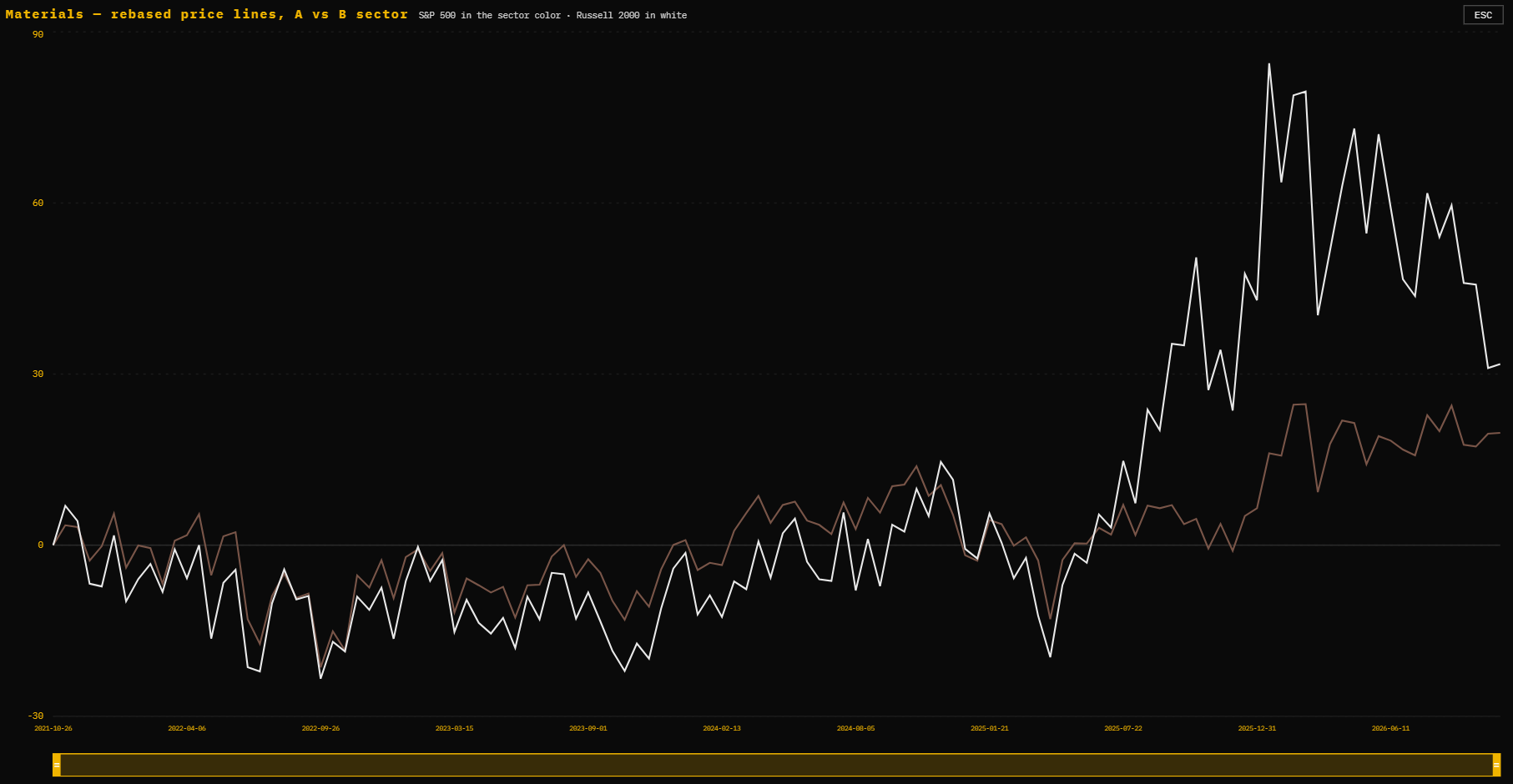
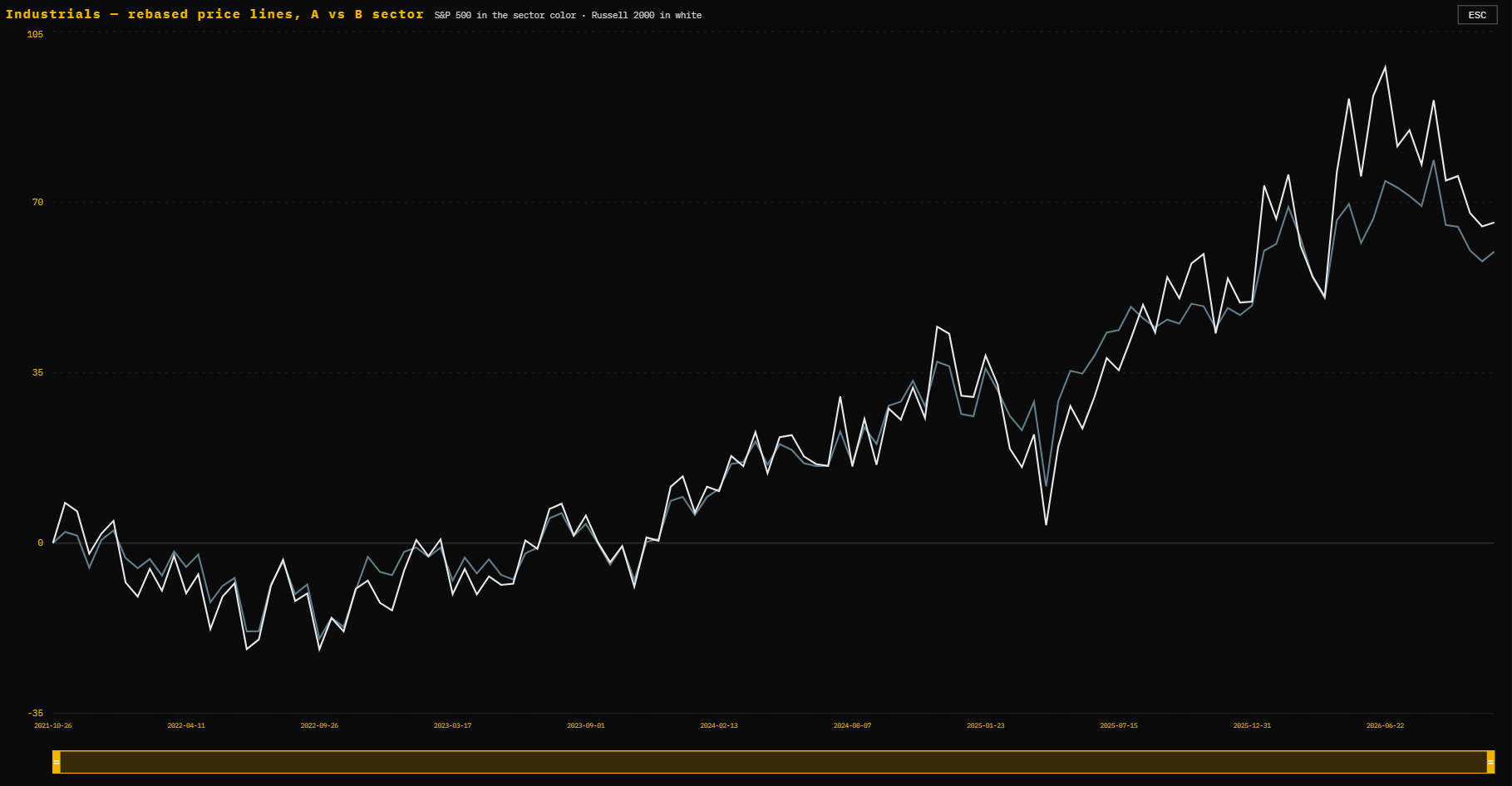
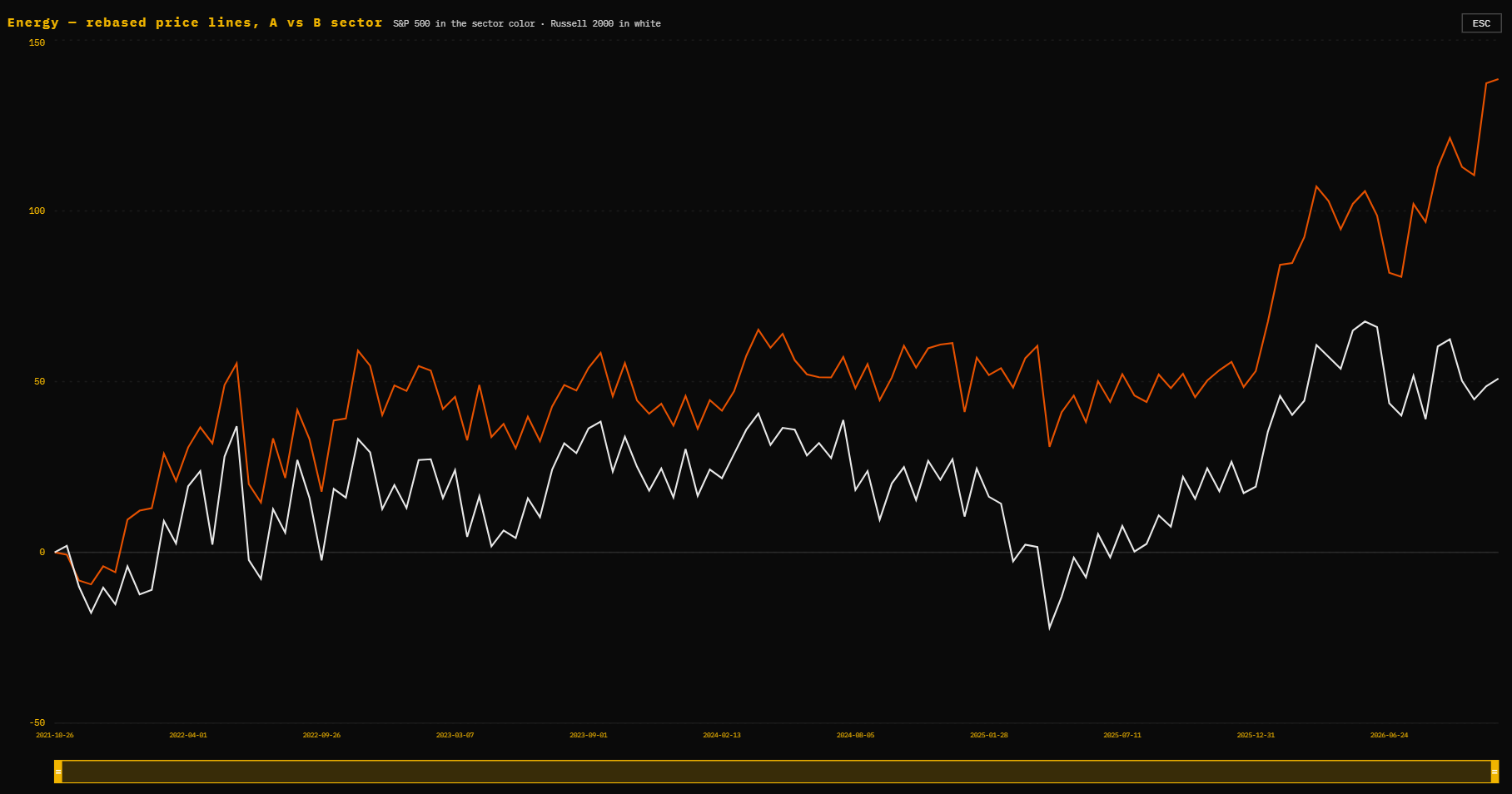
As we move into the midterms, the question everyone faces is HOW MUCH deregulation will slow. We already know that a Republican sweep is not going to happen, which means it’s all about whether the Dems take the House and the Senate or just the House. If the Dems take both the House and the Senate, this is a real risk for the regulatory regime because, no matter what, it’s going to be constant jawboning for the next 2 years.
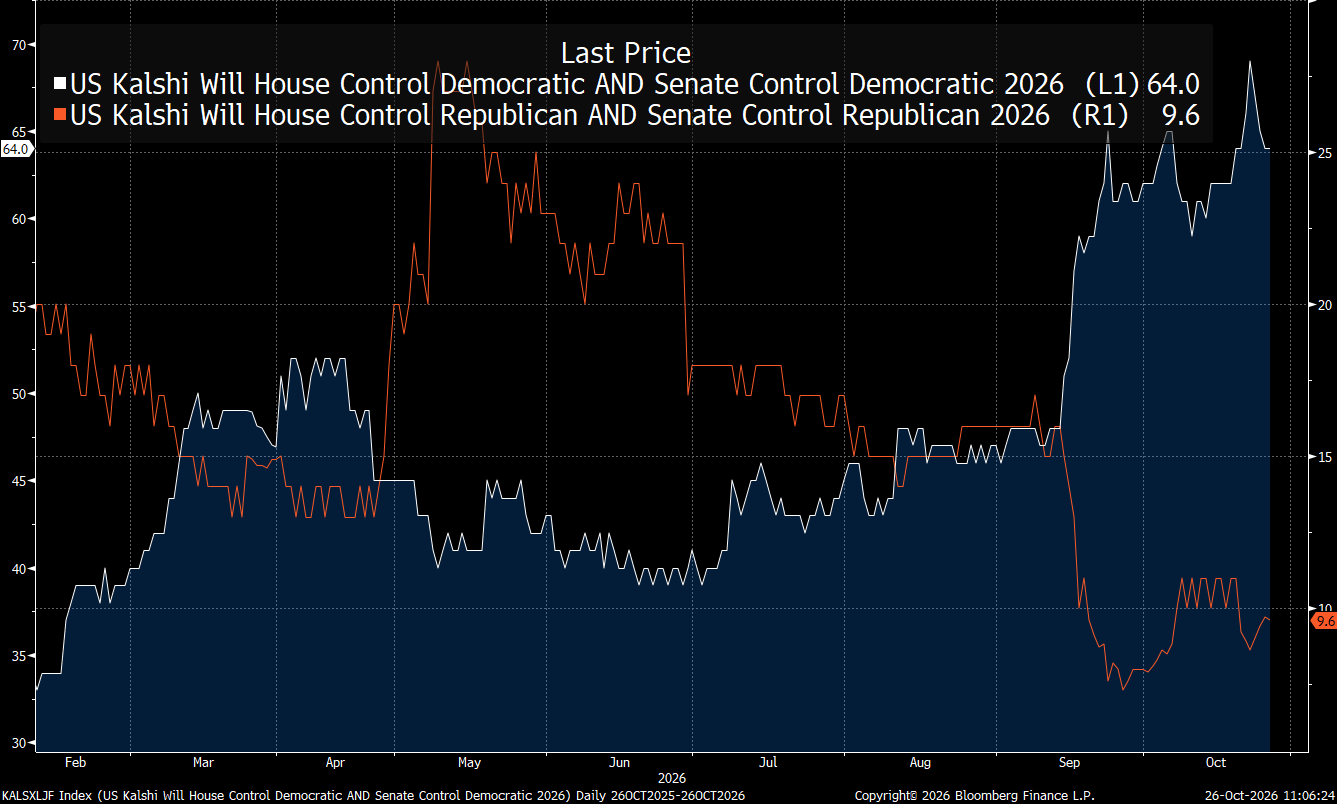
Right now, the market is likely pricing some risk premia around it, which is why we have seen some selling pressure and rotation in the AI regulation factor. You can see that we have been in a range for months now. The midterms are only one factor contributing to this. The Neocloud risks, Hyperscaler capex, and Fed policy have most certainly created a fragile environment as well.
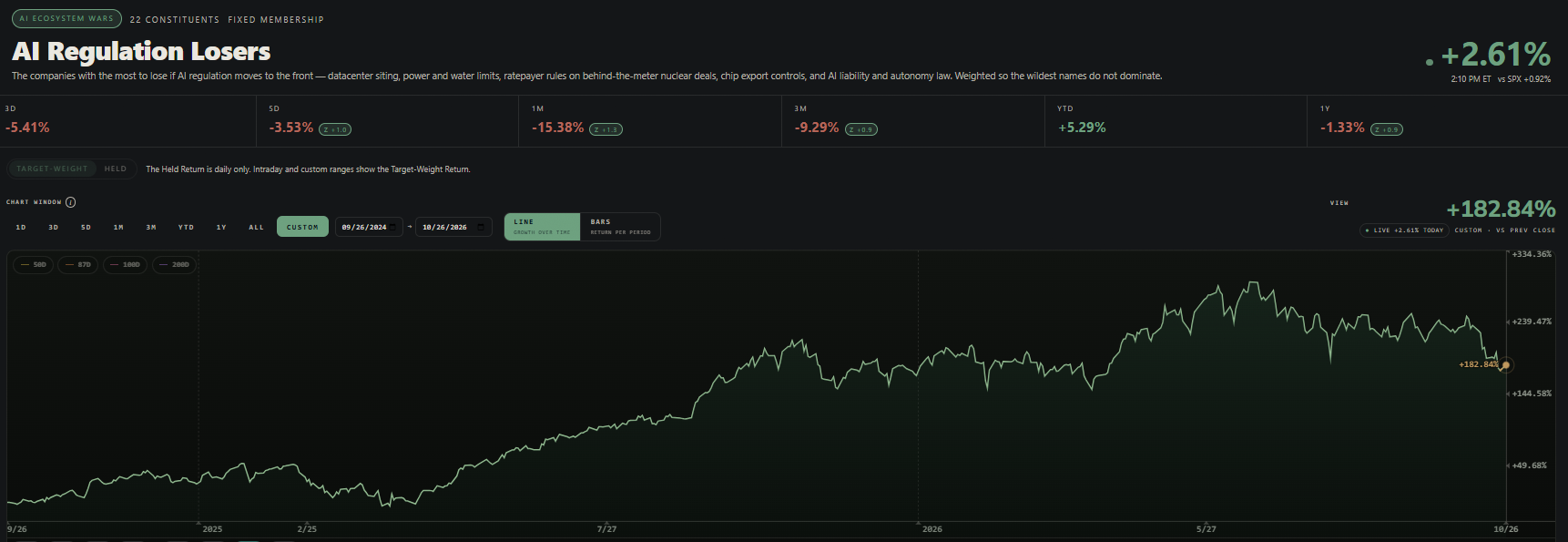
As we progress into the midterms, if the Dems only get the House and lose the Senate, then I would expect short-term hedges to unwind and set a short-term bottom in the AI trade as the market looks toward the Anthropic IPO (we just got the S1 today). If the Dems don’t win the Senate, then moving into the end of the year, I would expect a more neutral-to-positive environment on the regulatory front. If the Dems do sweep, this could be a major hurdle for AI policy for the next 2 years, especially as it relates to power, permitting, and scrutiny of the grid. If we see regulation increase at a time when credit issuance for the sector is decreasing, this can hit margins and create defaults.
Now, to be clear, this dynamic is already well documented in the active trading space. I noted earlier this year in many of the reports and livestreams that all of my contacts in the compute space were expecting defaults in Q1 of 2027 due to the amount of debt rolling over relative to GPU residuals.
When Chamath and Elon are chatting about this on Twitter, it’s not some divergent view:


Now that we understand how midterm flows are interacting with the AI space, let’s dig into the Anthropic IPO and how it connects to the midterms.
Anthropic IPO:
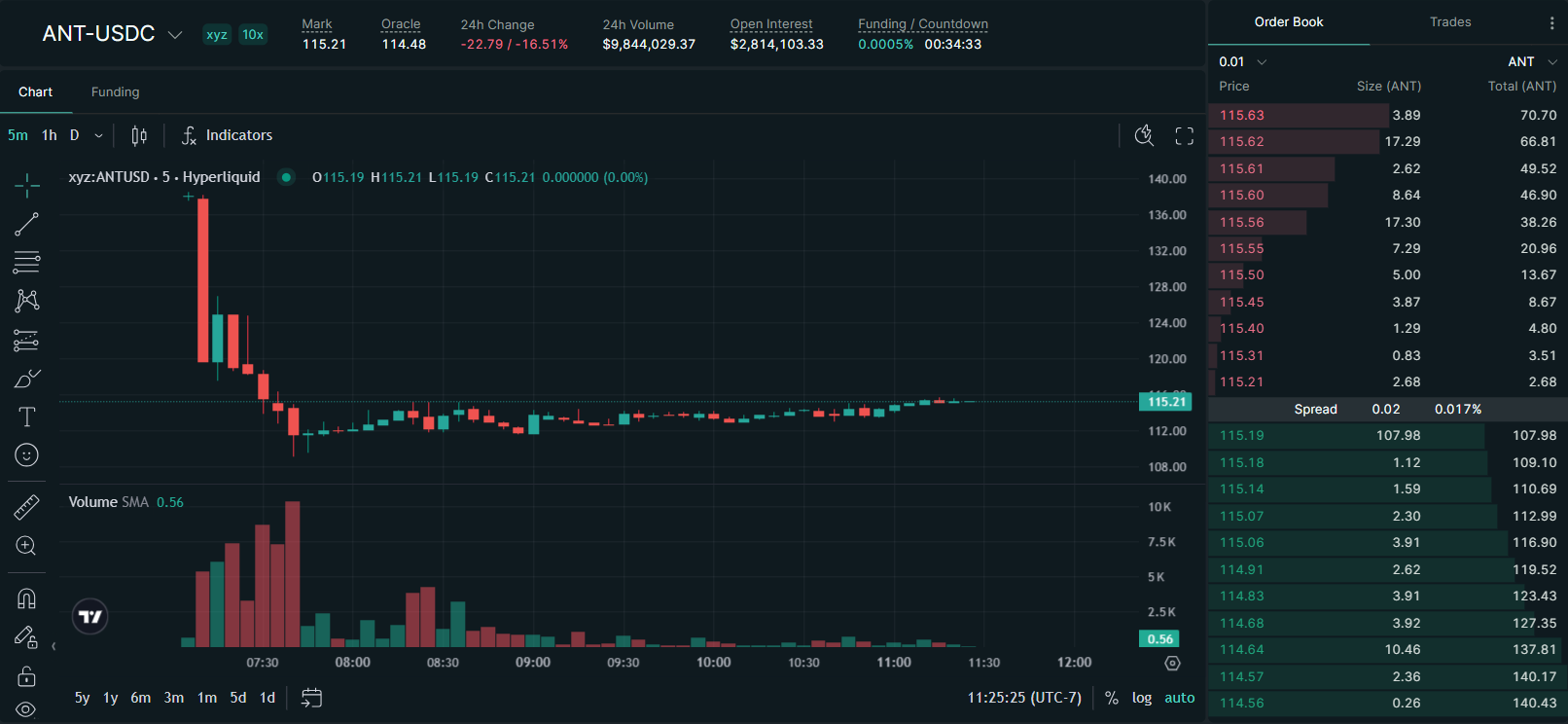
The Anthropic S1 was just released today, along with the Hyperliquid contract for it:
https://app.hyperliquid.xyz/trade/xyz:ANT
This will be THE most important chart to watch moving into the midterms and the Anthropic IPO because it directly connects to the regulatory regime as well as the catalyst flows from the midterms. If we see hedges start to unwind in the AI Hyperscaler and Semi space, with vol premiums decreasing at the same time this Hyperliquid contract starts to rally, it is very likely that we rally into the Anthropic IPO, especially if the Dems don’t take the Senate.
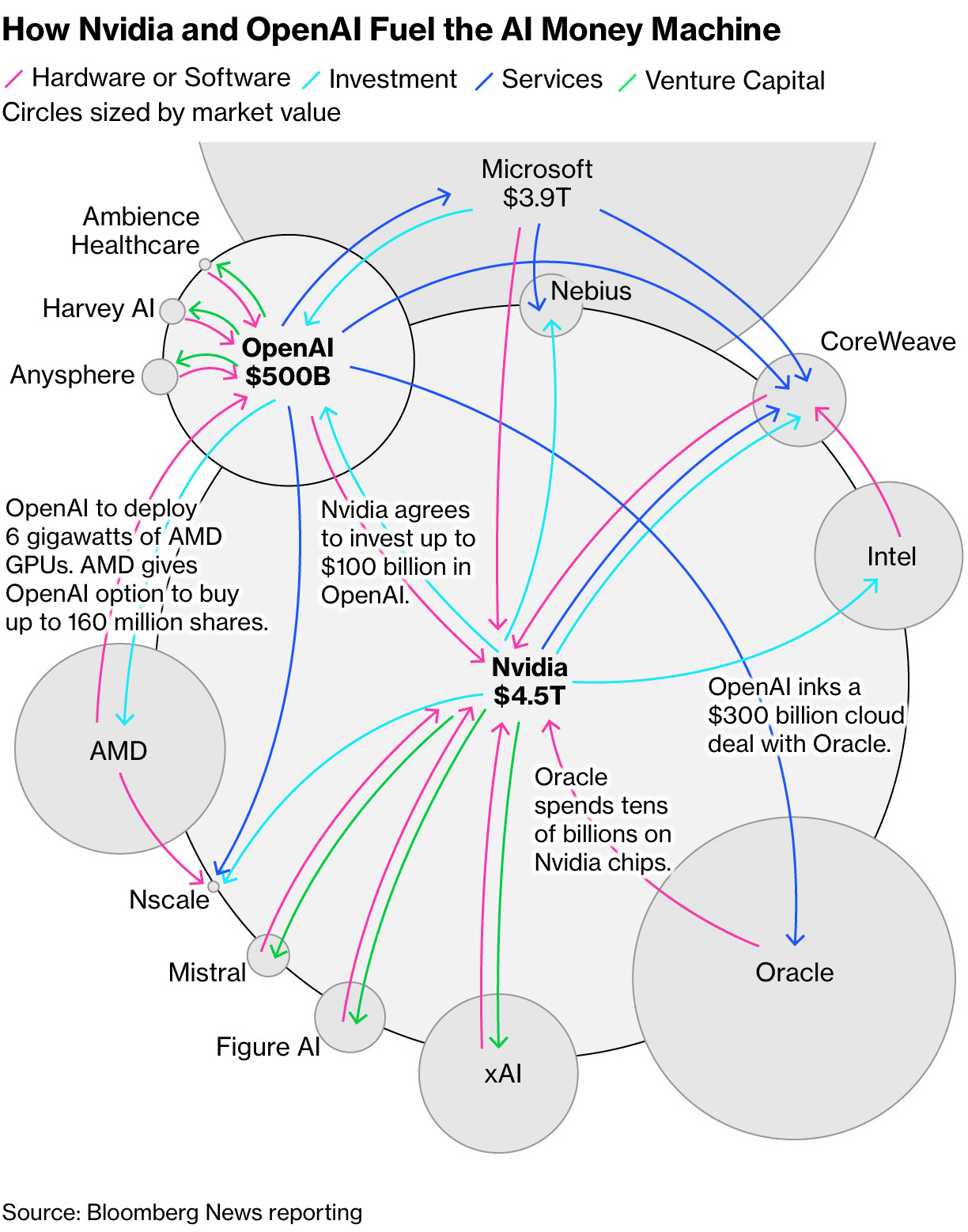
The Anthropic S1 is the first time we are getting clarity on the circular financing of the entire AI space because they are required to disclose WHERE they stand. Remember, one corporation’s investment is another corporation’s revenue, and vice versa. So these circular flows MUST net out, and the risk will be expressed.
The Anthropic S1 document is a direct order book for the compute supply chain through 2028, with a single buyer committing well over half a trillion dollars, almost all of it on other people’s balance sheets. Demand is real, broad, and still shallow in penetration, and lower price per task has driven more spend rather than less. The risk section reads as a list of what breaks it: agentic compute intensity outrunning price, open-weight commoditization, power, a startup-heavy customer base with a fixed cost base, and a growth rate management says will fall.
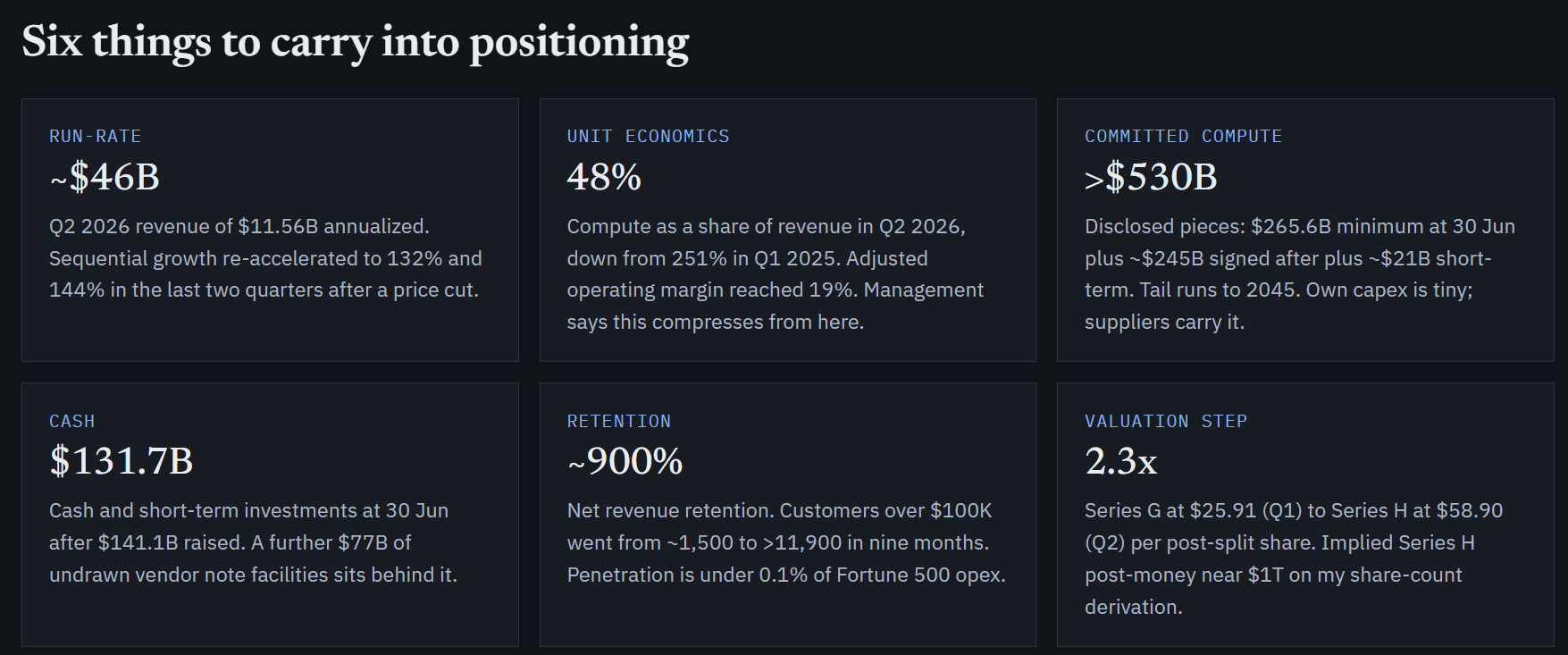
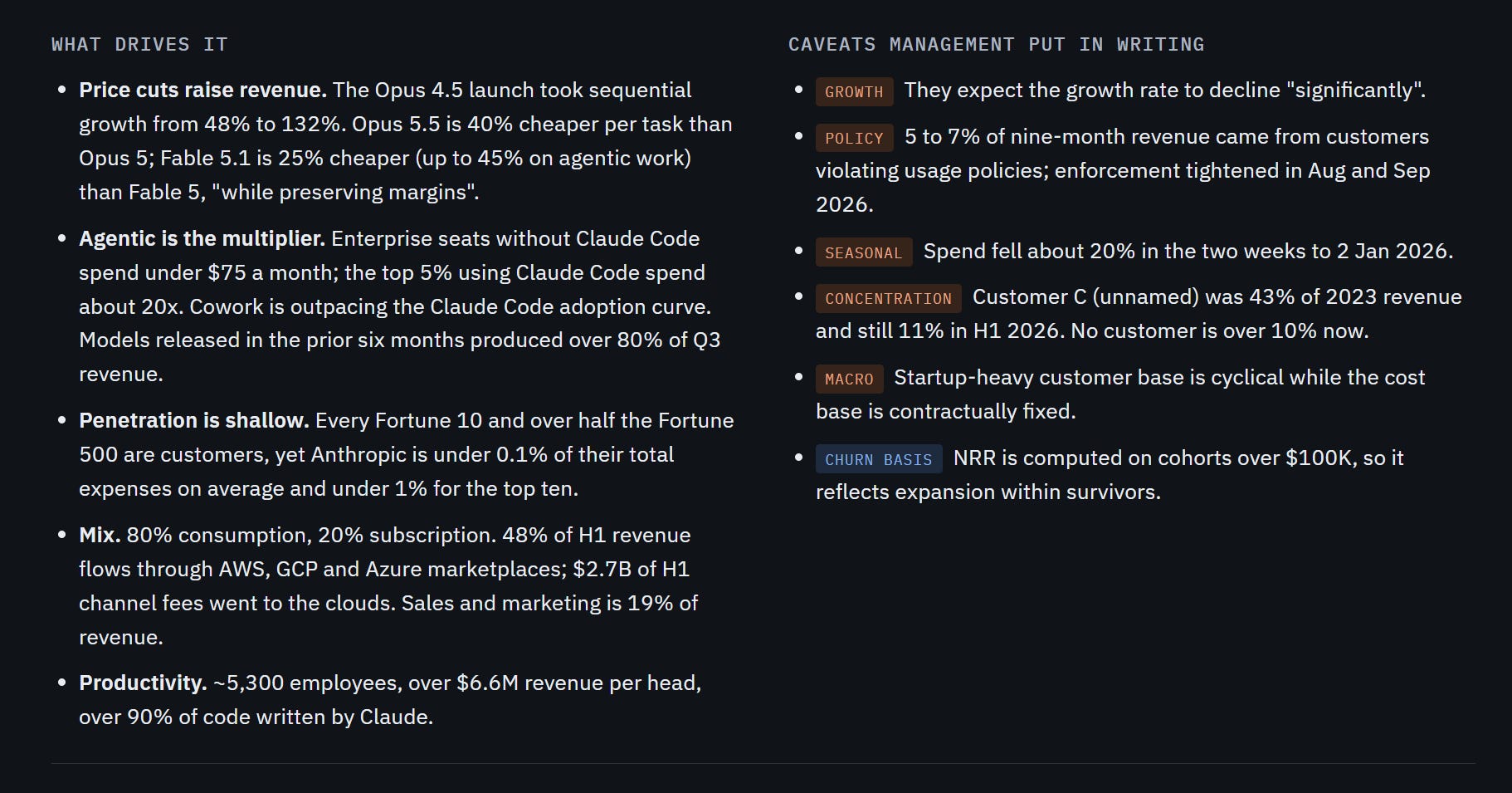
MAIN TAKEAWAY: Anthropic has committed to buy more compute over the next five years than any single hyperscaler spent on capex in 2025, and its payments peak in 2027 and 2028 at roughly a seventh of what Microsoft, Alphabet, Amazon, and Meta are expected to spend combined. That makes it the largest identifiable end customer of the capex cycle. The commitments are take-or-pay, so from here the question for the cycle is not whether the orders exist but whether Anthropic’s revenue can grow five to six times in two years to pay for them without the margins management already says will compress.
Anthropic’s revenue is one of the single most important data points for answering the question of whether Hyperscaler capex will have a return.
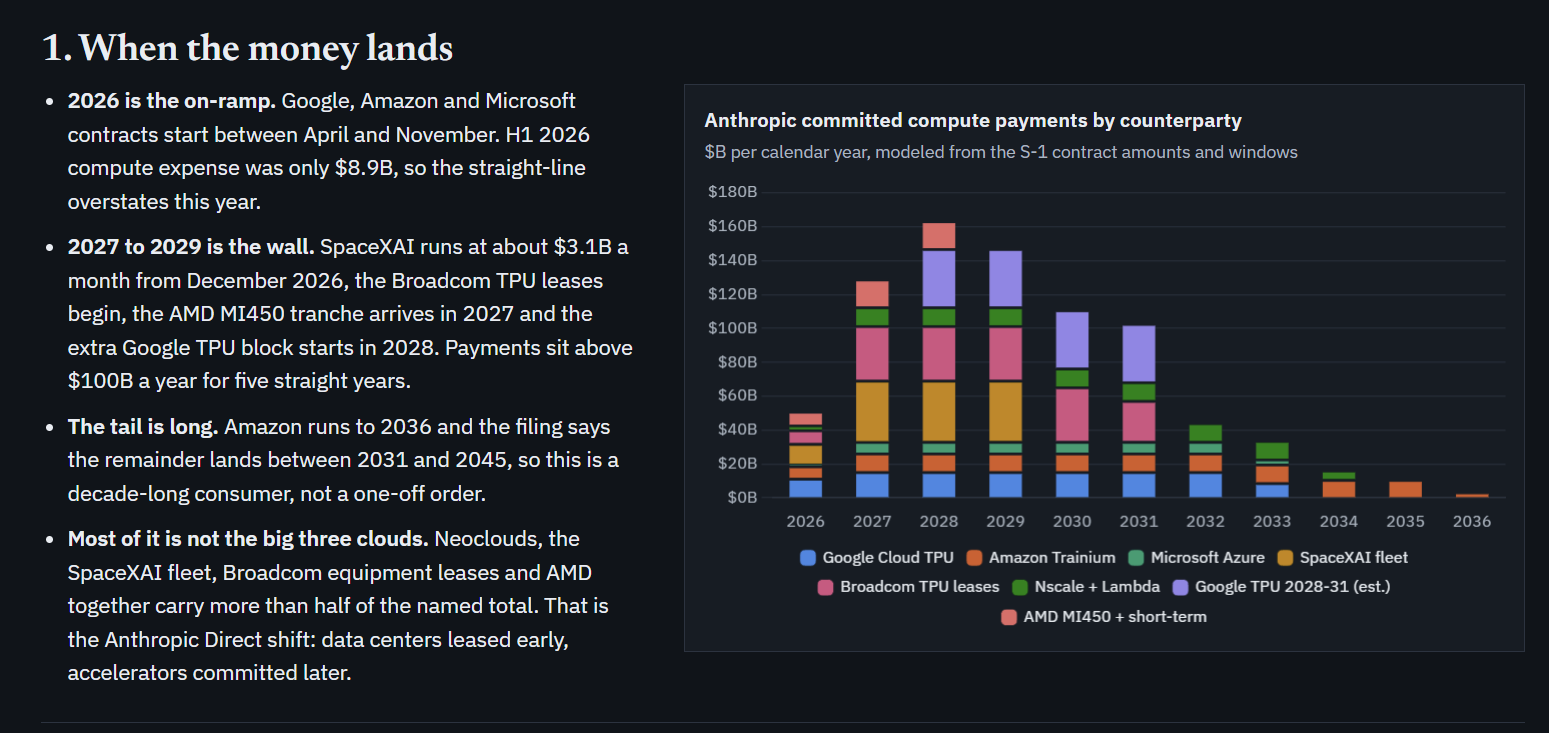
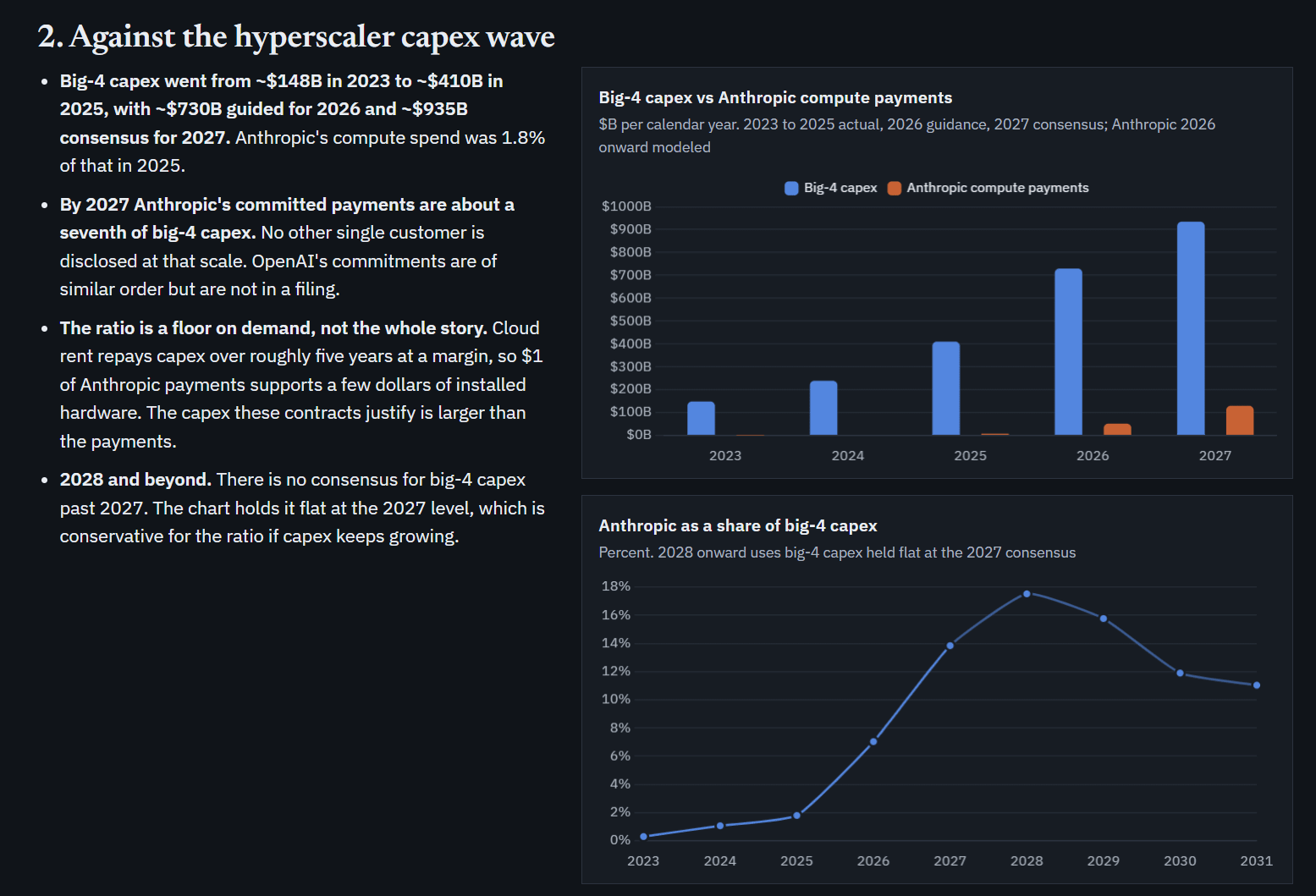
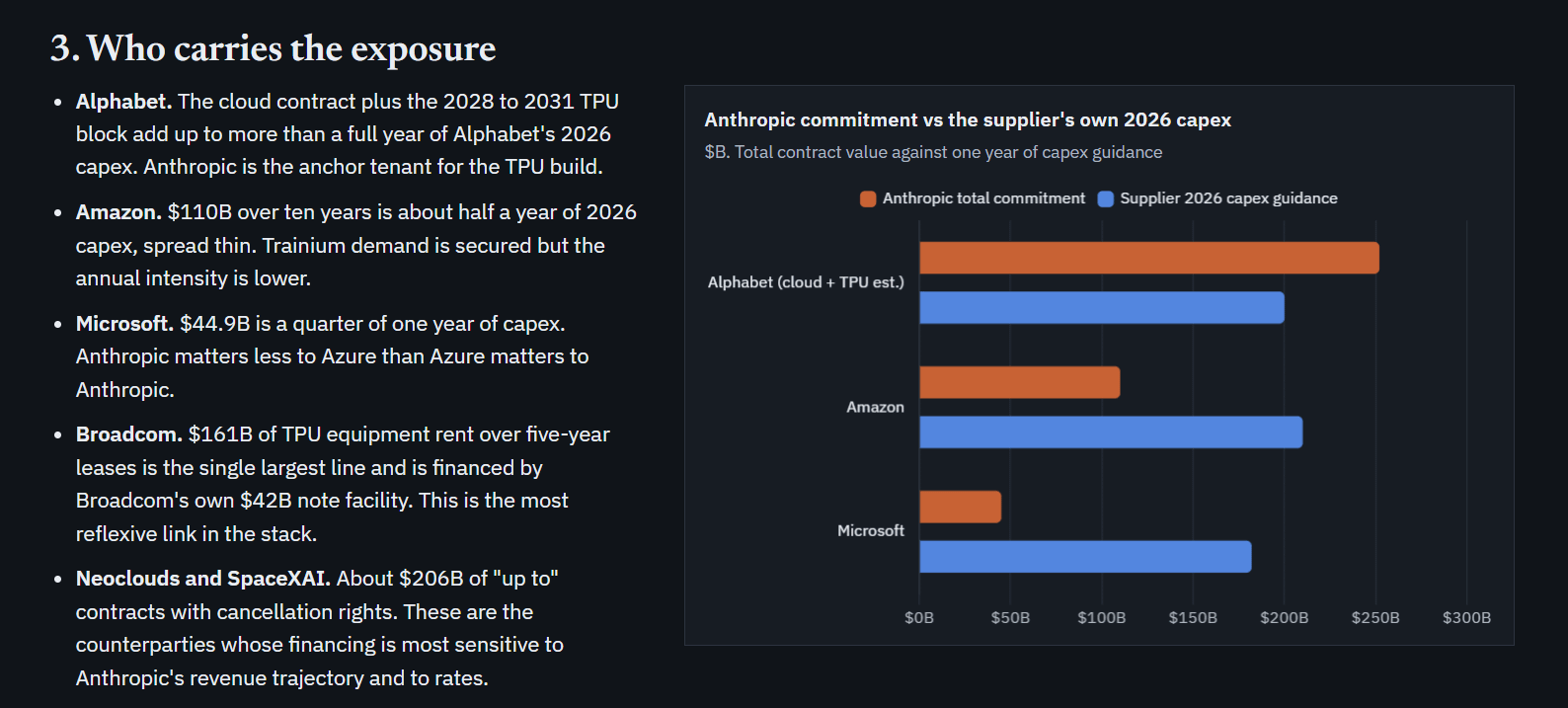
You can begin to see that clarity into Anthropic’s revenue, and the demand it provides for compute, is THE direct input into WHEN the Hyperscalers will see a return on their CAPEX and HOW MUCH credit risk will be priced in the interim.
Capex Spending vs. Expected Returns:
Who are the largest capex spenders? GOOGL, META, MSFT, ORCL, and AMZN.

These names are the largest spenders and thereby the largest providers of compute. Once OpenAI goes public, Anthropic and OpenAI will be the two largest compute consumers.
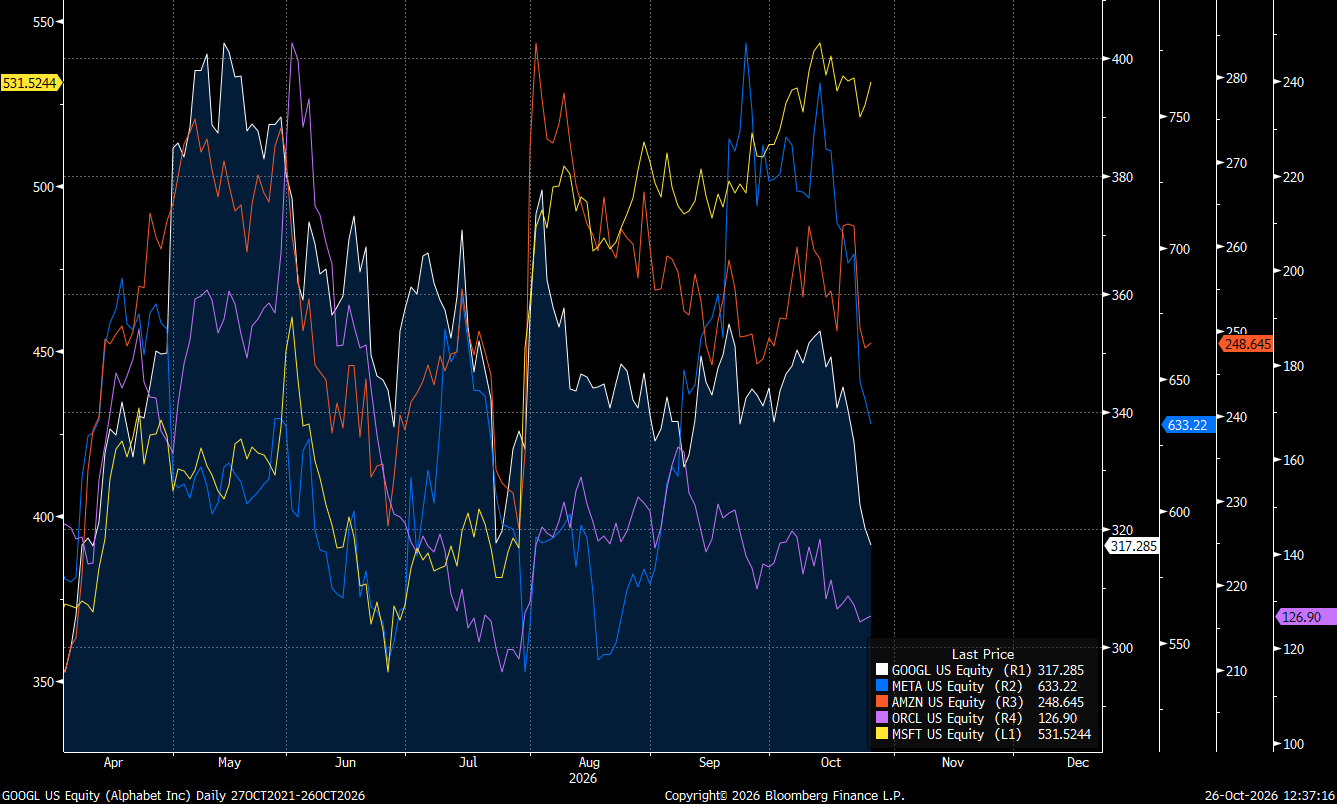
This means that in the interim, if there is a massive surplus of compute relative to the pace of demand, these names, along with the Neoclouds and downstream factors (AI power and materials), will rise or fall on the factor risk curve depending on upstream demand. Simply put, if Anthropic’s revenue starts stalling out, this will impact compute providers, which will in turn impact AI energy and materials providers.
However, we can see that the Neoclouds and the compute providers taking on liabilities take the majority of the hit.
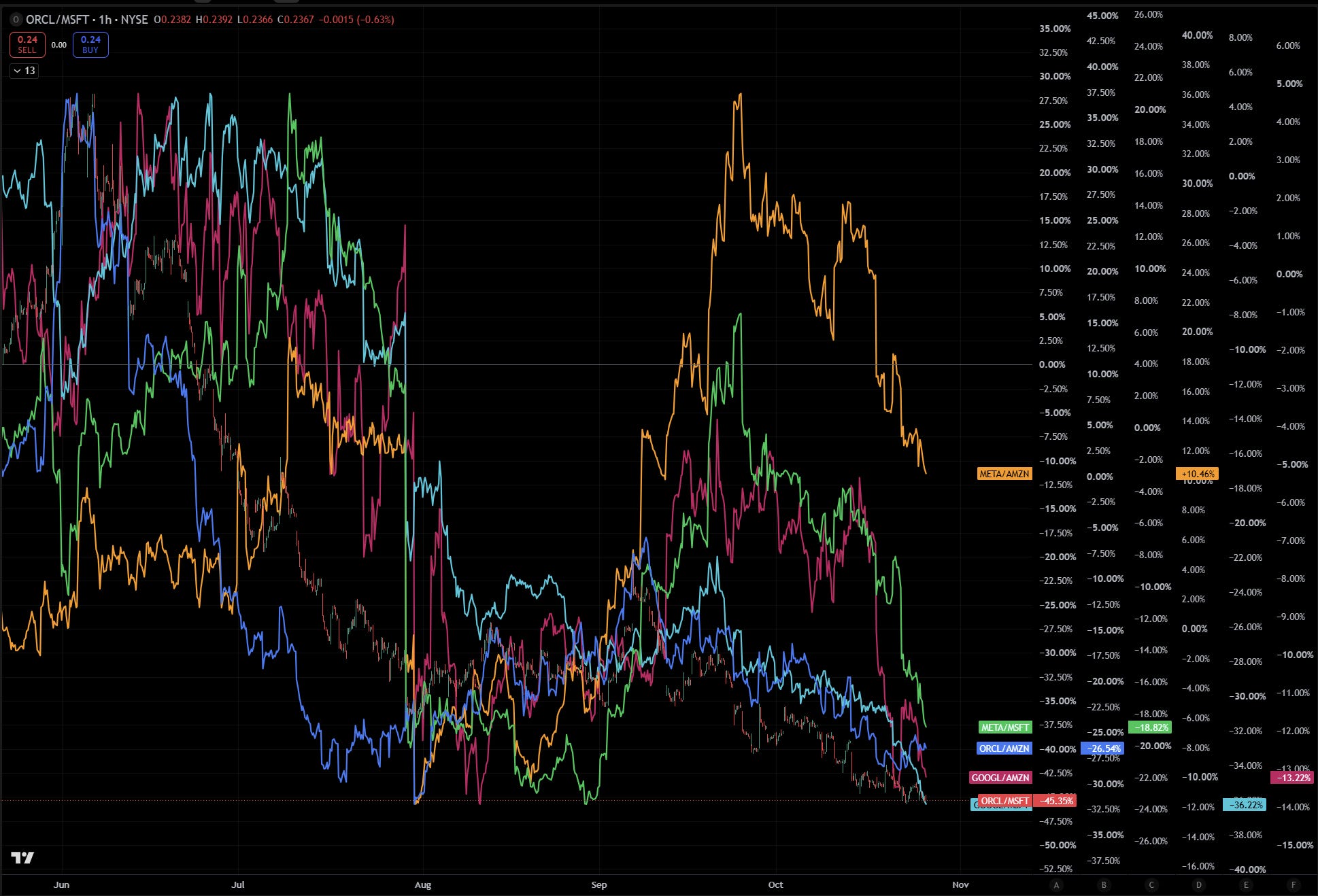
This is WHY GOOGL, META, MSFT, ORCL, and AMZN are seeing significant dispersion right now.
Oracle is the levered pure play. Capex is four-fifths of revenue, exceeds operating cash flow by three quarters, and is funded with $43B of debt plus $5B of equity in one fiscal year on a Baa2 rating with a negative outlook. The backlog is enormous, but half of the AI RPO is one customer. On the way up it re-rates on every RPO print; on the way down it is the first name where the market asks whether the financing closes. Both tails are widest here.
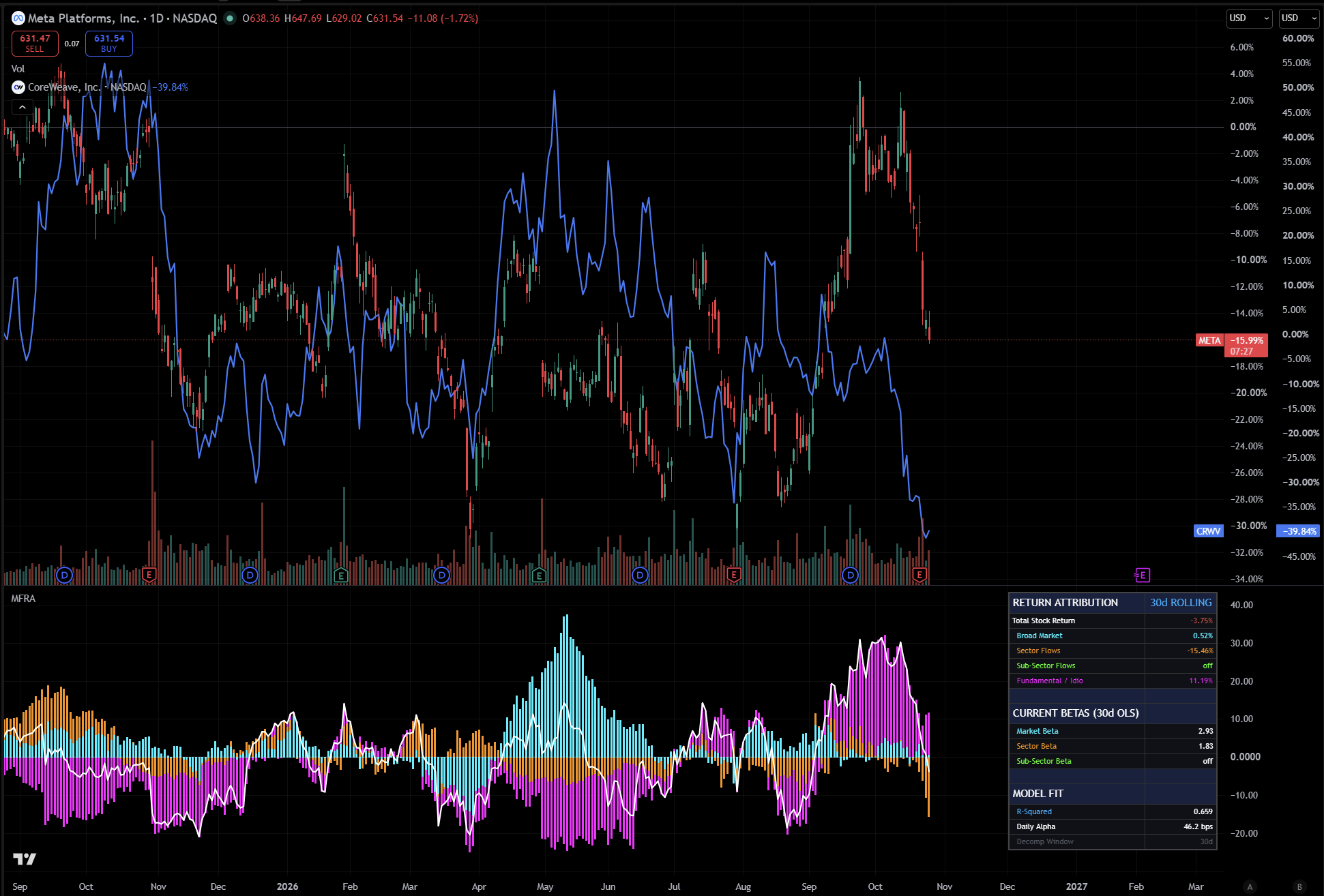
Meta is the highest-beta big-4 name, for a different reason. Capex has crossed operating cash flow and the company has no cloud customer paying for the compute. The entire outlay is a bet on its own ad and AI monetization, so there is no backlog to point to if sentiment turns, and bond issuance is now part of the funding. The downside beta is high because the market can only judge the spend by ROI, and the upside is capped because nobody else’s commitments flow through its P&L.
Microsoft is in the middle. Intensity is high once finance leases are counted, but it is the only one of the five still free-cash-flow positive, and it has the broadest contracted demand across OpenAI, Anthropic, and its own software base. It also pushed a lot of capacity to neocloud leases, which moves some beta onto CoreWeave and Nebius. Medium-high beta with the best balance-sheet cushion.
Alphabet has the best asymmetry. Capex intensity is lower than Meta or Microsoft on revenue, yet the TPU franchise gives it the largest single externally contracted demand of the five, worth more than a year of its own capex from Anthropic alone. Free cash flow dipped negative and buybacks paused, which is why the stock sold off on the raise, but it is the clearest beneficiary of the Anthropic stack we modeled. Medium beta, skewed up.
Amazon screens lowest at the equity level and highest at the segment level. Retail dilutes the ratio to under 30% of consolidated revenue, so the whole-company beta is the lowest of the five. Strip it to AWS and capex runs about 1.5x segment revenue, with free cash flow negative at the segment level for years. Trade it as a low-beta consolidated name with a high-beta cloud inside.
The regime change applies to all five. A year ago, all of them funded capex out of operating cash flow. Today, four of the five spend more than they generate and are issuing debt. That raises the beta of the whole group, because the marginal dollar of capex now depends on credit markets and on customers like Anthropic actually paying their take-or-pay bills, which is exactly the chain the S-1 risk section describes.
You can begin to see why META’s fundamental returns (purple) are about to turn negative and have converged marginally with CoreWeave. https://www.tradingview.com/chart/eiOfsMWn/
The same is true for GOOGL: https://www.tradingview.com/chart/qorWL7bW/
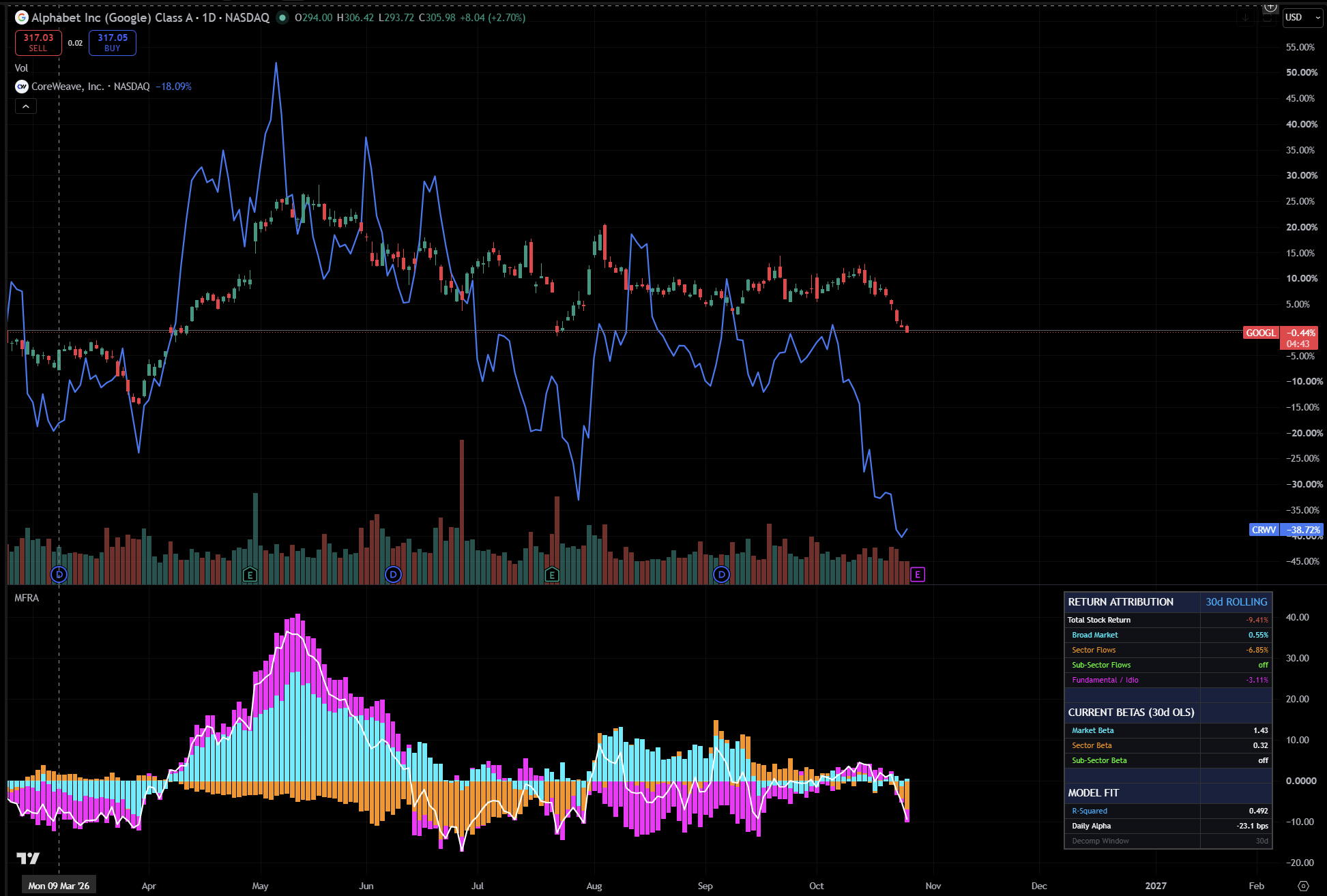
Owning downside puts on META and GOOGL into the midterms is a good expression of further downside and contagion in the compute space without needing to short the Neoclouds. Downside exposure in these names pairs well with long exposure in the Russell or financials. This is especially attractive in META given that the Muse release is behind us and all of the fundamental returns from it have been unwound.
At the end of the day, the Anthropic IPO is going to price a ton of idiosyncratic risk into the market, and factor flows are going to change significantly because there is going to be a lot more clarity on the circular financing between the Hyperscalers, Neoclouds, and Frontier Labs.
All of this brings us to the larger macro risks surrounding the Fed’s stance towards inflation and capex growth.
Interest Rate Risk:
One of the primary drivers of growth has been the capex spending from Hyperscalers, which is adding capital to nominal GDP at the same time a supply-side shock is occurring. I already explained my views on rates here:
And here:

What I want to focus on in this section is HOW interest rates are connected to these changes in AI, the midterms, and macro volatility in the system.
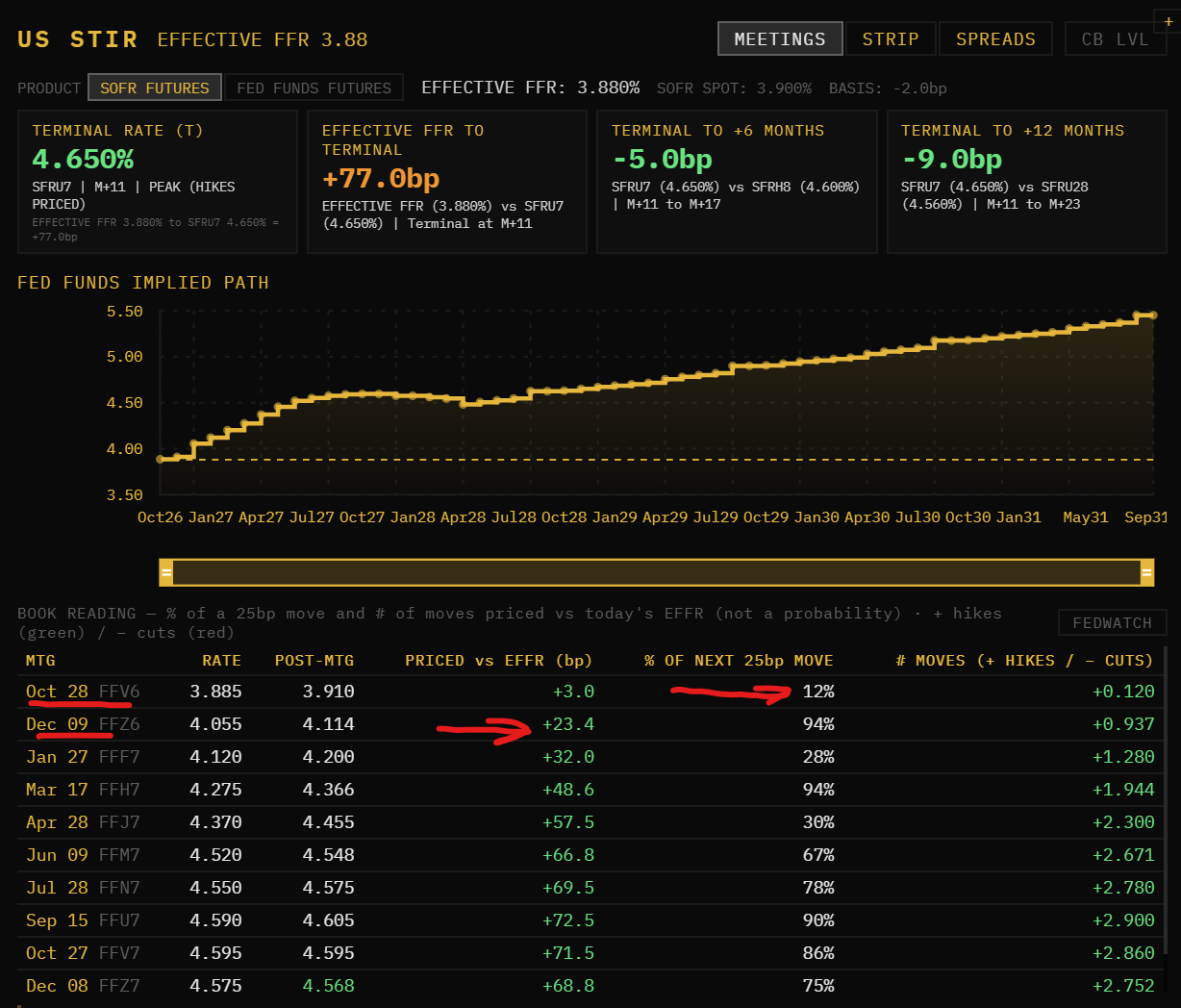
The Fed’s passive stance, matched with the repricing of the forward curve, has begun to set the stage for another policy error. The forward curve is now pricing a pause at this meeting and a hike at the December meeting, with only 77bps of hikes to the terminal rate.
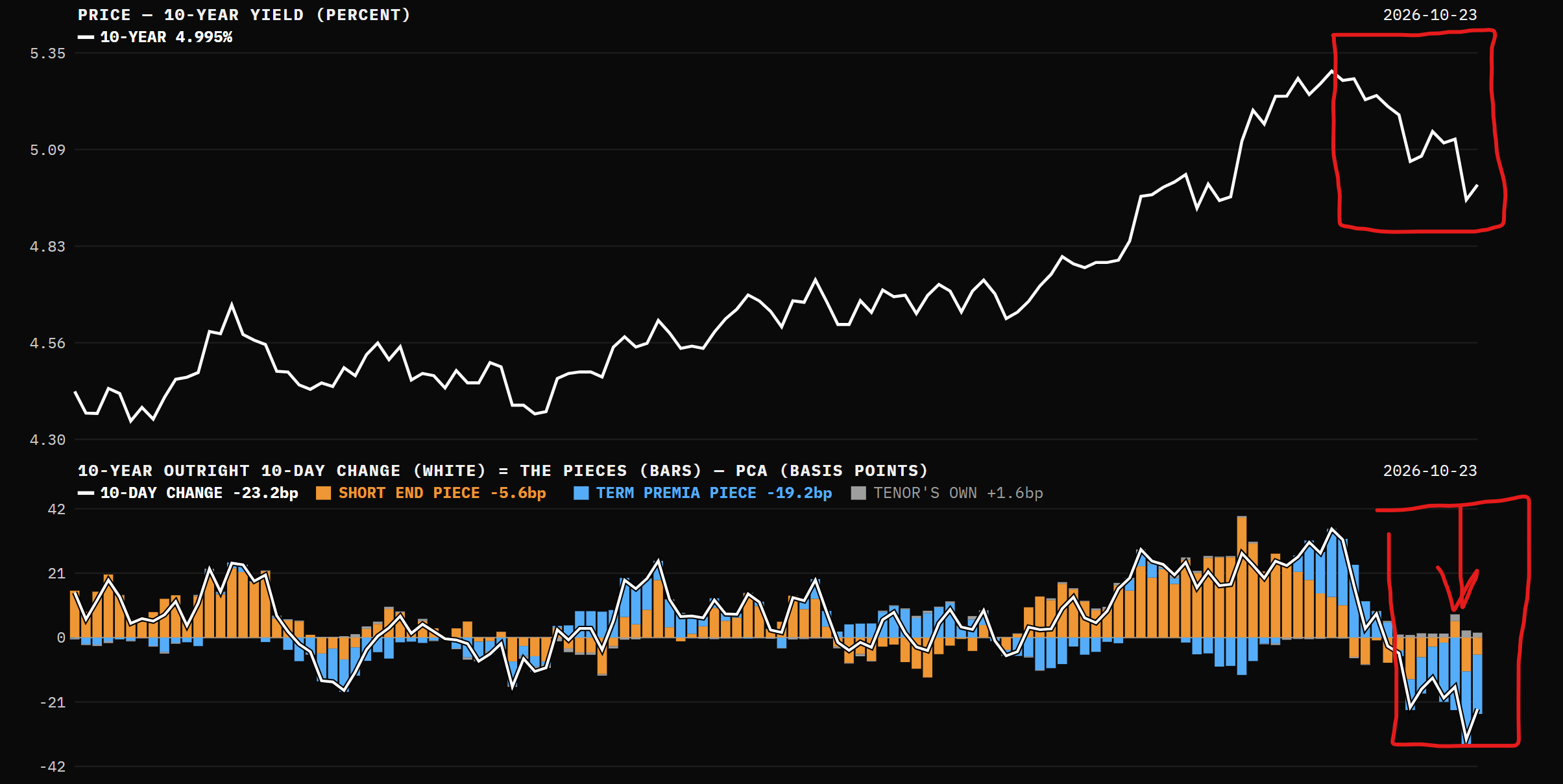
Notice that the recent pullback in rates has been almost exclusively driven by term premia (blue bars). This means the move in rates is primarily a repricing of expectations for long-term nominal GDP as opposed to being driven by an active Fed.
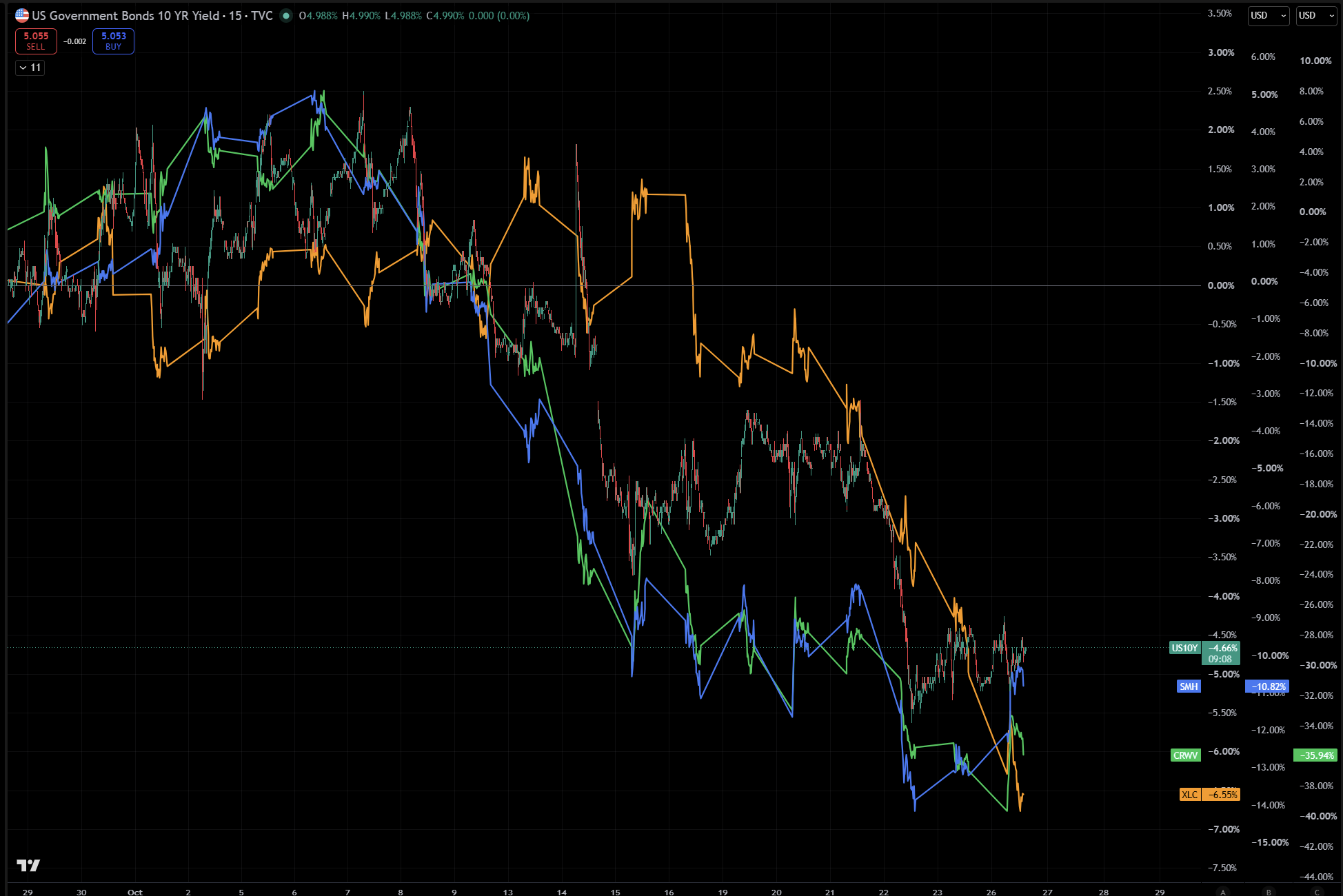
What parts of long-term nominal GDP are repricing during this period? You will notice that traders rotated out of SMH, CRWV, and XLC at the same time they bid bonds on the margin. The shift in expectations around capex with the midterms and the Anthropic IPO I noted above is very likely connected to the recent pullback in long-end rates. However, the problem is that the structural forces for growth and inflation have NOT changed in a durable way.
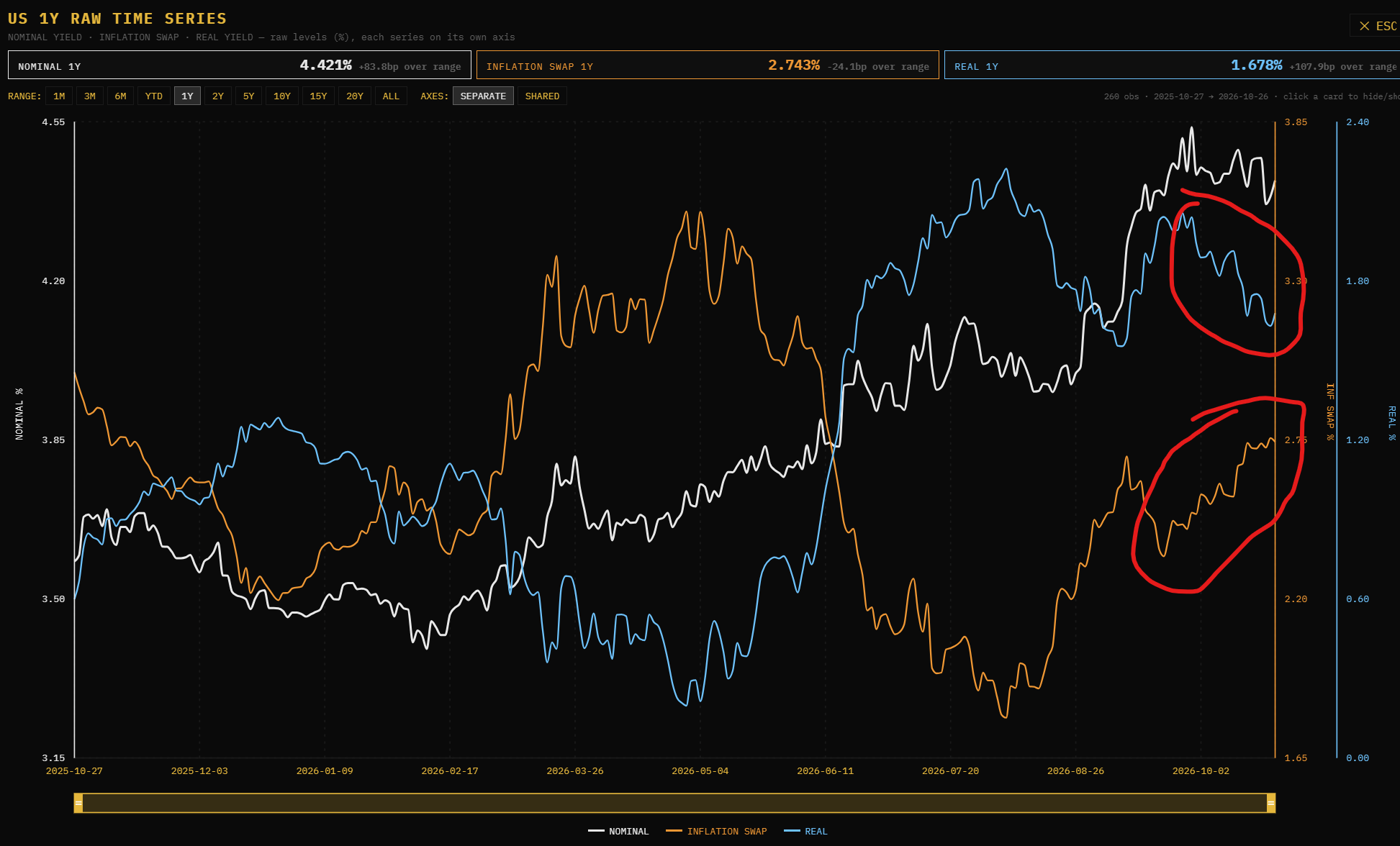
Notice that even on the short end, inflation swaps have been rising as real rates have been falling. This means the Fed has been less active and thereby less restrictive in its stance at the same time inflation expectations are rising.
As I explained here, the wealth effect is currently exerting inflationary pressure on the US economy at the same time CAPEX spending is elevated, a supply-side shock is occurring, and the deficit is running hot.
Equity and Bond Market Risks (Video Breakdown)

Today I recorded a video explaining HOW to think about and analyze the flows in the equity and bond market. With equities closing down today and crude bidding again, the question facing investors is: how extensive are the risks in the liquidity cycle?
All of these factors are occurring as inventory-to-sales ratios are near 2021 levels, when inflationary forces were building. Simply put, the supply and demand structure is currently out of balance at the same time demand forces and the supply of money are increasing. As this takes place, the Fed is not even maintaining a restrictive policy.
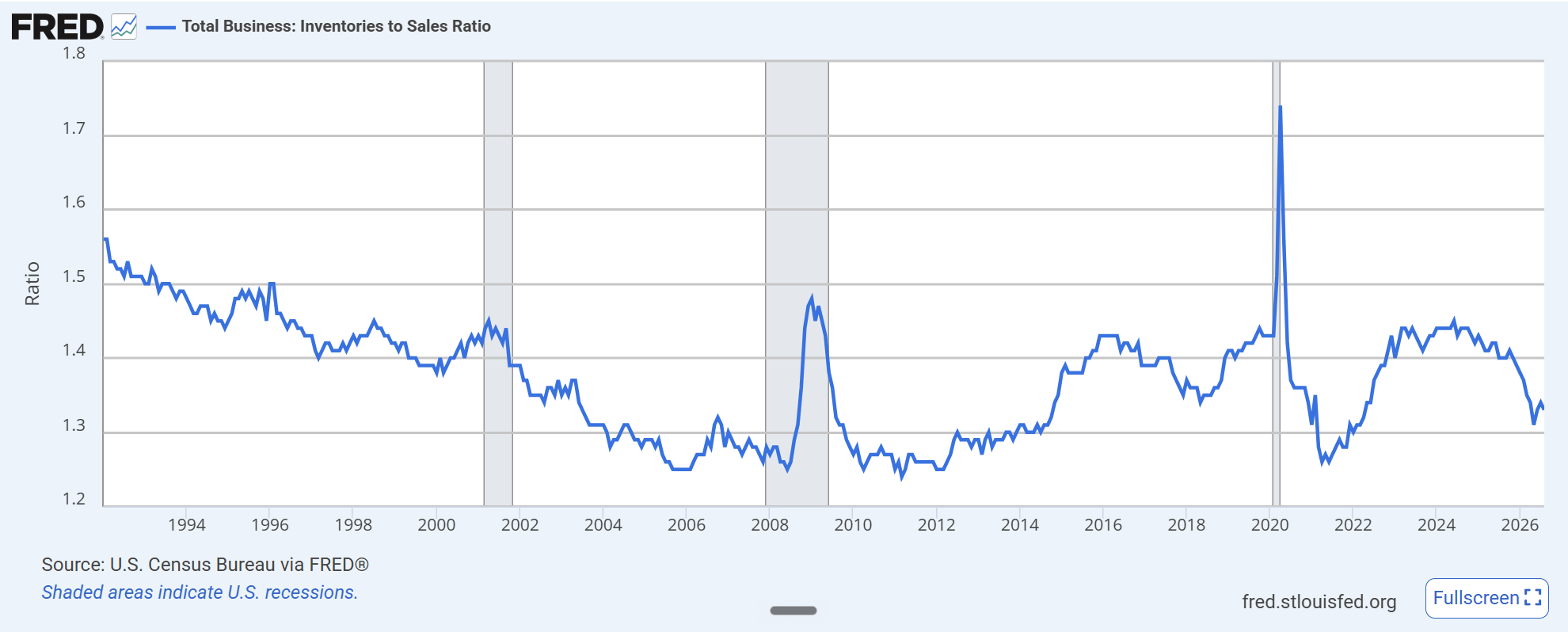
WHEN the Fed finally has to play catch-up, they are going to need to hike, which will bring risk assets down given the valuations we are seeing. If they don’t hike, they are going to cause long-end rates to spike as the curve bear steepens, which will also likely cause equities to sell off. The bigger risk is if we see the dollar fall against major currencies while this takes place, because foreigners are exiting USD-denominated exposure due to the fall in real returns. Remember, foreigners make decisions based on their dollar-hedged returns, not just S&P 500 returns. Read this article if you are trying to understand this dynamic:

Trading Opportunities:
We have covered multiple layers that are likely to drive markets. The midterms represent considerable risk depending on whether the Dems take the Senate; the AI risk curve is becoming much clearer with the Anthropic IPO; some of the Hyperscalers could get smashed with selling pressure due to their increased compute exposure (Meta); and the growing imbalance in the economy could create some real risks for interest rates.
There are two things to consider when expressing trades in this environment:
First, headwinds for equities are increasing due to the macro risks (see my video here). This means that identifying idiosyncratic returns without exposure to broad beta or the winners of the last 2 years will be important.
Second, interest rate risk is going to drive a lot of volatility over the next 2 months. It is very possible that the Fed is waiting until after the midterms and the Anthropic IPO to get super hawkish. If this takes place, shorting bonds will continue to be an excellent macro trade as long as the Fed stays behind the curve. Once the Fed plays catch-up, flatteners will be an excellent expression along with being long vol. We are not at this moment yet, but we will receive more clarity at FOMC this week.
Trade Ideas:
The dispersion between GOOGL, META, MSFT, ORCL, and AMZN is likely to intensify as the Neoclouds maintain their downtrend. Simply put, GOOGL, META, and ORCL are likely to underperform MSFT and AMZN.
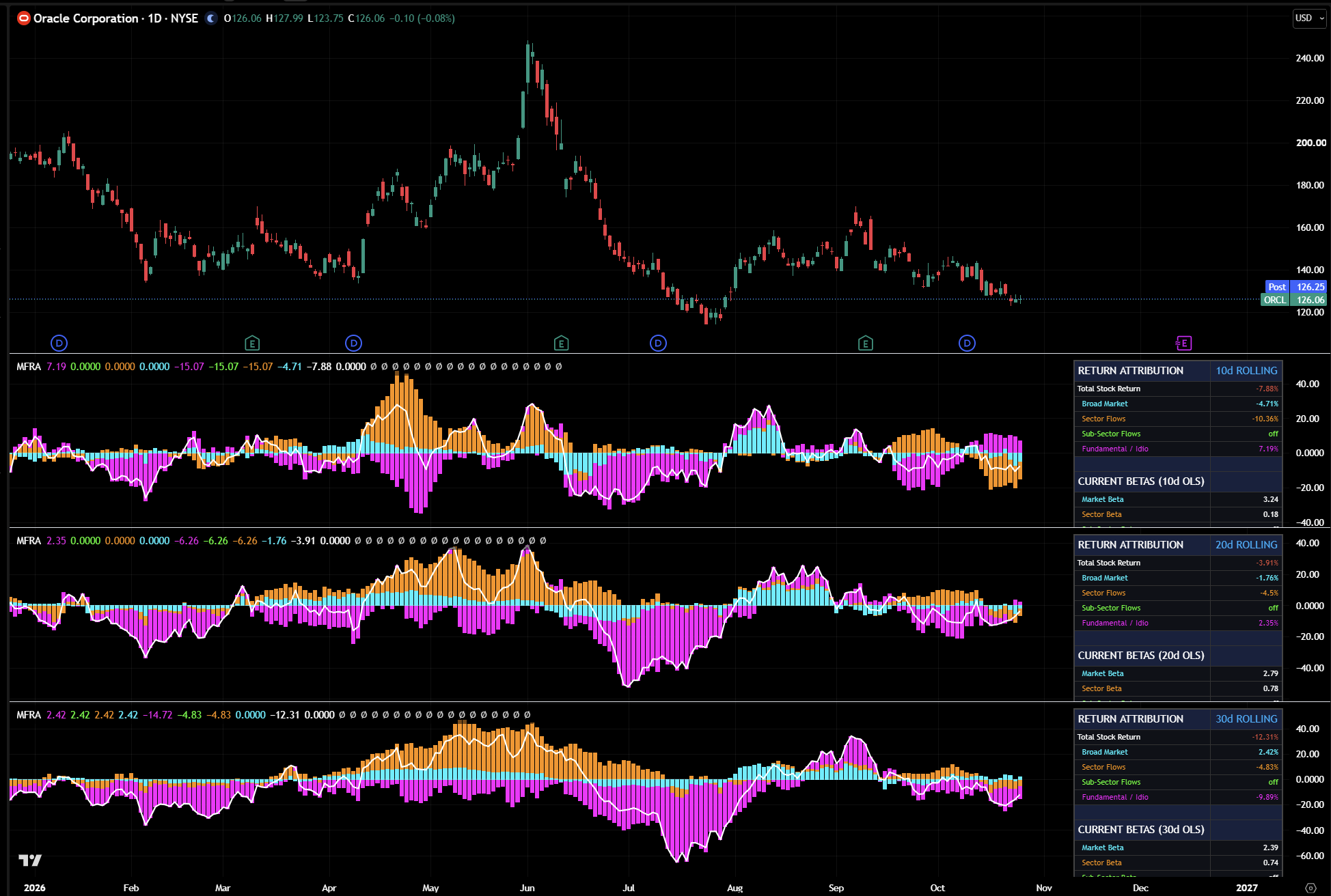
Once Anthropic and OpenAI begin to indicate that compute demand is coming online in excess of supply, ORCL will begin to show fundamental returns turning positive across multiple time horizons. You can see that fundamental returns (purple bars) have functionally been negative, indicating that the build-out by Ellison is not yet contributing positively to the company. The Neocloud factor carries greater risk than Oracle, but if it keeps falling, it is likely a net drag on Oracle until the broader AI regime changes and the data centers actually come online.
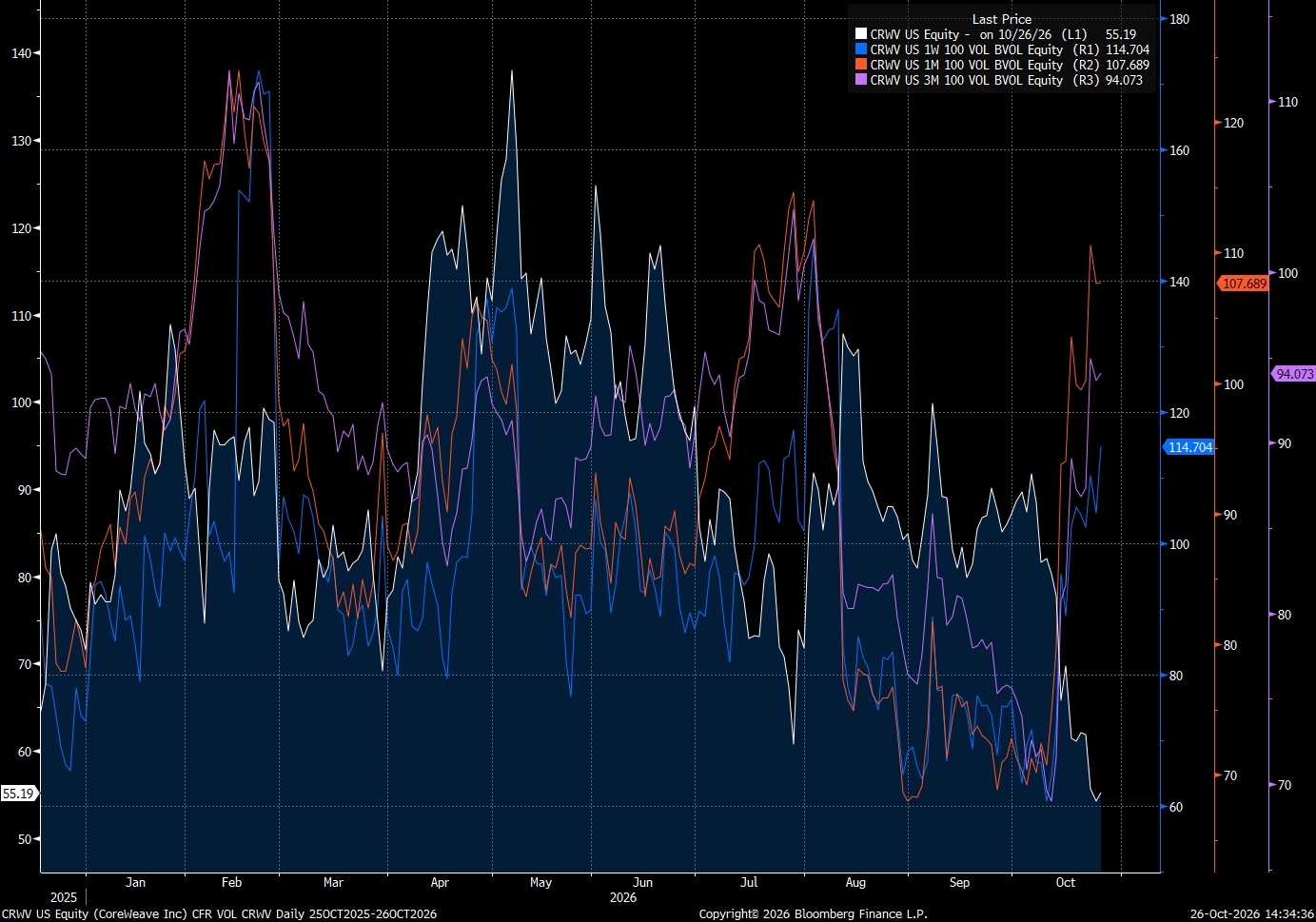
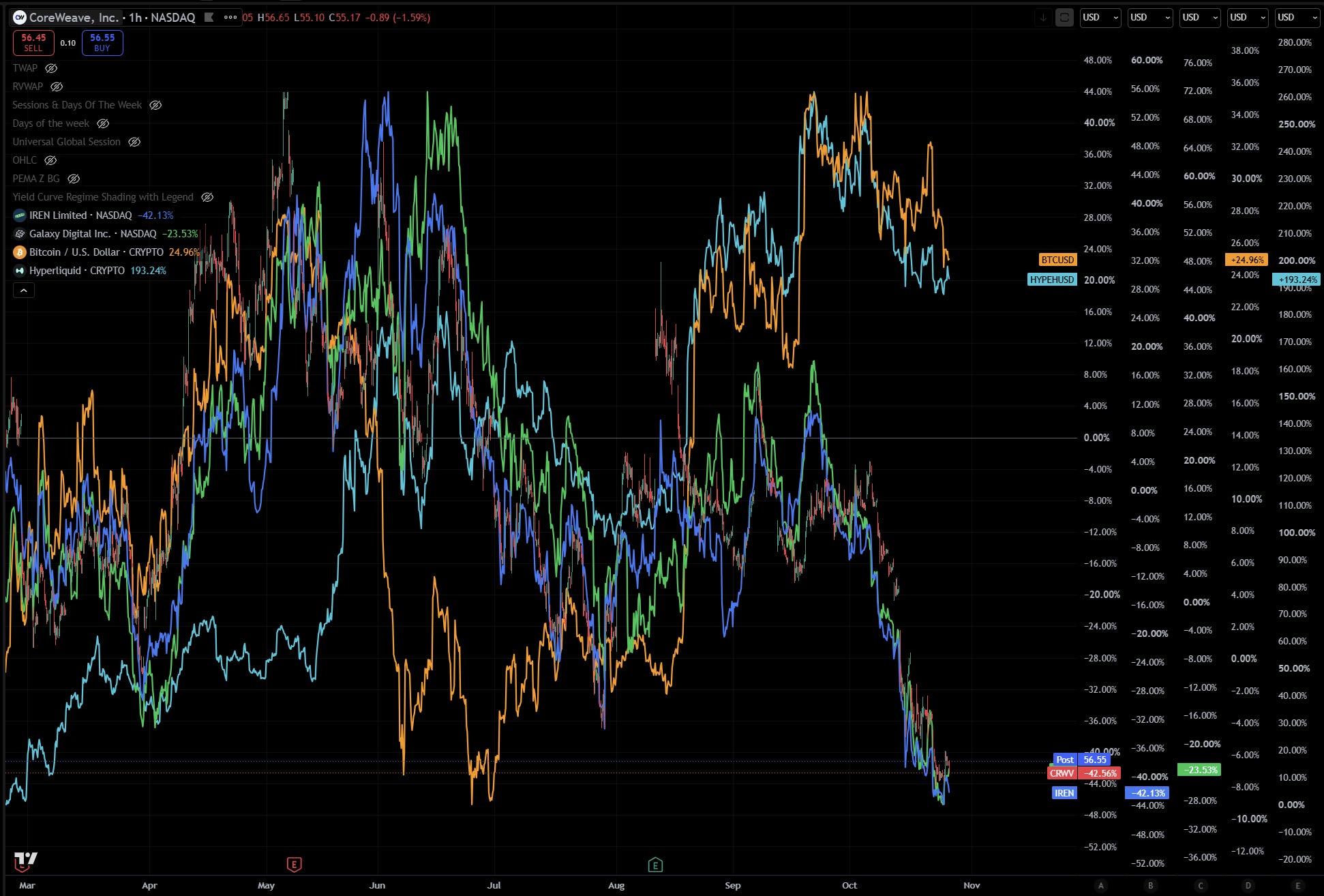
CoreWeave has been the focus of a lot of the selling pressure because it’s the largest Neocloud, with the greatest sensitivity to compute, since the Hyperscalers’ full capex build-out hasn’t finished yet. You will notice that implied vol has risen considerably to price in the downside.
Ironically, all of the crypto bros who were doing Bitcoin mining pivoted to AI compute at the very moment it went into the dumps (classic). Galaxy Digital and IREN have been decimated for pivoting. The divergence that has taken place is that Bitcoin and Hyperliquid have actually reconverged in their correlation and are outperforming all of the companies that pivoted, despite a marginal pullback from the highs. As we progress through the midterms and AFTER FOMC, I would begin to look for short-term bottoms in BTC and HYPE, especially HYPE into the Anthropic IPO.
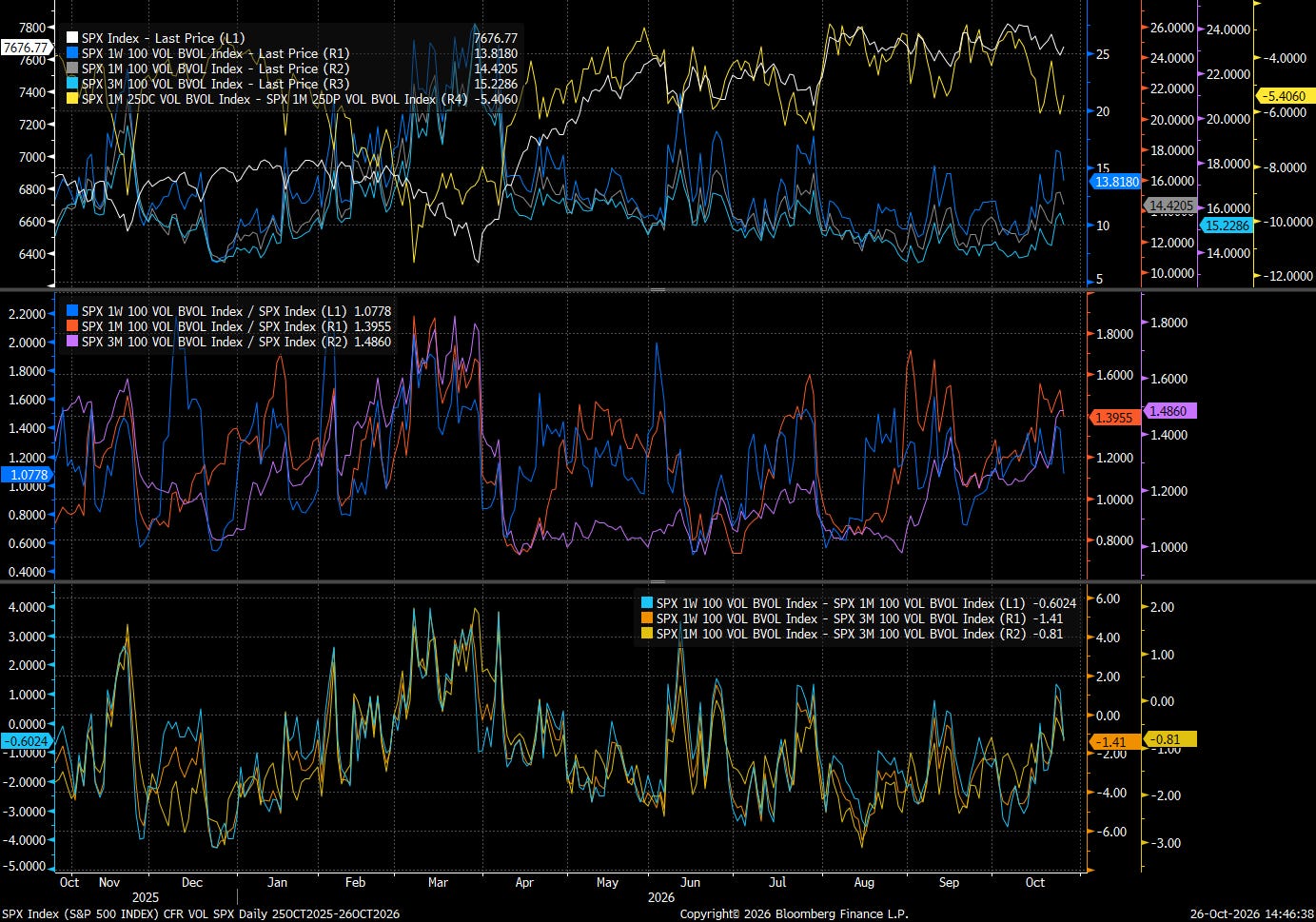
We already have some significant vol premiums in the index moving into FOMC. As long as the Fed maintains its policy-error stance and doesn’t try to turn more hawkish before the midterms, we are likely to see hedges unwind in the main index. Being long the Russell and the Dow are likely good ways to play this given their positive momentum off last week’s lows. The things to watch closely are the rotations and risks in the AI supply chain, because if capital starts to rotate out, the index will see a massive squeeze.
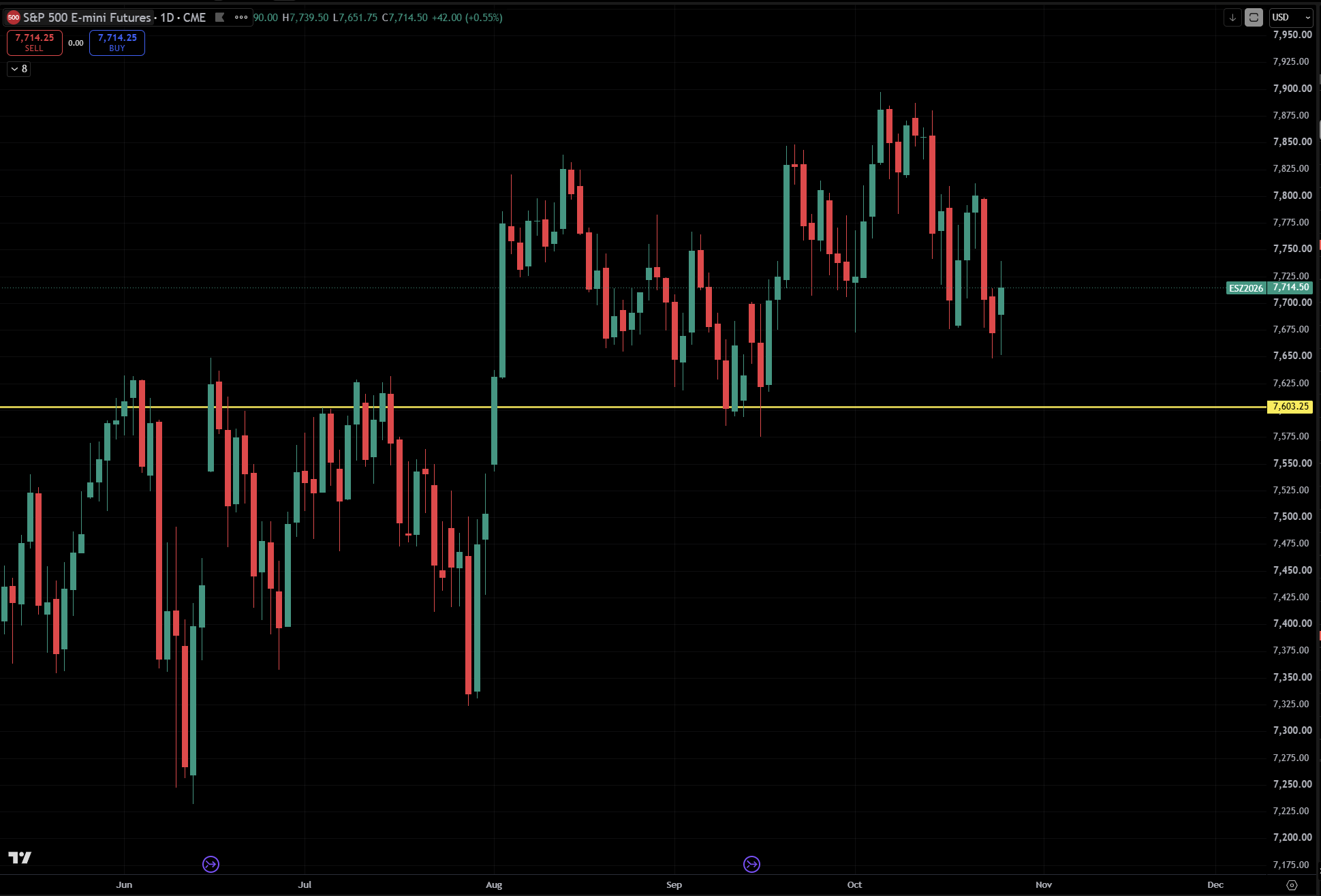
I continue to emphasize that there are significant risks and headwinds in markets. Massive directional bets on the index continue to have minimal risk-reward, but the moment my strategy turns bearish, I will publish it. This will likely overlap with the yield curve breaking out of its range.
We have covered a lot, and we didn’t even get to how the carry trade and dollar trades fit into this. This is what I will cover tomorrow in the next article.
In the interim, I would encourage you to use the free MCP on the Liquidation Nation Website: LINK. This is the single greatest tool for understanding these factor flows, and it’s 100% free.
Thanks.
The information on this website/Substack is for information purposes only. It is believed to be reliable, but Capital Flows does not warrant its completeness or accuracy. The information on the website/Substack is not intended as an offer or solicitation for the purchase of stock or any financial instrument. The information and materials contained in these pages and the terms, conditions and descriptions that appear, are subject to change without notice. Unauthorized use of Capital Flows websites and systems including but not limited to data scraping, unauthorized entry into Capital Flows systems, misuse of passwords, or misuse of any information posted on a site is strictly prohibited. Your eligibility for particular services is subject to final determination by Capital Flows and/or its affiliates. Investment services are not bank deposits or insured by the FDIC or other entity and are subject to investment risks, including possible loss of principal amount invested. Your use of any information which is proprietary to Capital Flows or a third-party information provider shall only be used on individual devices without any right to redistribute, upload, export, copy, or otherwise transfer the information to any centralized interdepartmental or shared device, directory, database or other repository nor to otherwise make it available to any other entity/person/third party, without the prior written consent of Capital Flows.
Awesome read