


One of the main goals of Capital Flows is to create a foundation for HOW to think about financial markets. I have written an entire suite of educational primers on every aspect of macro and markets, which includes quantitative models. All of this is 100% free and can be found below.

When volatility rises, uncertainty rises with it, both in markets and in people’s perception of how bad things can really get. The range of outcomes expands and credit markets begin to slow: banks wait on financing, hedge funds slow down how fast they put on risk, and vol-controlled portfolios need to either sell exposure or buy puts to cap their downside. All of this is happening as the VIX blows out to price a significant premium on WHERE markets are going over the next 3 months.
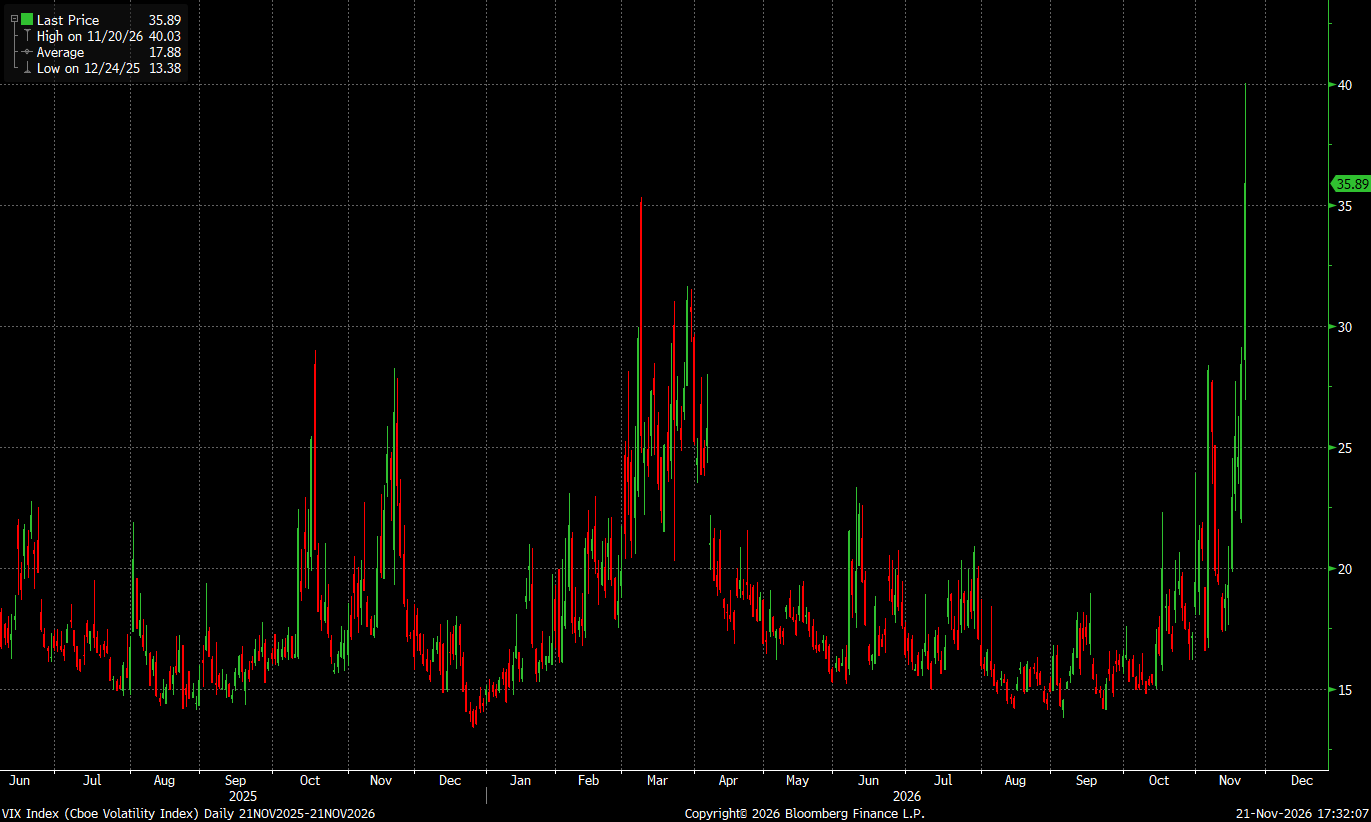
These moments determine A LOT because they compress a huge amount of opportunity and risk into a very short period of time. If you understand HOW to execute and manage risk during these windows, you set yourself up for success over the next 3-6 months.
The goal of this report is to explain HOW to execute and manage risk when this kind of vol premium exists, regardless of whether we have entered a bear market or are about to rebound to all-time highs.
This report is broken into three parts:
Part 1: The Macro Environment. Identifying WHEN the selling stops.
Part 2: The Levels and The Trades. WHAT LEVELS make the index and specific names attractive enough for long-term buyers to step in.
Part 3: The Execution. HOW to size and manage risk through the current dislocation, whether we are heading into a bear market or back into a bull market.
Part 1: The Macro Environment
Everything starts with understanding WHERE we are in the macro cycle across growth, inflation, liquidity, and credit. The credit cycle and the liquidity cycle drive 80% of all returns in financial markets because they are the strongest forces acting on the underlying economy and the financial markets that sit on top of it.
As we exited the first half of this year, all of the credit from AI capex was being injected into the economy. Then the environment began to shift. In the second half, the credit and liquidity forces started to slow as capex expectations for this cycle peaked and liquidity contracted due to higher interest rates and a decrease in dollar liquidity. On its own, this simply limited the upside and caused equities to chop in a range through the summer. It was the midterms and the significant shift in AI regulation that created a source of selling within a fragile environment.
If you have been following along as a paid subscriber, these flows of capital and risks in the system have been documented extensively in the reports below. We have now faced multiple catalysts within this fragile environment that have caused selling: the Democratic sweep that increases AI regulation, the Jensen saga with NVDA, Neoclouds facing credit risk as compute prices fall, and the Anthropic IPO.


The catalysts alone are not THE cause of the selling. If they had occurred in a more robust period of the credit cycle, they would likely have caused dips that were bought aggressively. But when negative news or market catalysts hit during a period of fragility, they become “excuses” for the market to price the risks that already exist under the surface.
The credit cycle and the liquidity cycle (different yet connected) frame EVERYTHING about how far down equities can go:
Credit is all about the flow of debt into the underlying economy and the pricing of risk, which determines whether credit spreads rise or fall due to market liquidity or the rise and fall of underlying delinquencies.
Liquidity, on the other hand, is all about the price of money (nominal and real interest rates) and the quantity of money in the financial system that facilitates financing and refinancing for the economy. Macro liquidity is THE primary causal driver of equity valuations on a broad basis.
When you understand where we are with credit, liquidity, and their connection to fundamental drivers, you know WHERE to deploy capital and HOW to structure the trade to take advantage of the premiums and discounts that exist. This is what we are going to explain in depth so you know exactly HOW to think about things and WHAT to do.